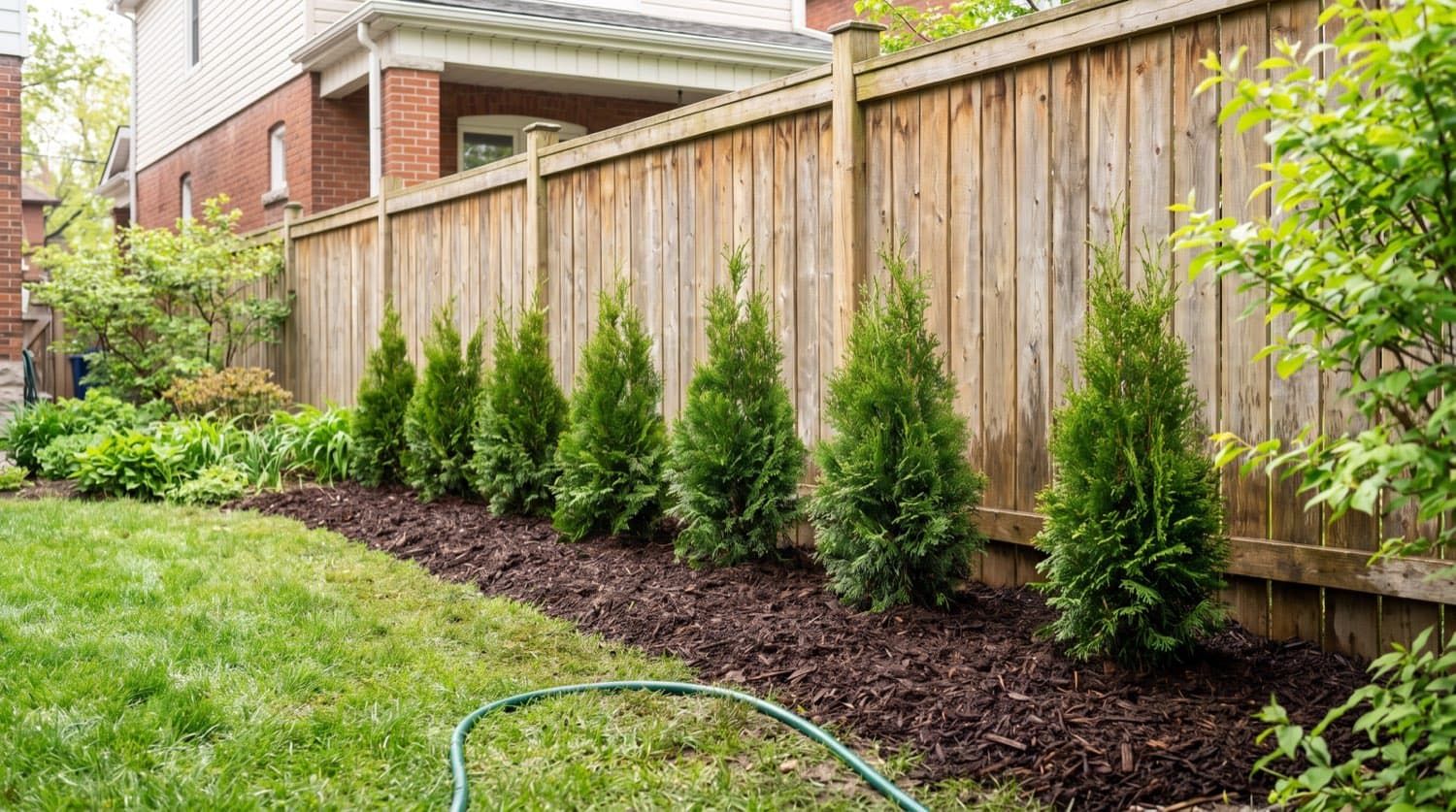
Answer First: For a dense Ontario cedar hedge, space emerald cedars 2 to 3 feet apart, plant in spring or fall, and water deeply for the first two years, right up until the ground freezes, with a thick mulch ring to hold moisture. Trim once a year in the late-June-to-early-August window, checking for active bird nests first. Get spacing and watering right and the hedge knits into a solid green wall; get them wrong and it browns or gaps.
A cedar hedge is the most planted privacy screen in the GTA and the most commonly botched. The trees are cheap and forgiving enough that people plant them too far apart, forget to water them, and then wonder why they have a row of thin brown cones instead of a wall. The fixes are simple and they are all decided in the first two years. Here is the whole playbook.
How far apart should you space a cedar hedge?
For emerald cedars, 2 to 3 feet apart, main stem to main stem. This single decision sets whether you get a solid hedge or a row of separate trees, so it is worth getting right before the shovels come out.
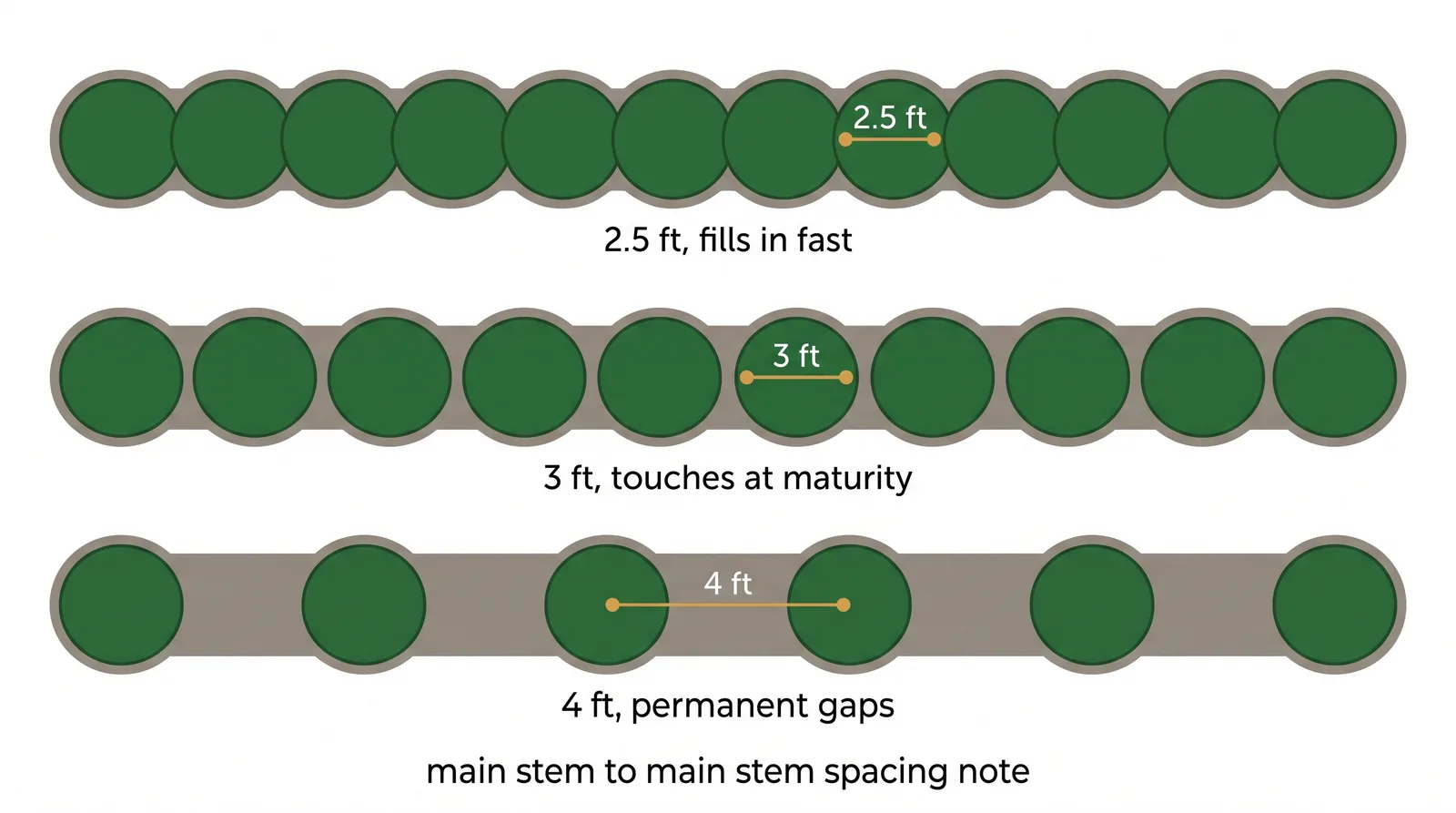
Closer spacing fills in sooner but costs more per foot of hedge because you buy more trees. The three common choices break down cleanly:
- About 2.5 feet: the fastest route to a solid screen, with only small gaps at the start that close quickly.
- 3 feet: still forms a continuous hedge at maturity, but starts with larger visible gaps you wait out.
- 4 feet or more: the trees read as separate specimens and never fully touch, so this is spacing for a row of cedars, not a hedge.
Larger species like eastern white cedar mature much wider, up to 7 to 10 feet across, so they need proportionally more space than the narrow emerald cultivar. If you want the fuller picture on choosing between them and other screens, see our guide to fast-growing privacy trees and hedges for the GTA.
Quotable: Space emerald cedars 2 to 3 feet apart for a hedge: about 2.5 feet fills in fastest, 3 feet still closes at maturity, and 4 feet leaves permanent gaps. Spacing, not fertilizer, is what makes a cedar hedge solid.
When and how should you plant a cedar hedge?
Plant in spring or fall, set each tree at the right depth, and mulch. The GTA's two planting windows, late April to June and early September to late October, both work for cedars; skip the peak of summer heat and frozen ground. Our tree-planting timing guide covers the windows in detail.
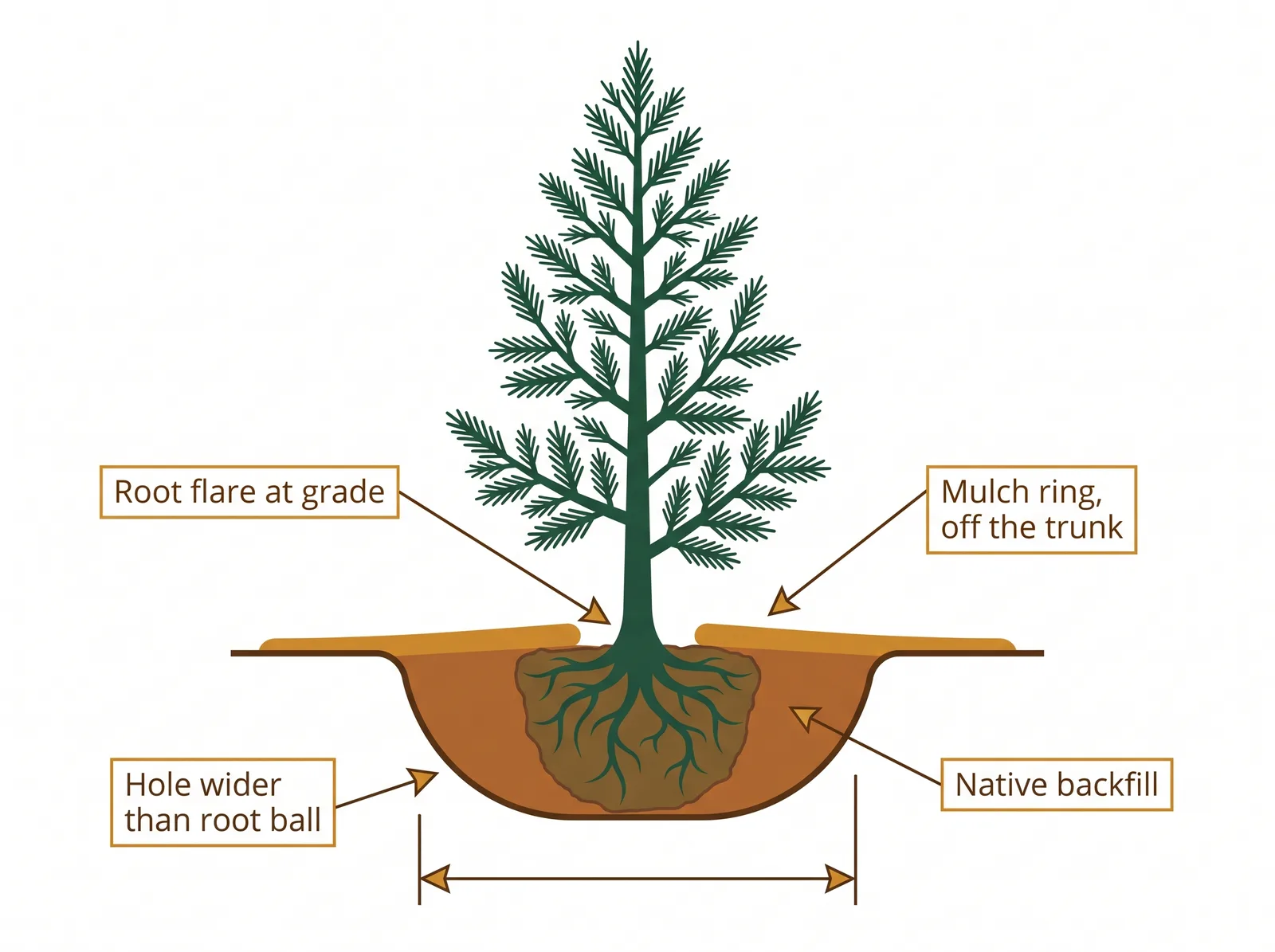
- Dig a hole wider than the root ball, no deeper. Set the tree so its root flare, where the trunk widens into the roots, sits right at ground level. Planting too deep is a slow killer.
- Backfill with native soil and firm gently. Remove air pockets. There is no need for rich amended soil in the hole.
- Mulch in a ring, not against the trunk. Spread a thick layer of mulch over the root zone, pulled back a few centimetres from each stem, to hold moisture and suppress weeds.
- Water in deeply at planting. Give the whole row a long soak the day you plant, and then keep it up, which is the next section.
How do you keep a cedar hedge alive and green?
Water and moisture, especially before winter. Cedars lose water through their foliage all year, including through a dry, windy Ontario winter, so a hedge that goes into freeze-up thirsty is the one that browns by March.
Winter burn, the browning or scorching of evergreen foliage over winter, caused mostly by the plant losing moisture faster than its frozen roots can replace it. It looks like frost damage but is really drought, which is why watering before freeze-up prevents it.
Give a new hedge deep, regular watering for its first two years, right up until the ground freezes in late fall, and keep the mulch ring topped up to hold that moisture. Where you can, plant in a spot sheltered from the harshest winter wind, and for a young or exposed hedge, a burlap screen or an anti-desiccant spray through the first winter buys insurance against burn. One more Toronto-specific hazard: road salt spray browns cedars badly, so keep the hedge back from salted driveways and sidewalks.
From the data: YardQuote tracks 650 landscaping companies across the GTA, and a supplied-and-planted cedar runs about $150 to $500 per tree depending on size, with crew labour at $50 to $100 an hour (YardQuote cost data, July 2026). A full fence-line hedge is a real project, so the cheapest insurance on that spend is correct spacing and two years of honest watering.
Trimming a cedar hedge without breaking the law
Trim once a year in late June to early August, and check for nests first. By late summer the spring growth has firmed up so the cut holds its shape, and there is still time for the tips to harden before frost. A hard cut in fall or winter invites winter burn or damages the dormant plant.
The catch is that the ideal trimming window overlaps bird nesting season, and under the Migratory Birds Convention Act it is a federal offence to disturb an active nest. Before you cut, walk the hedge and look for a nest or for birds flying in and out of one spot; if you find an active nest, wait a few weeks until the young fledge. Our full guide on when to trim hedges in Ontario covers the timing and the nest check in detail. For a tall hedge or a full reshape, a rated crew is worth it, you can check landscaping costs and browse pros on the landscaping directory for your area.
Planting or renovating a cedar hedge? Request a quote and compare up to three vetted local pros side by side. Your contact details only go to the one you pick.