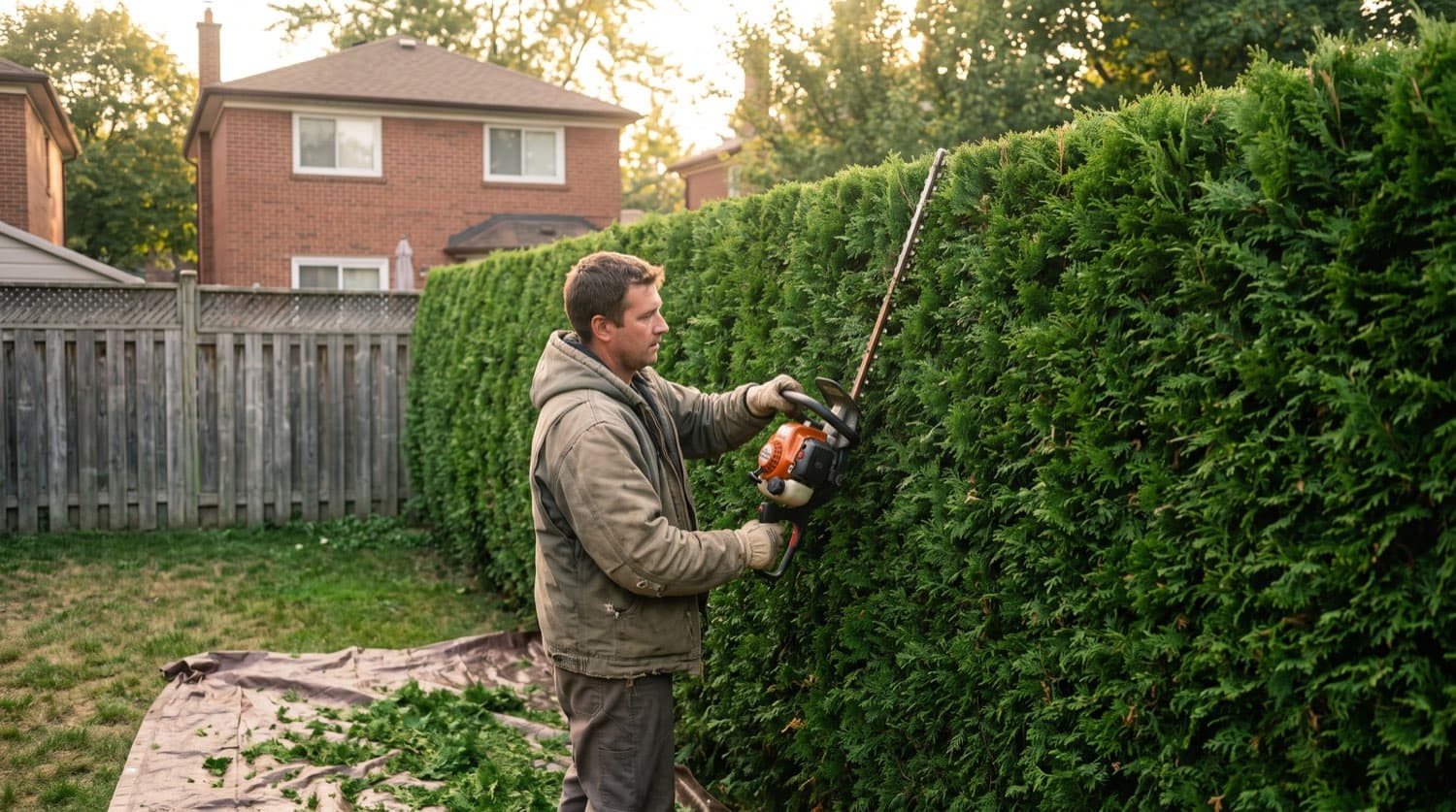
Answer First: The best time to trim a cedar or evergreen hedge in the GTA is late June to early August, after the spring growth firms up and while there is still enough summer left for the cut ends to harden before frost. The catch is that this window overlaps bird nesting season, which runs roughly April 1 to August 31 in southern Ontario, and the Migratory Birds Convention Act makes it a federal offence to destroy an active nest or eggs. So the rule is simple: trim in mid-to-late summer, but check the hedge for an active nest first and wait if you find one.
Hedge timing in Toronto is a small collision of two calendars. The one your hedge cares about says cut in summer once the spring flush hardens. The one the birds care about says do not disturb an active nest between spring and late summer. Most homeowners know one of these and not the other. This guide lines them up so you cut at the right time for the plant without breaking a law you did not know applied to your backyard.
When should you trim a hedge in Ontario?
For the cedar, yew, and boxwood hedges that dominate Toronto backyards, the reliable window is late June to early August. By late June the soft spring growth has firmed up enough to hold a shape, and there are still weeks of warm weather left so the cut tips harden off before the first frost. Trim when the foliage is dry, not wet, to limit disease spread.
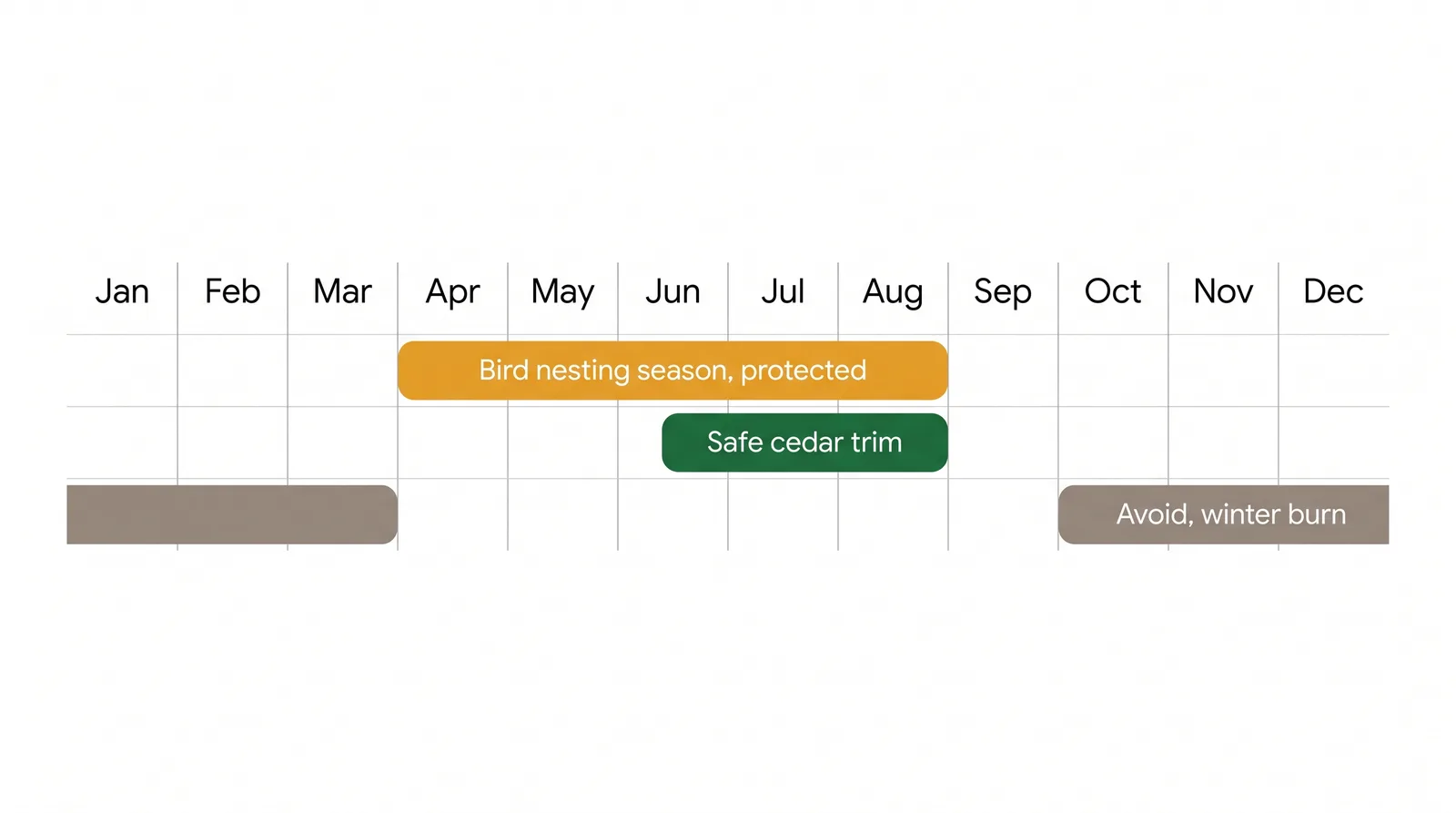
The reason the window closes in late summer is winter, not the calendar. A cut stimulates fresh growth, and growth pushed out in September has no time to harden before the cold. That soft new foliage is what browns and dies over a Toronto winter, the damage gardeners call winter burn. A hard cut in late fall or winter is worse, because the plant is dormant and cannot seal or recover the wound.
Quotable: The safe window to trim a GTA cedar hedge is late June to early August: late enough that the spring growth has hardened, early enough that the cut tips firm up before frost. Growth triggered by a September cut has no time to harden and browns over winter.
Why does bird nesting season change when you can cut?
Because the same summer weeks are when birds are raising young in your hedge, and their nests are protected by federal law. The Migratory Birds Convention Act protects the nests, eggs, and young of most bird species, and it is an offence to disturb or destroy an active nest. In most of southern Ontario the general nesting period runs from about April 1 to August 31, with the busiest stretch from mid-April through July.
A dense cedar or privet hedge is prime nesting habitat, exactly the kind of cover robins, cardinals, and sparrows choose. Nests sit at many heights and are easy to miss until the trimmer is already in the foliage. This is not a theoretical risk: Environment and Climate Change Canada has fined Ontario companies for vegetation work that destroyed migratory bird nests.
Quotable: Under the Migratory Birds Convention Act it is a federal offence to disturb or destroy an active bird nest or its eggs, and most southern Ontario songbirds nest between roughly April 1 and August 31, the same weeks a cedar hedge wants trimming.
Active nest, a nest currently in use, holding eggs or young, or being actively built or tended. An old, empty nest from a previous year is not the same thing, but if you are not certain a nest is inactive, treat it as active and leave it alone.
How do you trim during nesting season without breaking the rules?
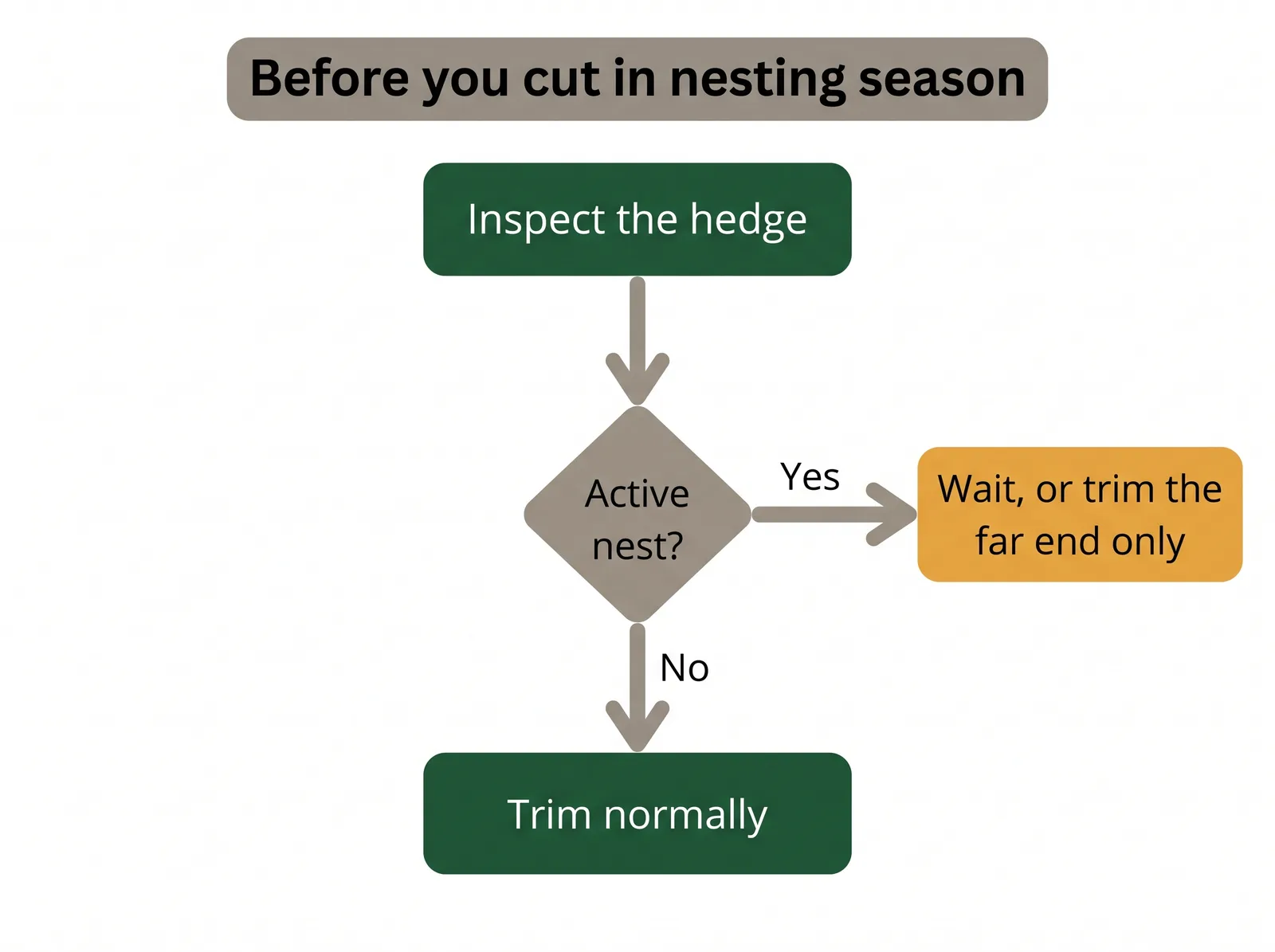
Check first, then cut. The law does not stop you from trimming a hedge in July; it stops you from destroying an active nest while you do. A few minutes of inspection settles it.
- Walk the hedge before you start. Look into the foliage at several heights, from both sides, for a nest or for birds flying in and out of one spot. Nesting adults are secretive, so watch for a minute or two, not just a glance.
- If you find an active nest, stop. Postpone the trim, or work only the far end of the hedge, well away from the nest, and come back for the rest later. Songbird nests clear fast, often two to three weeks from eggs to fledged young, so a short delay usually solves it.
- If the hedge is clear, trim normally. Do your main shaping cut, then keep the timing in mind for next year so the job lands in the late-June-to-August window by default.
- Favour a light early-season shaping. A gentle tidy in very early spring, before birds settle in, reduces how much you need to cut in July, which lowers the odds of hitting an occupied nest during the main trim.
Does the timing change for different hedge types?
Yes. The late-summer rule is built for cedars and other evergreens, but a spring-flowering or deciduous hedge follows its own clock. Match the cut to what you are growing.
| Hedge type (common in Toronto) | Best trim timing | Why |
|---|---|---|
| Cedar / arborvitae, yew, boxwood (evergreen) | Late June to early August | New growth hardens before frost; shape holds |
| Privet, other deciduous formal hedges | Light trim in mid-summer; harder cut in late winter dormancy | Dormant cuts heal cleanly; summer tidy keeps the shape |
| Spring-flowering shrubs (lilac, forsythia) | Right after the blooms fade | They set next year's flowers on old wood soon after blooming |
| Fast-growing formal hedges | Light early-season shaping plus the main summer trim | Two light cuts hold a crisp shape better than one hard one |
The nesting rule applies to all of them equally. Whatever the species, the check for an active nest comes before the shears, from April through August.
From the data: YardQuote tracks 650 landscaping companies across the GTA, and hedge trimming is one of the most common services they list. GTA crew labour runs $50 to $100 an hour (YardQuote cost data, July 2026), so a tall hedge is usually an afternoon of billed time, not a quick job. A pro who trims for a living also knows to check for nests first, which is one quiet reason to hire the job out during nesting season rather than guess.
The Toronto-specific reasons timing matters more here
Two things make hedge timing less forgiving in the GTA than in a milder climate. The first is the freeze-thaw winter, which punishes any soft growth a late cut leaves exposed. An emerald cedar hedge sheared in September often comes out of winter with brown patches on the new tips, while the same hedge cut in July comes through clean. The second is snow load: heavy wet snow splays and bends tall cedar hedges, so a summer trim that keeps them dense and upright also helps them shrug off the winter.
If your hedge has outgrown its space, resist the urge to take it back hard in fall. Plan the heavy reduction for the following summer instead, and stage it over a couple of seasons so you never cut into old bare wood the plant cannot regrow. When the job is bigger than a ladder and hand shears, a rated local pro is worth it, the same way it is for a full landscaping project. You can browse vetted crews on the landscaping directory for your area, and if the hedge shares a line with a protected tree, our guide to the Toronto tree removal permit covers when the City's rules kick in.
Not sure whether your hedge needs a light shape or a full reduction? Request a quote and compare up to three vetted local pros side by side. Your contact details only go to the one you pick.