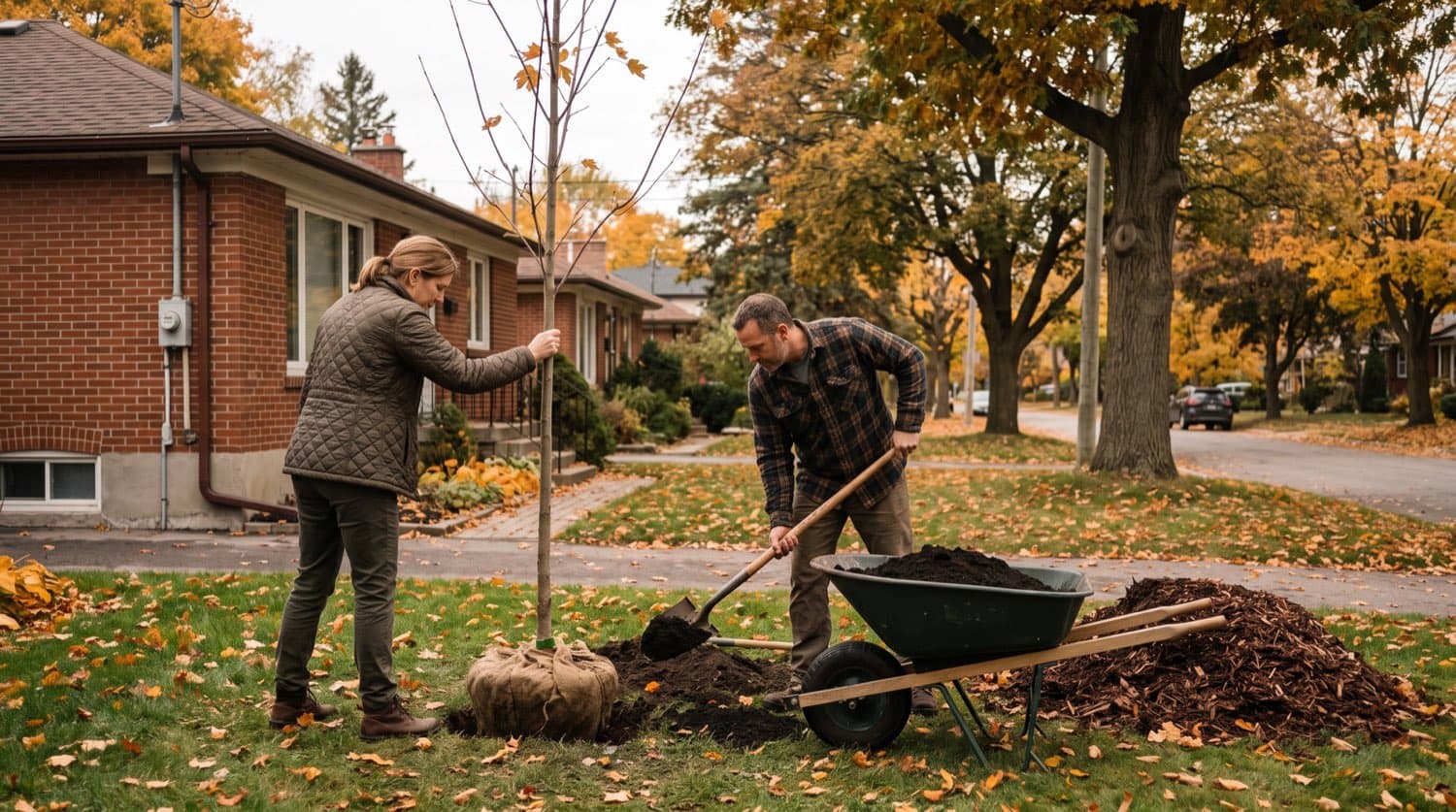
Answer First: You can plant a tree in Toronto in spring, from late April to June once the ground thaws, or in fall, from early September to late October before it freezes. Both windows work, but fall usually has the edge: the soil still holds summer warmth while the air is cool, so roots grow without the tree also feeding a full canopy, and autumn rain cuts watering stress. Avoid the peak of summer heat and any time the ground is frozen.
The old saying that the best time to plant a tree was twenty years ago, and the second best time is now, is good motivation and slightly wrong on the details. In Toronto's climate, now matters. A tree planted in the right window settles in and thrives; the same tree planted in a July heat wave spends its first year just trying to survive. Here is how to pick the window, plant it right, and, if you want, get the tree for free.
When should you plant a tree in Toronto?
Plant in one of two windows: spring, from late April to June after the ground thaws, or fall, from early September to late October before it freezes. The GTA growing season runs roughly April to November, and these are its two calm shoulders, either side of the summer heat that stresses a young tree.
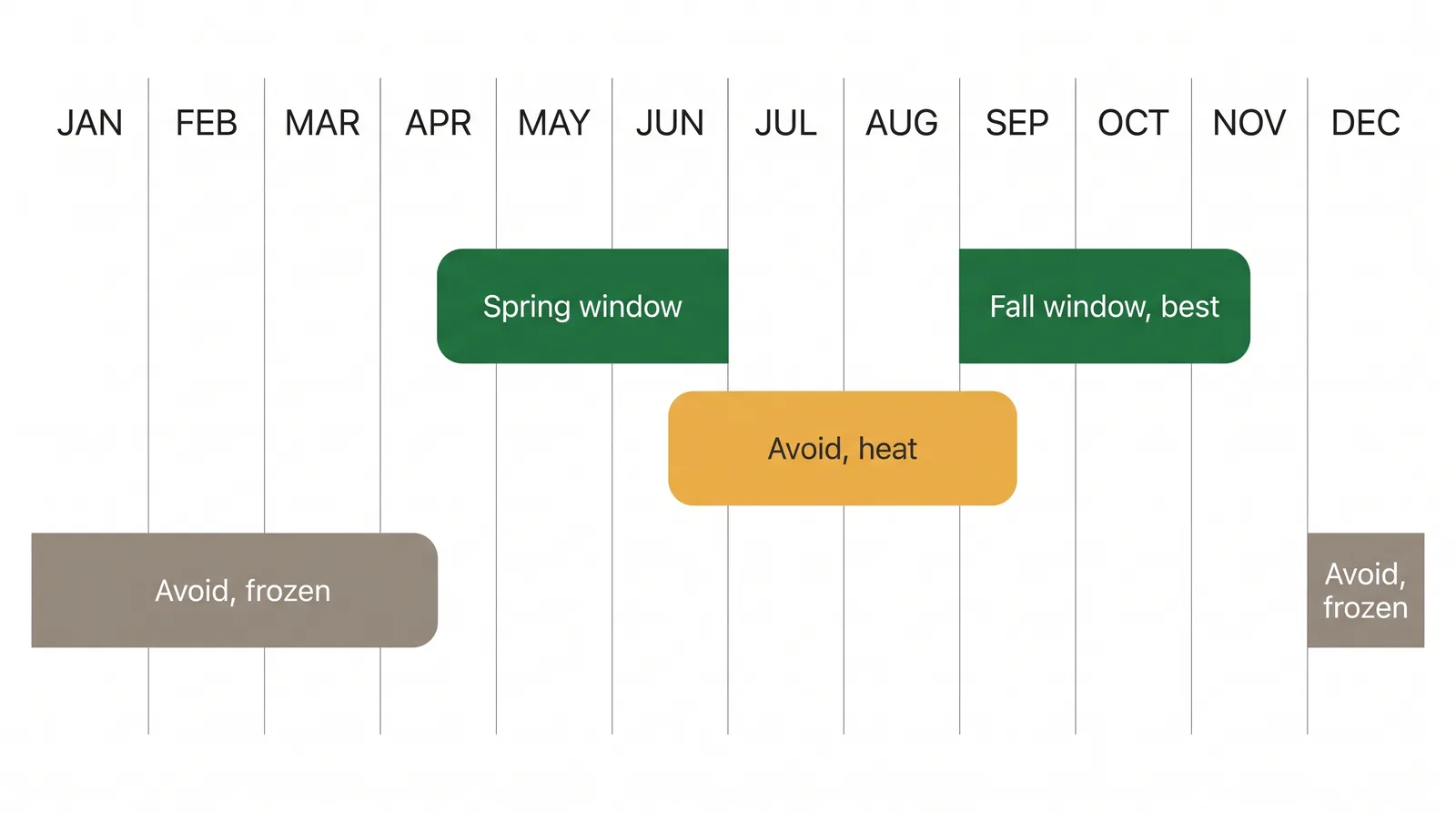
The hard limits are heat and frost. A tree planted into July's heat and dry spells loses water through its leaves faster than its disturbed roots can replace it, so it wilts and stalls. A tree planted into frozen November ground cannot root at all. Give a fall planting about a six-week runway before the ground freezes hard, so it can settle in.
Quotable: Toronto has two tree-planting windows: spring, from late April to June after the thaw, and fall, from early September to late October before the freeze. Peak summer heat and frozen ground are the two times to avoid.
Why is fall usually better than spring?
Because in fall the soil is working for the tree and the weather is not against it. This is the part most people get backwards, assuming spring is automatically best.
Through September and October, the ground still holds the summer's warmth even as the air cools. Roots keep growing in that warm soil, and because the tree is heading into dormancy, it is not spending energy on leaves or flowers, so nearly all of it goes into establishing roots. Fall also brings steadier rain than midsummer, which means less watering and less drought stress. The tree then wakes up the following spring already anchored, ahead of anything planted fresh that April.
Spring planting still has its place. It gives the tree the longest possible first season in the ground, and it is the safer choice for species that are tender to a hard first winter. The catch is that a spring-planted tree heads straight into summer, so it needs reliable watering through its first July and August to make it.
Quotable: Fall is often the best time to plant a tree in southern Ontario: the soil still holds summer heat while the air is cool, so the tree pours its energy into roots instead of leaves, and autumn rain does much of the watering for you.
Balled-and-burlapped, a tree dug from a nursery field with its root ball wrapped in burlap, as opposed to a container-grown or bare-root tree. Balled-and-burlapped and container trees can both be planted in either window; bare-root stock is best planted in early spring while still dormant.
How do you plant a tree so it survives its first Toronto winter?
Planting depth and mulch do most of the work. The single most common mistake is planting too deep, which slowly suffocates the roots. Get these steps right and the tree does the rest.
- Call before you dig. Book a free Ontario One Call locate about five business days ahead so buried gas, hydro, and utility lines get marked. This is required by law in Ontario and it is free.
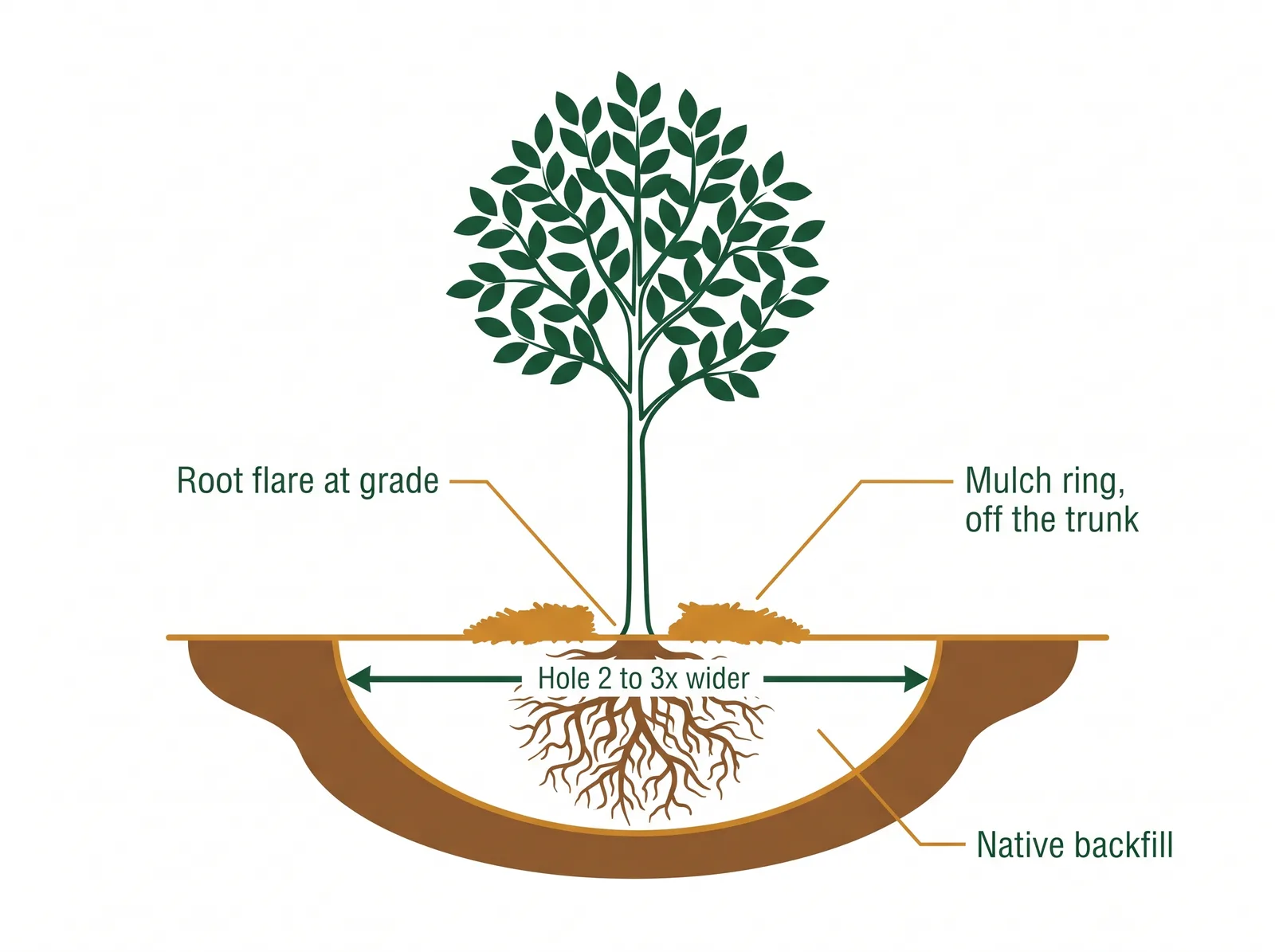
- Dig wide, not deep. Make the hole two to three times wider than the root ball but no deeper than it. The root flare, where the trunk widens into the roots, should sit right at ground level, never buried.
- Set it at grade and backfill. Place the tree so the flare is visible, backfill with the native soil you dug out, and firm it gently to remove air pockets. There is no need to amend the hole with rich soil.
- Mulch like a doughnut, not a volcano. Spread 5 to 8 cm of mulch in a ring around the tree, pulled back a few centimetres from the trunk. Mulch piled against the bark, the volcano look, traps moisture and rots the trunk.
- Water deeply until freeze-up. Water well at planting and keep watering through the fall until the ground freezes, then again through the next summer. Deep, infrequent watering beats a daily sprinkle.
Free and low-cost ways to plant a tree in Toronto
You do not have to pay full landscaping rates to get a tree in the ground. The City and its partners run several programs, and knowing them can turn a $300 job into a free one.
| Option | Cost | What you get |
|---|---|---|
| City of Toronto Free Tree Program | Free | Up to 2 native trees/shrubs per household (about 25–100 cm), spring and fall, you plant it |
| City street-tree request (road allowance) | Free | The City plants and maintains a tree on the City strip in front of your home; request via 311 |
| LEAF subsidized backyard planting | ~$160–$230 per tree + HST | Site consult with an arborist, delivery, planting, and mulching |
| Landscaping company | ~$150–$500 per tree | A supplied-and-planted tree, species and caliper of your choice |
From the data: YardQuote tracks 650 landscaping companies across the GTA, and a supplied-and-planted tree from a pro runs about $150 to $500 each (YardQuote cost data, July 2026). That is real money for a larger caliper tree, which is exactly why the City's free program and LEAF's subsidized planting are worth checking before you pay full rate for a modest tree.
Whichever route you choose, plan the location for the tree's mature size, not the sapling in front of you, so it will not crowd the house, the hydro lines, or the property line in twenty years. A tree planted right also stays out of bylaw trouble later: once it grows past 30 cm across the trunk, removing it needs a City permit, which our Toronto tree removal permit guide covers in full. For a larger yard project around the planting, you can check current landscaping costs and browse vetted crews on the landscaping directory for your area. And if that new tree shares a line with a hedge, our guide on when to trim hedges in Ontario keeps both on the right schedule.
Planning a tree or a bigger yard refresh? Request a quote and compare up to three vetted local pros side by side. Your contact details only go to the one you pick.