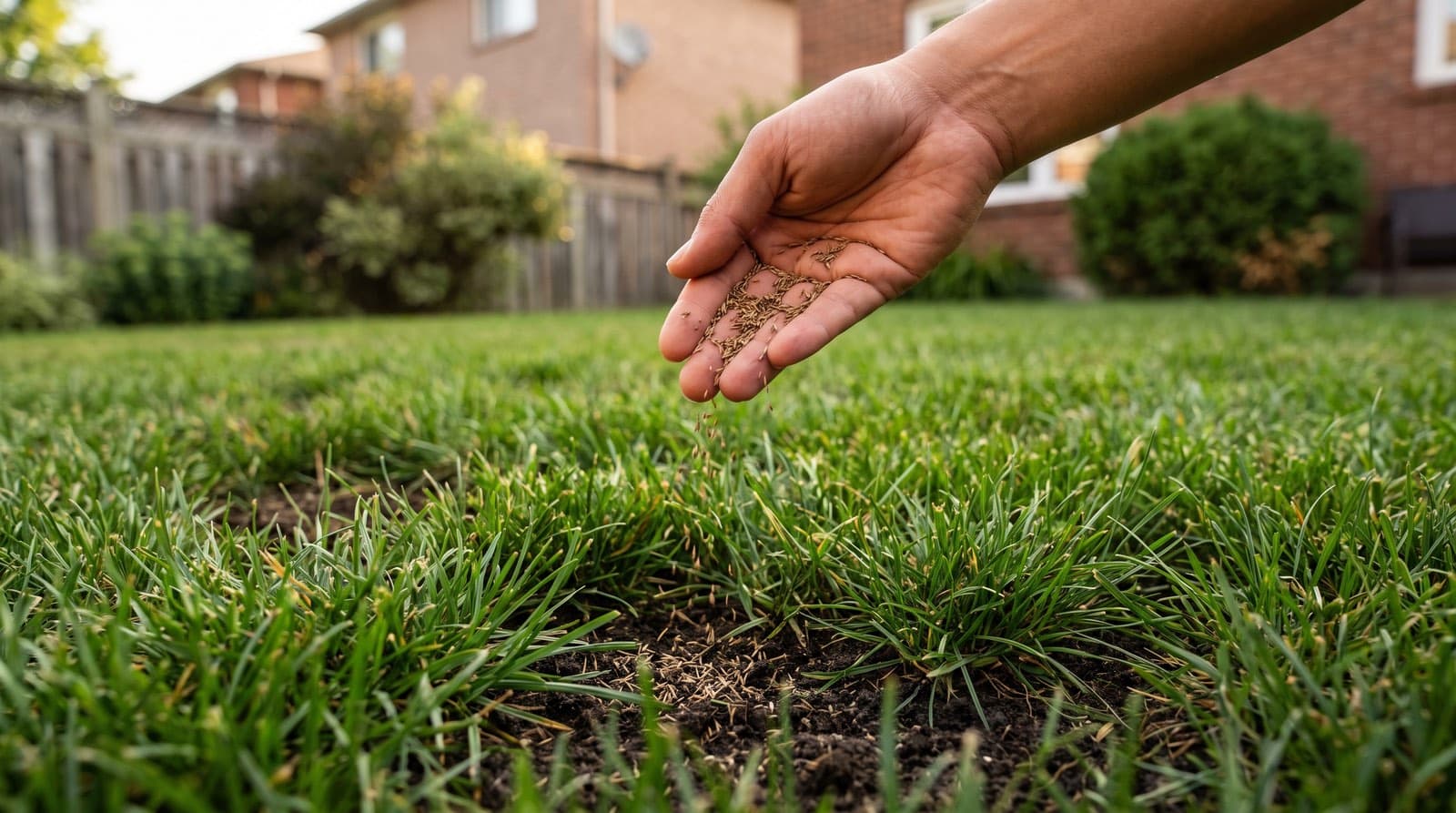
Answer First: The best grass seed for Ontario is a blend of cool-season species, not a single grass. Kentucky bluegrass self-repairs and loves full sun, perennial ryegrass germinates fastest and takes traffic, fine fescue is the most shade-tolerant, and turf-type tall fescue handles drought with the least upkeep. For a typical Toronto lot, a sun-and-shade blend of bluegrass, ryegrass, and fine fescue is the safe choice; match it tighter to your site from there.
Standing in the seed aisle, the bags all look the same and the names blur together. The good news is that Ontario narrows the field for you: only cool-season grasses survive here, and there are just four that matter. Learn what each one is good at, and the right bag picks itself.
Which grass species actually grow in Ontario?
Four cool-season grasses, and only cool-season grasses. Ontario's Zone 5 to 6 climate, with its cold winters and short growing season, rules out the warm-season grasses (Bermuda, Zoysia, St. Augustine) sold in the southern United States. They would brown out and die in a GTA winter.
Cool-season grass grows most actively in the cool shoulder seasons of spring and fall and slows in summer heat. Kentucky bluegrass, perennial ryegrass, fine fescue, and tall fescue are the four that make up Ontario lawns, alone or in blends.
Each one trades strengths against weaknesses, which is why blends exist. No single species is best at sun, shade, traffic, drought, and low maintenance all at once.
Quotable: Ontario is cool-season country. Only four grasses matter here, Kentucky bluegrass, perennial ryegrass, fine fescue, and tall fescue, and the whole art of buying seed is blending their strengths for your specific yard.
How do the four grasses compare?
Here is what each species does well and badly, so you can weight a blend toward the conditions you actually have.
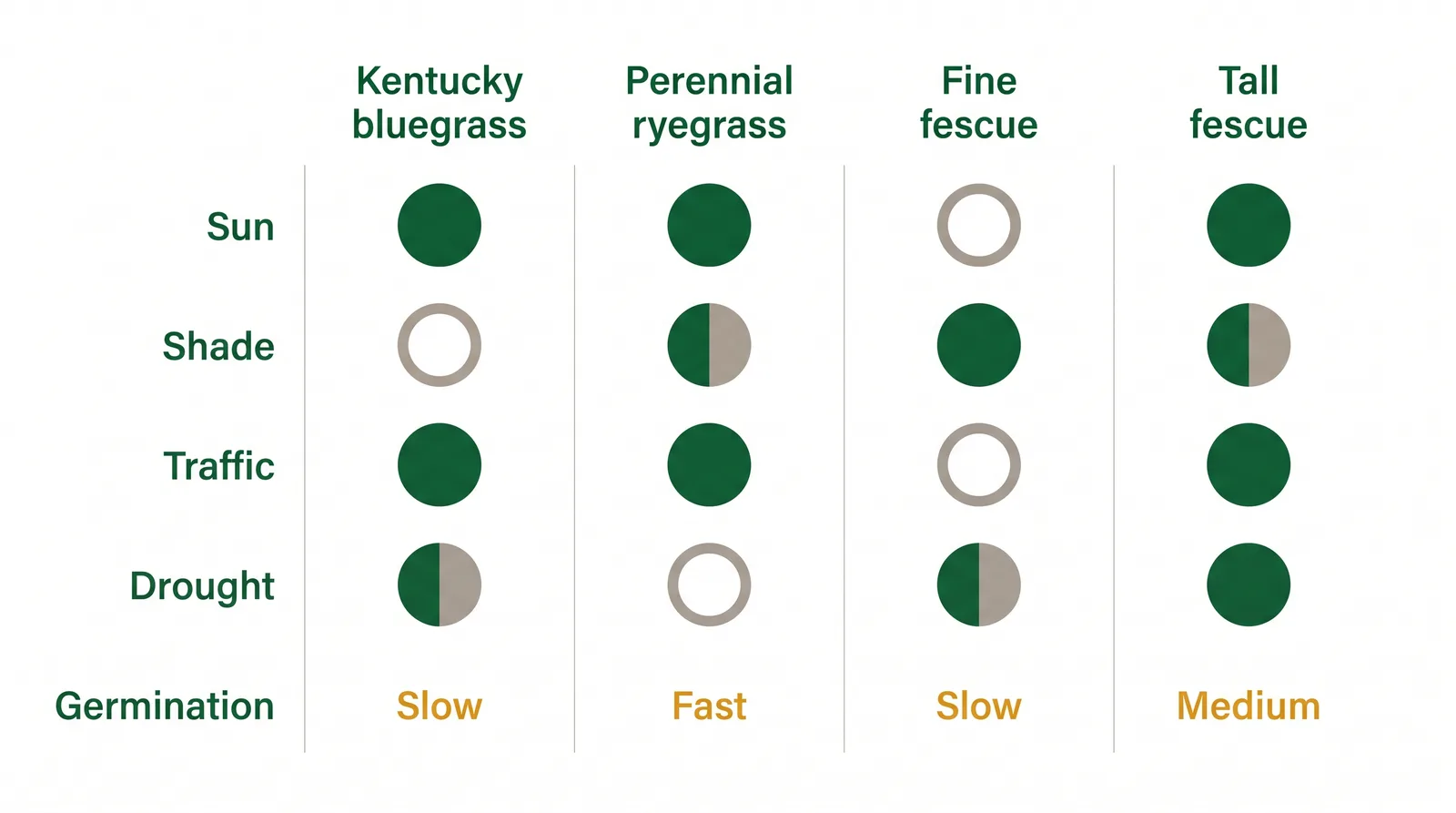
| Grass | Best at | Weak at | Germination | Spreads? |
|---|---|---|---|---|
| Kentucky bluegrass | Full sun, traffic, self-repair | Deep shade, drought | 14 to 30 days | Yes (rhizomes) |
| Perennial ryegrass | Fast cover, wear, deep colour | Cold extremes, gap-filling | 5 to 10 days | No (bunch) |
| Fine fescue | Shade, drought, low upkeep | Foot traffic | 14 to 21 days | Some |
| Tall fescue | Drought, heat, low water | Fine texture, gap-filling | 7 to 14 days | No (bunch) |
Two facts drive most blend decisions. First, only bluegrass spreads by underground rhizomes, so it is the one that fills in bare spots on its own; the bunch-type grasses just sit where you sow them. Second, ryegrass germinates in a week while bluegrass can take a month, so blends use fast ryegrass to hold the soil and beat weeds while the slower, tougher bluegrass establishes underneath.
Quotable: Only Kentucky bluegrass spreads to repair itself; ryegrass, tall fescue, and to a lesser extent fine fescue stay where you sow them. That single trait is why nearly every Ontario lawn has bluegrass in the mix.
Which blend should you buy for your Toronto yard?
Start from your dominant condition, then buy the blend built for it. Most bagged Ontario seed is already sold this way; you are matching the label to your yard.
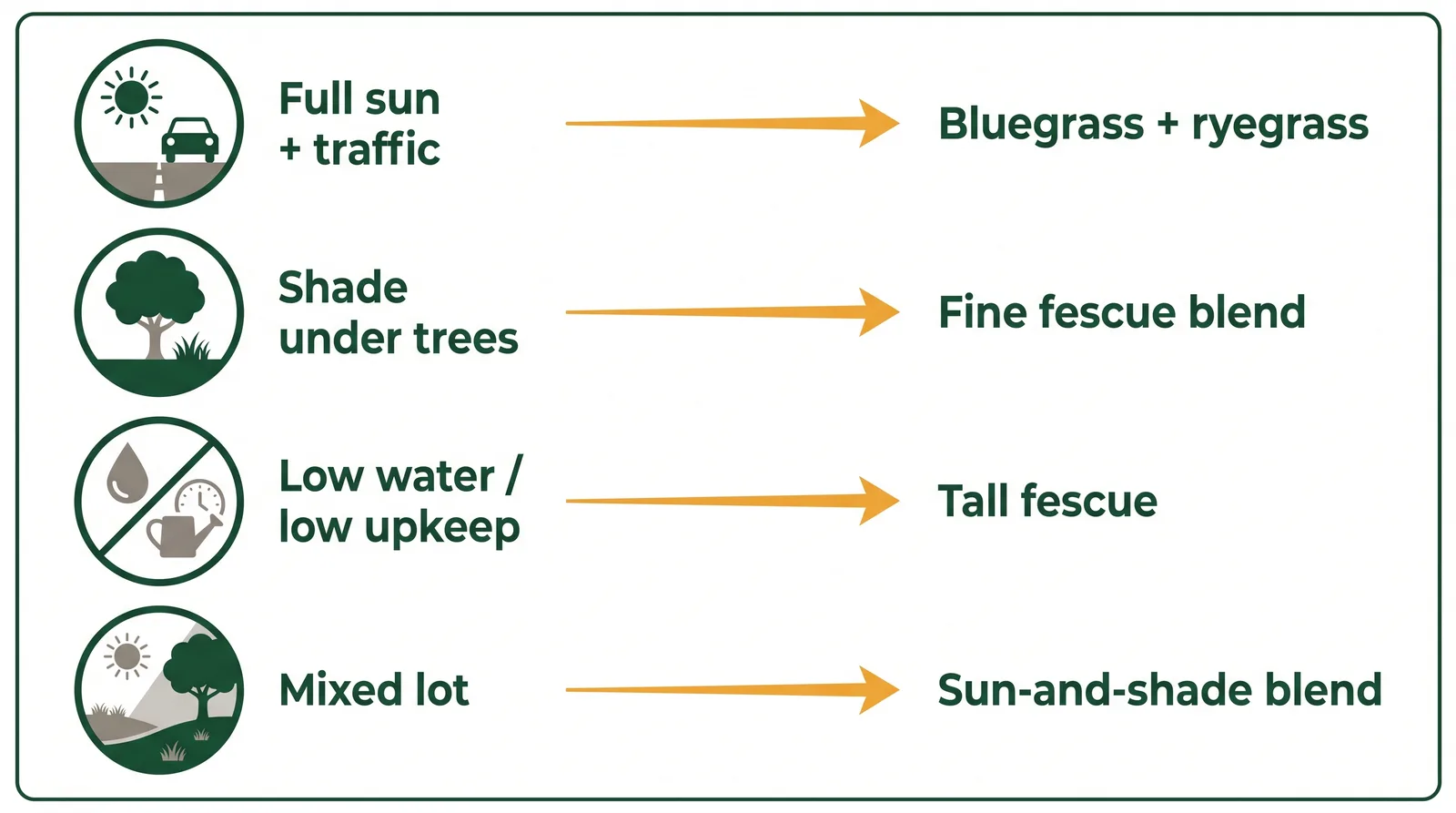
- Full sun and foot traffic: a Kentucky bluegrass and perennial ryegrass blend. Bluegrass gives density and self-repair, ryegrass adds fast establishment and wear tolerance.
- Shade under trees: a fine-fescue-heavy blend. It is the only mix that holds up in dry shade where bluegrass thins out and dies.
- Low water and low maintenance: turf-type tall fescue, sometimes with a little bluegrass. Deep roots mean it stays green through drought with minimal feeding.
- A mix of everything (most lots): a sun-and-shade blend of bluegrass, ryegrass, and fine fescue. It hedges across the conditions a real Toronto yard actually has.
When you buy, read the label. You want named cool-season species, a high germination percentage, and a low share of "other crop" and weed seed. Timing matters as much as the mix: our guide on when to plant grass seed in Ontario covers the mid-August to mid-September window, and if you are thinning an existing lawn rather than starting over, see overseeding in fall versus spring. For a deeper look at matching a grass to your specific site, including whether to seed or sod, read the best grass types for Toronto lawns.
From the data: YardQuote tracks 249 lawn care companies across the GTA, and 220 carry three or more Google reviews with an average rating of 4.75 (YardQuote tracking, July 2026). Many now sell overseeding with a named blend as a fall service, which is worth asking about, because a pro matching seed to your yard's light and traffic beats grabbing whatever contractor mix is on the truck.
If you would rather have someone choose and sow the right blend for your conditions, compare local pros and rates on the Toronto lawn care cost page or browse lawn care companies in North York and other areas.
Want the right seed matched to your yard's sun and soil? Request a quote and compare up to three vetted local lawn care companies side by side. Your contact details only go to the one you pick.