Answer First: The best time to plant grass seed in the GTA is mid-August to mid-September. In Toronto's Zone 5 to 6 climate, that window pairs warm soil with cooler nights, steady autumn rain, and far less weed competition than spring, which gives fall seeding the highest first-try success. Mid-April to mid-May is a workable second choice, and peak-summer July is the worst time to seed. Professional seeding runs about $0.50 to $1.25 per sq ft, against $1.90 to $4.25 for sod.
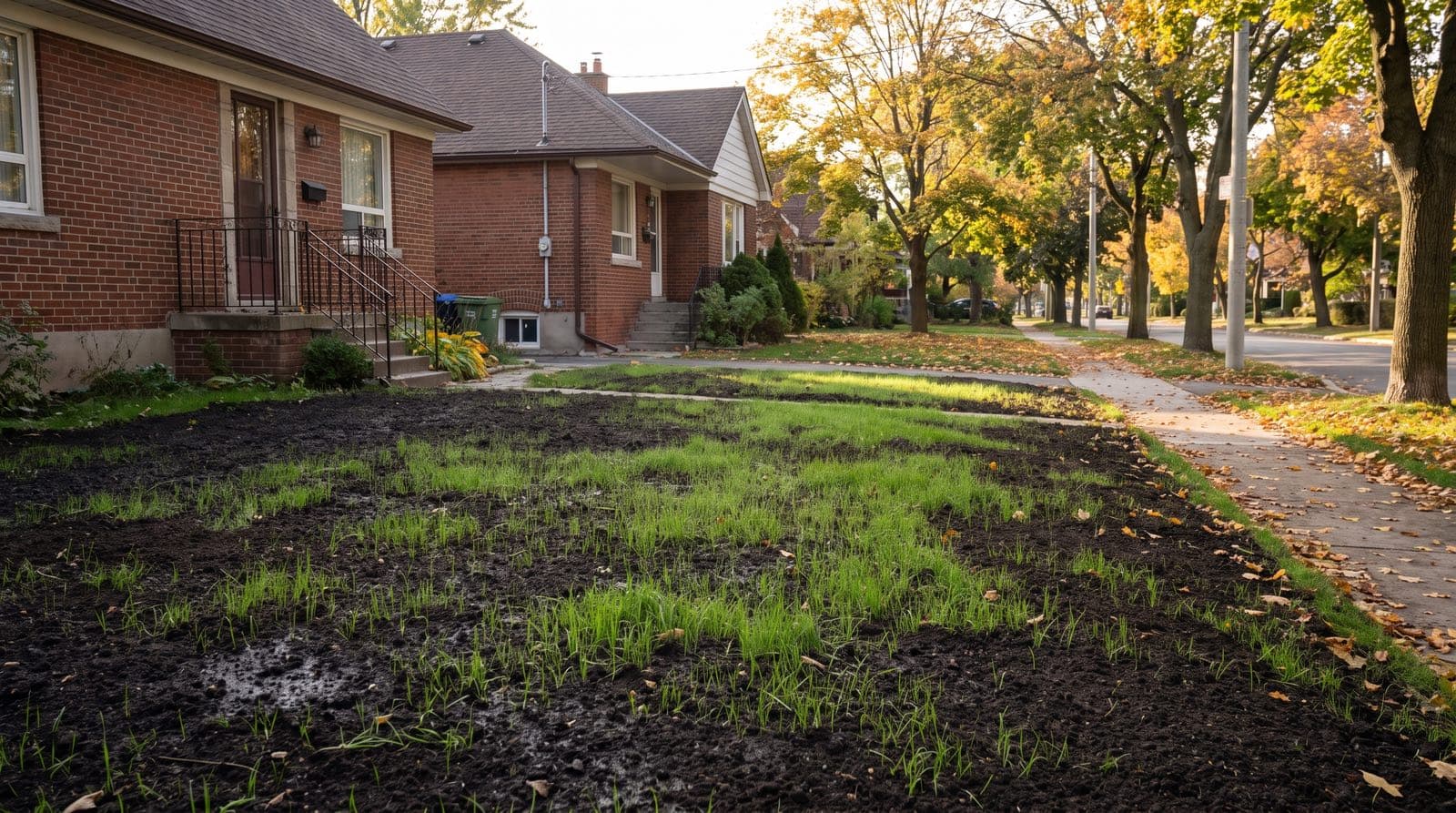
Most failed lawns in Toronto were not seeded with the wrong product. They were seeded at the wrong time. Grass seed is unforgiving about timing in a Zone 5 to 6 climate, and the difference between a lawn that fills in and a spring "mud pit" that sits bare until August usually comes down to which month the seed went down.
When is the best time to plant grass seed in Ontario?
Mid-August to mid-September, in most of the GTA. The soil is still holding summer warmth, the nights have cooled, autumn brings more reliable rain, and the weeds that torment spring seedings have mostly stopped germinating. Seedlings get two cooler months to root before frost, which is exactly what cool-season grasses want.
The reason is soil temperature, not the calendar. Cool-season grasses, the Kentucky bluegrass, fescue, and ryegrass blends standard in Ontario, germinate best when soil sits between about 10 and 18°C. Early fall lands squarely in that band, with the added bonus of dropping air temperatures that stress new grass far less than July sun.
Cool-season grass: the grass types suited to Ontario's climate that do their growing in the cooler shoulder seasons of spring and fall, and go semi-dormant in peak summer heat. Kentucky bluegrass, perennial ryegrass, and fescues are the common blends.
Quotable: In Toronto's Zone 5 to 6 climate, the best time to seed a lawn is mid-August to mid-September, warm soil, cooler nights, autumn rain, and a fraction of the weed pressure that wrecks spring seedings.
What is the full seeding calendar for a Zone 5-6 lawn?
There are three windows, and they are not equal. Match your project to the right one instead of seeding whenever the mood strikes.
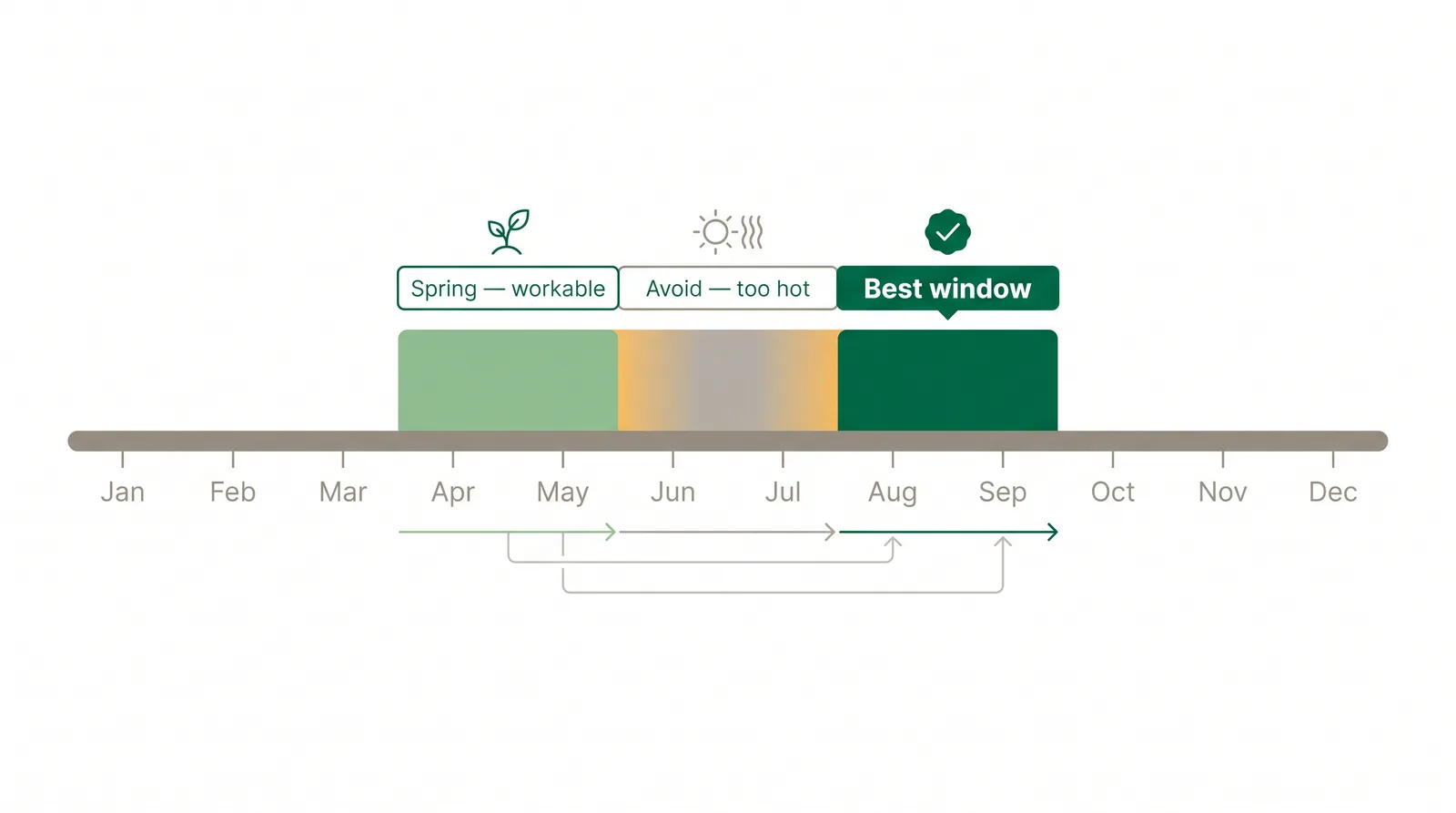
- Mid-August to mid-September: best. Highest first-try success. Warm soil, cool nights, fall rain, low weed pressure. If you can plan ahead, this is the window to aim for.
- Mid-April to mid-May: workable. The soil has warmed past roughly 10°C but summer heat has not arrived. The catch is crabgrass competition and the risk of a storm washing fresh seed off any slope before it roots.
- June through July: avoid. Peak heat and drought stress cook young seedlings, and summer watering limits can leave you unable to keep seed moist enough to germinate.
Ontario's short growing season raises the stakes on getting this right. A spring seeding that fails often cannot be properly redone until the mid-August window, which means living with bare soil for three months. That is the practical case for the fall window: one good try beats two rushed ones.
From the data: Contractors feel this calendar in their booking sheets. In Toronto, the late-August seeding slots fill up during July, homeowners who wait until they see the bare patch in September are already behind the demand curve. If fall seeding is the plan, the call to book happens in mid-summer, not at the last minute.
Why is fall better than spring for seeding in the GTA?
Three reasons, and weed pressure is the biggest. In spring, your new grass germinates at the same time as crabgrass and other summer weeds, and Ontario's cosmetic pesticide rules limit the chemical crabgrass control you could otherwise lean on while the lawn establishes. Fall seedlings face almost none of that competition.
The second reason is heat. Spring seedlings that survive May run straight into July heat and drought stress while their roots are still shallow. Fall seedlings get cooler, wetter conditions and root down before winter, then take off the following spring with a head start.
The third is water. Fall rain does much of the watering for you, while a spring or summer seeding leans on your hose and your water bill, and on Toronto not calling a summer watering restriction at the wrong moment.
Quotable: Grass seed germinates best when soil sits between 10 and 18°C. In the GTA that is early fall, not the peak of July, which is why a mid-September seeding routinely outperforms one put down in spring heat.
What does it cost to seed a lawn versus lay sod?
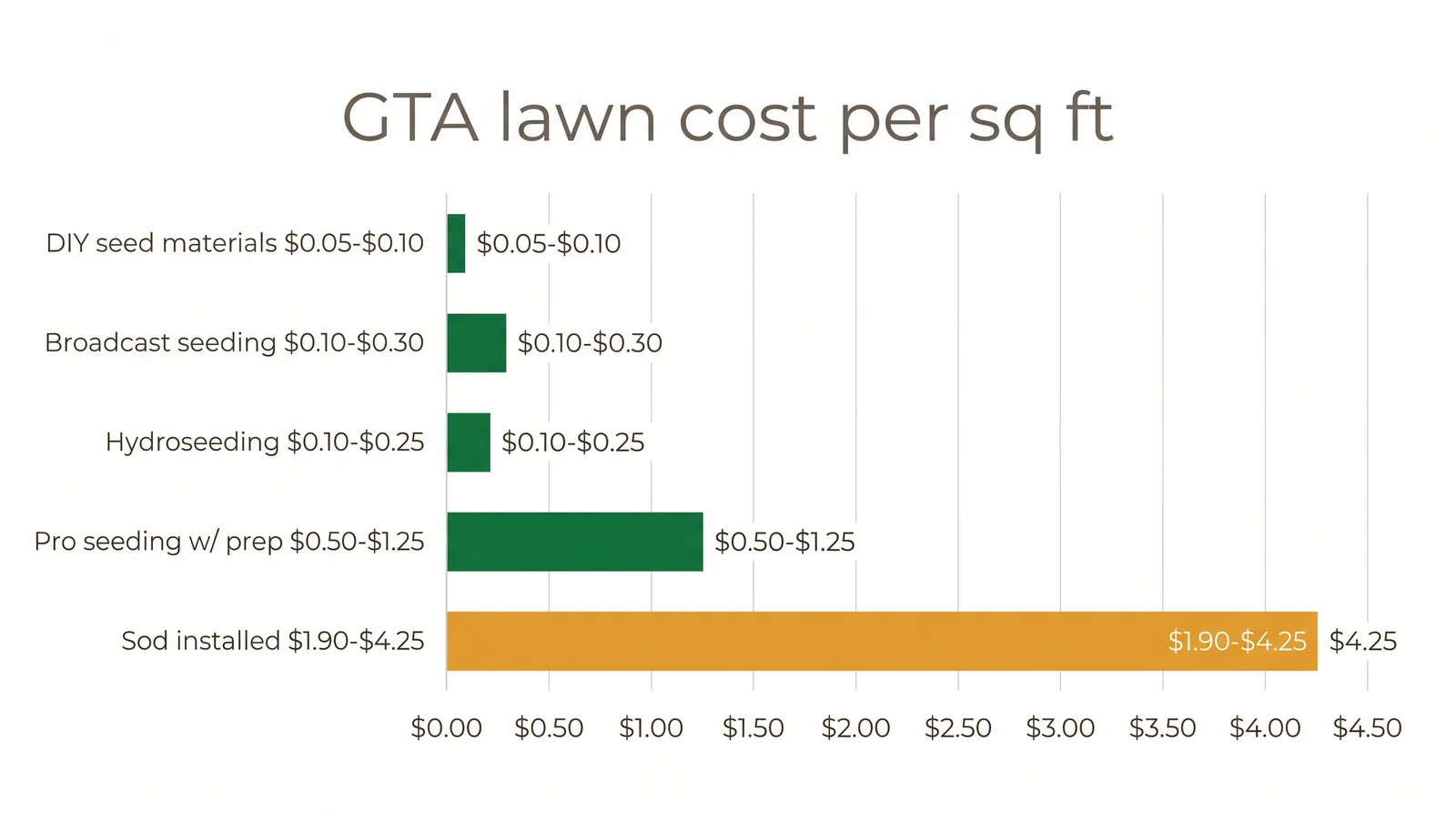
Seed is dramatically cheaper up front; you pay for it in time, not dollars. Here are the real GTA ranges, per square foot installed.
| Method | Cost per sq ft | Notes |
|---|---|---|
| DIY seed materials only | $0.05–$0.10 | Quality Zone 5 mix; you do the labour and watering |
| Broadcast seeding (minimal prep) | $0.10–$0.30 | Basic installed cover |
| Hydroseeding | $0.10–$0.25 | Faster germination; most crews want 2,000+ sq ft jobs |
| Professional seeding (with soil prep) | $0.50–$1.25 | About $500–$1,250 for a 1,000 sq ft lawn |
| Sod installed | $1.90–$4.25 | Green in 24 hours; three to four times the price of seeding |
The number that decides most projects is not in the price column, it is the clock. Seed germinates in 7 to 21 days but takes 8 to 12 weeks for basic coverage and 4 to 6 months before the lawn tolerates regular use (Allen Landscaping). Sod is green in a day and traffic-ready in two to three weeks. If you have a fall window and patience, seed saves real money. If you need a lawn now, or you are selling in spring, sod's premium buys speed. Our breakdown of sod installation cost per square foot walks through that side of the math, and the same normalize-then-compare logic from why Toronto landscaping quotes vary so much applies to seeding bids too.
When should you hire a pro instead of seeding yourself?
Seed yourself if the lawn is small, reasonably flat, and you can commit to weeks of light daily watering. DIY seed materials at $0.05 to $0.10 per sq ft make a small Toronto yard cheap to reseed, and a thin-but-alive lawn is often better served by an aeration-plus-overseeding pass ($150 to $300) than a full tear-out.
Hire a pro when the ground needs grading, the old lawn has to come out, or the area is big enough that a failed try costs you a whole season. A crew that plans your job for the fall window and preps the soil properly is buying down the redo risk that makes cheap spring seedings so expensive in the end. You can see current ranges on the Toronto lawn care cost page and sod installation cost page, or compare lawn care companies in Etobicoke and other GTA areas.
From the data: YardQuote tracks 249 lawn care companies across the GTA, and 220 carry three or more Google reviews with an average rating of 4.75, with 88% of rated companies holding 4.5 stars or higher (YardQuote tracking, July 2026). With that many well-reviewed pros, you do not have to gamble on the cheapest unknown to get a lawn seeded at the right time, the right way.
Want to know what seeding or sodding your lawn should cost? Request a quote and compare up to three vetted local pros side by side, your contact details only go to the one you pick.