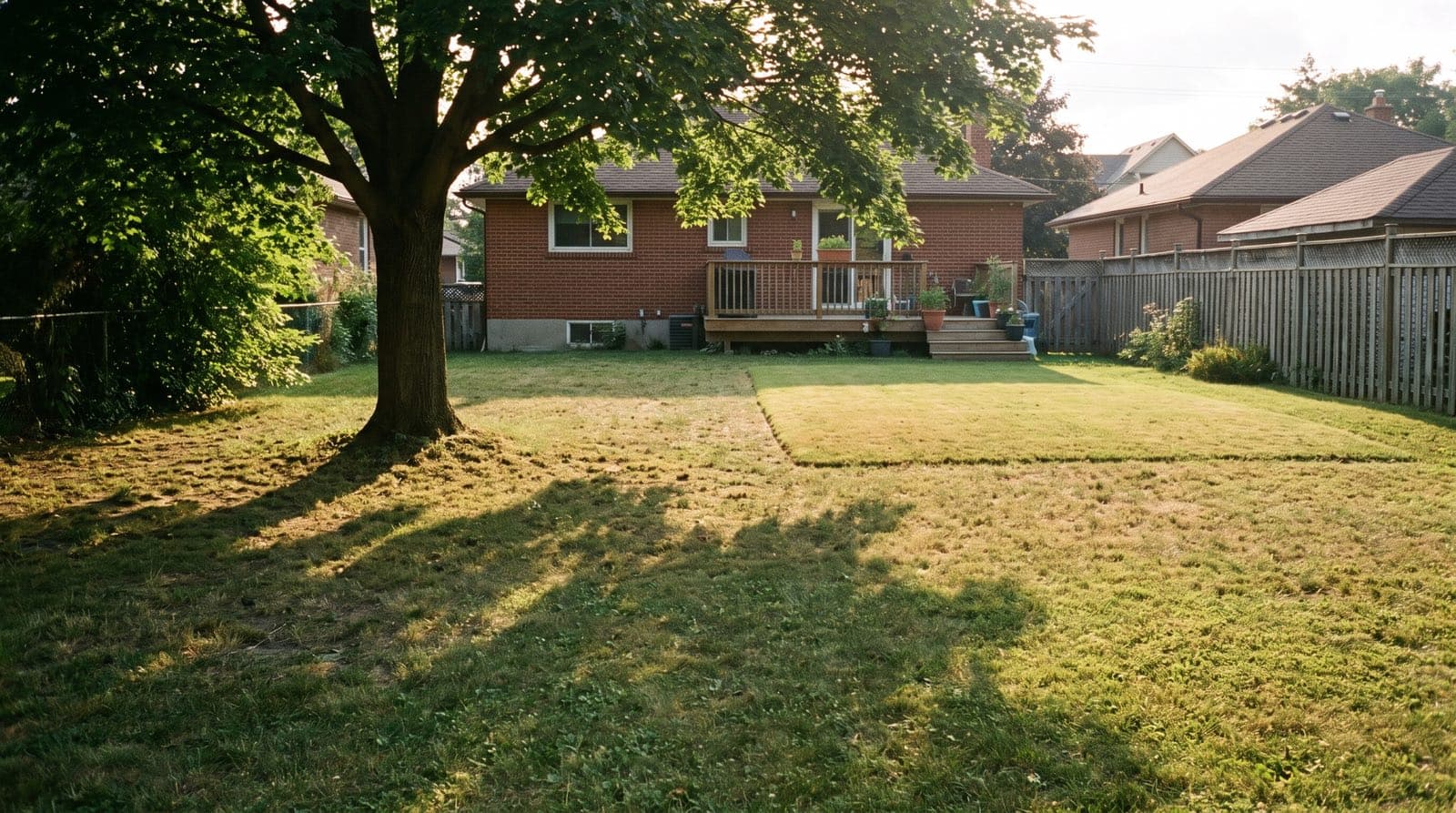
Answer First: Every Toronto lawn is a cool-season grass, so the real decision is which type fits your yard. Kentucky bluegrass suits sunny, moderate-traffic lawns and is what almost all Toronto sod is made of. Fine fescue is the grass for shade under mature trees, perennial ryegrass and turf-type tall fescue handle heavy traffic, and tall fescue is best for clay soil and low water. Most yards need a blend, because sun and shade rarely fall evenly across a lot.
Your neighbour's sunny front lawn looks perfect with the same sod that turned your shaded backyard into a thin, mossy mess. The grass was not the problem; the match was. Picking grass for a Toronto lawn is less about the "best" type and more about reading your own yard honestly, then choosing the type, or the blend, that fits it.
What kind of grass grows in Toronto?
Cool-season grasses, every one of them. Toronto's cold winters and short growing season mean the warm-season grasses of the southern United States cannot survive here, so the choice is always among four cool-season types: Kentucky bluegrass, perennial ryegrass, fine fescue, and tall fescue.
That single fact reframes the whole decision. You are never choosing between warm and cool grass in Toronto; you are choosing which cool-season type, or blend, matches your yard's light, soil, and use. Our companion guide compares the best grass seed species for Ontario in detail; this one is about matching them to a real Toronto lot.
Quotable: There is no warm-season grass decision in Toronto. Every lawn here is a cool-season grass, so the only real question is which type fits your yard's sun, soil, and traffic.
How do you match grass to your yard's conditions?
Read your yard's dominant condition first, then pick the grass built for it. Four conditions cover most Toronto lots.
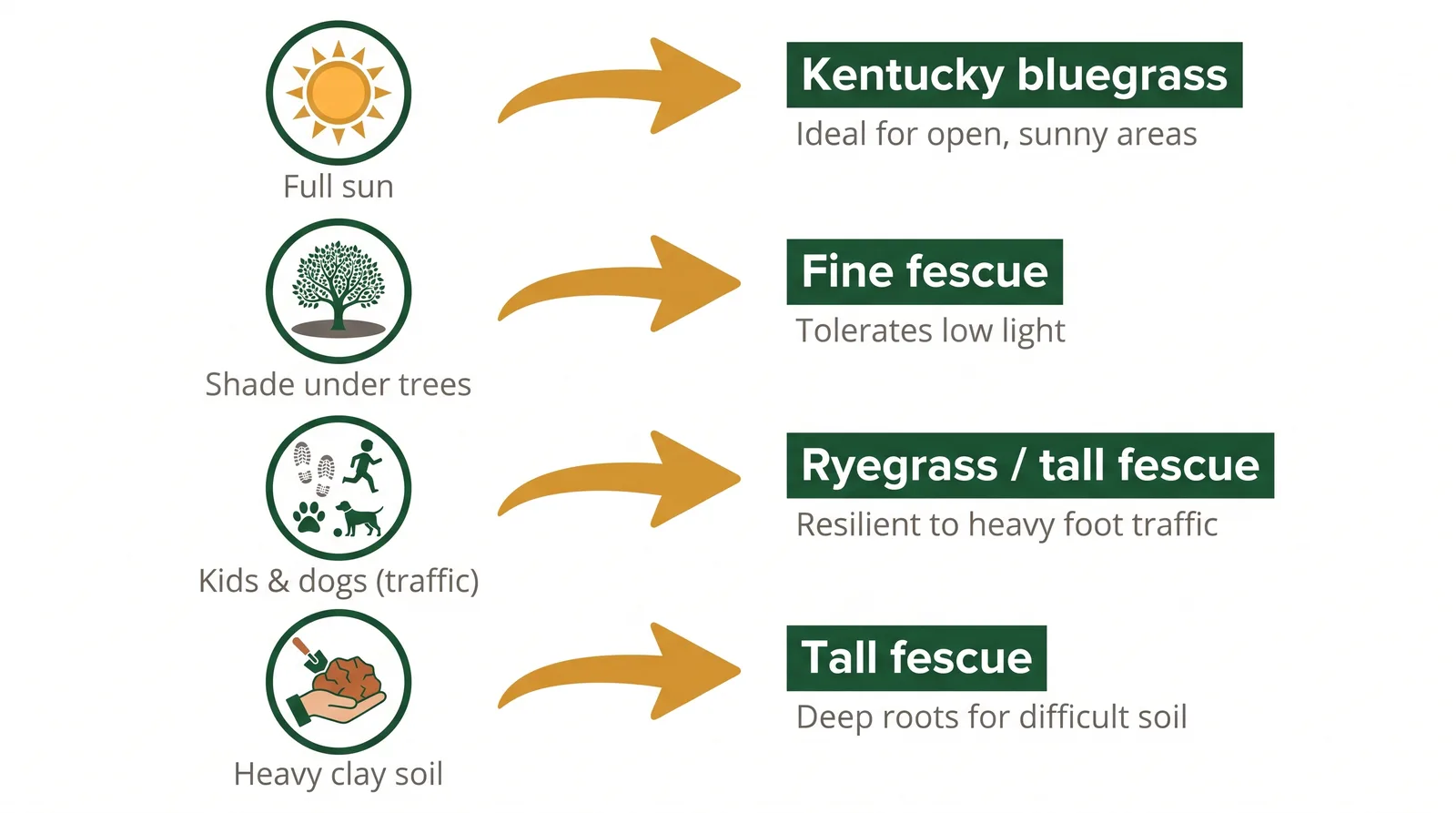
- Full sun: Kentucky bluegrass. Dense, fine-textured, and self-repairing, it is the classic Toronto lawn where the sun reaches all day.
- Shade under trees: fine fescue. The only cool-season grass that holds up in the dry shade beneath mature maples and oaks.
- Heavy traffic (kids, dogs): perennial ryegrass or turf-type tall fescue, ideally blended with bluegrass so the lawn both resists and repairs wear.
- Heavy clay soil: turf-type tall fescue, whose deep roots punch through compacted ground and find moisture that shallow-rooted grasses miss.
Two of these conditions are especially Toronto. The city's older neighbourhoods are full of mature street and yard trees that throw dense, dry shade, and much of the GTA sits on heavy clay that compacts hard. Both realities pull yards away from pure bluegrass and toward the fescues, which is exactly why the sod that works on a sunny new-build lot can fail in an established, tree-lined one.
Quotable: Two Toronto realities, mature-tree shade and heavy clay soil, quietly decide many lawns. Both push the choice away from pure Kentucky bluegrass and toward the tougher, deeper-rooted fescues.
Should you seed it or sod it?
Sod for speed and a sunny front yard; seed for cost, shade, and control. The two methods suit different parts of the same property, and many homeowners use both.
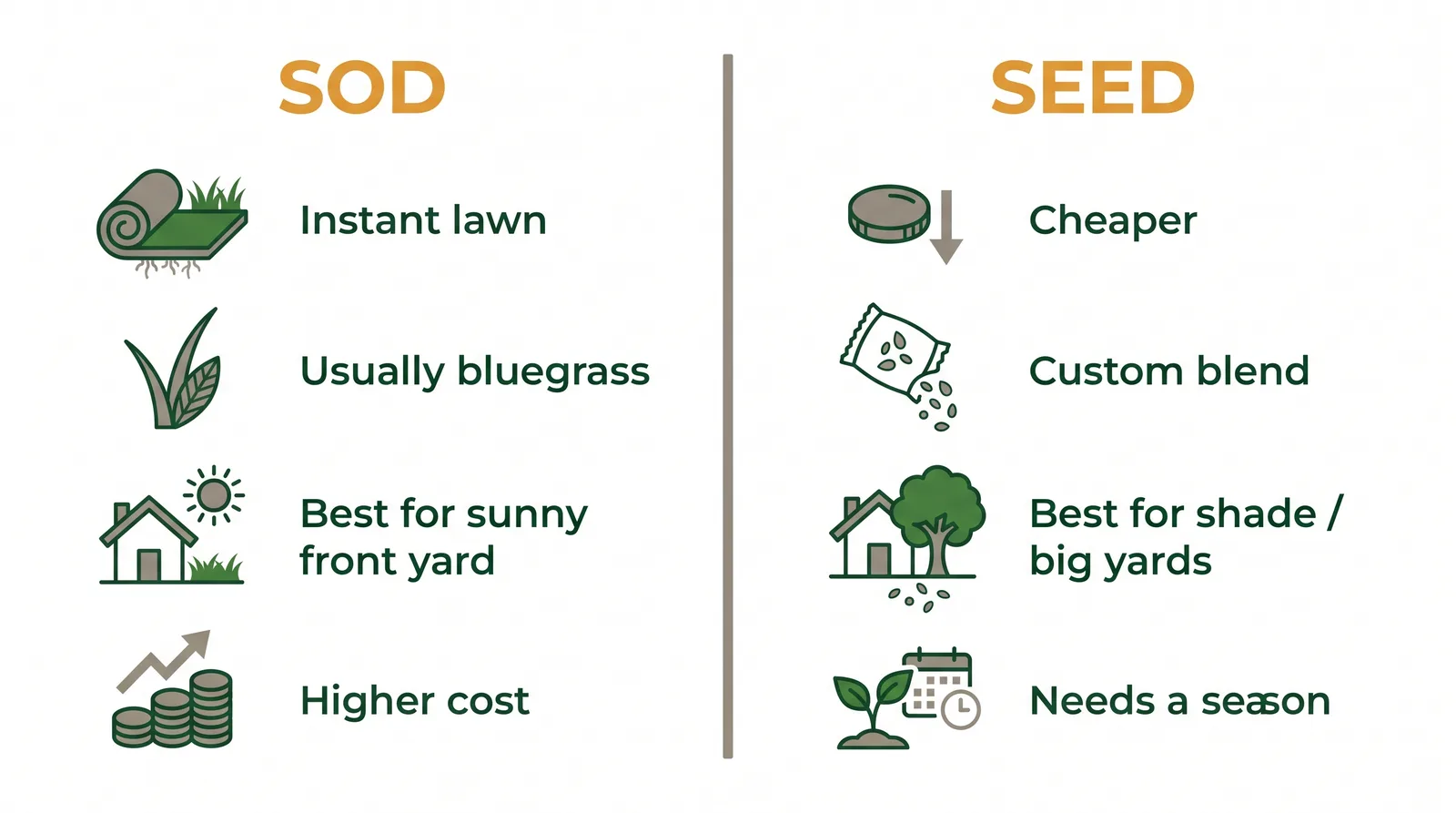
Sod is almost always Kentucky bluegrass, grown on a farm and laid as an instant, uniform lawn. It is the right call for a sunny front yard where appearance and speed matter, and it is usable in two to three weeks. Its limits are cost and its bluegrass-only nature: it struggles in the shade where so many Toronto backyards sit.
Seeding is far cheaper and lets you pick a blend matched to shade, traffic, or low maintenance, but it demands patience and a full season to mature. For a large or shaded backyard, that trade is usually worth it. The honest split for many Toronto lots is to sod the front where it shows and seed the back where a fescue blend will actually thrive. Timing decides success either way: see when to lay sod in Toronto and when to plant grass seed in Ontario.
From the data: YardQuote tracks 249 lawn care companies across the GTA, and 220 carry three or more Google reviews with an average rating of 4.75, with 88% of rated companies holding 4.5 stars or higher (YardQuote tracking, July 2026). The strongest-reviewed pros ask about your yard's shade and soil before recommending sod or a seed blend, which is the tell that they are matching the grass to your lot rather than selling one product to everyone.
If you want help deciding what will actually thrive in your yard, compare local pros and rates on the Toronto lawn care cost page or browse lawn care companies in Scarborough and other areas.
Not sure whether your yard wants sod or a seed blend? Request a quote and compare up to three vetted local lawn care companies side by side. Your contact details only go to the one you pick.