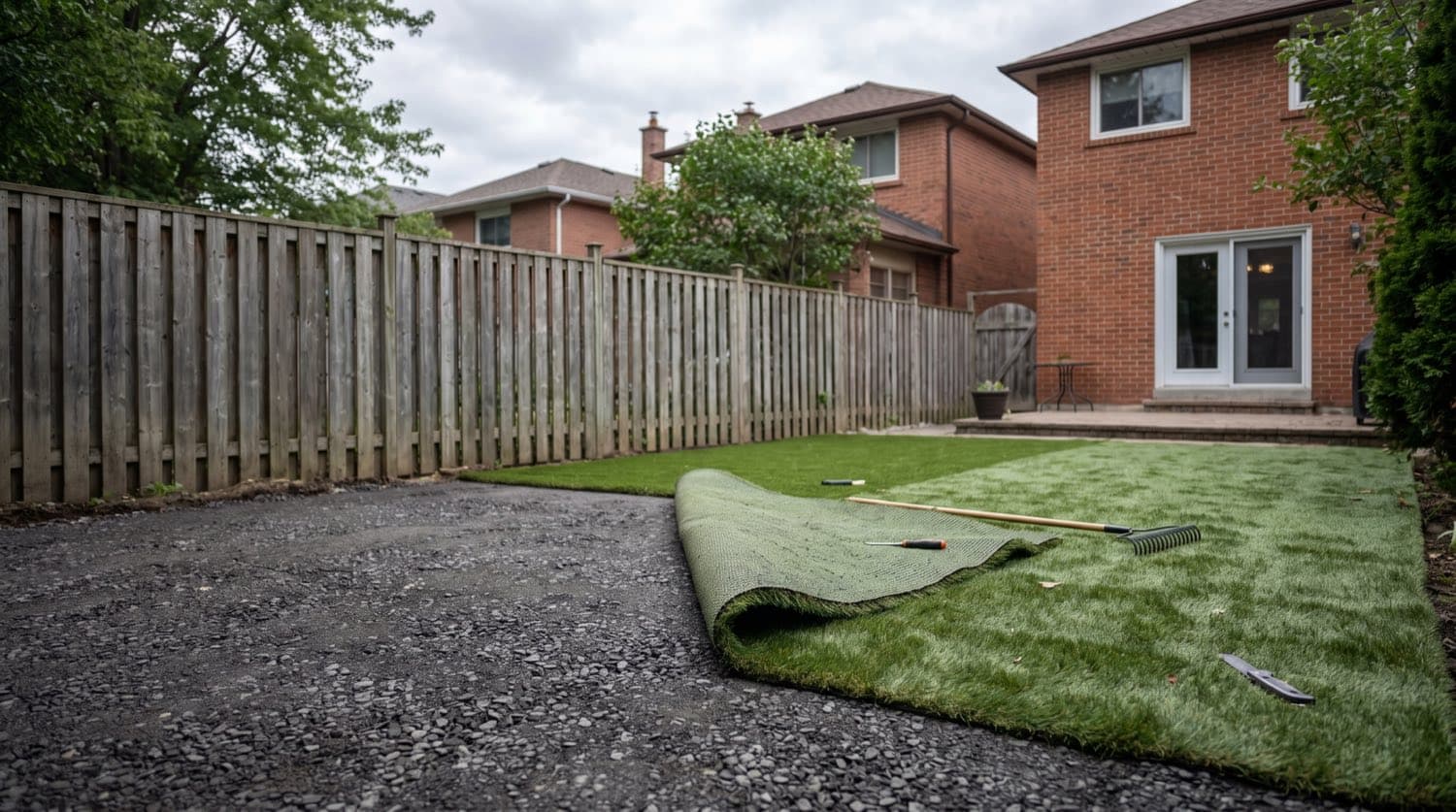
Answer First: You can lay artificial turf over grass, but only for a short-term fix, never for a lawn you want to last. The living grass underneath keeps growing, then dies and decomposes, leaving the surface lumpy, poorly drained, and prone to weeds and pests. The right way removes about 3 to 4 inches of sod and soil and replaces it with a compacted crushed-stone base for drainage and a stable, level surface. In Toronto, turf also cannot count as front-yard soft landscaping, so a proper backyard install is where this belongs.
It is the most-asked artificial turf question, and the honest answer disappoints people who want a weekend shortcut. Rolling turf over your existing lawn works for about a season, then the lawn you buried starts to fight back.
What happens if you lay artificial turf directly over grass?
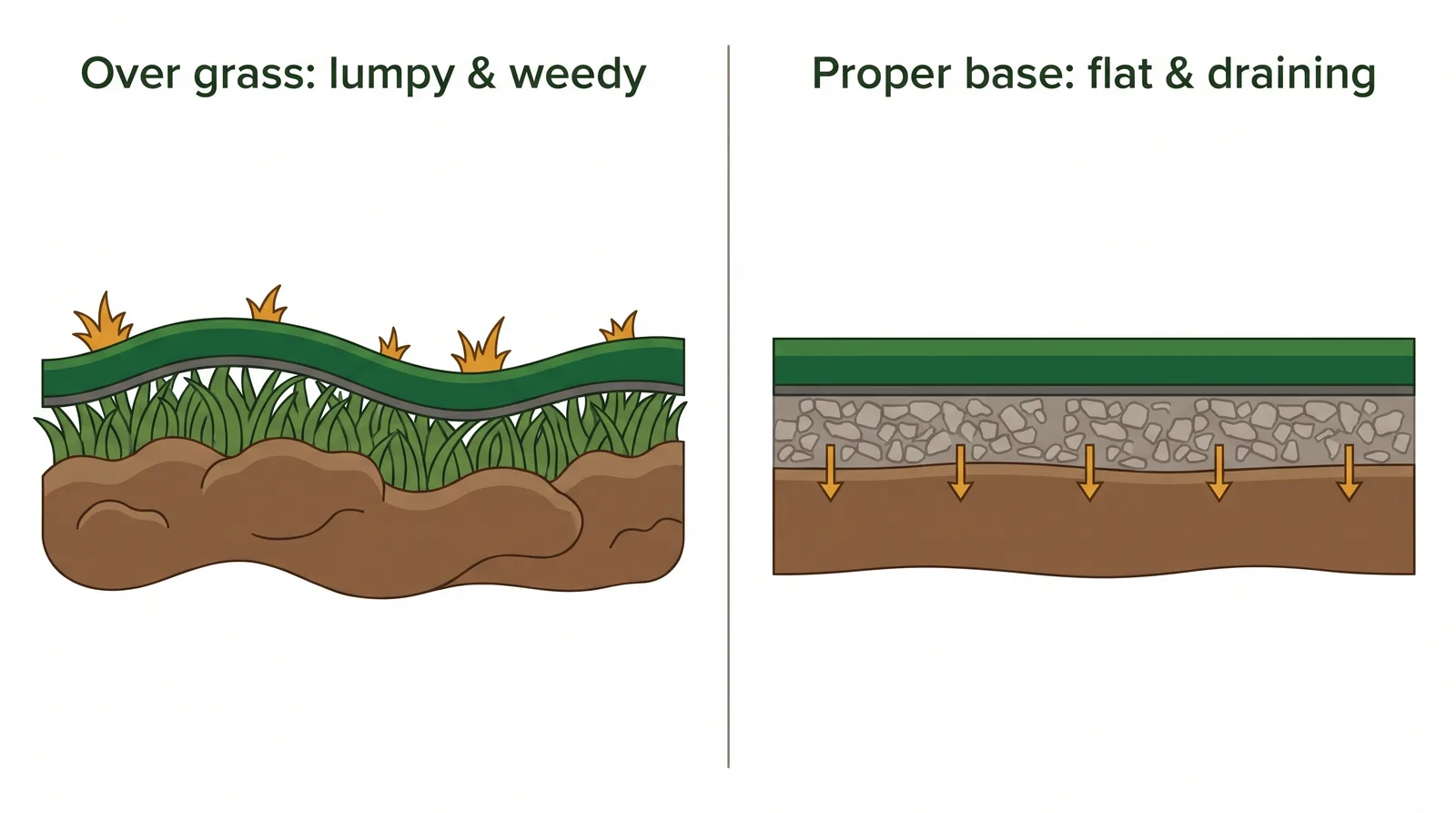
It fails slowly, in four ways. First, the living grass underneath keeps growing for a while, then dies and decomposes unevenly, so the surface develops bumps and hollows you can feel underfoot. Second, drainage suffers: compacted soil under a solid layer of turf does not shed water well, so moisture pools and can start to smell. Third, weeds find the seams and drainage holes and push right through. Fourth, the damp, dark layer becomes a home for insects and pests.
None of this shows up on day one, which is what makes the shortcut tempting. It shows up over the following months, and the fix is to pull the turf up and do it properly, which means you paid for the job twice.
Quotable: Laying artificial turf straight over a lawn works for one season. Then the buried grass decomposes, the surface goes lumpy, water pools, and weeds push through the seams. The shortcut is the reason turf gets redone.
Is it ever okay to lay turf over grass?
Yes, for genuinely temporary situations. If you are renting, staging a home, covering a patchy spot for an event, or just want a quick cosmetic cover you do not expect to keep, laying turf over a very short-mown lawn is a reasonable stopgap. Adding a weed-barrier fabric over the mown grass slows the weeds, and cutting the grass as low as possible reduces the lumps.
The key is honesty about the outcome. A temporary over-grass install will get uneven and weedy over time, and it is not how you would build turf meant to last years. If the goal is a permanent, dog-proof, or high-use lawn, skip the shortcut.
What is the right way to prepare the base?
Strip the grass and build a proper base. The industry-standard sequence, the same one professional installers follow, looks like this (Global Syn-Turf; CCGrass):
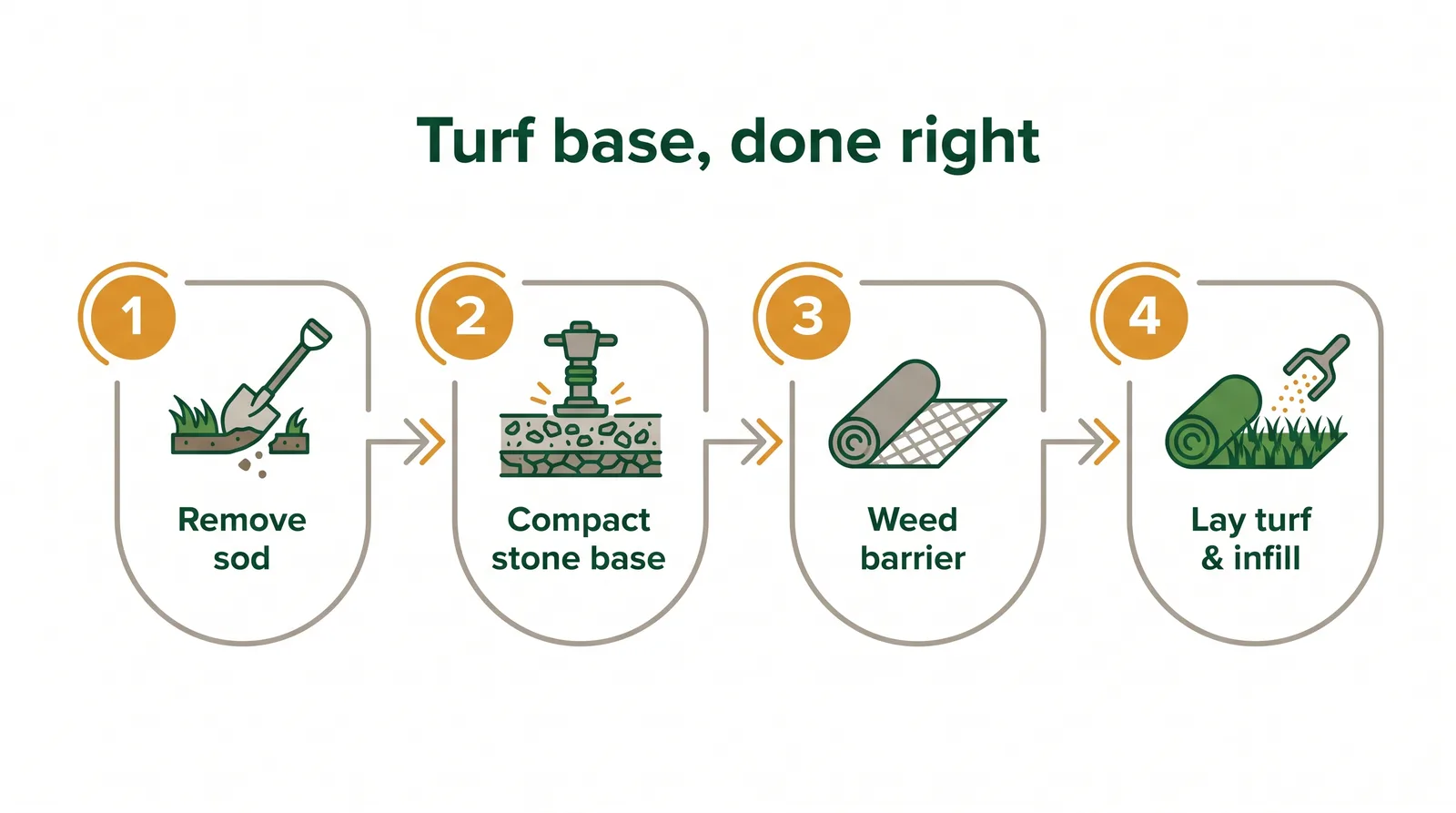
- Remove the sod. Excavate about 3 to 4 inches of existing grass and soil so the finished turf sits flush with the surrounding surfaces.
- Grade for drainage. Slope the area slightly so water runs away from the house.
- Build and compact the base. Lay 3 to 4 inches of crushed angular stone with fines, then compact it, which is what gives a stable, level, free-draining surface that will not settle unevenly.
- Add a weed barrier. Many installers lay weed-barrier fabric over the compacted base, porous enough to drain but strong enough to suppress weeds.
- Lay the turf and infill. Roll out the turf, secure the edges and seams, then brush in the appropriate infill.
That compacted crushed-stone base is the whole difference. It is the same reason a solid base matters under pavers, which we cover in why interlocking sinks: build on soft, uneven ground and the surface follows it.
The Toronto rule to check first
Before you install turf anywhere in the front yard, know that Toronto does not count artificial turf as soft landscaping, because it does not support vegetation or let water infiltrate the ground (City of Toronto). It cannot satisfy the front-yard soft-landscaping requirement, and a non-compliant front install can be ordered removed. That is a big reason a proper turf lawn in Toronto goes in the backyard, where the rule does not apply. Whether turf is even the right call for your climate and use is worth reading first in is artificial grass worth it in Canada's climate, and for pet yards, artificial grass for dogs.
From the data: YardQuote tracks 650 landscaping companies across the GTA, many of which install artificial turf on properly excavated bases (YardQuote tracking, July 2026). If an installer quotes laying turf straight over your existing lawn for a permanent job, treat that as a red flag and get another quote.
Want turf installed on a base that lasts? Request a quote and compare up to three vetted local pros side by side, or browse the landscaping directory for Etobicoke. Your contact details only go to the one you pick.