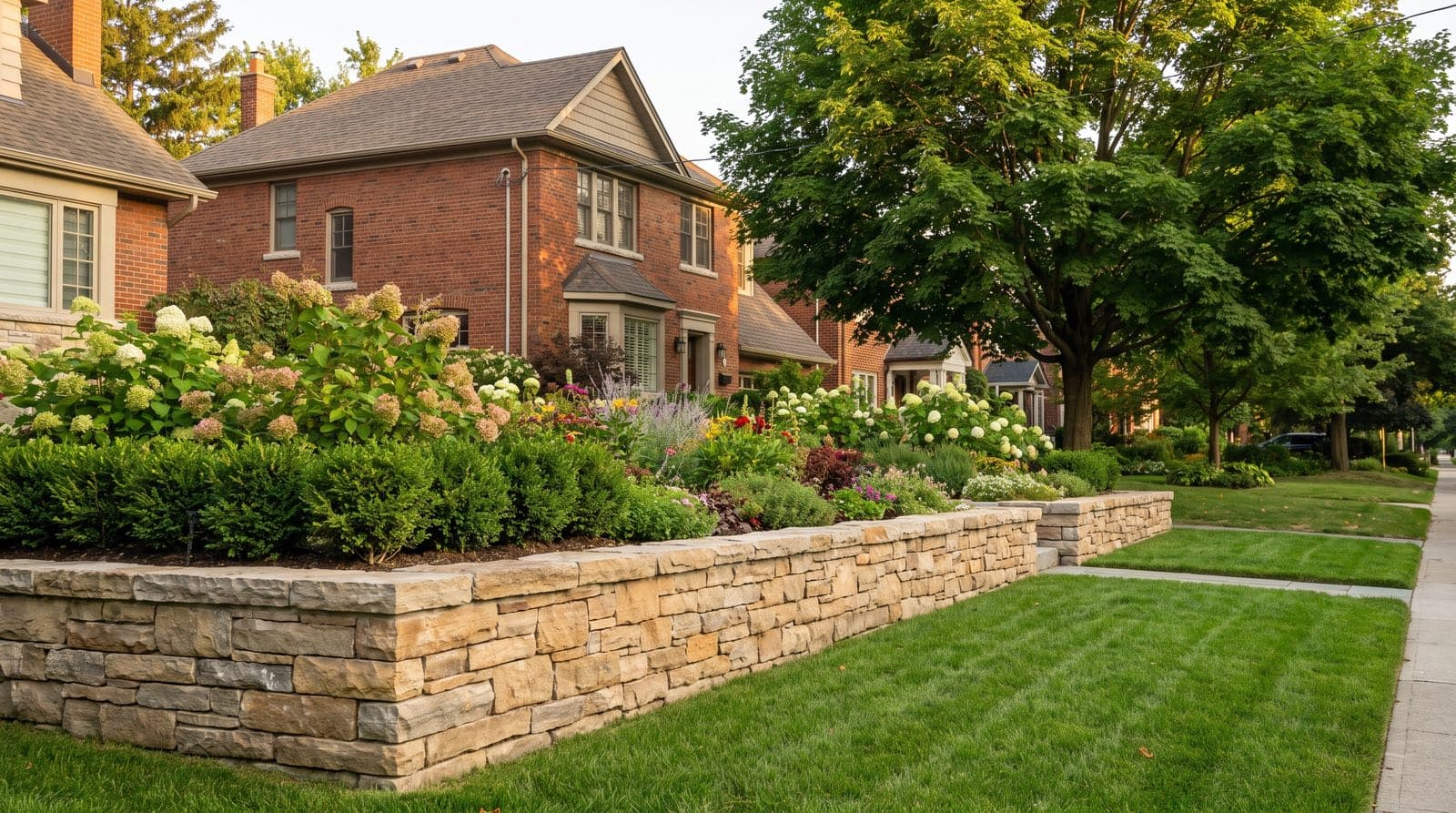
Answer First: Pressure-treated timber is the cheapest retaining wall at $15 to $30 per square foot but lasts only 10 to 20 years; interlocking concrete block is the best all-round value at $25 to $50 per square foot with a 30 to 50-year life and geogrid reinforcement for taller walls; natural stone lasts longest at 50 to 100-plus years but costs $35 to $85 per square foot. For most Toronto walls, block wins on value. Whatever the material, a proper base and drainage decide whether it survives freeze-thaw.
Choosing a retaining wall material feels like a look decision and is really a cost-per-year decision. The cheapest wall to build is rarely the cheapest wall to own, especially in a climate that punishes the wrong choice.
The three materials at a glance
Each material trades cost against lifespan and looks. Here is how they line up in the GTA.
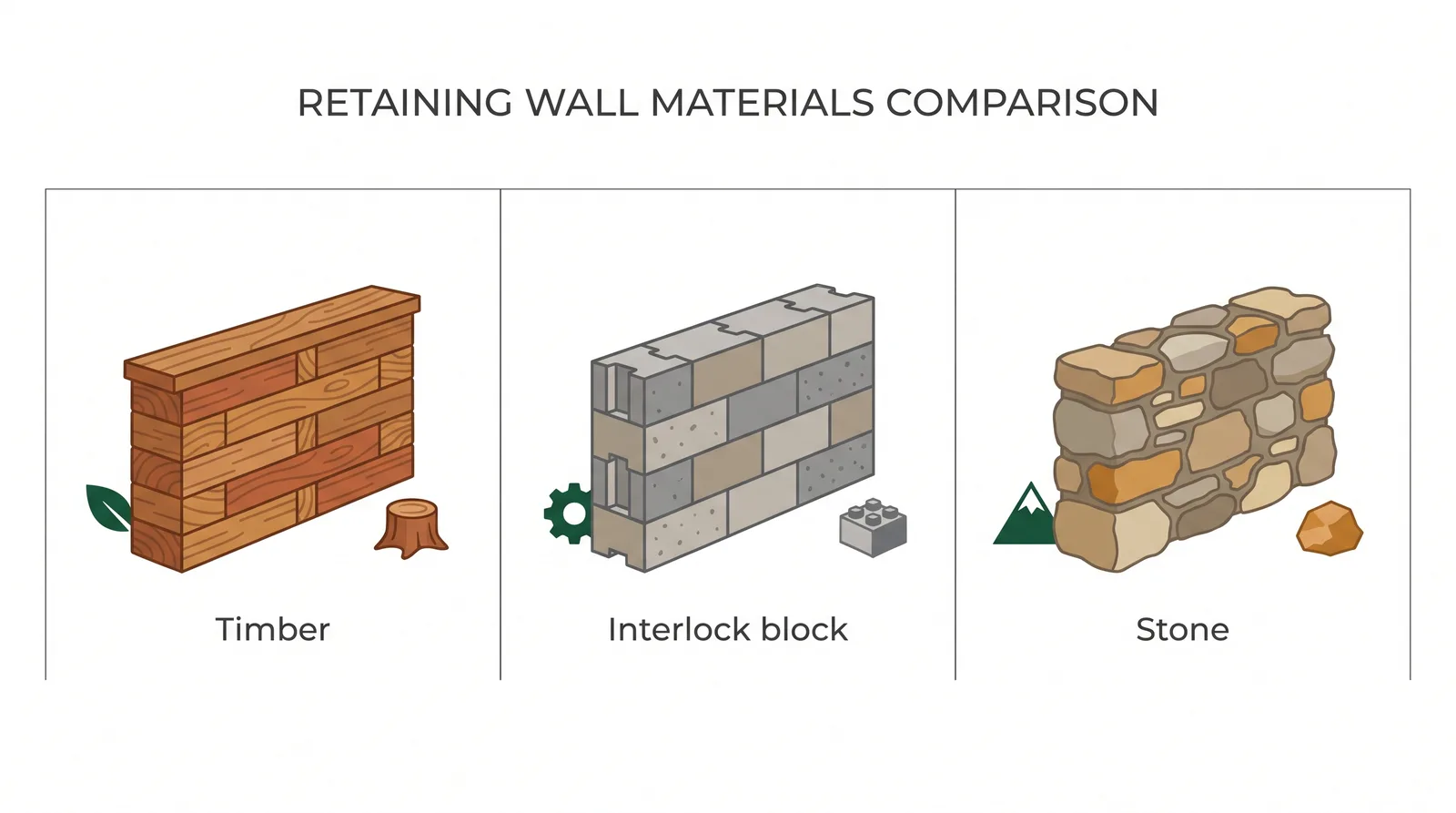
| Material | Installed cost (per sq ft) | Lifespan | Best for |
|---|---|---|---|
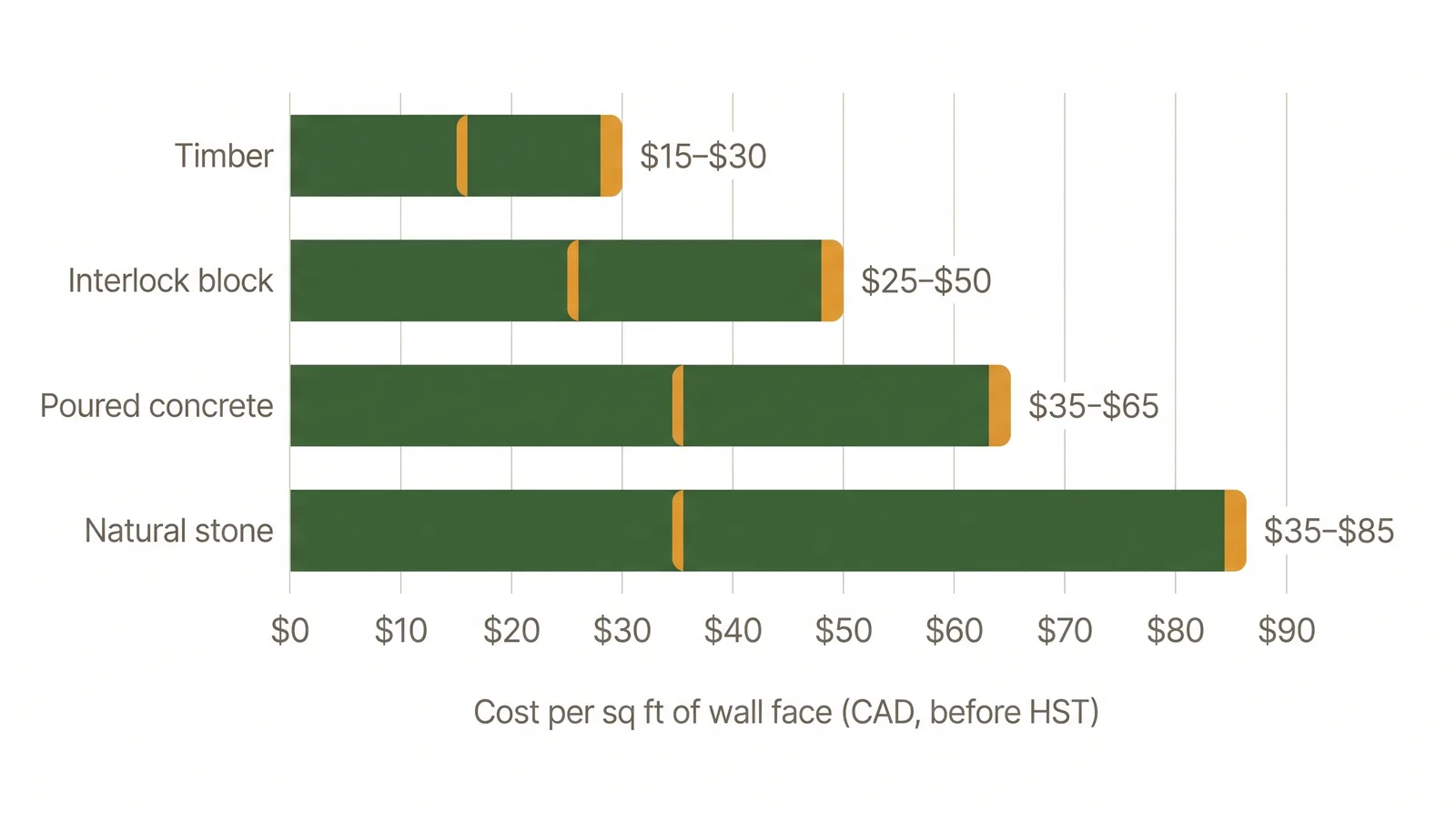
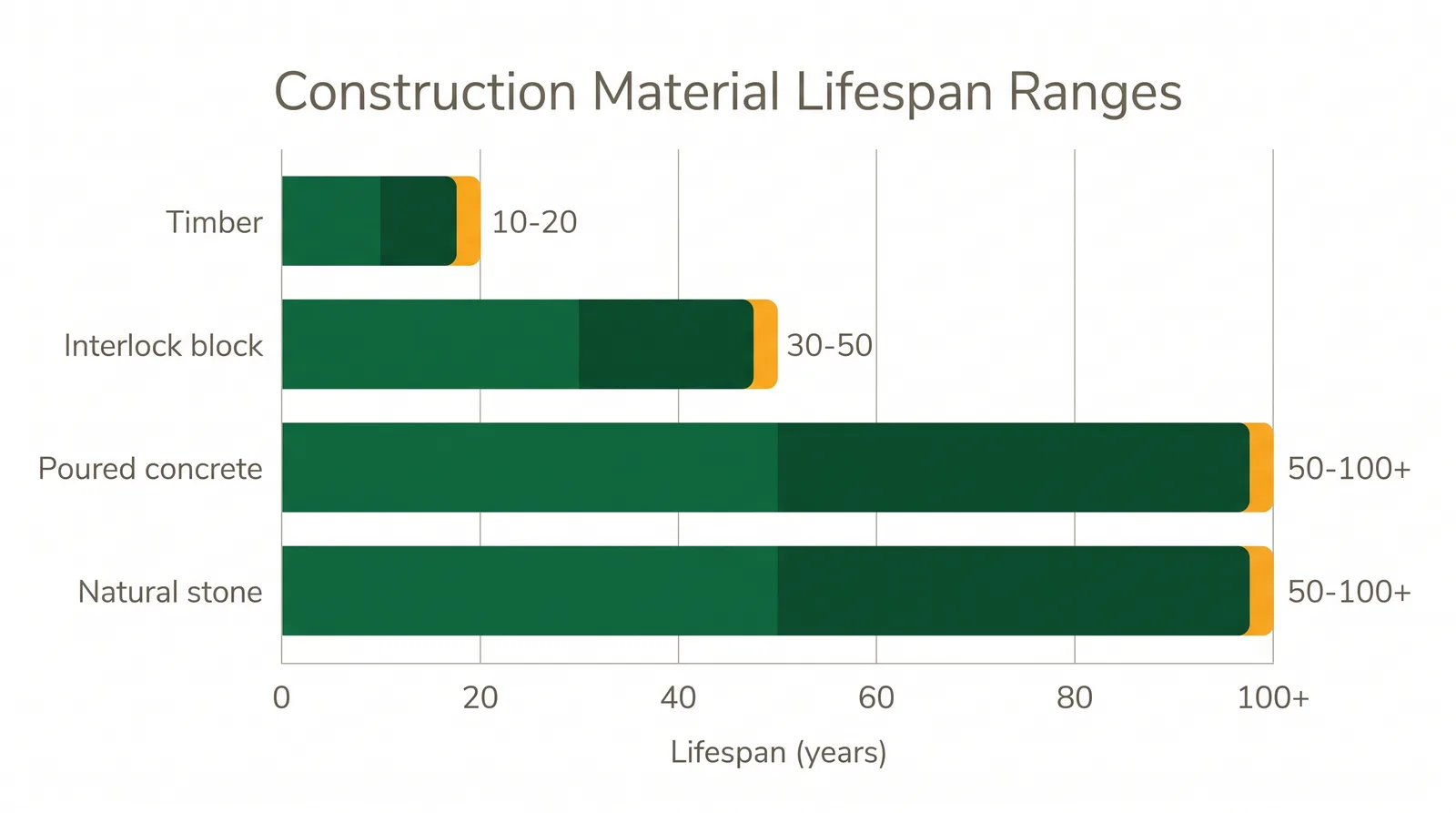
| Pressure-treated timber | $15–$30 | 10–20 years | Short, budget garden walls |
| Interlocking block (SRW) | $25–$50 | 30–50 years | Most walls; best all-round value |
| Poured concrete | $35–$65 | 50–100+ years | Structural, modern look |
| Natural / armour stone | $35–$85 ($40–$120 armour) | 50–100+ years | Premium look, big structural walls |
Source: GTA pricing, 2026 (YardQuote retaining-wall cost data). Landscaping work carries 13% HST.
Pressure-treated wood: cheapest, shortest life
Timber is the budget choice, at $15 to $30 per square foot of wall face, and it gives a warm, rustic look that suits garden beds and terraced planters. For a short garden wall under about 2 feet, it is also the most DIY-friendly option.
The catch is lifespan. Wood lasts 10 to 20 years before rot forces replacement, and Toronto's clay soil, which holds moisture against the wall, is exactly the condition that rots it fastest. Road salt does not help. Timber makes sense when the wall is short, the budget is tight, and you accept replacing it in fifteen years, not when you want a wall you build once.
Quotable: Pressure-treated timber is the cheapest retaining wall at $15 to $30 per square foot, but it lasts only 10 to 20 years in Toronto's clay before rot, versus 30 to 50 for block and 50-plus for stone. Cheapest to build, most expensive per year.
Interlocking block: the best all-round value
Interlocking concrete block, also called segmental retaining wall or SRW, is the middle option on price at $25 to $50 per square foot and the winner on value for most Toronto walls. It lasts 30 to 50 years, comes in consistent engineered units that install predictably, and, crucially, it can be reinforced with geogrid tied back into the soil for taller or load-bearing walls.
That reinforcement is what makes block the default. A timber wall cannot be engineered up in height the way a geogrid-reinforced block wall can, and block costs far less than stone for a comparable structural result. For the typical GTA backyard grade change, block is the sensible middle.
Natural and armour stone: longest life, highest cost
Stone is the premium end: $35 to $85 per square foot for natural stone, and $40 to $120 for armour stone, with a 50 to 100-plus year lifespan. It gives the highest-end natural look and is the standard for large structural and shoreline walls, where armour stone's mass does the work.
The cost is not just the stone. It is heavy, so tight Toronto lots often need craning or hand-carrying, and armour stone transport alone can add 25 to 40% on top of the material price. Stone is the right call when you want maximum lifespan, a natural look, or a genuinely structural wall, and the budget supports it.
From the data: YardQuote tracks 61 retaining-wall contractors across the GTA (July 2026), 58 with three or more reviews at an average of 4.81 stars. Ask any of them for the base and drainage spec alongside the material, because the same stone wall built on a poor base fails as fast as timber.
Which should I choose?
Match the material to the wall's job and how long you want it to last.
- Choose timber for a short garden or planter wall on a tight budget, accepting a 10 to 20-year life.
- Choose interlocking block for most walls: the best balance of cost, 30 to 50-year lifespan, and the ability to reinforce taller walls with geogrid.
- Choose stone for a premium look, maximum lifespan, or a large structural or shoreline wall.
Whatever you pick, the base and drainage decide whether it reaches its lifespan, which is why so many walls fail early, covered in retaining wall repair. If your wall is on a grade, it also has to be built into the slope correctly, and anything over 1 metre triggers the permit and engineering rules in Toronto retaining wall standards.
You can see full pricing on the Toronto retaining wall cost page or compare vetted builders near you, such as retaining walls in North York or Etobicoke.
Want to know what your wall should cost in each material? Request a quote and compare up to three vetted local builders side by side, on the same height and drainage spec. Your contact details only go to the one you pick.