Answer First: To winterize a Toronto yard before the first snow, cut the final mow short to about 2 to 2.5 inches and clear the leaves to prevent spring snow mould, put down a fall winterizer feed and one last deep watering before the ground freezes, then winterize the water side by draining hoses and blowing out or shutting off irrigation so pipes do not burst (University of Minnesota Extension; City of Toronto). Finish by booking a snow contractor before the mid-October rush. Done in that order, it is an afternoon of work that saves a rough spring.
The first snow always arrives before people feel ready. A short list of jobs, done in the mild weeks of late fall, is the difference between a lawn that greens up cleanly in April and one that comes out of winter matted, mouldy and half-dead.
The before-first-snow checklist
Five zones, in the order you should tackle them. Everything here is doable in an afternoon or two of good fall weather.
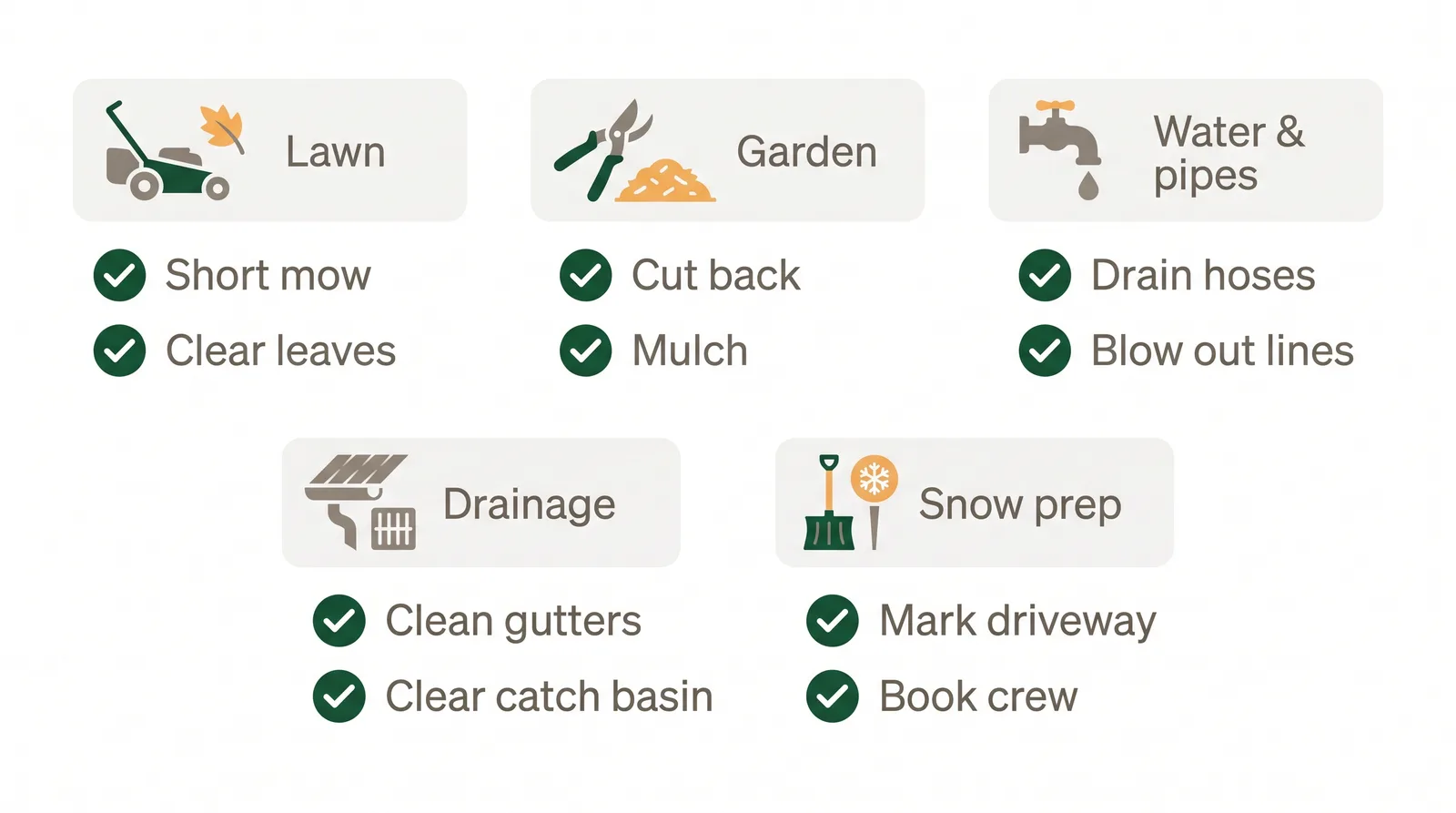
- Lawn: final short mow, clear the leaves, apply a fall winterizer feed, and give one last deep watering before the ground freezes.
- Garden beds: cut back spent perennials, mulch the beds, and wrap or shelter young or tender trees and shrubs.
- Water and pipes: drain and store hoses, and blow out or shut off irrigation and outdoor taps.
- Drainage: clean the gutters and clear the catch basin near your home so a thaw drains instead of flooding.
- Snow prep: mark driveway edges for the plow, stock salt or sand, service the snowblower, and book a snow contractor.
Why the last mow should be short
Because a tall lawn under snow is a mould problem waiting to happen. Lower the mowing height gradually over the last few cuts to about 2 to 2.5 inches, and not below 2 inches. A shorter final cut reduces the risk of snow mould in spring, makes it easier to collect leaves, and gives burrowing rodents like voles less cover to tunnel under the snow (University of Minnesota Extension).
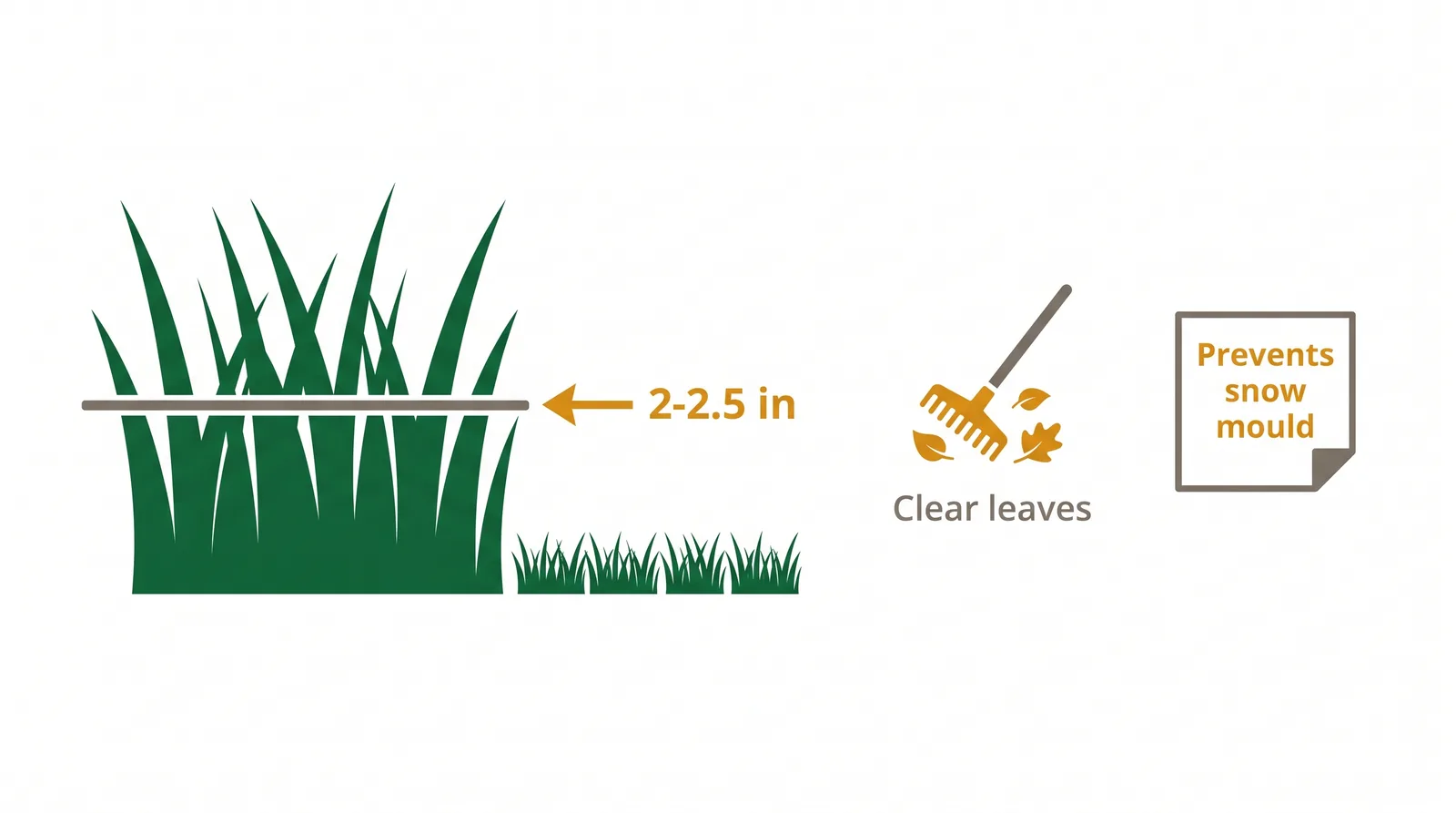
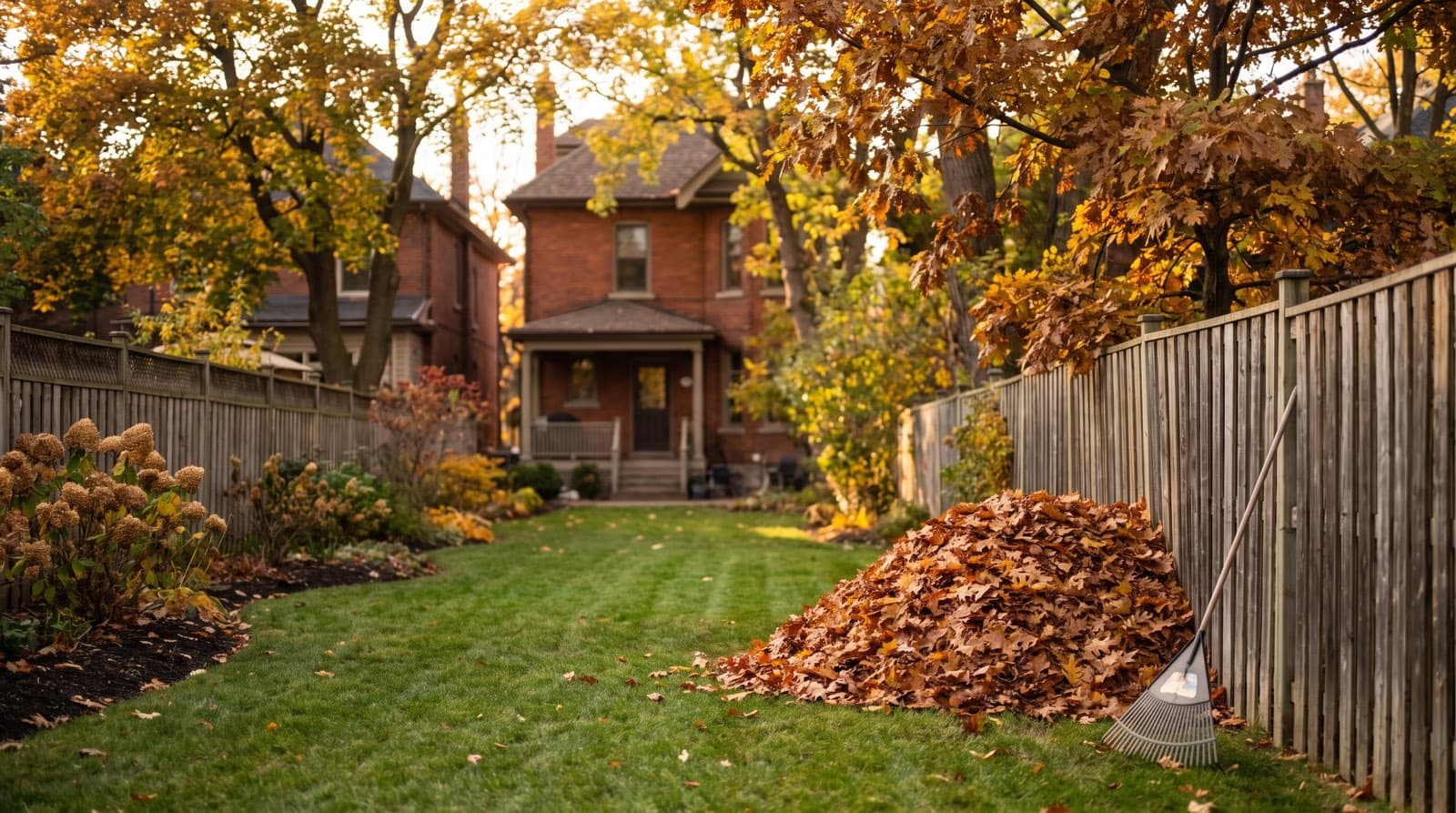
Pair it with clearing the leaves. A heavy mat of fallen leaves left on the lawn traps moisture and blocks light all winter, smothering the grass. Rake them off, or mulch-mow a light scattering back in, but do not let a thick layer sit on the grass under the snow.
Quotable: Cut the last mow of the year to about 2 to 2.5 inches and clear the leaves. Long grass and a wet leaf mat under snow are the two things that breed spring snow mould on a Toronto lawn.
Do not skip the water lines
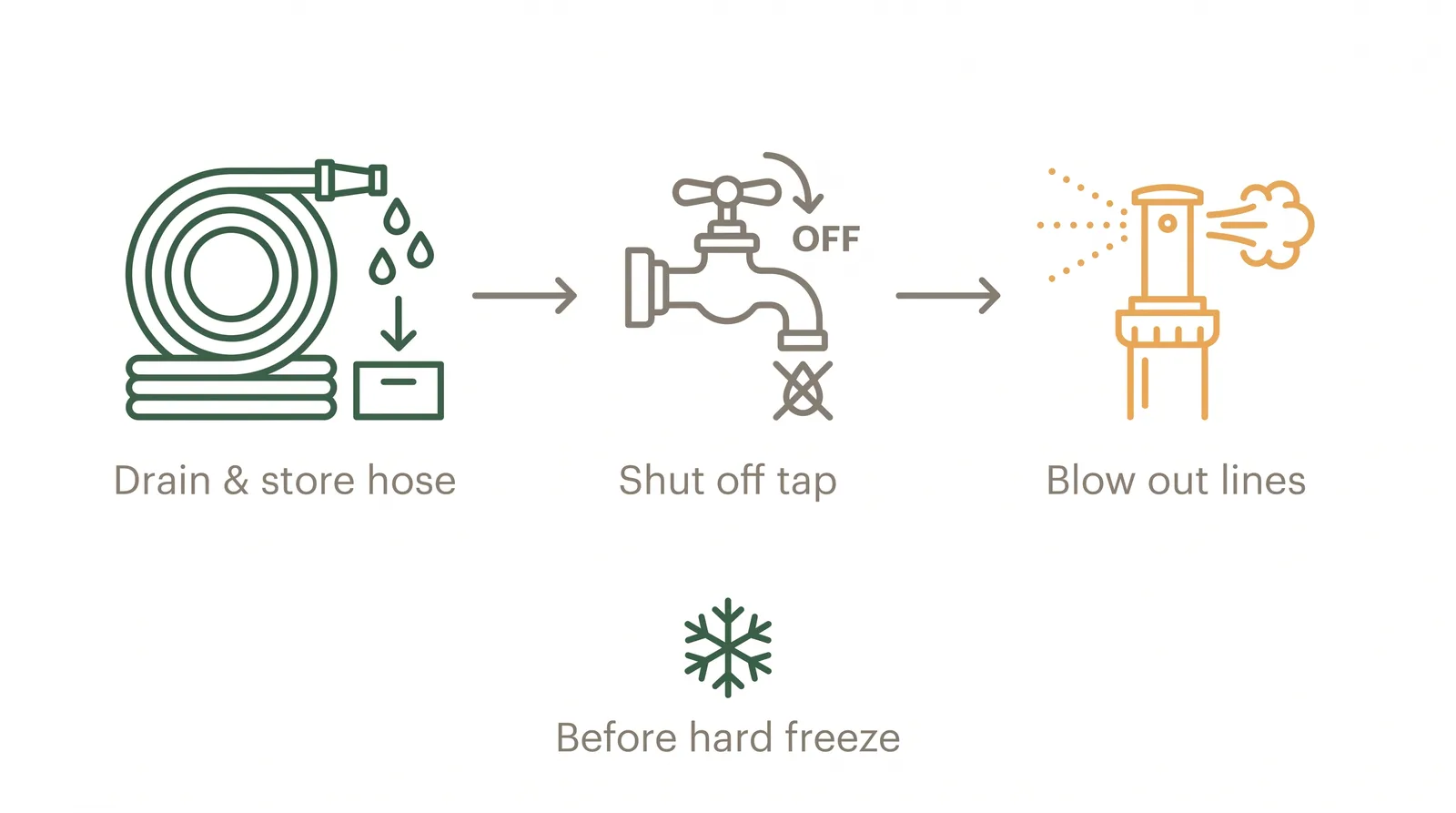
This is the step that turns into a repair bill. Water left in a hose, tap or irrigation line freezes, expands, and splits the pipe, and you do not find out until spring. Drain and loosely coil hoses for storage, shut off and drain outdoor taps, and blow out or winterize any in-ground irrigation before the first hard freeze.
While you are thinking about water, feed and water the lawn one last time. A fall winterizer fertilizer helps the lawn store energy for a faster spring green-up, and a final deep watering before the soil freezes lets the grass and perennial crowns rehydrate for winter (City of Toronto). If the lawn also needs aeration or overseeding, that is an early-fall job done well before this stage, covered in when to aerate your lawn in Toronto.
From the data: YardQuote tracks 249 lawn-care companies across the GTA (July 2026), 220 with three or more reviews at an average of 4.75 stars. Many offer a fall cleanup-and-winterize visit, which is worth booking alongside a snow contract so the same handoff covers the last mow and the first plow.
Book the snow crew before the first flake
Winterizing the yard includes lining up who clears it. Book a snow removal contractor in September or early October, because early-bird contract windows generally close in mid-October and mid-season signups pay rush premiums for whatever capacity is left. It locks in the price and your spot on the route.
Whether a seasonal contract or per-visit billing is cheaper for your winter is worked out in seasonal versus per-visit snow removal pricing, and once the snow falls, where you can legally pile it matters too. You can compare vetted crews on the Toronto snow removal cost page, see lawn-care options on the lawn care cost page, or browse pros in your area, such as lawn care in North York.
Want the fall cleanup and the winter snow handled by vetted local pros? Request a quote and compare up to three side by side. Your contact details only go to the one you pick.