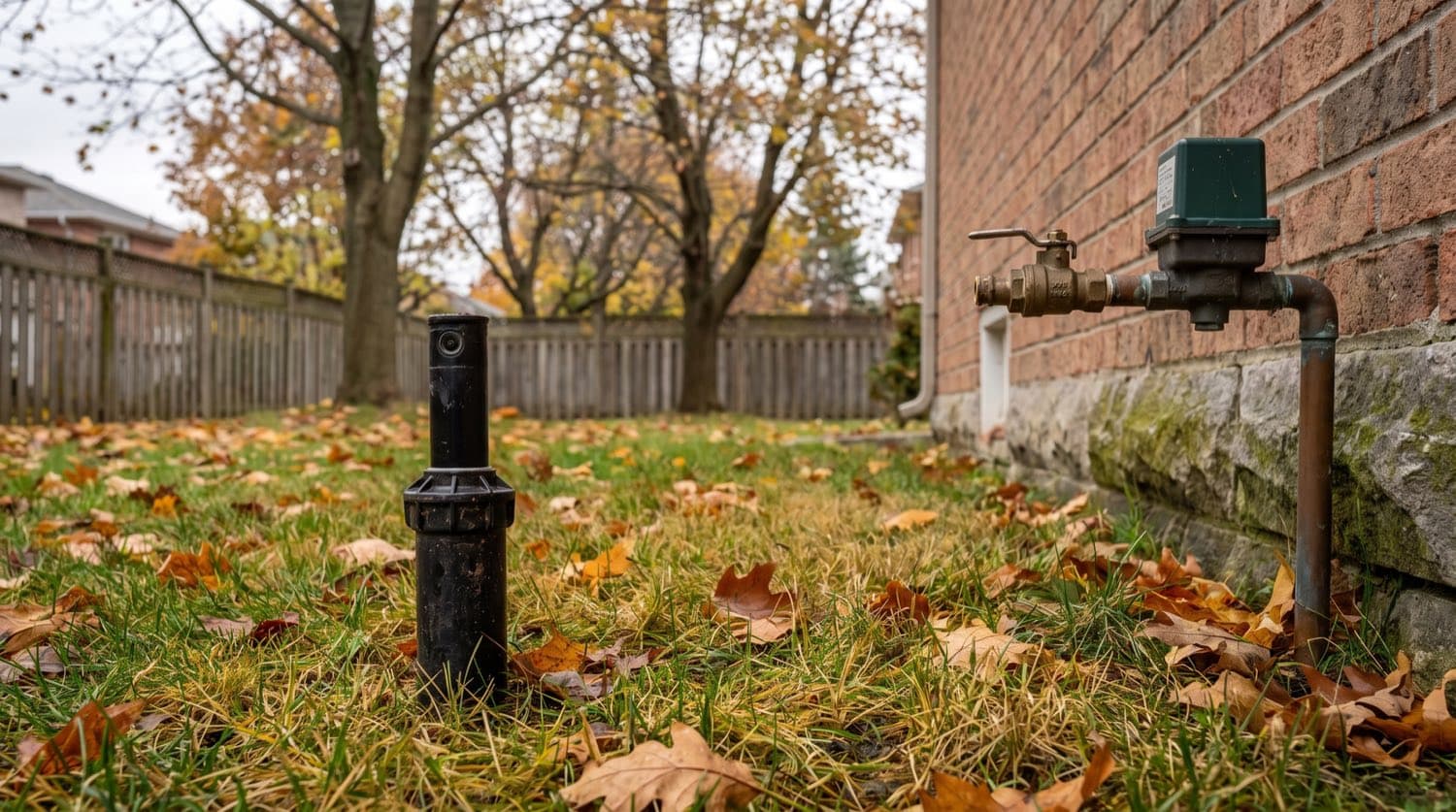
Answer First: Winterize an Ontario sprinkler system by blowing it out with compressed air before the first hard freeze, which usually means late September into October. Shut off the water supply, then push air through one zone at a time to clear every line, keeping the pressure under 50 PSI so you do not crack the pipe or heads. Any water left in the lines, valves, or backflow preventer can freeze, expand, and split the components over winter.
An in-ground irrigation system that is not drained before a Toronto winter is a repair bill waiting to happen. Water expands about 9% when it freezes, and there is nowhere for that expansion to go inside a sealed pipe or a brass valve body. The fix is simple and seasonal: get the water out before the cold gets in.
When should you winterize your sprinkler system in Ontario?
Before the first hard freeze, which across most of Ontario lands in late September into October. You want to clear the lines while the days are still mild but before any overnight freeze can reach the shallow pipes and heads.
Do not wait for the ground to actually freeze. Irrigation lines and pop-up heads sit only a few inches down, so they freeze well before the deep soil does. Booking or doing the blow-out in October gives you a safe margin. In a cold year, move it up; in a mild one, you still should not push past early November.
Quotable: In Ontario, winterize irrigation before the first hard freeze, usually October. Sprinkler lines and heads sit only a few inches deep, so they freeze long before the ground fully does.
What does winterizing a sprinkler system actually involve?
It means removing every bit of water from the system so nothing can freeze inside it. The standard method is the air blow-out.
Blow-out method — shutting off the water supply and then pushing compressed air through the irrigation lines, one zone at a time, to force out the water that gravity cannot drain on its own.
The reason draining alone is not enough for most Ontario systems is geometry. Residential irrigation lines dip and rise across a yard, trapping water in low spots, valve bodies, and the heads themselves. Gravity leaves that water behind, and that leftover water is precisely what freezes and cracks the parts.
How do you blow out a sprinkler system, step by step?
The sequence matters. Done in the wrong order, you can pressurize a closed valve or leave the backflow preventer full.
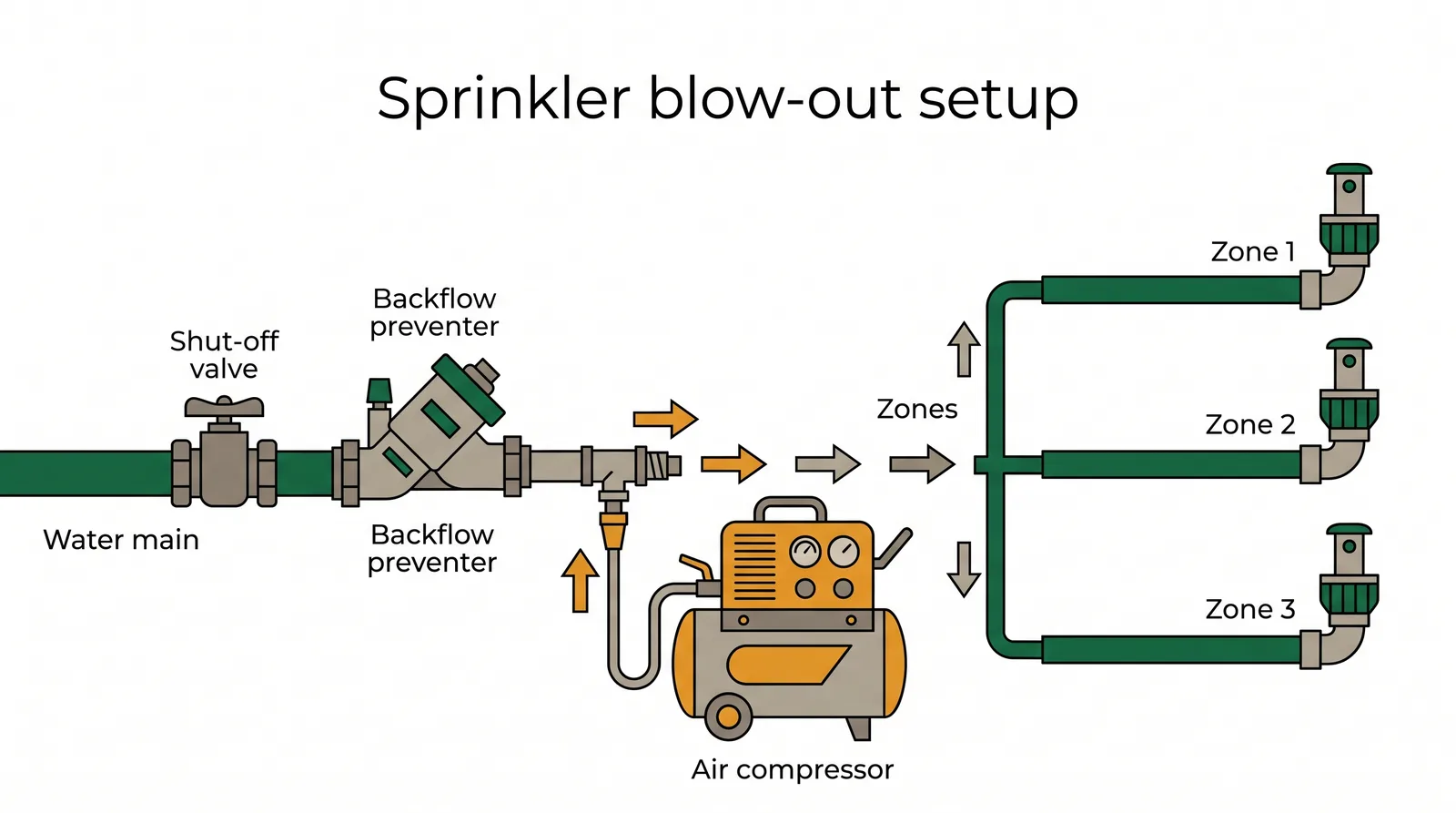
- Shut off the water supply to the irrigation system at the main isolation valve, and if your controller has a rain or off mode, use it.
- Set the controller to run one zone. You blow out zones individually so all the air volume goes to one set of heads at a time.
- Connect the air compressor downstream of the backflow preventer, at the designated blow-out port, never through the backflow device itself.
- Open a zone, then introduce air slowly, keeping pressure under 50 PSI. Run each zone until the heads spit mostly mist and then air, not a steady stream of water.
- Move through every zone, usually starting with the one farthest from the compressor, and repeat a second short pass if any zone still pushes water.
- Drain and protect the backflow preventer: open its test cocks to 45 degrees so any trapped water can escape through the winter.
What air pressure is safe for a blow-out?
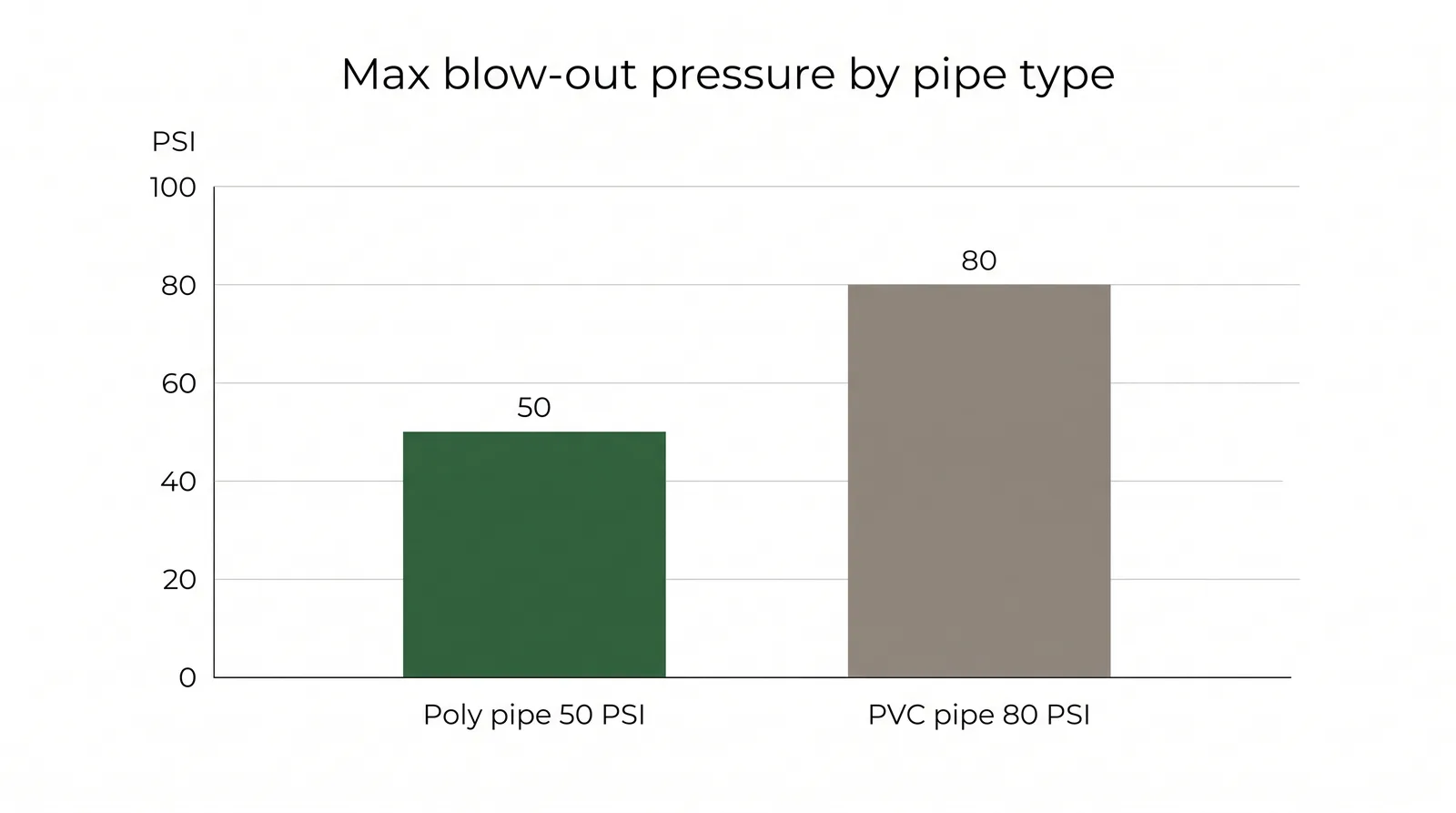
Keep it under 50 PSI, and lean on air volume instead of pressure. Black polyethylene pipe, the flexible pipe common in residential Ontario systems, tolerates only about 50 PSI, while rigid PVC handles up to roughly 80 PSI (Rain Bird). If you are not certain which you have, treat 50 PSI as your ceiling.
What actually clears the water is air volume, measured in cubic feet per minute (CFM), not raw pressure. A compressor in the 50 to 100 CFM range at low pressure clears lines far better, and far more safely, than a small high-pressure shop compressor. Over-pressurizing does not clear water faster; it cracks fittings and blows apart pop-up heads.
Quotable: Air volume clears the lines, not pressure. Keep a sprinkler blow-out under 50 PSI on residential poly pipe; more pressure does not remove water faster, it just breaks fittings and heads.
Should you blow it out yourself or hire a pro?
The method is straightforward, but the blow-out is the one irrigation task where the safety warning is not boilerplate. Compressed air in a sealed system can launch a pop-up head or debris with real force, so ANSI-approved eye protection is mandatory and you never stand over a head or valve while air is running (Hunter Industries). If you do not own a compressor with enough CFM, renting a proper unit beats forcing a small one at high pressure.
Many homeowners hand this off along with the rest of their fall shutdown, since the same visit can cover the final fall lawn watering and cutoff and the last mow. You can compare vetted crews on the lawn-care directory for Etobicoke, browse all services on the costs hub, or request a quote. If trees are also on your fall list, our guide to when to prune trees in Ontario covers the timing that keeps them healthy.
Want a pro to winterize your irrigation and close out the yard for the season? Request a quote and compare up to three vetted local crews side by side. Your contact details only go to the one you pick.