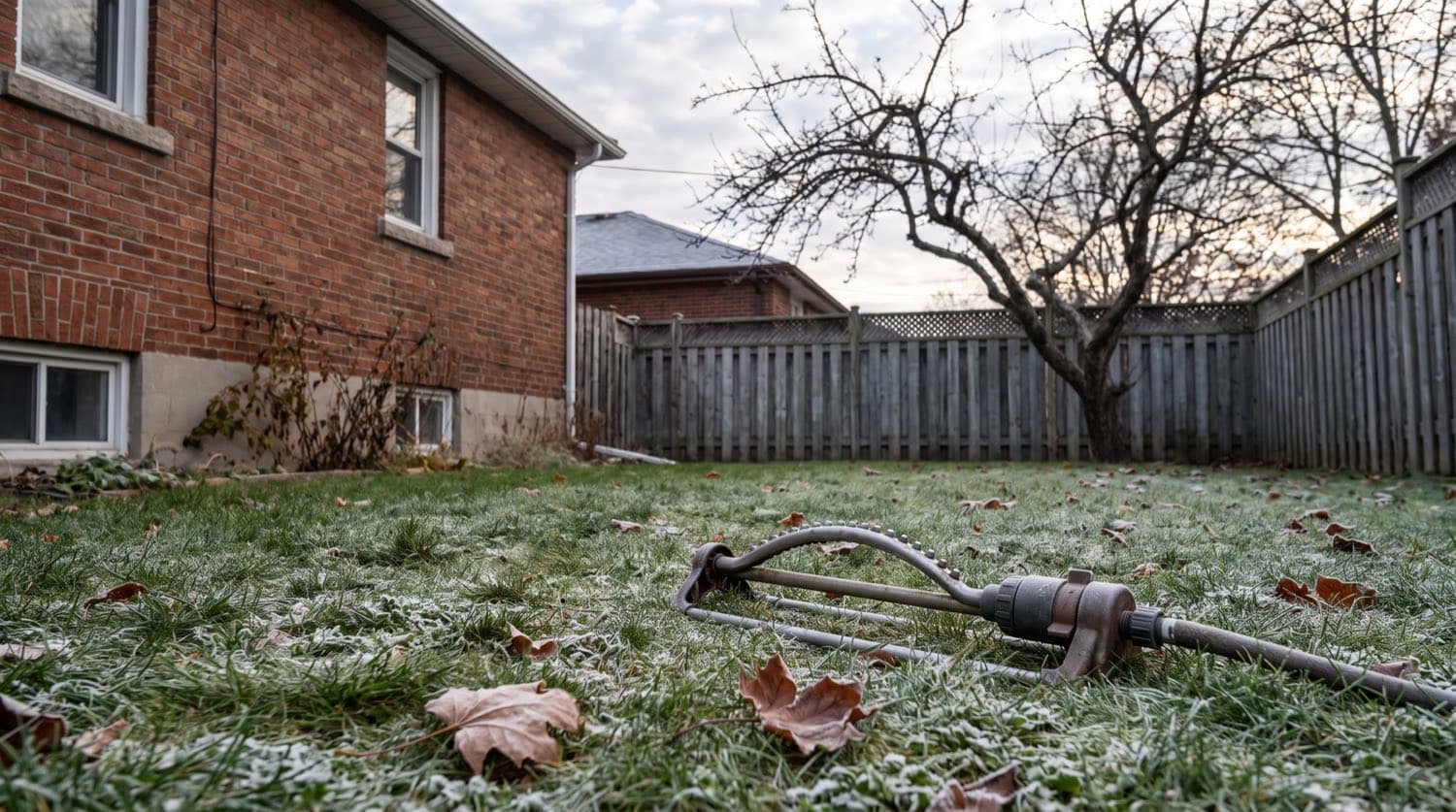
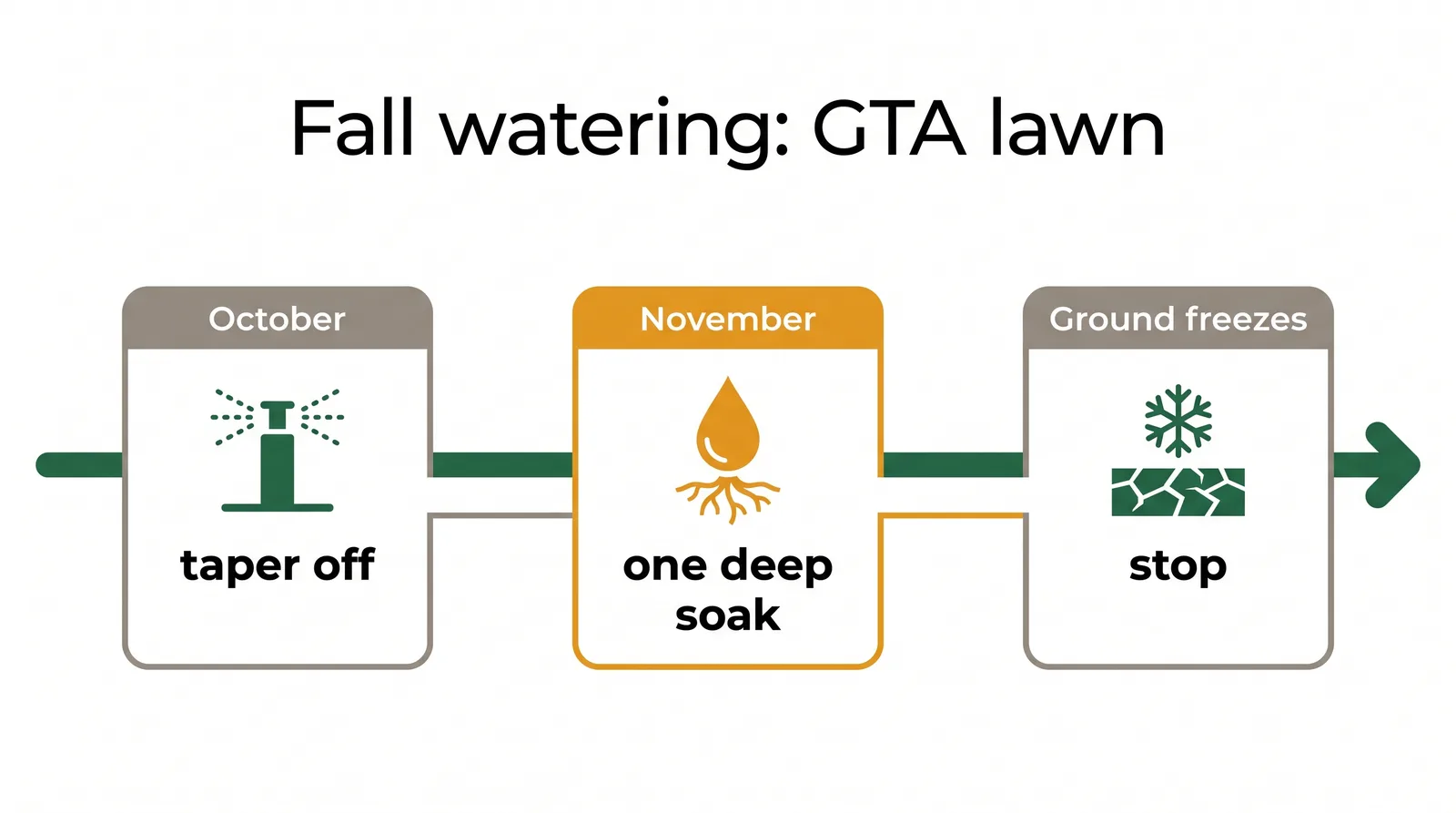
Answer First: Stop watering your Toronto lawn once overnight temperatures consistently sit near freezing and the ground starts to harden, which in the GTA usually happens in late November. Do not quit abruptly: taper watering through October, then give one deep final soak before the ground freezes. Cool-season grass keeps sipping water through fall, but once the ground is frozen the water simply cannot get in.
Fall watering is where a lot of Toronto homeowners either overdo it or stop too soon. The grass looks like it is going dormant, so people shut the hose off in September. Then a dry, windy November leaves the crowns parched heading into winter. The trick is knowing the actual signal to stop, and it is not the calendar.
When should you stop watering your lawn in fall in Toronto?
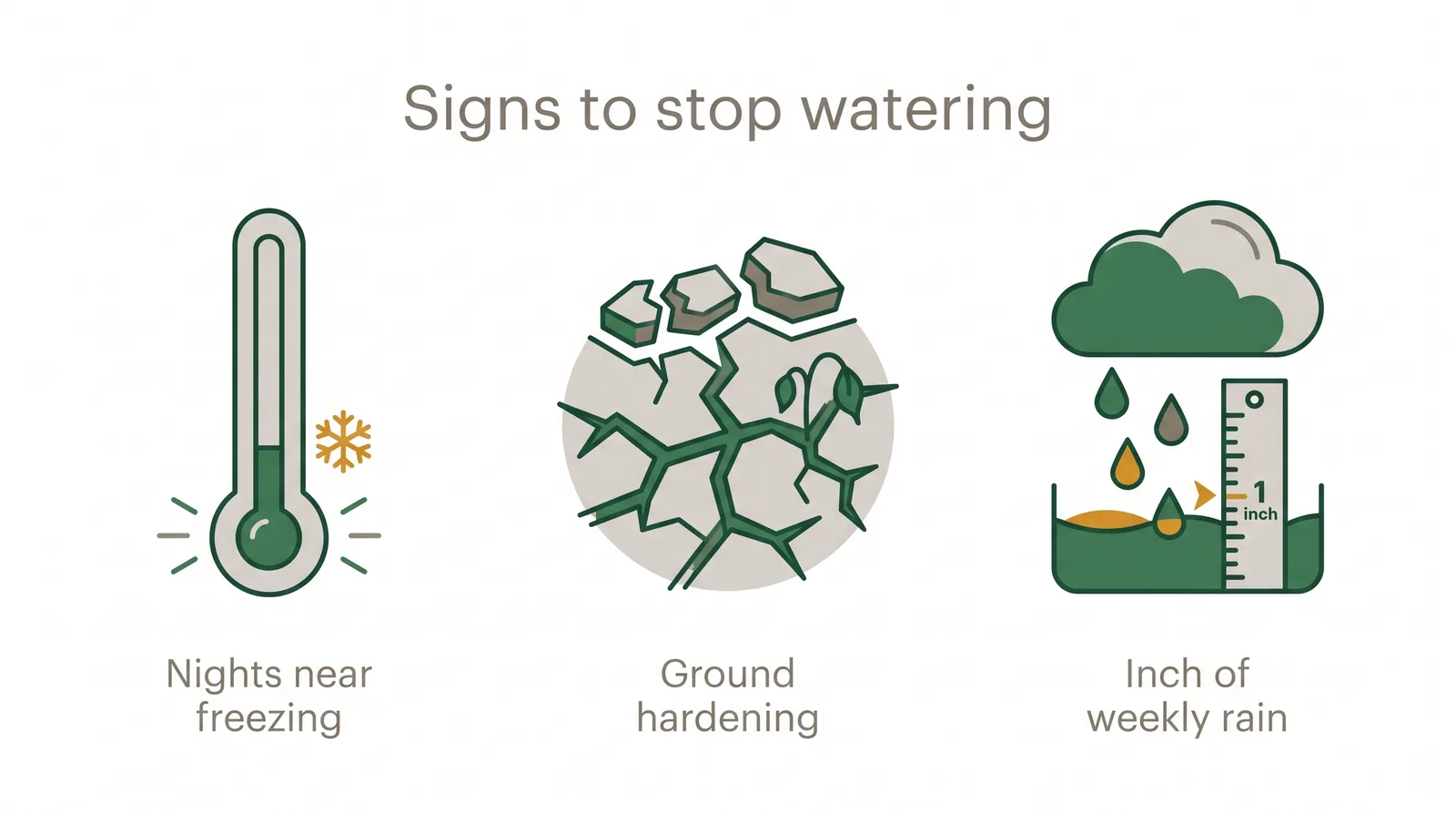
Stop watering once overnight temperatures consistently drop into the low single digits (around 4°C) or the ground begins to freeze (University of Minnesota Extension). In the GTA that signal usually arrives in late November, though a cold year can pull it earlier and a mild one can push it into early December.
The reason is physical, not botanical. Water cannot soak into frozen or freezing ground, so anything you apply once the ground hardens just runs off or sits on the surface. Watch the weather, not the date. When you see a steady run of cold, freezing nights, the season is done.
Quotable: Stop watering your lawn once nights consistently sit near freezing and the ground starts to harden, usually late November in the GTA. Water cannot penetrate frozen ground, so the calendar matters less than the overnight lows.
Should you keep watering right up until then, or taper off?
Taper, then finish with one deep soak. As the days shorten and cool through October, your cool-season grass (Kentucky bluegrass and fescue, the GTA standard) slows its growth and needs less water. Gradually stretch the days between waterings rather than keeping a mid-summer schedule.
Then, before the ground freezes, give the lawn one deep, thorough watering (University of Minnesota Extension). This final soak is the one most people skip, and it is the one that matters most.
Dormancy — the resting state cool-season grass enters as light and temperature drop in fall. The blades stop growing and may lose colour, but the roots and crowns stay alive and still benefit from moisture until the ground freezes.
How much should you water your lawn in the fall?
Aim for up to about an inch of water per week, minus rainfall (University of Minnesota Extension). Toronto gets steady fall rainfall, so in many weeks you will not need to run a sprinkler at all, and the GTA's heavy clay soils hold moisture long enough that watering once a week is plenty. If the week delivers an inch of rain, skip watering entirely.
Measuring is simple: set an empty tuna can or a rain gauge on the lawn and stop when it holds about an inch. This beats guessing, which is how lawns get overwatered into disease in a wet Toronto October. Deep and infrequent always beats shallow and daily for root health.
Why does a final deep watering before the freeze matter?
Because winter is dry, not just cold. On clear, windy winter days the grass keeps losing a little moisture from its crowns while the frozen ground gives none back. A lawn that went into freeze-up already dry is the one that greens up patchy and slow in spring.
A deep soak before the ground freezes sends the grass into winter with hydrated crowns and roots, which is exactly what helps it shrug off that winter drying. This is most important after a dry fall; if your October and November were wet, the lawn is already carrying the moisture it needs.
Quotable: Winter kills grass by drying it out as much as by freezing it. One deep watering before the ground freezes is the cheapest insurance a fall lawn can get.
What about new sod or a fall overseeding?
New grass is the one exception to the late-November shutdown. Freshly laid sod and fall overseeding have not built the root systems an established lawn has, so they need consistent moisture to anchor before the ground freezes.
Keep watering these lightly and often until the seedlings are established and hardened off, even if that runs later than you would water the rest of the yard. If you seeded in the ideal GTA window of mid-August to mid-September, the new grass should be well rooted by the time real cold arrives; our guide to aeration and overseeding covers that timing. Once the new lawn is established, it follows the same rules as everything else.
Fall watering is one piece of putting the yard to bed. The other big one is your irrigation itself, which cannot be left full of water over a Toronto winter; see our walkthrough on winterizing a sprinkler system in Ontario. If you would rather hand the whole seasonal shutdown to a pro, you can compare crews on the lawn-care directory for North York, check current rates on the Toronto lawn-care cost guide, or request a quote.
Want a pro to handle fall watering, shutdown, and next spring's start-up? Request a quote and compare up to three vetted local crews side by side. Your contact details only go to the one you pick.