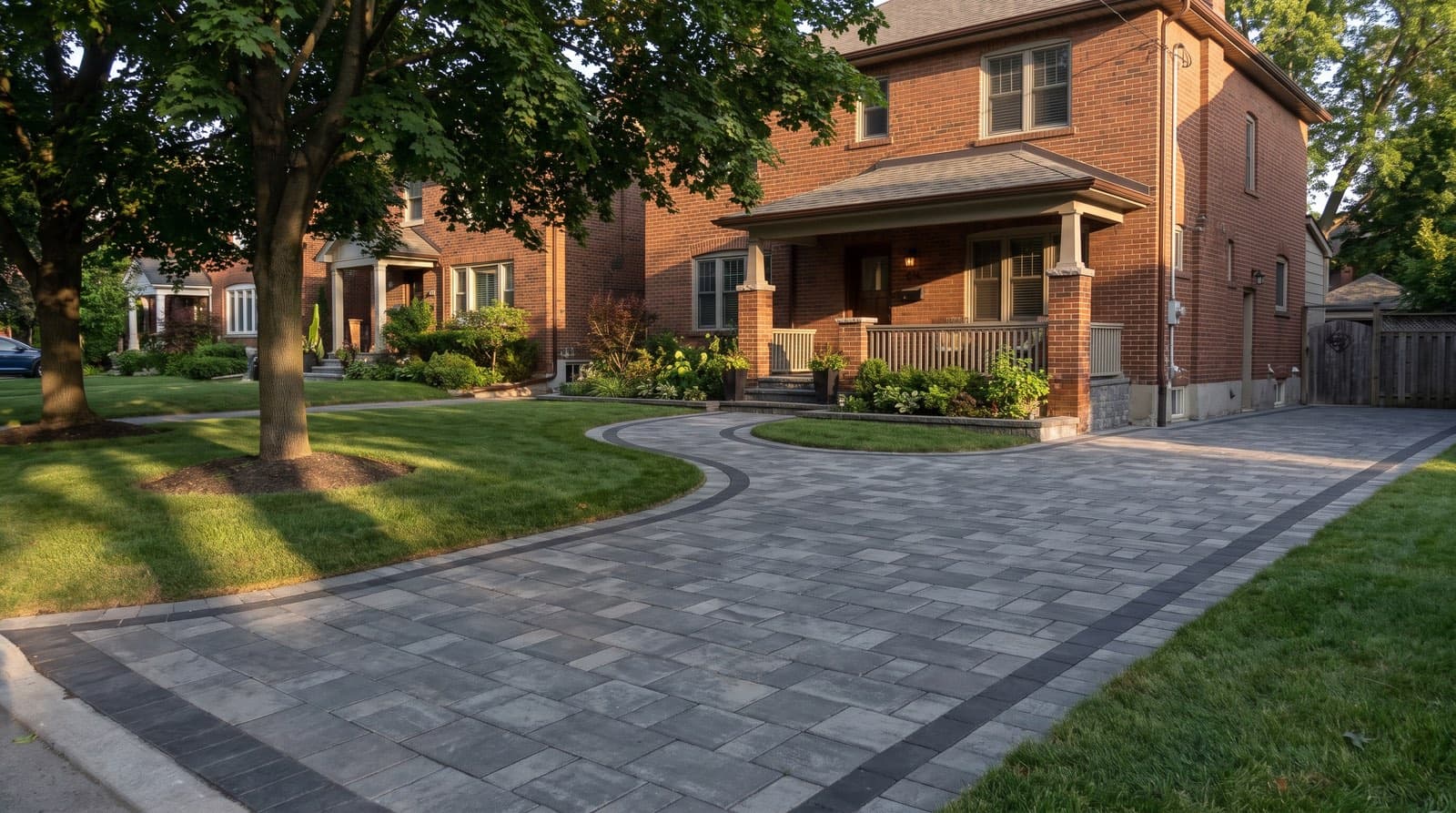
Answer First: Interlocking is paving made of individual concrete or stone pavers laid over a compacted gravel base, with sand in the joints, so the surface flexes with the ground instead of cracking like a poured slab. Toronto loves it because our freeze-thaw winters heave the ground and crack solid concrete, while interlocking pavers move independently and can be lifted and relaid if a section settles. Installed driveways run about $18 to $55 per square foot depending on how much of the base is rebuilt.
Interlocking looks like a design choice and behaves like an engineering one. In a climate that freezes and thaws dozens of times a winter, how a driveway handles ground movement matters more than how it looks, and that is exactly where interlocking wins.
What is interlocking?
Interlocking (interlock) — a paving system of individual concrete or natural-stone pavers set over a compacted gravel base and a thin bedding layer, with sand swept into the joints so the units grip each other and act as one flexible surface. There is no poured slab; the strength comes from the base below and the friction between the pavers.
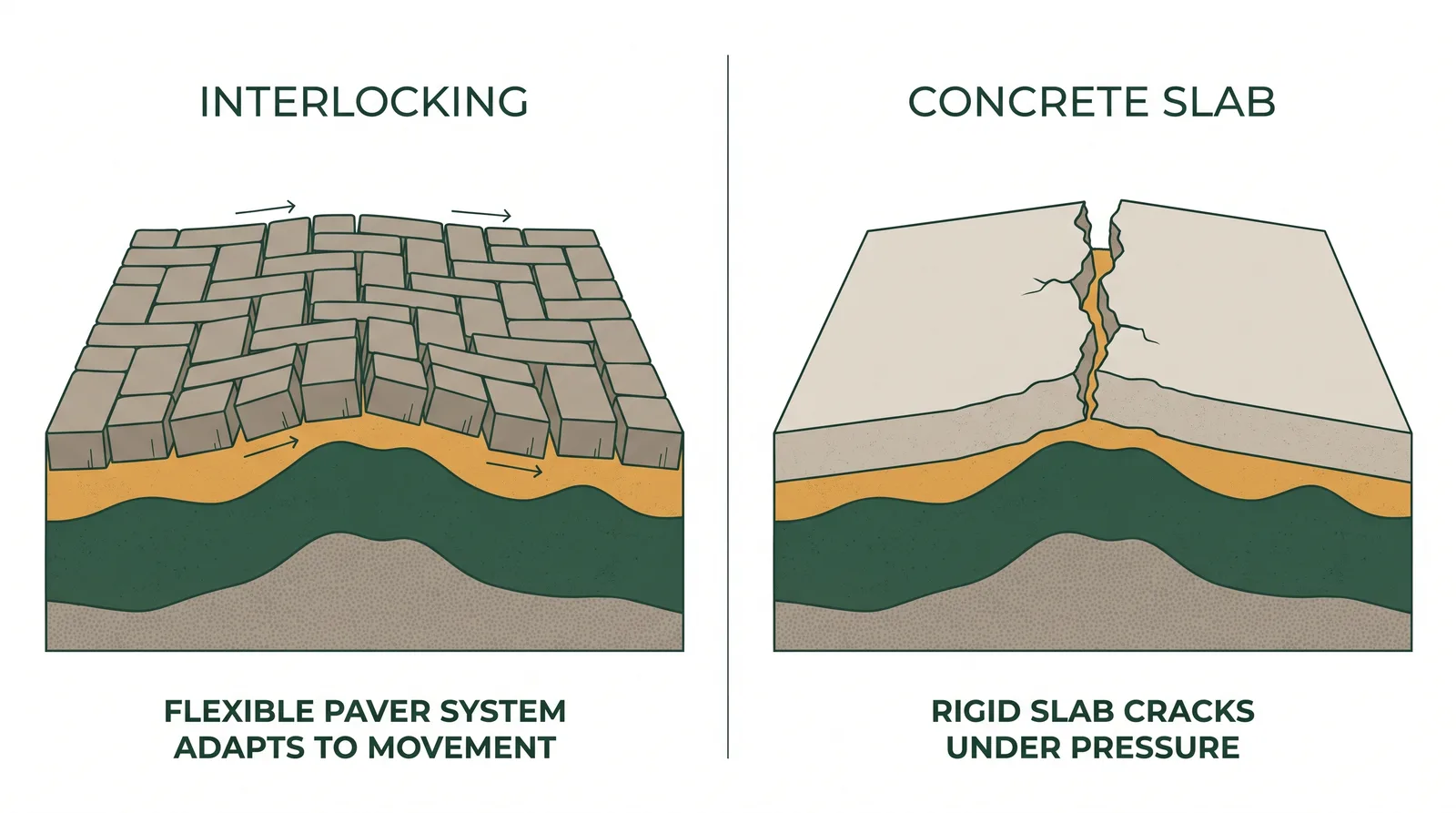
That structure is the whole point. Because the surface is made of many small units rather than one rigid sheet, it bends slightly with the ground instead of cracking, and any single paver can be pulled and reset. A poured driveway is one object that either holds or cracks; an interlock driveway is hundreds of objects that move together.
Quotable: Interlocking is not a poured surface. It is individual pavers over a compacted gravel base, so it flexes with freeze-thaw ground movement and lets a single settled paver be lifted and relaid, which a concrete slab cannot.
Why does Toronto love interlocking?
Because of freeze-thaw, the defining stress on any GTA hardscape. Toronto's ground freezes, expands, thaws and settles repeatedly through winter, and that heaving cracks solid concrete and asphalt. Interlocking absorbs the same movement because each paver shifts independently, so the surface flexes where a slab would split.
The advantages stack from there. Interlocking is repairable, since a stained or sunken paver is lifted and swapped rather than jackhammered. It adds curb appeal and resale value. And permeable versions help meet Toronto's front-yard drainage and soft-landscaping rules. The one honest catch is Toronto-specific: de-icing salt slowly breaks down joint sand, so an interlock surface needs re-sanding every couple of years where salt is used.
From the data: YardQuote tracks 503 interlocking contractors across the GTA (July 2026); 464 carry three or more reviews, the average rating is 4.73, and 83% hold 4.5 stars or higher. It is one of the deepest trades in the market, which is exactly why comparing base specs matters more than comparing logos.
What does interlocking cost in Toronto?
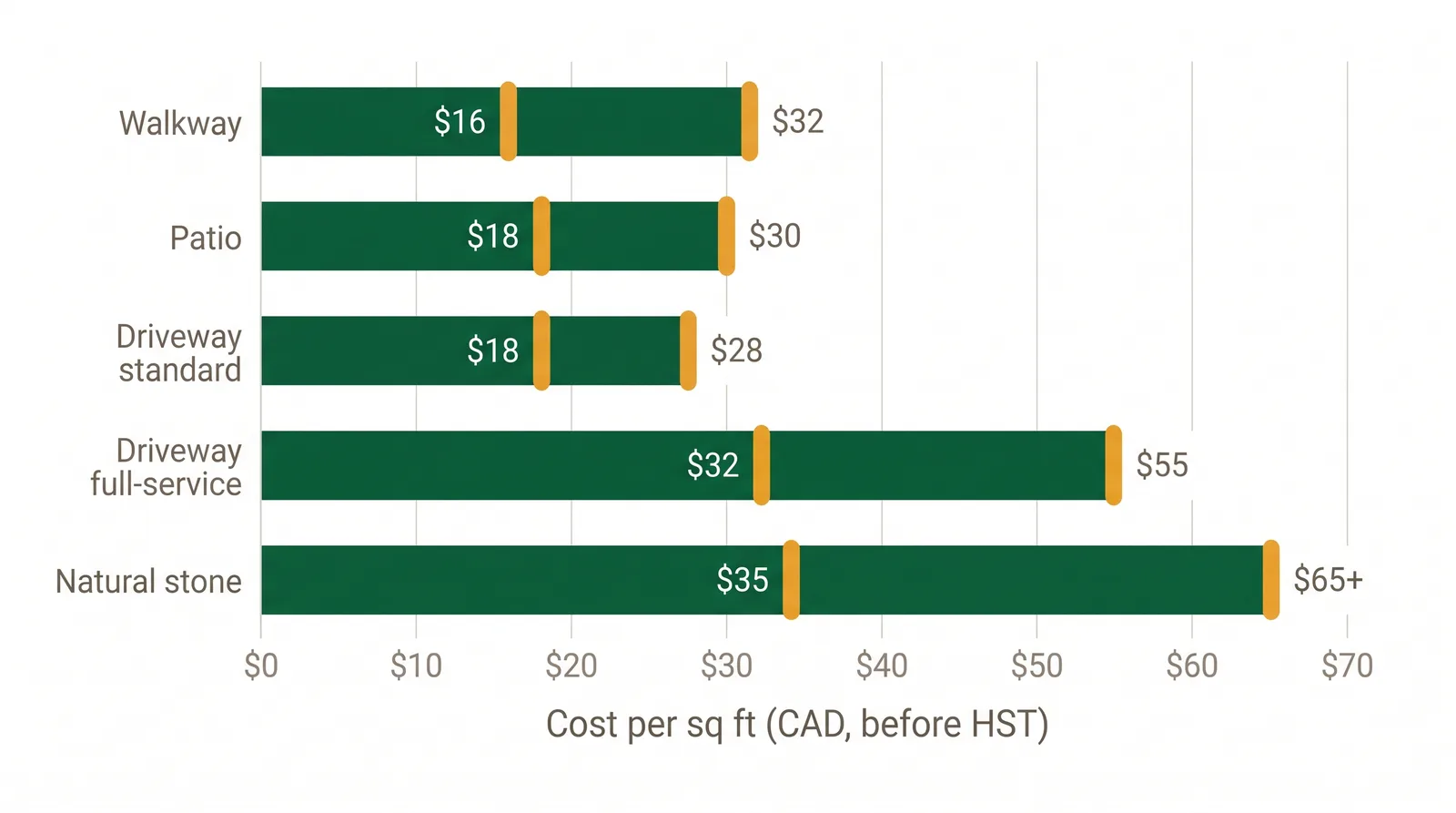
Installed prices depend on the surface and, more than anything, on how much of the base is rebuilt. Here are current GTA ranges per square foot installed.
| Surface | Installed cost (per sq ft) |
|---|---|
| Walkway / front entrance | $16–$32 |
| Patio | $18–$30 |
| Driveway (standard build) | $18–$28 |
| Driveway (full-service: deep excavation, geotextile, premium pavers) | $32–$55 |
| Natural stone | $35–$65+ |
Source: NR Builds, Ultrascape, Action Home Services (GTA, 2026). Standard concrete pavers run $5 to $8 per square foot in materials, premium textured lines $12 to $20, so the material is a small slice of an installed price that is mostly labour and base. See the full breakdown on the Toronto interlocking cost page, and note that landscaping contracts carry 13% HST.
What does a proper interlock build include?
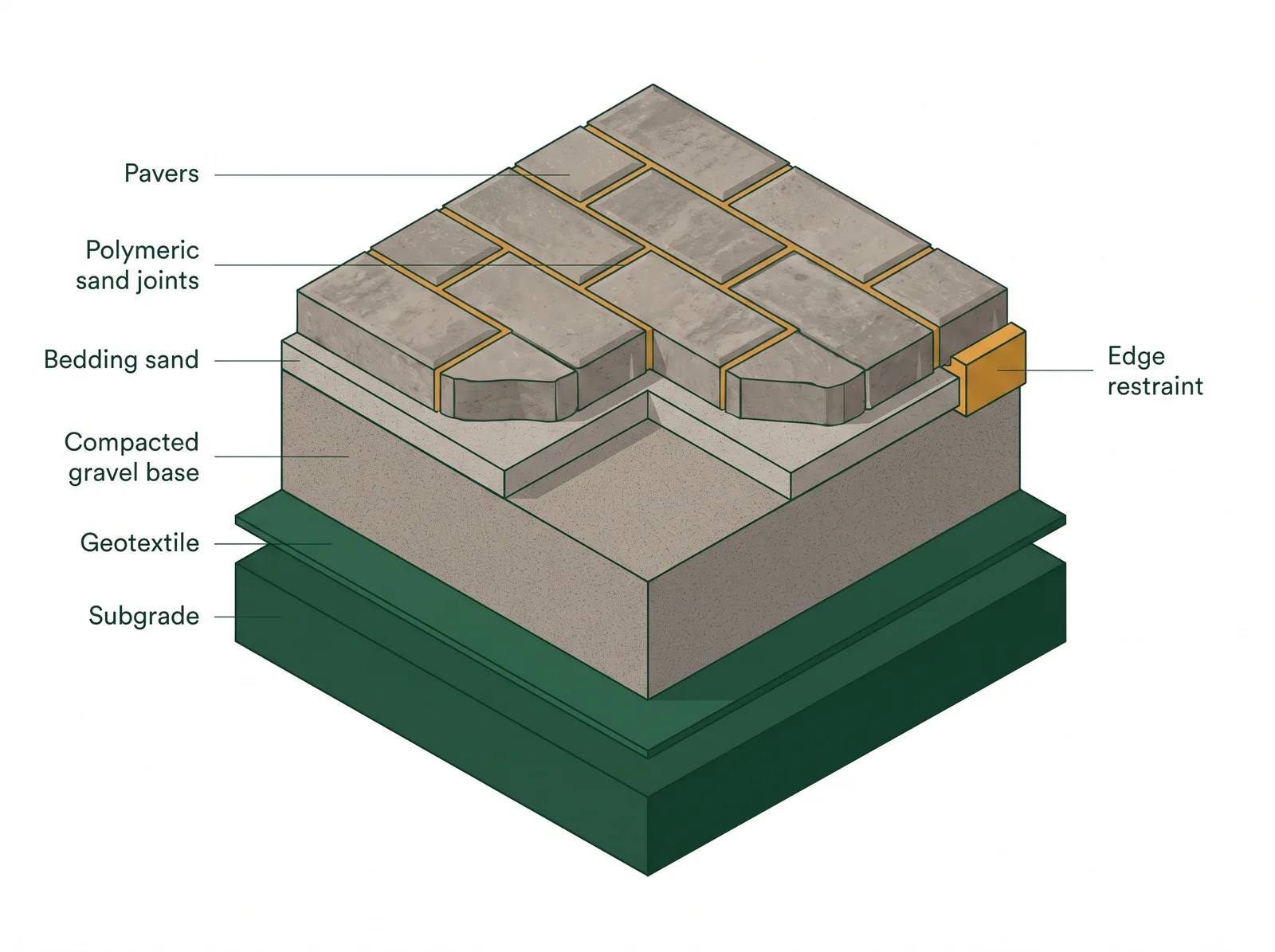
The base, and it is where cheap quotes cut. A full build is excavation, a geotextile fabric to separate soil from gravel, 8 to 18 inches of compacted gravel base, a bedding layer, the pavers, polymeric sand in the joints, and a solid edge restraint to keep the field from spreading. Skimp on base depth or drainage and the surface heaves or sinks within a few Toronto winters.
Because so much of the price is invisible base work, two "interlock driveway" quotes can differ enormously for the same finished look, the same pattern we break down in why Toronto landscaping quotes vary 3x. The joints matter too: they are finished with polymeric sand, which locks the pavers and blocks weeds when installed right.
Are there Toronto rules I should know?
Two catch people. Resurfacing an existing driveway in the same footprint needs no building permit, but widening one requires a zoning check at your Toronto Building office and then a Right-of-Way Management permit from Transportation Services for the portion on City property (City of Toronto). And the front-yard space not covered by a permitted driveway, porch, steps or a walkway up to 1.2 metres wide must stay as soft landscaping, so you cannot interlock the entire front yard.
You can compare vetted installers near you, such as interlocking in North York or Scarborough, and when a surface eventually settles, it is fixable rather than replaceable, covered in interlocking repair.
Want to know what interlocking should cost for your driveway or patio? Request a quote and compare up to three vetted local installers side by side, on the same base spec. Your contact details only go to the one you pick.