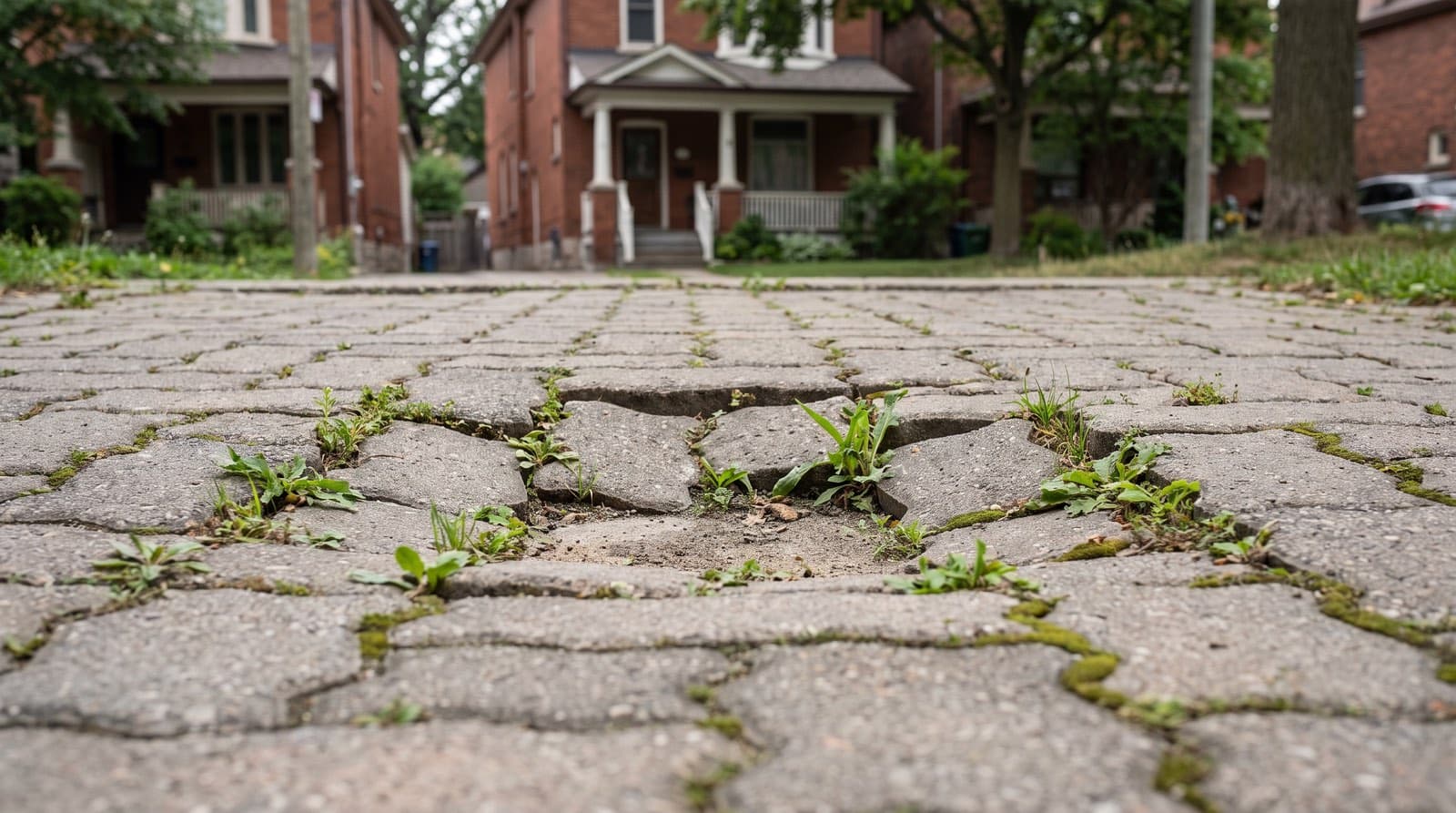
Answer First: Sunken interlocking pavers are a base problem, not a paver problem: the gravel or bedding beneath them washed out or settled, and the fix is to lift the pavers, repair the base, and relay them. Weedy joints mean the joint sand eroded, which re-sanding with polymeric sand solves. In Toronto, re-levelling runs about $8 to $22 per square foot and a full lift-and-relay that rebuilds the base runs $15 to $25. Because de-icing salt breaks down joint sand, plan to re-sand every 2 to 3 years.
The good news about a failing interlock surface is that it almost never needs replacing. Unlike a cracked concrete slab, interlocking comes apart, gets fixed underneath, and goes back together with the same stones. The trick is reading which repair the damage actually needs.
Why are my pavers sinking?
Because the base under them failed, not the pavers themselves. Interlocking sits on compacted gravel and a thin bedding layer, and when water erodes that material or an under-compacted base settles, a void opens and the pavers drop into it. The stones are fine; the ground beneath them moved.
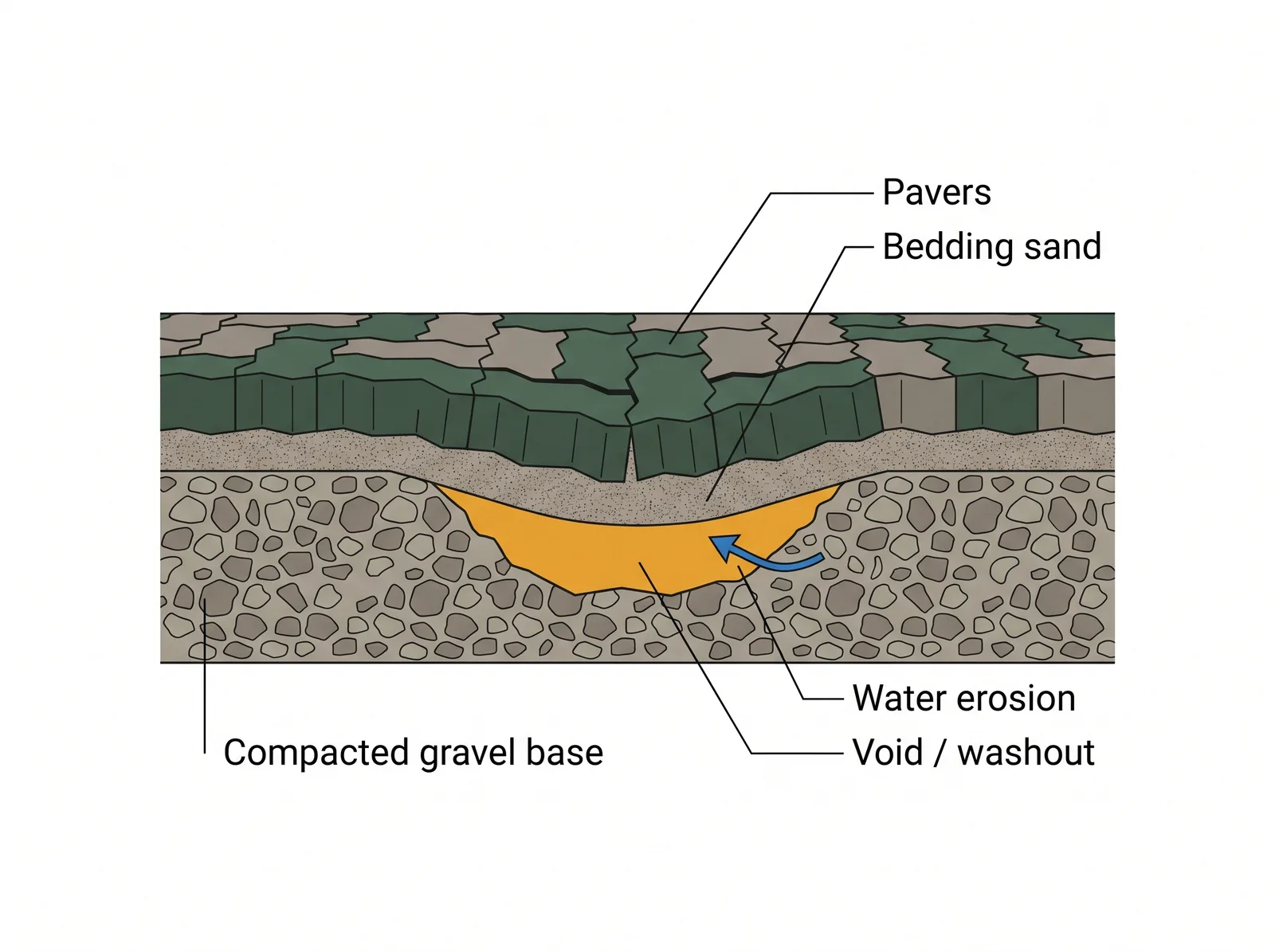
In Toronto this is usually driven by two things: poor drainage that lets water wash the base fines away, and freeze-thaw that heaves and unsettles a shallow base over winters. That is why a spot repair that only resets the pavers, without addressing the base, sinks again within a season or two.
Quotable: Sunken interlocking is a base failure, not a paver failure. Water eroded or an under-compacted base settled beneath the pavers, so any repair that resets the stones without fixing the base will sink again.
Why do weeds grow in my joints?
Because the joint sand is gone. The sand swept between pavers is what blocks the gaps; once it erodes, windblown seeds settle into the open joints and sprout. The weeds are a symptom of lost sand, not the cause of the problem.
Pulling or spraying them treats the symptom for a few weeks. The durable fix is to clean the joints and re-sand with polymeric sand, which hardens and seals the gaps against both weeds and ants. In Toronto there is a specific culprit behind the lost sand: de-icing salt breaks down joint sand over time, which is why re-sanding every two to three years is normal maintenance here, not a sign of a bad install.
From the data: YardQuote tracks 503 interlocking contractors across the GTA (July 2026), 464 with three or more reviews at an average of 4.73 stars. Many list re-sanding, sealing and re-levelling as standalone services, so a repair does not require the firm that built the driveway.
Re-level or full rebuild: which repair do I need?
Match the repair to how widespread the failure is. A few localized dips are a surface fix; a driveway that is sinking or heaving across large areas is a base fix.
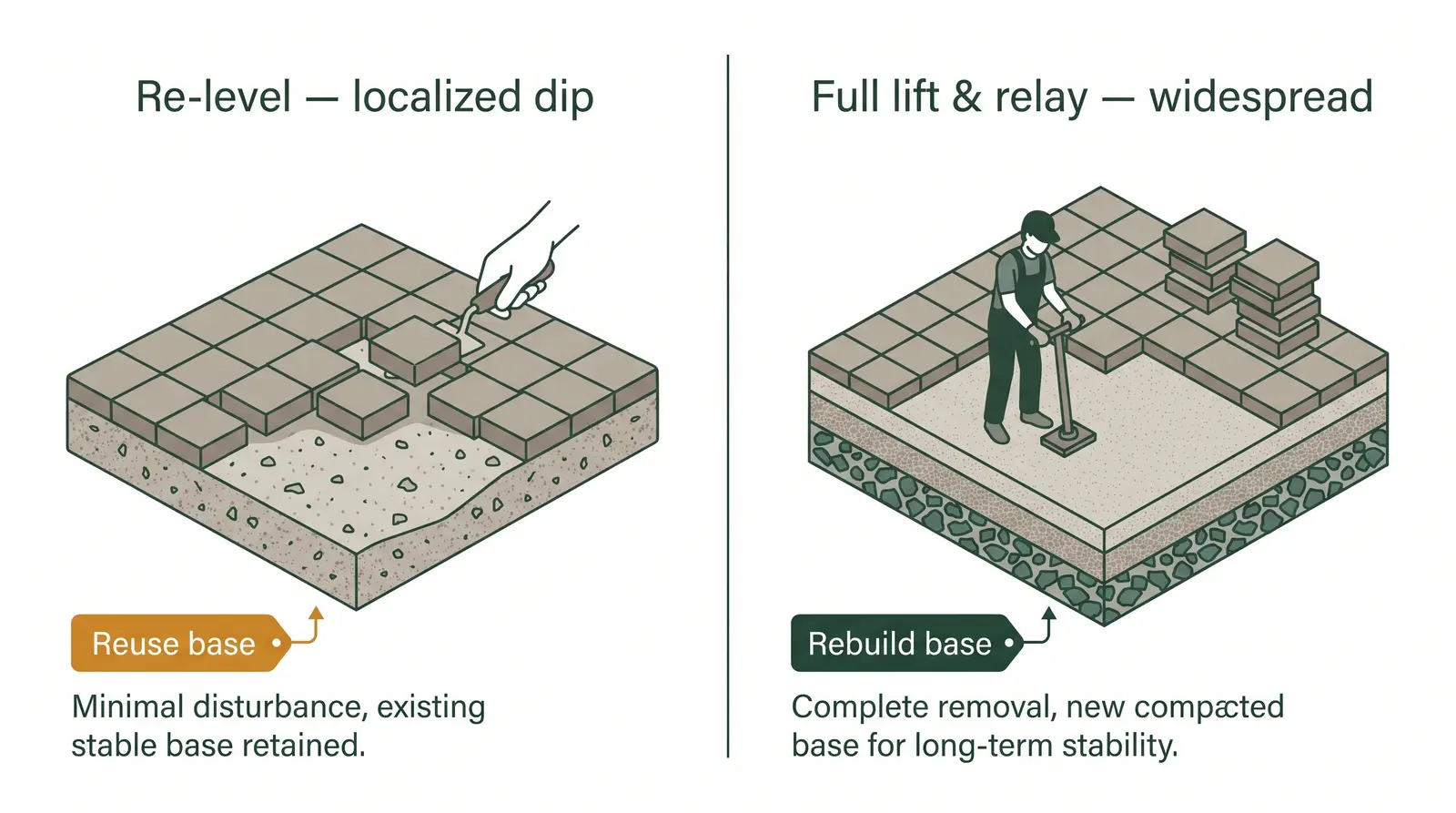
- Re-level (lift, re-screed, relay) for localized sunken spots. The pavers come up, the bedding is re-screeded flat, and the same stones go back. About $8 to $22 per square foot.
- Full lift and relay when the failure is widespread, because the base itself needs rebuilding. Pavers off, base re-compacted or rebuilt, everything reinstalled. About $15 to $25 per square foot.
- Sand and seal (power wash, weed removal, polymeric re-sand, sealer) for joints and surface that are otherwise sound. About $1.35 to $2.50 per square foot.
What does interlocking repair cost in Toronto?
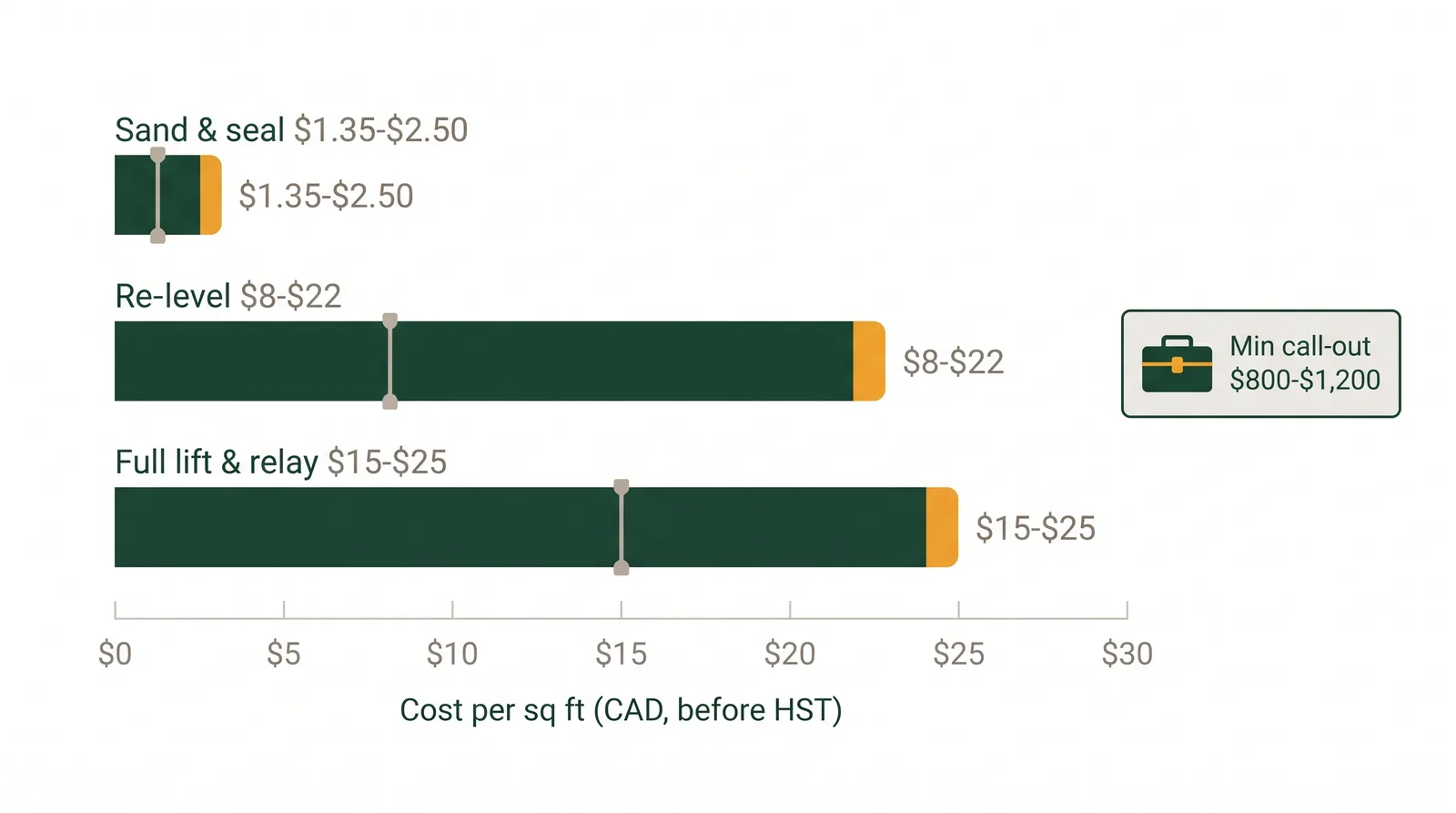
Here are the current GTA repair ranges, per square foot installed, plus the crew minimum.
| Repair | Cost |
|---|---|
| Sand and seal (wash, weed, re-sand, seal) | $1.35–$2.50 per sq ft |
| Re-level sunken pavers | $8–$22 per sq ft |
| Full lift and relay (rebuild base) | $15–$25 per sq ft |
| Minimum crew call-out | $800–$1,200 per job |
Source: GTA repair pricing, 2026 (YardQuote interlocking cost dataset). The minimum call-out is the number that surprises people: a single sunken paver still mobilizes a crew and machinery, so it pays to bundle several small repairs into one visit. Landscaping work carries 13% HST.
How do I stop it happening again?
Maintain the joints and protect against salt, which is the specific enemy of Toronto interlock. Re-sand the joints every two to three years and seal the pavers every three to five, because de-icing salt breaks down joint sand and pits pavers over time. Keep water draining away from the surface, since standing water is what erodes the base in the first place.
If your interlock is new enough that you are deciding how it was built, the base spec is everything, covered in interlocking 101. You can compare vetted repair crews near you, such as interlocking in Vaughan or North York, and see full pricing on the Toronto interlocking cost page.
Not sure whether your driveway needs a re-level or a rebuild? Request a quote and compare up to three vetted local installers side by side, so you can see whether they are pricing the same repair. Your contact details only go to the one you pick.