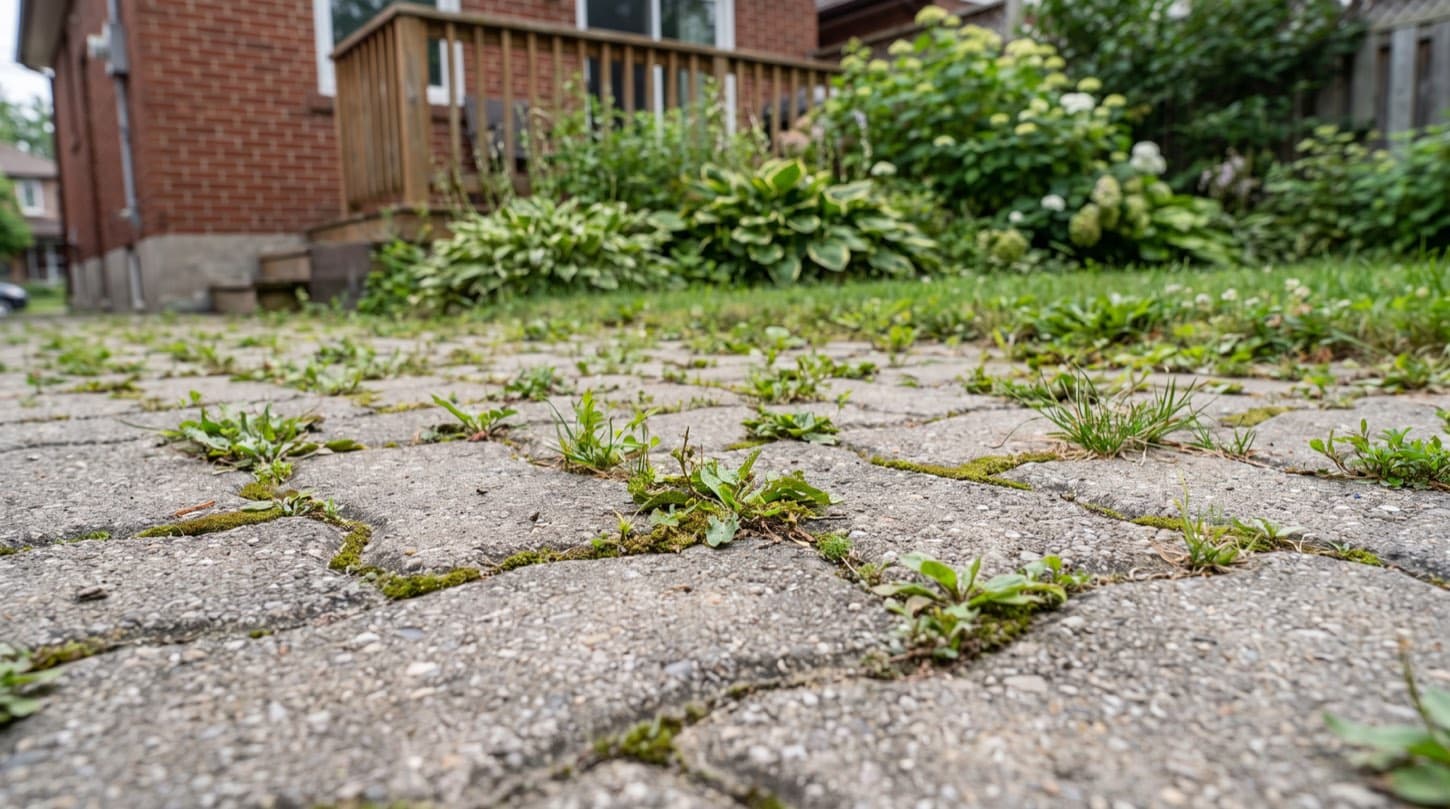
Answer First: Weeds between pavers grow from seeds that blow in from above and settle in the joints — not from roots pushing up through the base. The lasting fix is to clean the joints and fill them with polymeric sand, which hardens into a concrete-like fill that leaves seeds nowhere to root and resists rain washout. Kill the weeds already there first, and in Ontario that means boiling water, hand-pulling, or an allowed acetic-acid product, because glyphosate (Roundup) is banned for cosmetic use here.
A weedy paver patio looks neglected even when the pavers themselves are fine. The good news is that the problem is almost always in the joints, not the base, which makes it fixable without tearing anything up.
Where do the weeds actually come from?
From the top, not the bottom. This is the single most useful thing to understand, because it changes the whole approach. On a properly built interlocking patio or driveway, a compacted gravel base and geotextile stop anything from growing up through it. The weeds you see are growing in the joints, from seeds that blew in on the wind, dropped off shoes, or washed in with debris, then germinated in the grit and organic matter that collects between the stones.
That means the fight is a surface fight. Remove the seedbed in the joints and keep it removed, and the weeds have nowhere to live.
Quotable: Weeds in a paver patio grow from seeds blown into the joints from above, not from roots pushing up through the base. Seal the joints and you remove the seedbed — the weeds have nowhere left to root.
Why polymeric sand is the real fix
Because it turns a loose seedbed into a solid surface. Regular joint sand stays loose, holds moisture and grit, and washes out in heavy rain, leaving exactly the gap a weed wants.
Polymeric sand — a blend of fine sand with water-activated polymers and binders that, once swept into paver joints and misted, hardens into a firm, concrete-like fill. The University of Florida IFAS Extension describes it as a sand-and-polymer mix that fills joints, holds pavers in place, and blocks weeds.
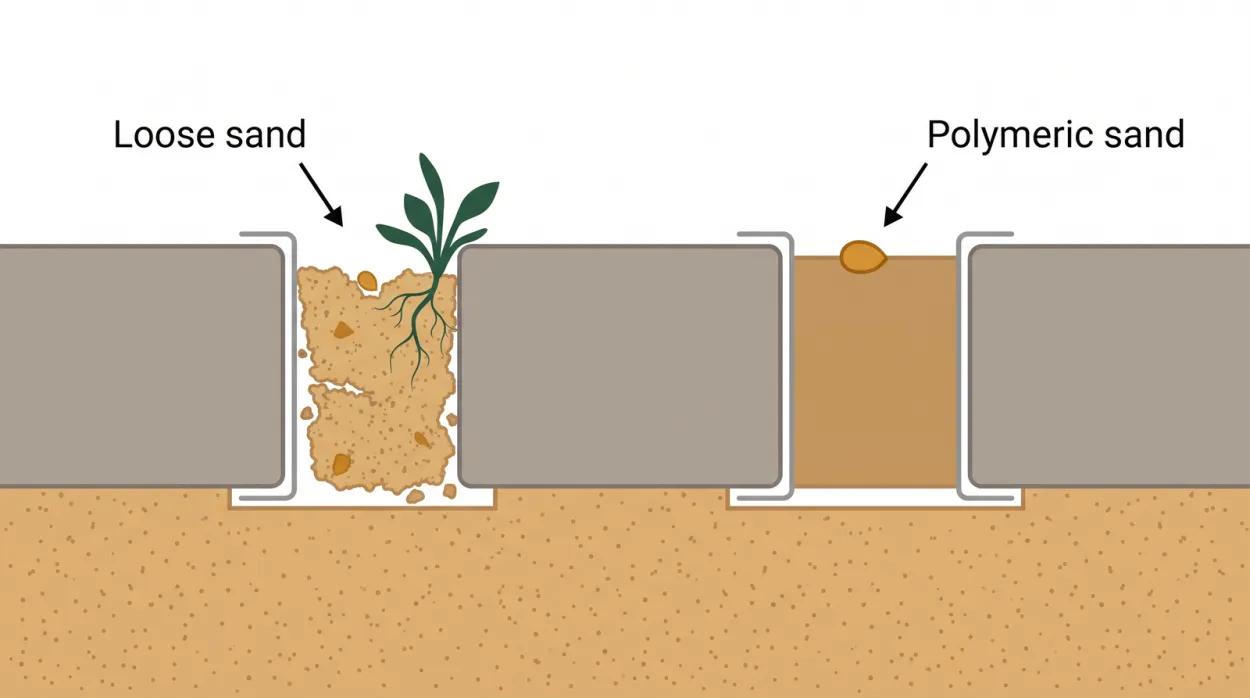
One honest caveat worth knowing: polymeric sand is deliberately not porous. It seals water out of the joints, which is great for a standard patio but the opposite of what a permeable paver driveway is designed to do. If your goal is drainage rather than a sealed surface, polymeric sand is the wrong product.
How to do it right
Prep decides everything. Polymeric sand that goes into dirty or damp joints, or that gets overwatered, fails and cracks. The sequence:
- Kill and clear the existing weeds. Pull them or hit them with boiling water first (more on the Ontario rules below), then scrape the joints.
- Clean out the old sand. A pressure washer clears the joints down; let everything dry fully before the next step.
- Sweep the polymeric sand in. Fill the joints to about 1/8 inch below the top of the pavers, sweeping diagonally so gaps fill completely.
- Blow off the surface. Any polymeric sand left on the paver faces will haze and stain when wetted. Clear it before activating.
- Mist to activate, then stop. Wet the joints gently in stages. Once they stop absorbing water, stop spraying. Overwatering floats the polymers out and ruins the bond.
What to use on existing weeds in Ontario
Not Roundup. This is where a lot of online advice steers Toronto homeowners wrong. Glyphosate, the active ingredient in Roundup, is banned for cosmetic use in Ontario — including on driveways, patios, and walkways, not just lawns. Spraying it in your paver joints is not legal here.
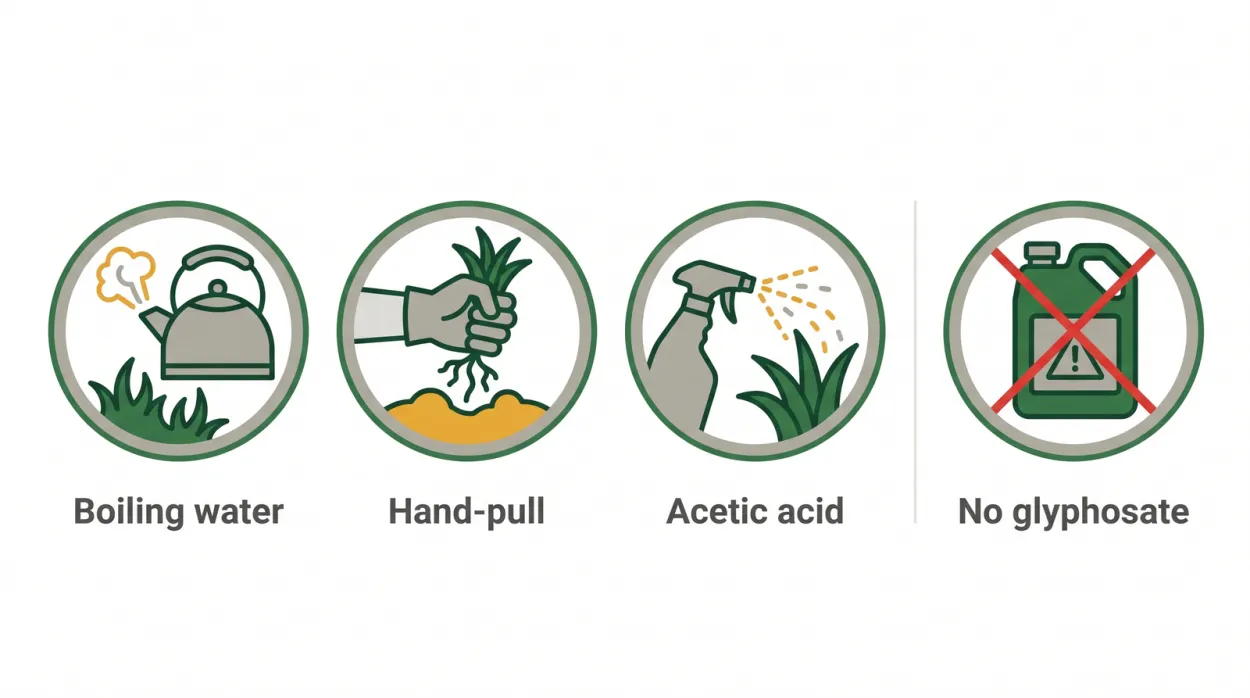
The methods that are both legal and effective:
- Boiling water. Free, immediate, and it cooks weeds in the joints without any chemical. The simplest option for a small patio.
- Hand-pulling. Tedious but works, especially after rain when roots lift easily.
- Allowed products. Acetic-acid (horticultural vinegar) and certain soap-based weed products on Ontario's Allowable List can burn back joint weeds. They kill top growth, so repeat as needed.
Once the joints are clear, the polymeric sand is what keeps them clear.
From the data: Of the 503 interlocking contractors YardQuote tracks across the GTA, the ones that hold ratings above 4.5 stars almost always finish a patio or driveway with polymeric sand rather than plain joint sand. It costs a little more up front and saves the annual weed fight.
If your joints keep failing, the base or the pattern may be the deeper issue — see our guide to paver patterns for why a proper interlock matters, and compare real GTA ranges on the interlocking cost page or browse interlocking contractors near you.
Want a pro to re-sand or rebuild a weedy patio? Request a quote and compare up to three vetted local contractors side by side — your contact details only go to the one you pick.