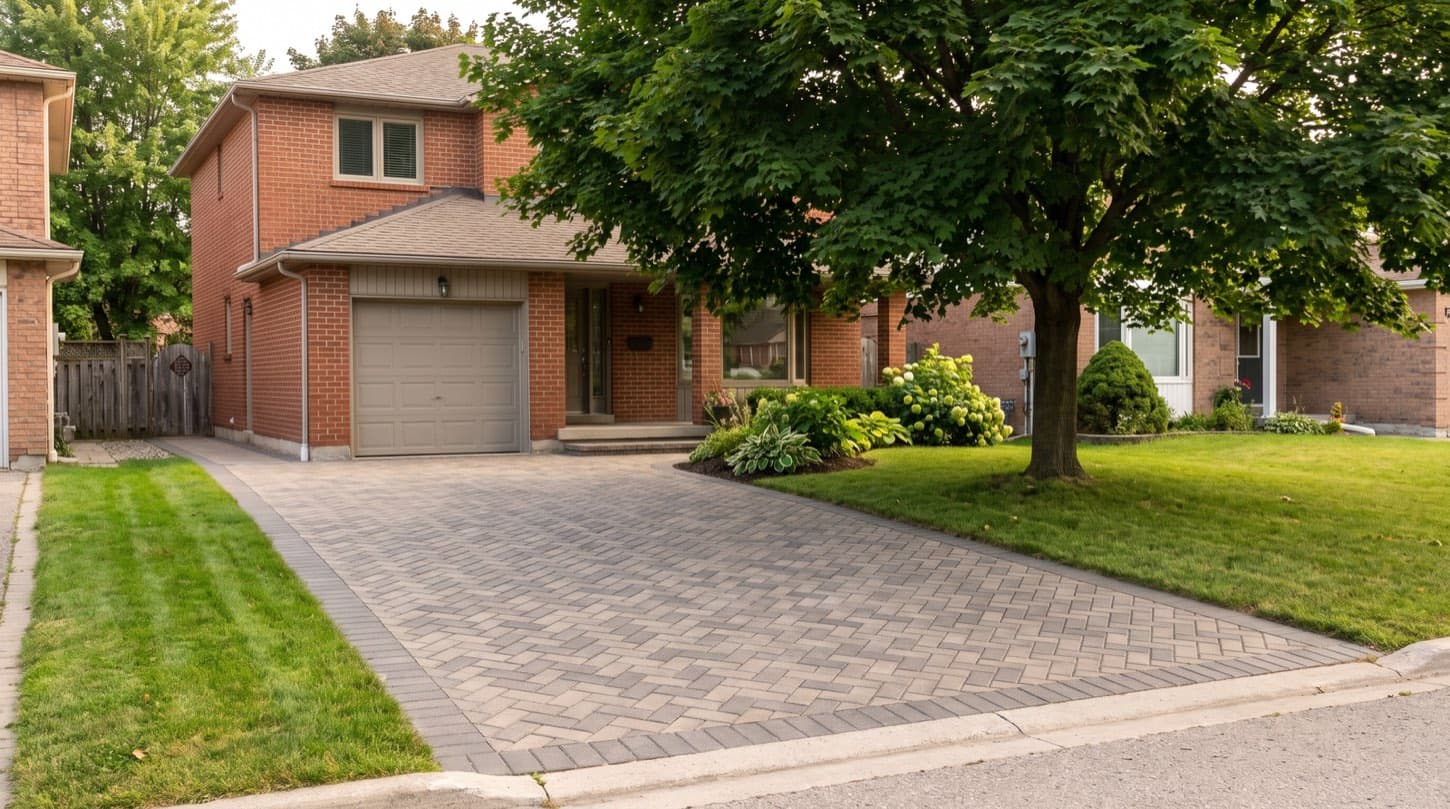
Answer First: The paver pattern you choose is structural, not just decorative. A 45-degree herringbone is the strongest layout and the one the Interlocking Concrete Pavement Institute recommends for driveways, because it spreads vehicle braking and turning forces across the most pavers. Running bond, the simple offset brick look, is the weakest pattern but perfectly fine for patios and walkways. Match the pattern to how the surface gets used, then to how it looks.
Most people pick a paver pattern off a showroom board by looks alone. That works for a patio. For a driveway it's how you end up with ruts and shifting stones in a few years, because some patterns are built to carry weight and some aren't.
Does the pattern actually affect strength?
Yes, and it's the thing homeowners underweight. According to the Interlocking Concrete Pavement Institute, the more a pattern interlocks, the stronger the paved surface, because tightly locked joints let each paver share load with its neighbours instead of moving on its own. The simple running bond is the weakest pattern structurally; herringbone is the strongest.
Interlock — the way paver joints brace against each other so a load on one paver is spread to those around it, rather than pushing a single stone down or sideways. Pattern, joint sand, and a compacted base all contribute to it.
Quotable: Paver pattern is structural. Running bond is the weakest layout and herringbone the strongest, which is why the Interlocking Concrete Pavement Institute recommends herringbone for any surface that carries vehicles.
The main patterns, and where each belongs
Here's the working guide, matched to use rather than fashion.
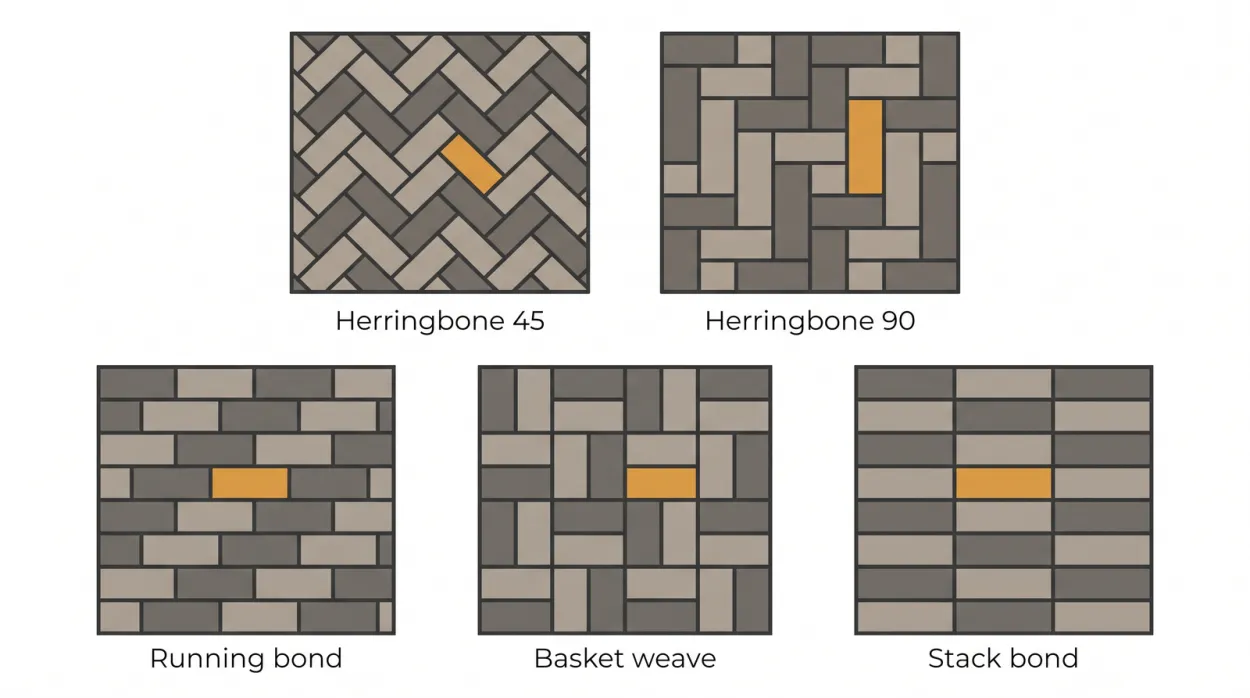
- 45-degree herringbone. The strongest and the driveway standard. Pavers set on the diagonal so wheel loads cross joints at an angle. Best load spreading, most edge cutting.
- 90-degree herringbone. Nearly as strong, set square to the edges. A clean, classic driveway or high-traffic-walkway choice with slightly less cutting.
- Running bond. Offset rows like brickwork. Easy, fast, low waste, and the weakest structurally — ideal for patios, walkways, and pool decks that only take foot traffic.
- Basket weave. Pairs of pavers alternating direction for a traditional, woven look. Good for patios; ICPI accepts it for some vehicular use, though herringbone is stronger.
- Stack bond. Pavers lined up in a perfect grid. The most modern look and the least interlock — decorative pedestrian use only, never a driveway.
Why herringbone wins for a driveway
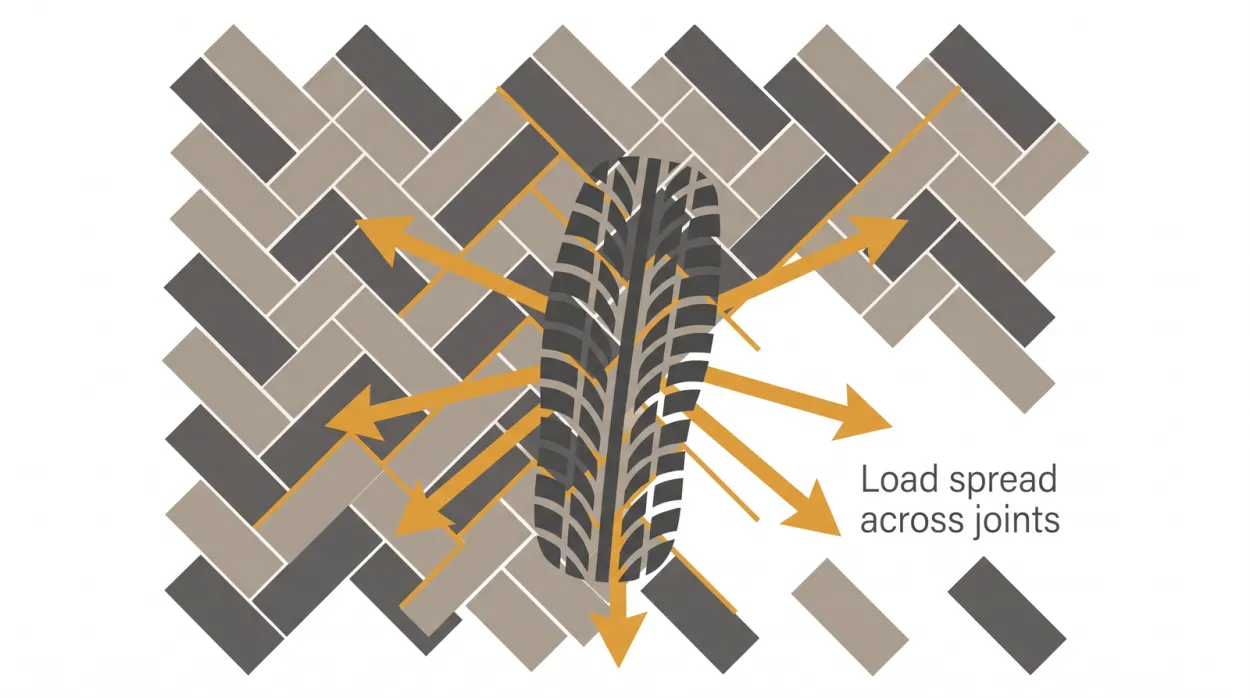
Because a driveway isn't a static load — it's braking, accelerating, and turning. ICPI notes that herringbone is the most effective pattern for dispersing the forces from braking and accelerating vehicles while maintaining the horizontal interlock between pavers. A 45-degree layout makes every wheel load cross several joints diagonally, so the force is shared across a wide footprint of stones instead of driving one row down.
Thickness works with the pattern. ICPI points to roughly 60 mm pavers for walkways and light driveway use, and at least 80 mm for heavier traffic. The durable Toronto driveway combination is an 80 mm paver, a 45-degree herringbone, and a deep, well-compacted base that handles our freeze-thaw ground.
From the data: Of the 503 interlocking contractors YardQuote tracks across the GTA, the pattern shows up in the reviews indirectly: driveways laid in running bond or stack bond are over-represented in the "it shifted and rutted" complaints. The pattern was doing a pedestrian job under a car.
So which pattern should you pick?
Let use decide first, looks second:
- Driveway or anywhere a car drives: 45-degree herringbone, 80 mm pavers. Non-negotiable if you want it to last.
- Patio, walkway, pool deck: running bond or basket weave — easier, cheaper, and plenty strong for feet.
- Modern, formal look with no traffic: stack bond, for a courtyard or feature area only.
Whatever the pattern, weed-free joints keep it looking new — see how to stop weeds between pavers, and if you're weighing drainage, our guide to permeable pavers in Toronto covers when the joint should let water through. Compare real GTA ranges on the interlocking cost page or browse interlocking contractors near you.
Planning a new driveway or patio? Request a quote and compare up to three vetted local contractors side by side — your contact details only go to the one you pick.