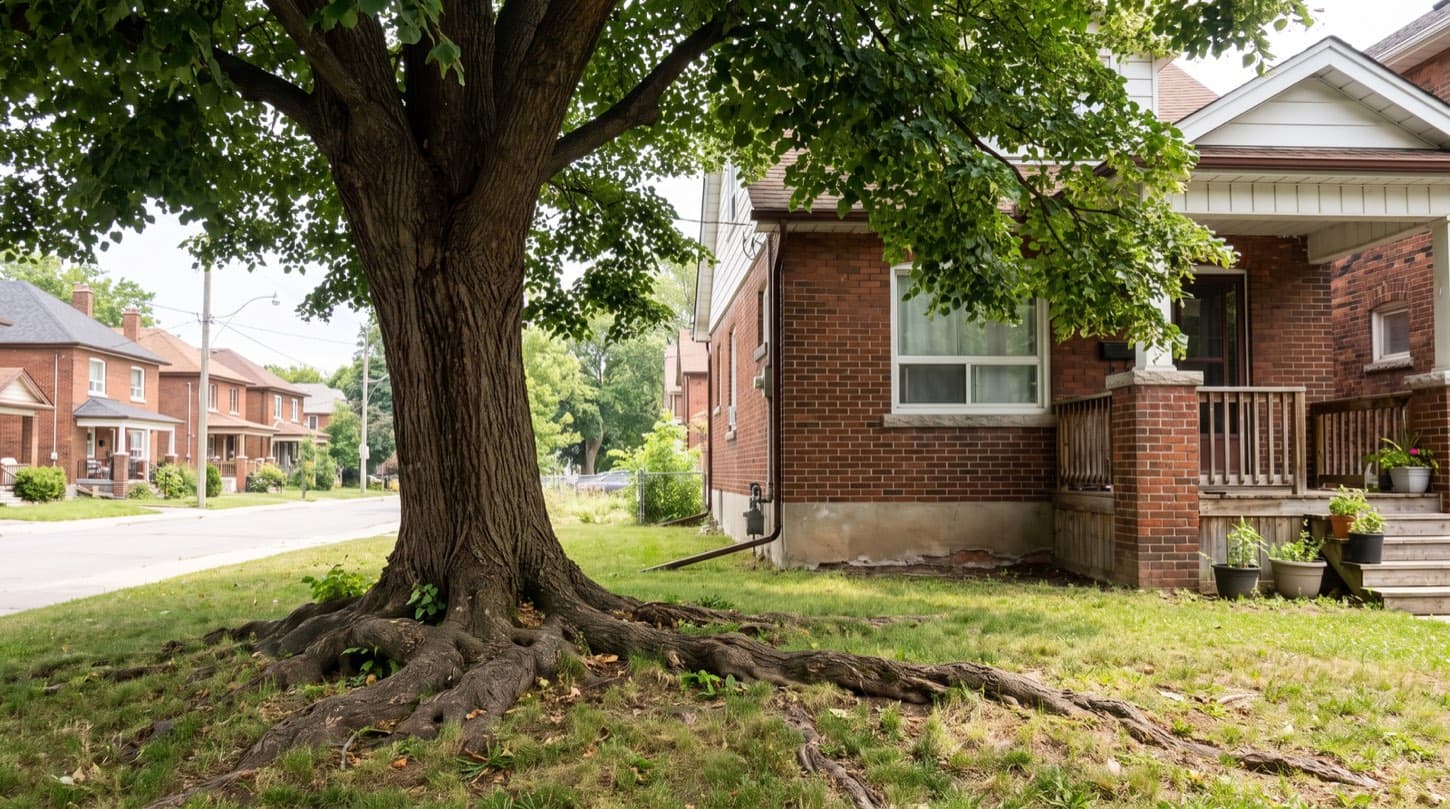
Answer First: Tree roots rarely damage a foundation by physically pushing through concrete. In Toronto's clay soil the real mechanism is moisture: a large tree draws hundreds of gallons of water out of the ground in summer, the clay shrinks, and the soil under part of the foundation settles unevenly, cracking it. Roots invade pipes the same indirect way — they don't pierce sound pipe, they find an existing crack or leaking joint and grow into it. And don't rush to cut the tree: on clay, removing a big one can make the soil rebound and heave, and Toronto protects private trees 30 cm or more across.
"The tree roots are cracking my foundation" is one of the most common — and most misunderstood — worries a homeowner has. The tree is often involved, but almost never in the way people picture. Understanding the actual mechanism changes what you should do about it.
Do tree roots really crack foundations?
Rarely by force. As the Morton Arboretum explains, roots generally redirect around solid objects rather than boring through intact concrete. A root meeting a sound foundation wall follows the path of least resistance around it. The image of a root splitting a foundation like a crowbar is mostly a myth.
The real damage is indirect, and it runs through the soil. That's the part that makes Toronto specific.
Quotable: Tree roots almost never bore through solid concrete. On clay soil they damage foundations indirectly — by drinking the water out of the ground until the clay shrinks and the foundation settles.
Why Toronto's clay is the actual problem
Because clay doesn't hold still. The British Geological Survey describes shrink–swell clays that swell when wet and shrink when they dry out — and much of Toronto and the GTA, especially Scarborough and parts of North York, sits on exactly this kind of ground.
Shrink–swell clay — soil that expands as it absorbs water and contracts as it dries, changing volume with the seasons. Buildings on it move as the soil moves beneath them.
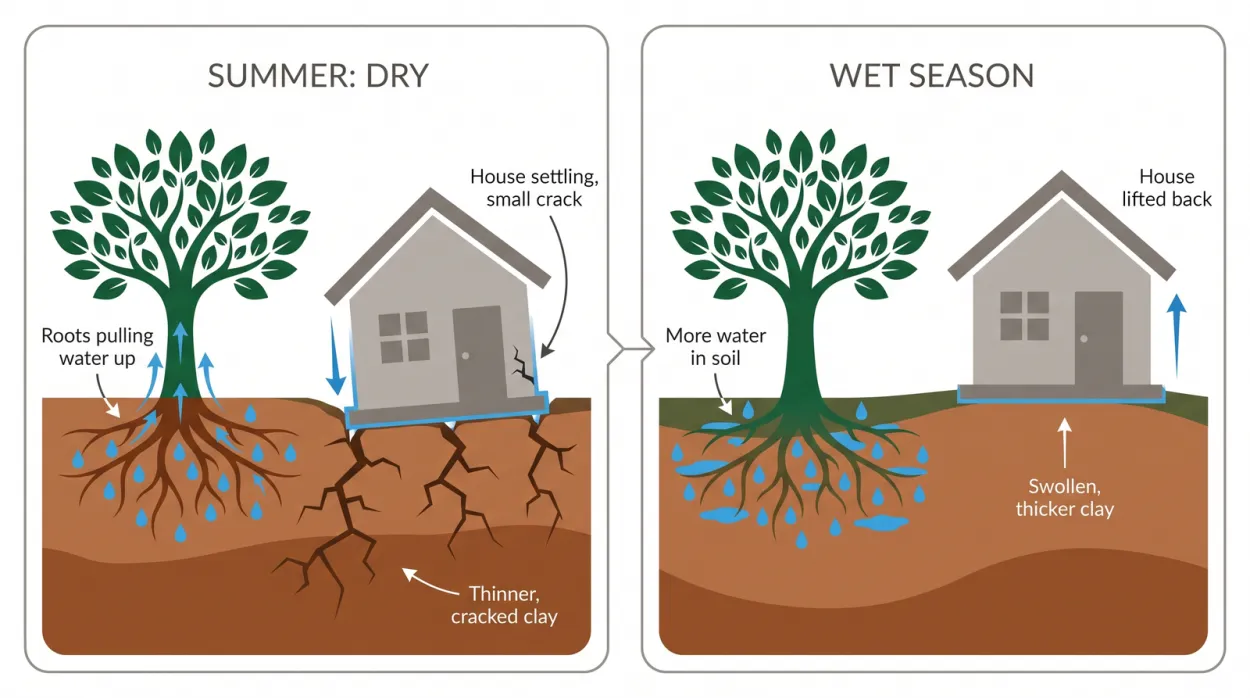
Now add a big tree. In summer a large tree can pull hundreds of gallons of water a day out of the soil. Right around the tree, that dries the clay and makes it shrink, so the ground under a nearby foundation drops. A wet autumn swells the clay back up. Repeat that cycle year after year and the foundation is being slowly see-sawed — which is what actually opens the cracks people blame on roots.
How roots actually get into pipes
Through the openings that already exist. This is the same story as the foundation: roots exploit defects, they don't create them from scratch. Roots don't drill through sound, intact pipe. But where there's already a crack, a loose joint, or a gap in an old drain, roots are drawn to the moisture and nutrients leaking out, grow in through the opening, and then thicken over the years until they've widened the defect into a blockage.
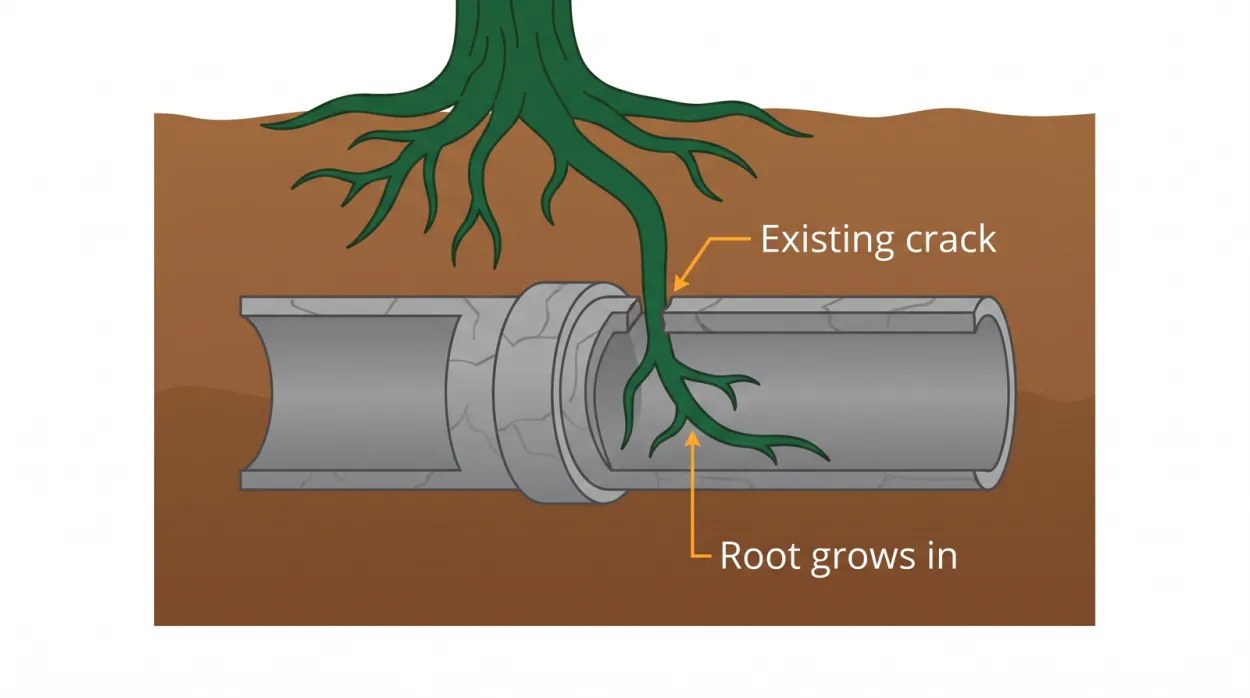
The practical upshot: root intrusion in a drain usually means the pipe was already old or damaged. Clearing the roots without fixing the pipe just resets the clock.
What to do — and what not to do
Don't reach for the chainsaw first. It feels like the obvious fix, but on shrink–swell clay it can backfire. Removing a large, established tree stops it drinking the soil, the dried clay rebounds and swells, and the ground can heave upward — sometimes causing new foundation damage where there was settlement before. Sudden removal trades one soil movement for another.
The measured approach:
- Get an assessment. A certified arborist and, for real cracking, a foundation professional can tell you whether the tree is actually the driver.
- Manage moisture and roots, not just the tree. Root barriers, consistent soil-moisture management, and targeted work often solve the problem without removal.
- Fix the pipe if pipes are the issue. Reline or repair the defect the roots found; clearing alone won't hold.
- Remember the permit. Toronto protects private trees 30 cm or more in diameter, so removal needs a City permit regardless — another reason to get the assessment before the saw. Our guide to when a leaning tree is an emergency covers the one case where speed does matter.
The same clay that moves foundations is why hardscape drainage matters here too — see how permeable pavers handle Toronto's clay. To compare local tree and landscaping crews, use the landscaping cost page or browse landscaping companies near you.
Not sure if a tree is really the cause? Request a quote and compare up to three vetted local pros side by side — your contact details only go to the one you pick.