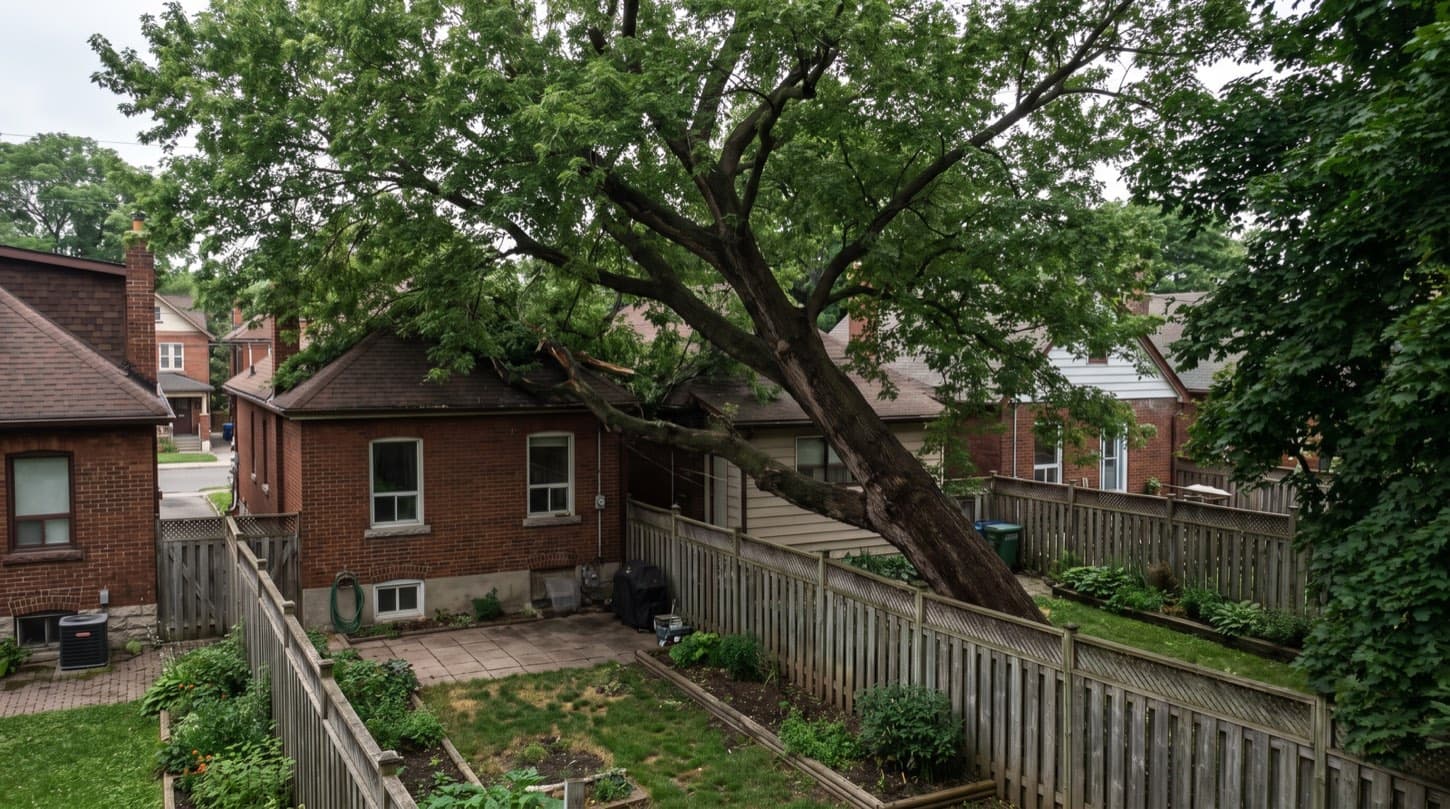
Answer First: A tree that has leaned the same way for years, with undisturbed soil at its base, is usually stable and not an emergency. The danger sign is change: a new or sudden lean, or one that worsens after a storm, especially with soil heaving, cracking, or roots lifting on the side opposite the lean. That means the root plate is pulling out of the ground — keep people clear and call a certified arborist now. And in Toronto, remember you generally can't just cut down a protected tree; a private tree 30 cm or more in diameter needs a City permit to remove.
Not every leaning tree is about to fall, and treating them all as emergencies wastes money while missing the ones that actually are. The difference between a harmless lean and a dangerous one is usually visible at the base.
Which leaning trees are actually dangerous?
The ones that changed. Penn State Extension draws the line clearly: many trees grow at an angle and are perfectly stable, but a tree that leans suddenly, or whose lean increases, is a different situation, because in wet soils trees can uproot and lift the root plate on the back side of the lean.
So the question isn't "is it leaning" — it's "did the lean change, and is the base disturbed." A decades-old lean toward the light with solid ground around the trunk is the tree's normal shape. A lean that showed up last week is the tree losing its grip.
Root plate — the wide, shallow mass of structural roots and soil that anchors a tree upright, shaped like the base of a wine glass. When it lifts or tears, the tree can fail suddenly and completely.
Quotable: A leaning tree isn't dangerous because it leans — it's dangerous because the lean is new. A sudden or worsening lean, with soil heaving on the opposite side, means the root plate is pulling out of the ground.
The warning signs at the base
Look down, not up. The trunk angle gets the attention, but the ground around the roots tells you whether the tree is failing.
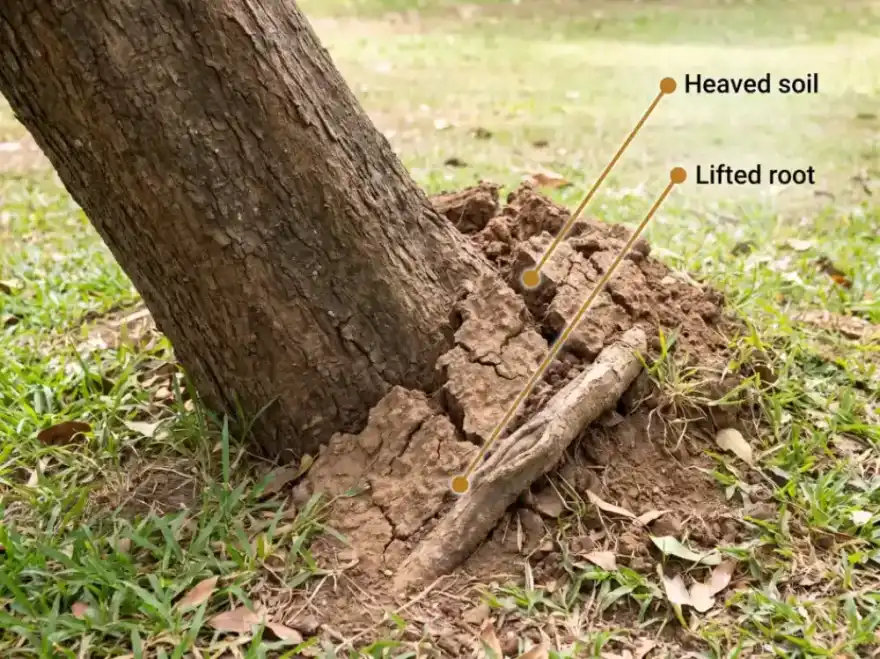
The signs that turn a lean into an emergency:
- Heaved or cracked soil on the back side of the lean. The single most serious sign — the root plate is lifting.
- Exposed or raised roots on the side opposite the direction of the lean.
- A fresh crack in the trunk, or a sudden change in the trunk angle.
- A lean that visibly worsens after each storm.
Any of these means treat the tree as if it could come down: keep people, cars, and play areas out from under it, and get a professional assessment fast.
When is it not an emergency?
When nothing at the base has changed.
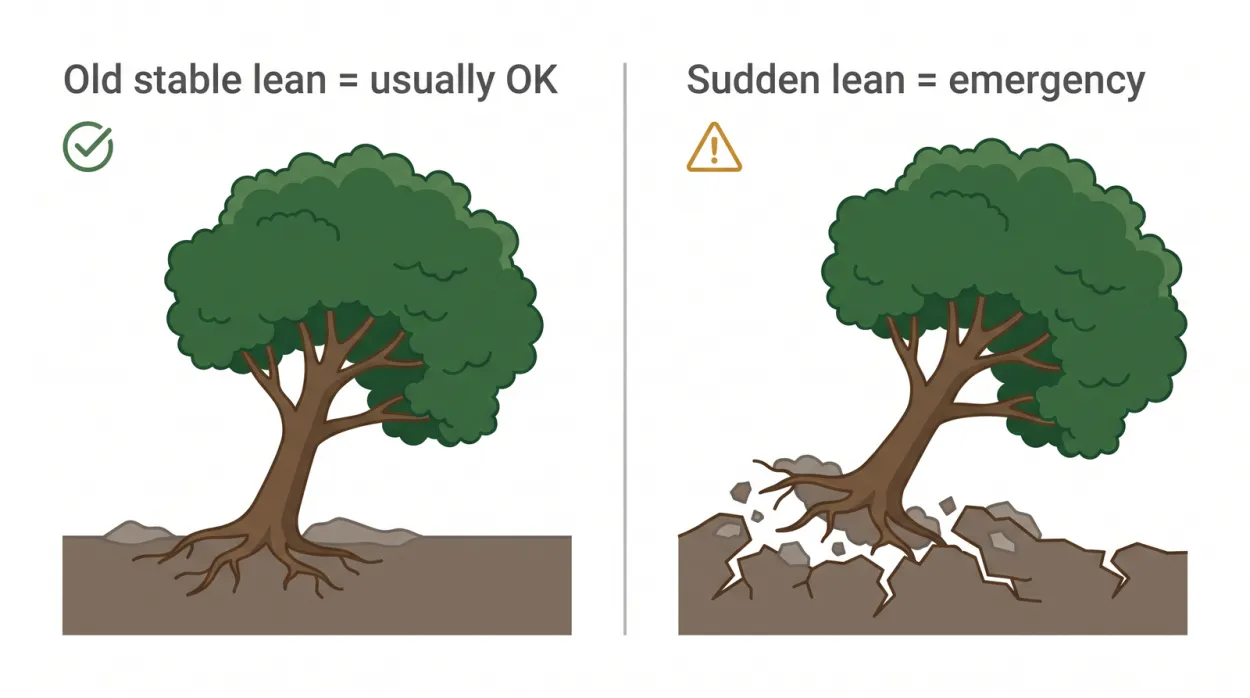
A stable lean typically shows:
- A long history at the same angle — you have photos, or you just know it's always looked that way.
- Undisturbed soil and a normal root flare at the base, no mounding or cracks.
- Healthy growth — full canopy, normal leaves, no dieback on the leaning side.
A tree like that is usually living its normal life. It's still worth a periodic look, especially after big storms, but it's not the call-tonight situation that heaving soil is.
From the data: Of the 650 landscaping companies YardQuote tracks across the GTA, tree assessment and removal is a specialty within the group, not something every crew is certified for. For a leaning-tree call, look specifically for an ISA Certified Arborist — the credential that means the person can actually judge whether a root plate is failing.
The Toronto catch: you can't just cut it down
Here's what surprises homeowners mid-panic. In Toronto, you generally can't remove a large tree on your own property without permission. The City protects private trees that are 30 centimetres or more in diameter, measured at 1.4 metres above the ground, and removing or injuring one requires a City permit, often with replacement planting.
That sounds impossible in an emergency, but it isn't. A genuinely hazardous tree has a faster path, and this is exactly why you call a certified arborist rather than reaching for a chainsaw: the arborist makes the tree safe and produces the assessment the City needs. Cutting down a protected tree without authorization risks a serious fine, so the professional route protects you twice.
If the concern is roots rather than the trunk, our guide to tree roots, foundations and Toronto clay covers when roots are actually a problem, and once a tree does come down, stump grinding versus removal explains what to do with what's left. You can compare local tree and landscaping crews on the landscaping cost page or browse landscaping companies near you.
Worried a tree on your property is failing? Request a quote and compare up to three vetted local pros side by side — your contact details only go to the one you pick.