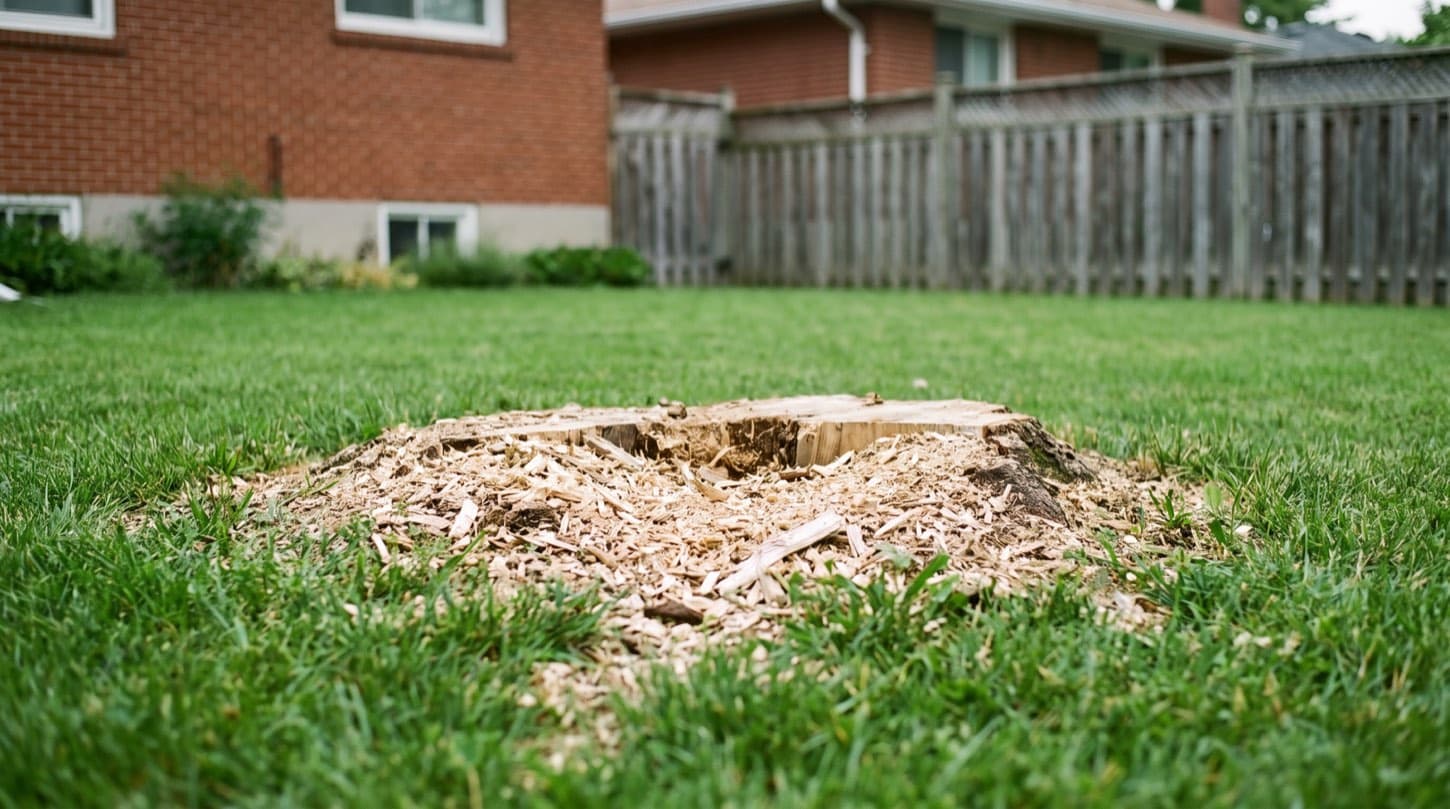
Answer First: Stump grinding uses a machine to chew the stump a few inches below grade and leaves the roots in the ground to decay over several years — it's faster, cheaper, and far less disruptive, and it's the right choice for most yards. Full stump removal digs out the entire root ball and leaves a big hole, and it's only worth the mess when you need the ground genuinely clear of roots — for a foundation, an addition, or replanting a tree in the exact same spot. The stump work itself needs no tree permit; only removing the living tree did.
Once a tree is down, you're left with the stump, and two ways to deal with it that sound similar but aren't. Picking the wrong one means either an unnecessary crater in your yard or roots left where you needed clear ground.
What's the actual difference?
One shaves, one excavates. Both get rid of the visible stump; they differ entirely in how much of the root system they take and how much they tear up your yard doing it.
Stump grinding — a machine with a rotating cutting wheel chews the stump down to a few inches below ground level, reducing it to mulch and leaving the roots in the soil to decay naturally.
Stump removal — the whole stump and its main root ball are pulled out of the ground, usually with heavy equipment, leaving a large hole to backfill.
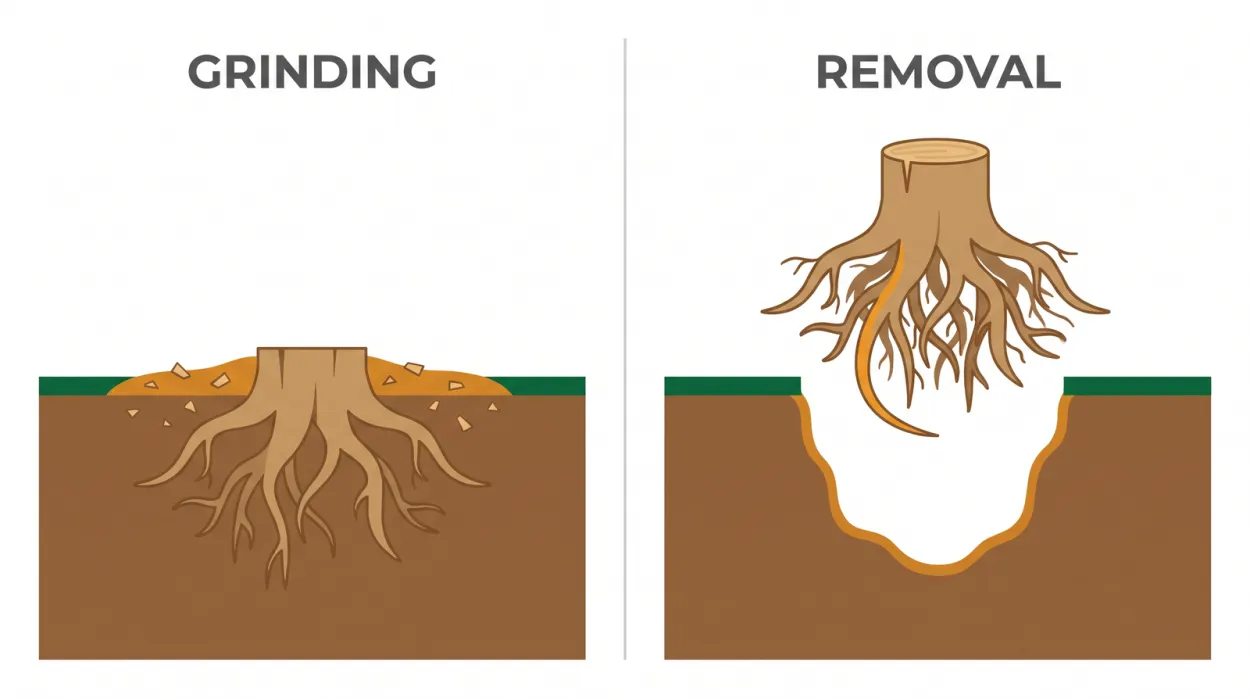
The Morton Arboretum notes that grinding leaves the base of the stump and the attached roots buried in the ground, which is exactly why it's the gentler option — nothing has to be dug up and hauled away.
Quotable: Grinding shaves a stump a few inches below grade and leaves the roots to decay in place. Removal excavates the entire root ball and leaves a large hole. Same goal, very different amount of damage to your yard.
When grinding is the right call (usually)
Most of the time. If your goal is simply to be rid of the stump and reclaim the surface, grinding wins on nearly every count:
- It's faster and less invasive. No excavation, no hauling out a root ball, no torn-up lawn or damaged nearby paths and pipes.
- You can plant over it. Clear the mulch, backfill with topsoil, and seed or sod over the spot.
- It protects the rest of the yard. Digging out a big root ball can disturb hardscape, other plant roots, and utilities the grinding never touches.
For a homeowner who wants a stump gone from the lawn or a garden bed, grinding is the default, and it's the more affordable of the two.
When you actually need full removal
Only when roots in the ground are the problem. Full removal earns its disruption in a few specific cases:
- You're building on the spot. A foundation, an addition, a shed slab, or a deck footing needs ground that's clear of a decaying root mass.
- You're replanting a tree in the exact same place. Old roots and grinding debris make poor ground for a new tree to establish, so the spot needs to be genuinely cleared.
- You want every root gone. If leftover roots or the chance of sprouting is unacceptable, only removal takes the whole system.
Outside those cases, the extra excavation, the hole, and the higher cost are effort you don't need to spend.
What happens to the roots you leave behind?
They quietly rot. After grinding, the roots stay in the soil and decay over several years. A few things follow from that, worth knowing before you plant over the spot:
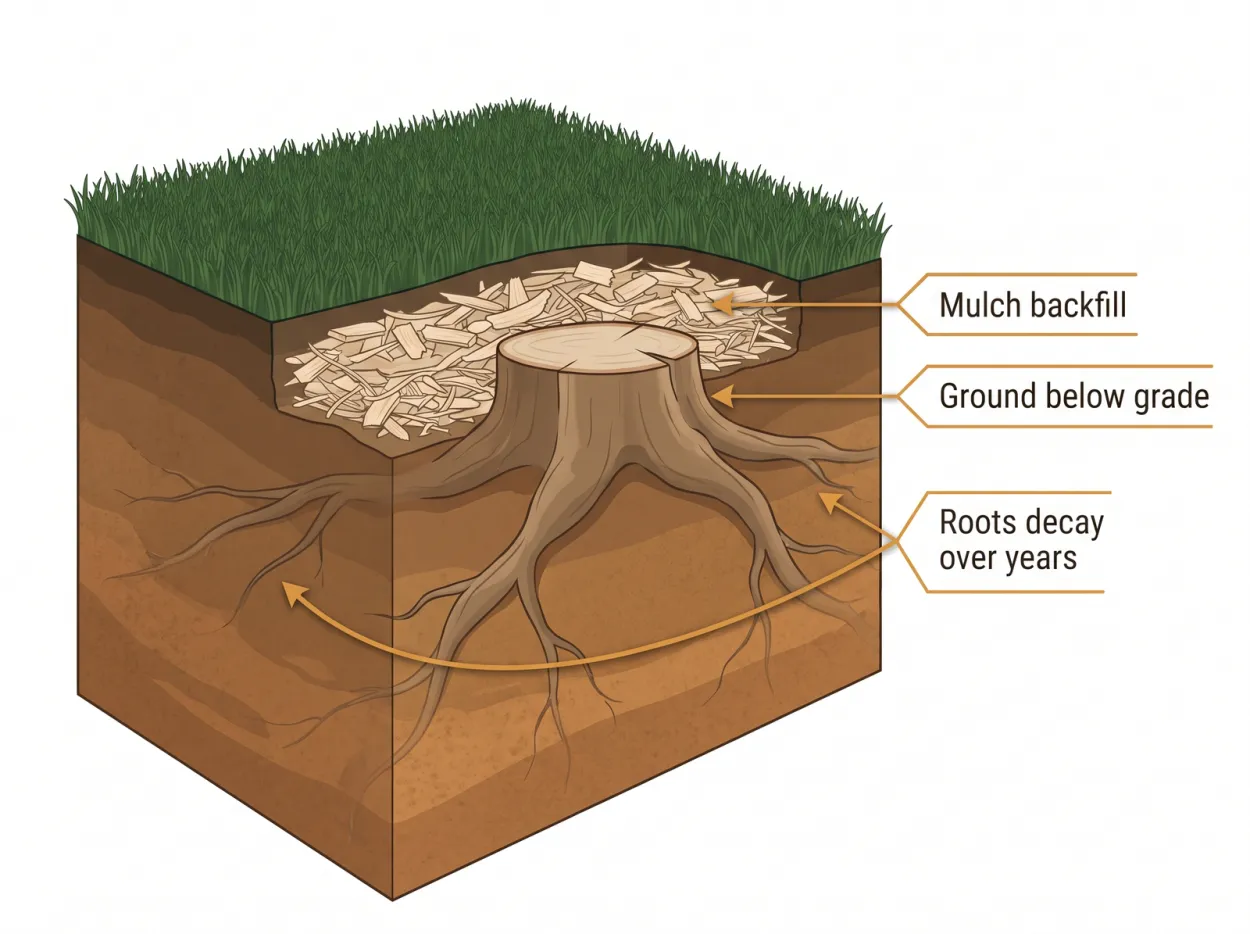
- Sprouts can appear. Some species push up suckers from the still-live roots for a while. In Ontario, handle these by cutting or digging them, not with the chemical stump killers sold elsewhere — those glyphosate and similar products are largely banned for cosmetic use here.
- The soil settles. As the roots break down, the ground over them can sink a little; top up with soil when it does.
- New grass can struggle at first. Decaying wood and its tannins make the soil slightly acidic right over the old stump, so grass there may need extra topsoil and patience.
The stump work itself needs no permit — the tree is already gone. The permit question belonged to the earlier step: in Toronto, taking down a protected private tree 30 cm or more in diameter needed a City permit. If you haven't removed the tree yet, our guides on when a leaning tree is an emergency and tree roots versus foundations cover that side. To compare local tree and landscaping crews, use the landscaping cost page or browse landscaping companies near you.
Need a stump gone? Request a quote and compare up to three vetted local pros side by side — your contact details only go to the one you pick.