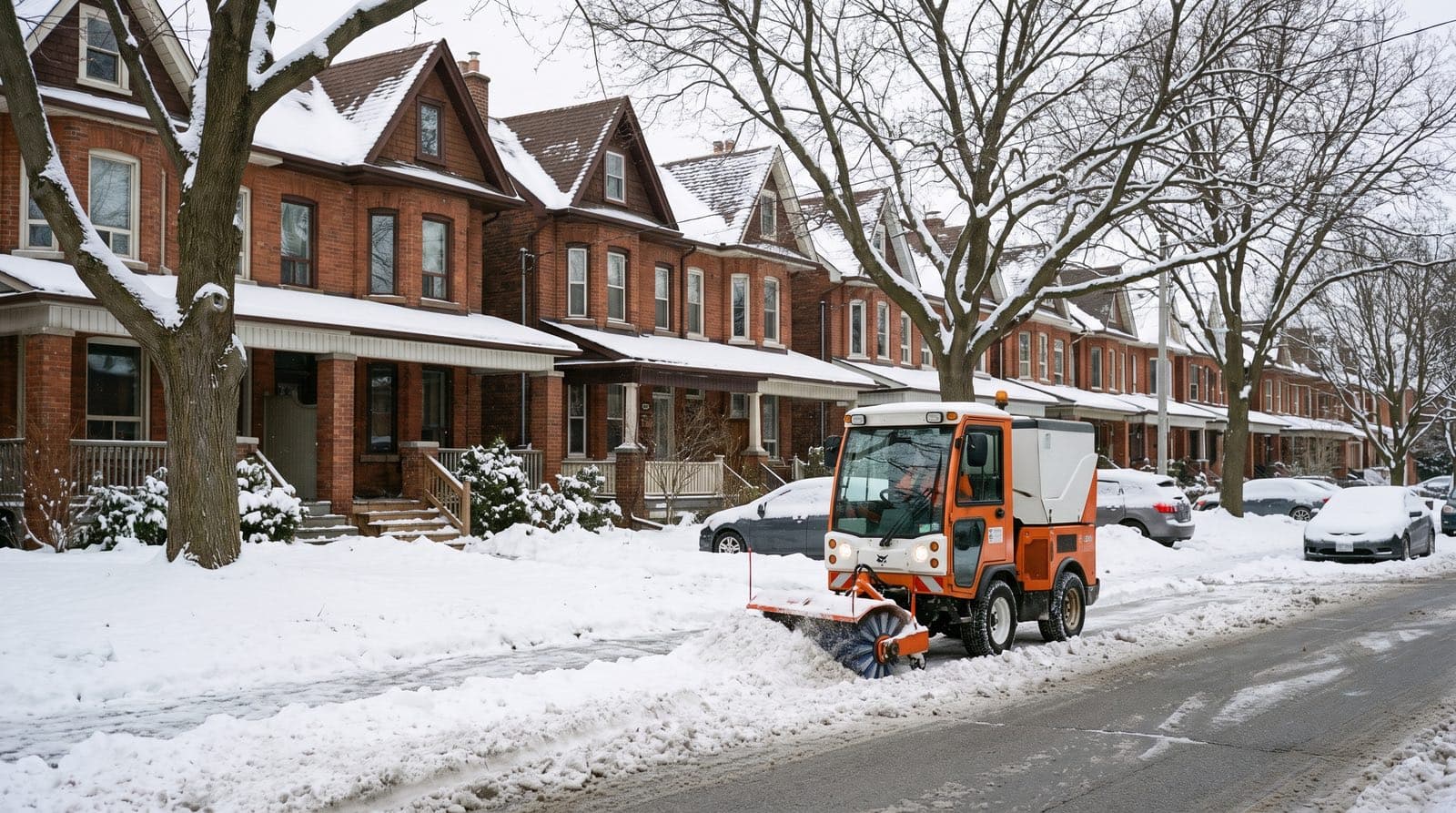
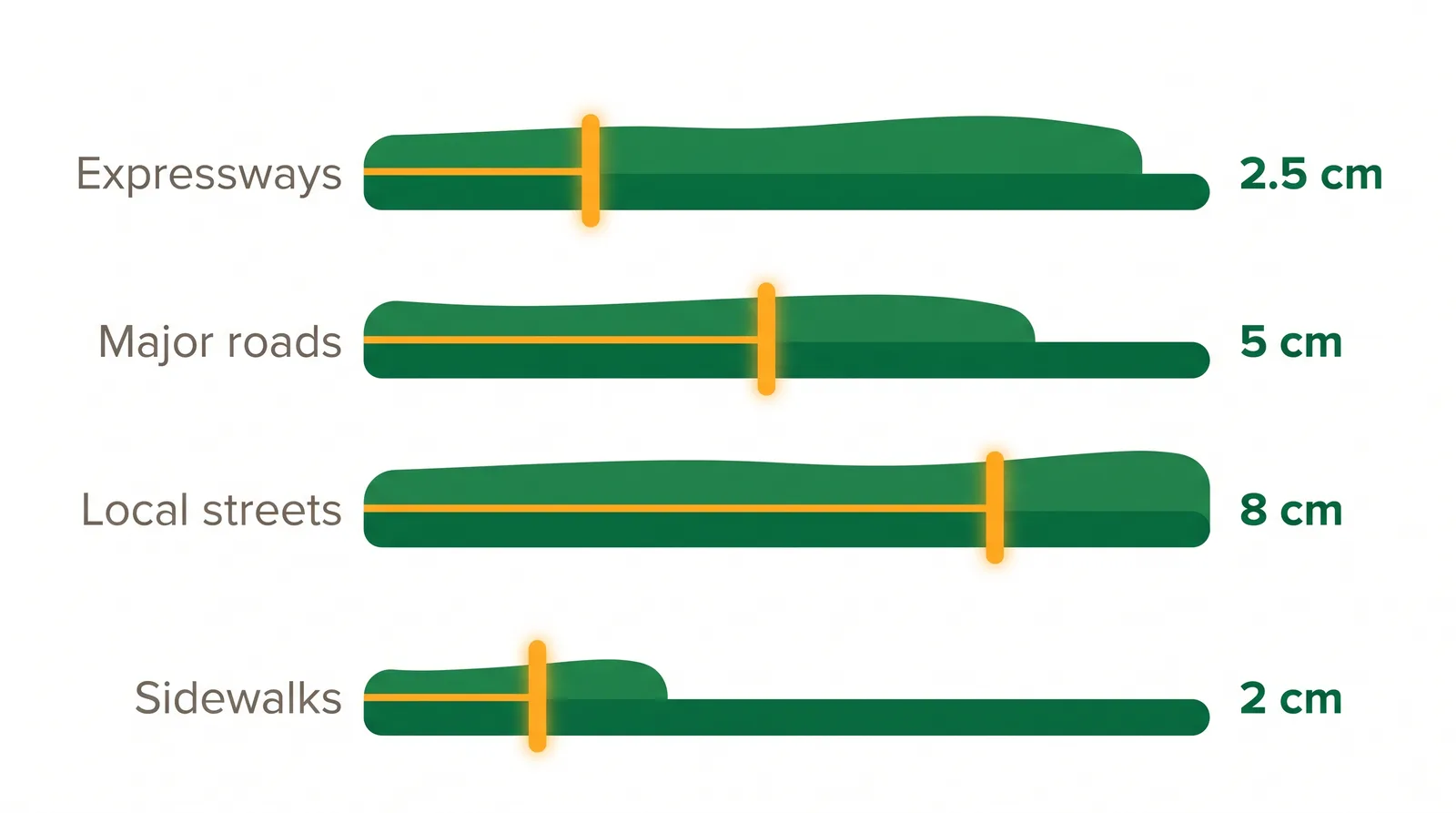
Answer First: Toronto clears snow by threshold, not by clock. Expressways are plowed at 2.5 cm of accumulation, major arterial roads at 5 cm, and local residential streets only once snow reaches 8 cm, while nearly all public sidewalks are plowed and salted at 2 cm with a 12-hour target. You can watch it happen on the City's live PlowTO map, but you still have to clear your own driveway and steps within 24 hours, and any sidewalk the City has not reached within 12 hours after snow stops.
Every Toronto winter runs on the same argument. The main road is bare, your street is buried, and it feels like the plow forgot you. It did not. The City works a priority list, and your quiet residential street sits at the bottom of it by design.
When does Toronto plow my street?
Local residential streets are plowed once snow accumulation reaches 8 centimetres, and higher-priority roads are cleared first. The City runs a tiered plan based on how many vehicles a road carries and how critical it is for emergency and transit access, so nothing about the order is personal (City of Toronto).
Here is the order, from first cleared to last.
| Surface | Plowing starts at | Service target |
|---|---|---|
| Expressways (Gardiner, DVP, etc.) | 2.5 cm | ~2 hours |
| Major / arterial roads | 5 cm | 6–8 hours |
| Local / residential streets | 8 cm | up to ~14 hours |
| Sidewalks and bus stops | 2 cm | 12 hours |
Salting is the exception to the thresholds. Salt trucks go out as soon as snow first starts sticking to the road, across every class, which is why a main road can look wet and bare while your street still holds 6 centimetres. Plowing and salting are two different operations on two different triggers.
Quotable: Toronto plows local residential streets only after 8 cm of snow accumulates, while expressways start at 2.5 cm and major roads at 5 cm. Your side street is not forgotten, it is simply last on a threshold-based priority list.
How does Toronto clear sidewalks now?
The City now plows and salts nearly all public sidewalks for every resident once snow reaches 2 centimetres, with a 12-hour service target. This is a meaningful change from the old patchwork, where mechanical sidewalk clearing depended heavily on which former municipality you lived in. Combination machines both plow and salt the walk in one pass (City of Toronto).
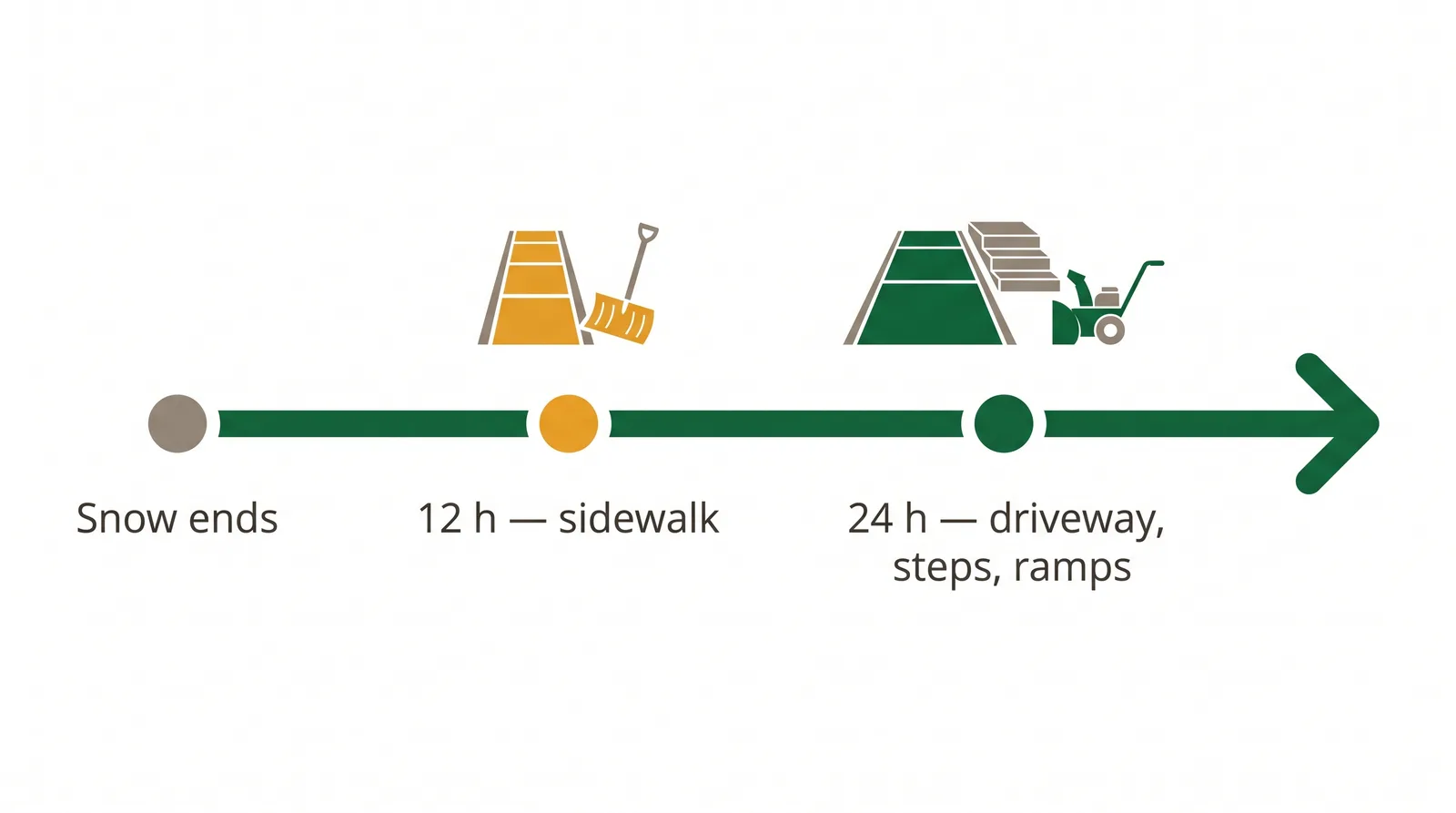
The 2-centimetre line matters for your own legal duty too. If a snowfall drops 2 centimetres or less, the City may not send a sidewalk machine, and clearing the walk in front of your property falls back to you within 12 hours after the snow ends. Above 2 centimetres, the City is clearing it, though you are still responsible if the machine misses a stretch.
What is the PlowTO map and how do I read it?
PlowTO is Toronto's live winter-operations map, and it is the single most useful tool for knowing whether to keep waiting or go grab a shovel. It uses GPS data broadcast from plows, salt trucks and sidewalk machines to show when each road, sidewalk and bike route was most recently serviced, updated in near real time (City of Toronto).
Read it in three steps. Find your street and check the timestamp on the road line, then check the separate sidewalk layer, because sidewalk plows are now linked to the map and report their own passes. If the road shows a recent pass but your street is still deep, a salt-only run may have logged before the plow round for your class was triggered. The map tells you which of the two happened.
From the data: Of the 194 snow-removal companies YardQuote tracks across the GTA (July 2026), 169 carry three or more reviews and the average rating is 4.61, with 71% holding 4.5 stars or higher. The City clears the road and the public sidewalk, but the driveway between them is where these private crews earn that rating.
Where does the City stop and my driveway begin?
The City clears public roads and sidewalks. Everything on your side of the property line, the driveway, walkway, steps, ramps and landings, is yours to clear within 24 hours after snowfall ends (City of Toronto). The most hated handoff between the two is the windrow: the ridge of packed snow the road plow drags across the foot of your driveway right after you have cleared it.
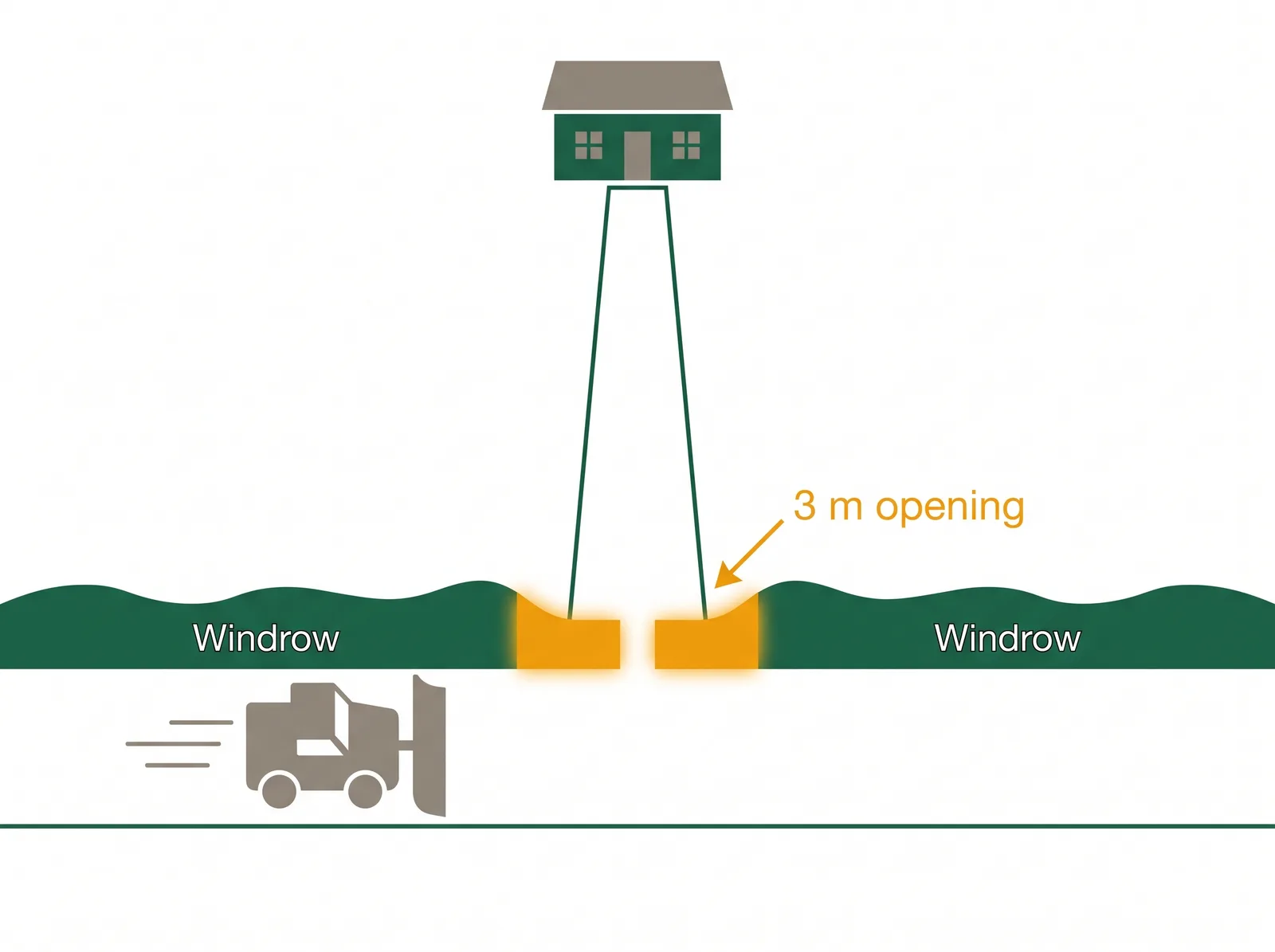
Windrow — the compacted ridge of snow a passing road plow pushes across the end of a driveway. On eligible residential streets the City clears a roughly three-metre-wide opening after plowing the road, and it clears windrows on collector and arterial roads when the pile exceeds about 25 centimetres. Whether your specific street qualifies is not universal, so confirm your address on the City map rather than assuming.
Two deadlines are worth pinning to the fridge, because they carry fines under Toronto's snow bylaw. Our companion guide breaks down the exact penalties in Toronto's sidewalk snow clearing rules.
Should I still hire a private snow contractor?
Yes, for the driveway and walkway, because the City does not touch them and 24 hours is a tight window after a heavy storm. The public plan handles the road and the sidewalk; it was never meant to clear your parking spot. A seasonal contract or per-visit crew fills that gap, and the right choice depends on how many storms a winter brings.
That trade-off has a clear answer once you run the numbers, which we do in seasonal versus per-visit snow removal pricing. You can also see current rates on the Toronto snow removal cost page or compare vetted crews for your area, such as snow removal in North York or Scarborough. For seniors and residents with disabilities, the City's 2-centimetre sidewalk clearing covers the public walk, and 211 Ontario can point you to community help for private property before you pay for a contract.
Want to know what driveway clearing should cost on your street? Request a quote and compare up to three vetted local snow crews side by side, on the same trigger depth and inclusions. Your contact details only go to the one you pick.