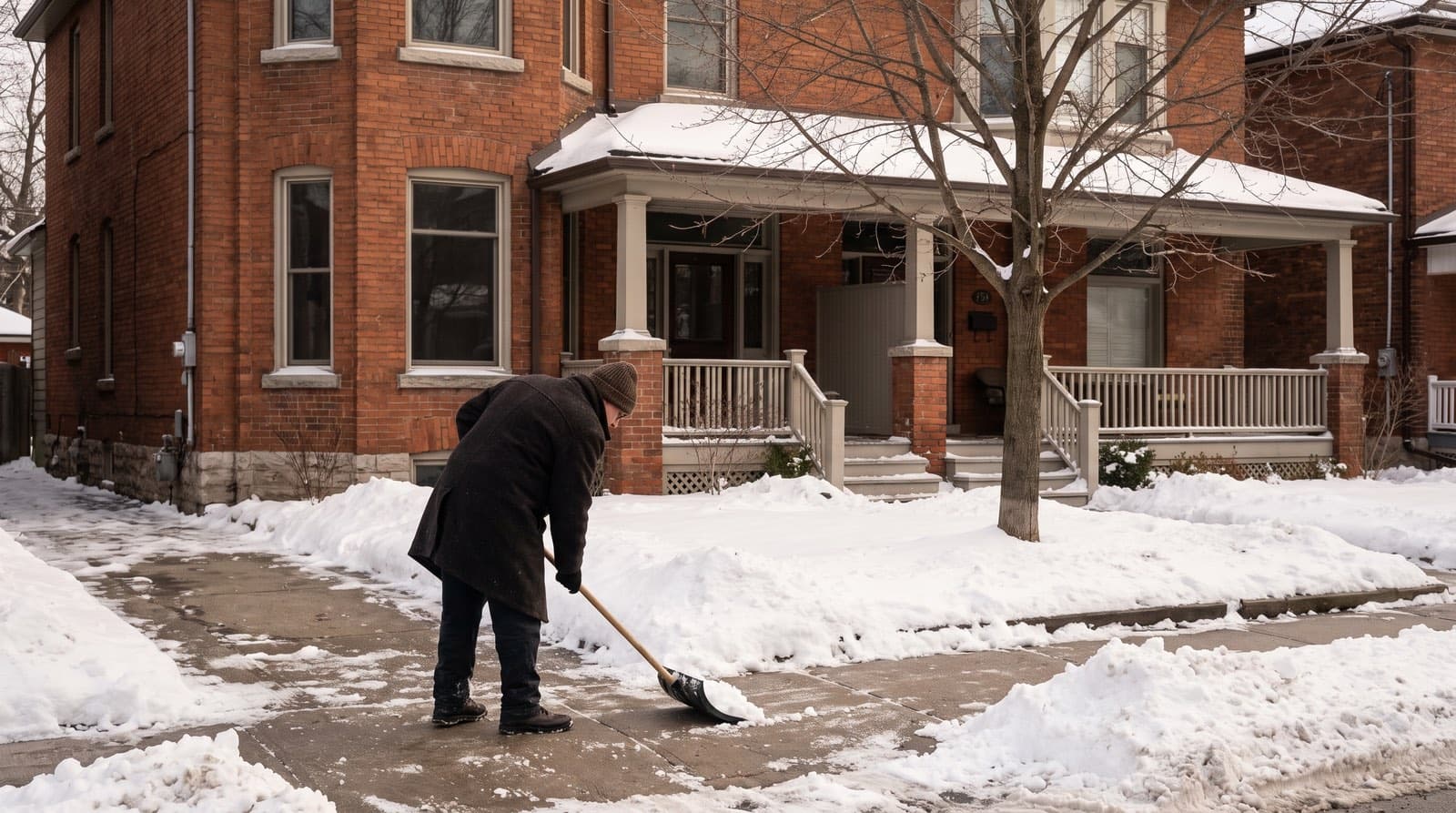
Answer First: Toronto's Chapter 719 gives you two deadlines: clear the public sidewalk around your property within 12 hours after snow stops, and clear your own driveway, steps and ramps within 24 hours. Failing to clear the sidewalk is a ticketable offence under the Provincial Offences Act, and the expensive, City-published penalty is for pushing snow back onto a road, sidewalk or bike lane, which carries a $500 fine plus a $110 victim surcharge for $610.
Most Toronto homeowners know they are supposed to shovel. Far fewer know they are on two different clocks, that the grit matters as much as the shovelling, and that the priciest ticket comes from where you put the snow, not whether you moved it.
What does Toronto's snow bylaw actually require?
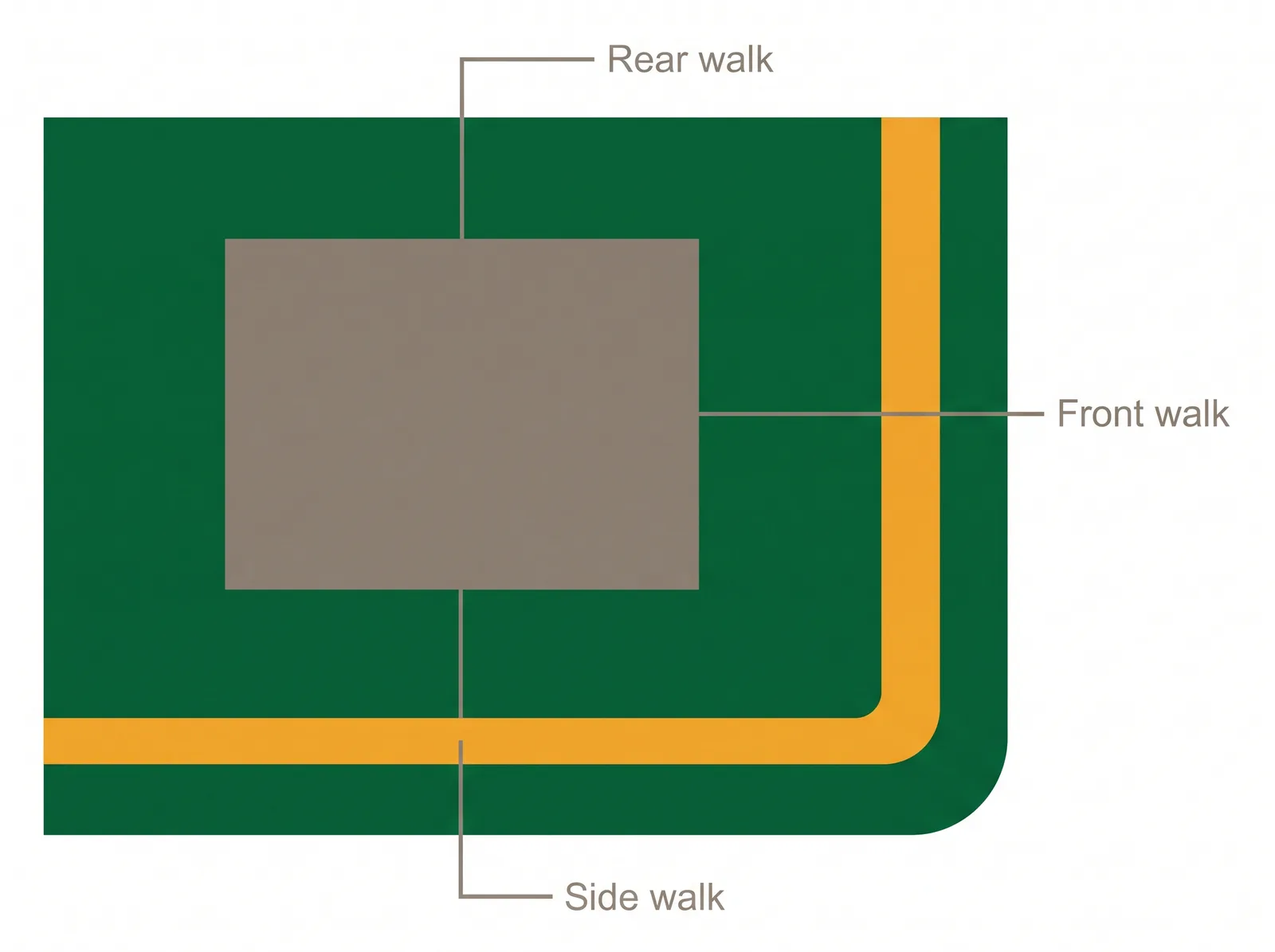
Chapter 719 of the Toronto Municipal Code sets one core duty: the owner or occupant of any building must clear snow and ice from the sidewalk in front of, alongside and at the rear of the property, within 12 hours after any fall of snow, rain or hail stops (City of Toronto, Chapter 719). The clock starts when the weather ends, not when it is convenient.
The bylaw also covers the ice you cannot shovel away. After you clear, if any part of the sidewalk stays slippery from any cause, you must apply ashes, sand, salt or another suitable material to fully cover the slippery surface. Clearing the snow but leaving a glaze of ice does not satisfy the bylaw.
Quotable: Toronto's snow bylaw does not stop at shovelling. Chapter 719 requires owners to apply sand, salt or grit whenever a cleared sidewalk stays slippery, so a bare-but-icy walk is still a violation.
What are the exact deadlines?
Two surfaces, two windows, both starting the moment precipitation ends.
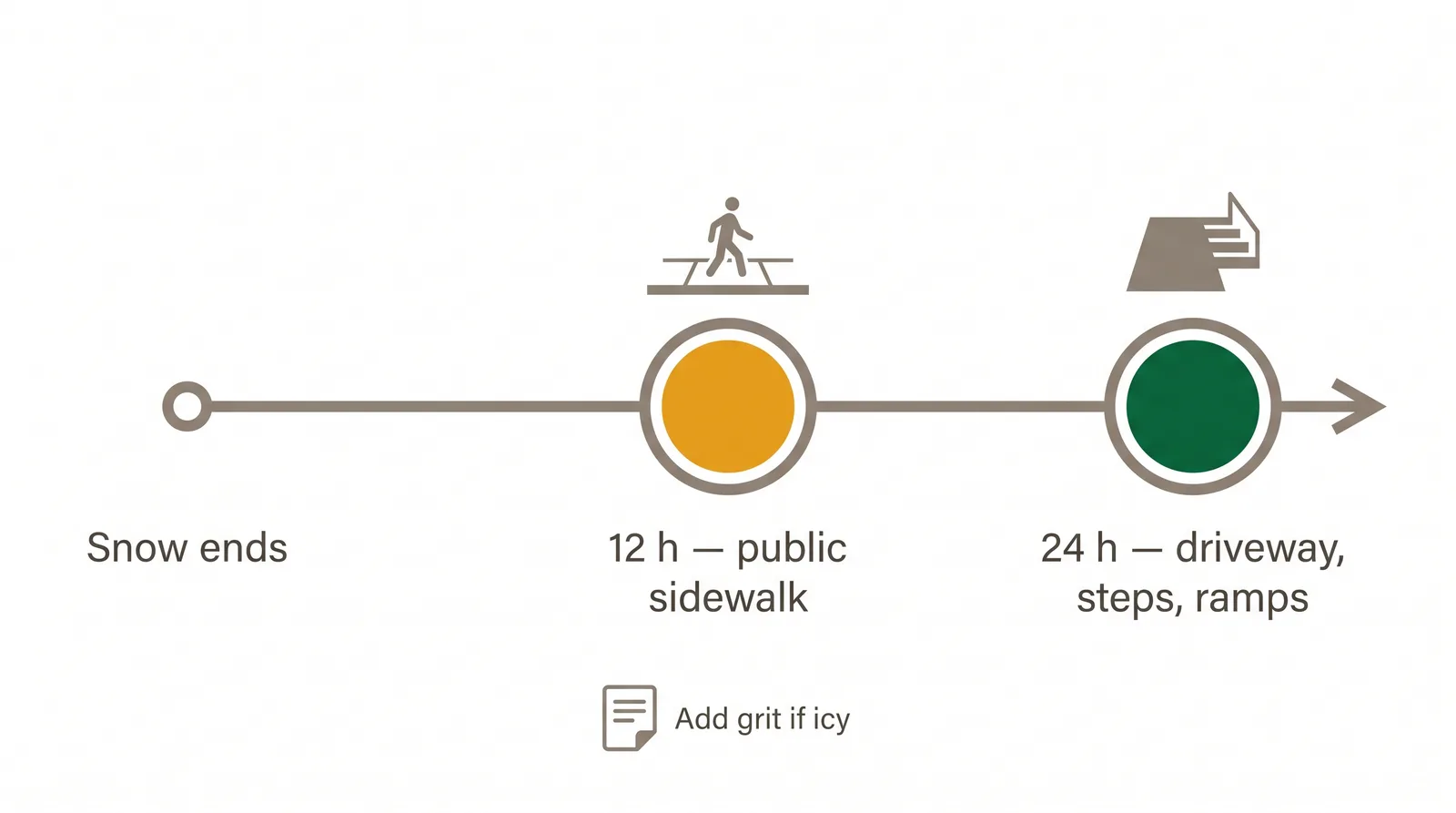
- Public sidewalk (front, side and rear): 12 hours. This is the duty most people forget, because they think the City owns the sidewalk. You are responsible for clearing it.
- Private driveway, walkway, steps, ramps and parking areas: 24 hours after snowfall ends (City of Toronto).
- Grit whenever slippery. If either surface stays icy after clearing, apply sand or salt to cover it, as often as needed.
A corner lot is the trap. The bylaw covers the sidewalk in front of, alongside and at the rear of your building, so a corner property has to clear two long stretches of public walk, not one.
How much is the fine for not clearing snow?
There are two separate penalties, and the one that costs the most is the one people trigger by accident. Failing to clear the sidewalk is an offence under Chapter 719, and conviction carries a fine set under Ontario's Provincial Offences Act. Enforcement runs largely on complaints from neighbours or passersby, so a walk that stays buried for days is far likelier to draw a ticket than one cleared late.
The heavier penalty is for where the snow goes. It is illegal to push, plow or blow snow from your property onto a public road, sidewalk or bike lane, and that offence carries a $500 fine plus a $110 victim surcharge, for a total of $610 (City of Toronto).
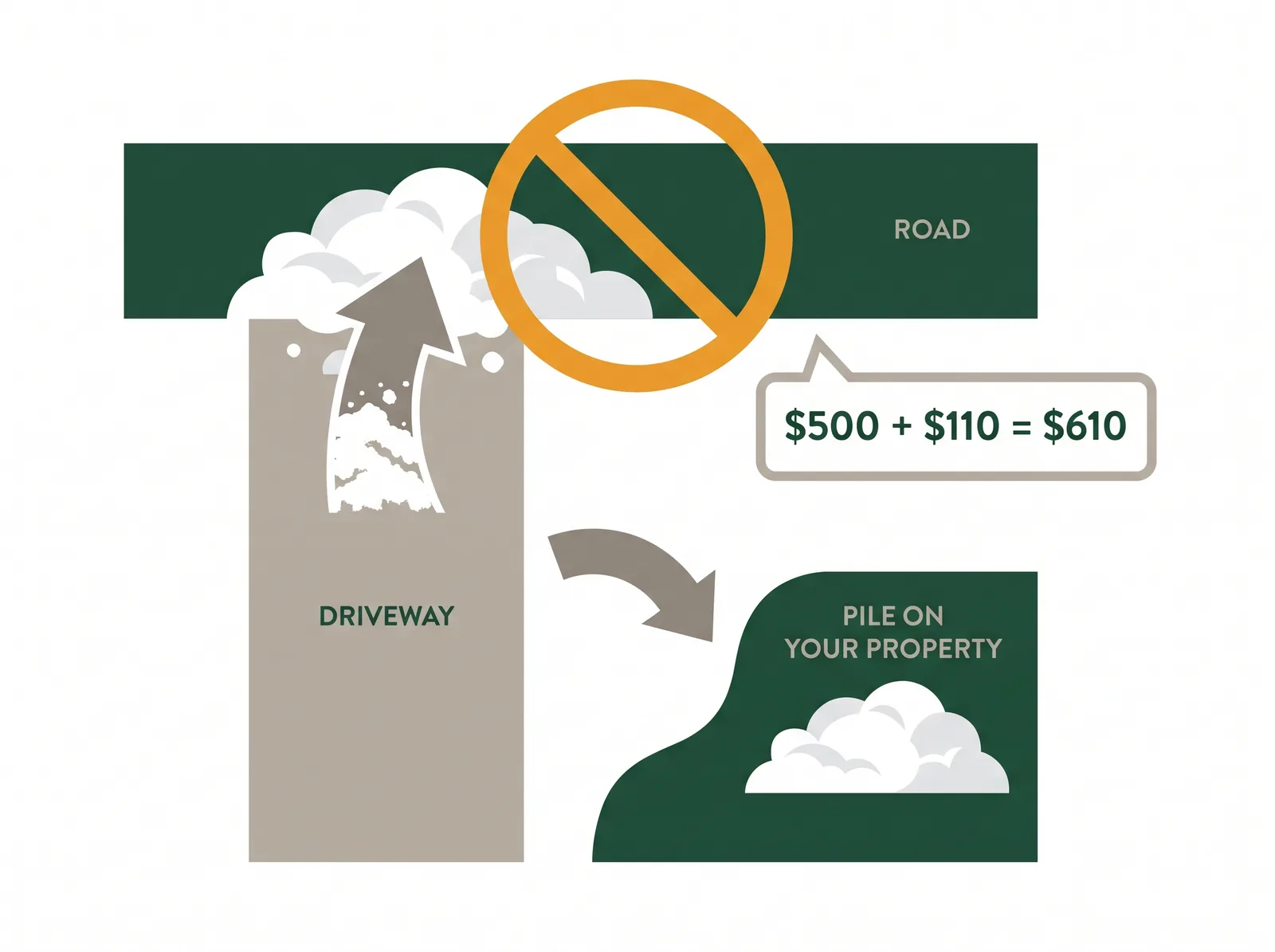
Quotable: In Toronto, blowing or shovelling snow onto a public road, sidewalk or bike lane carries a $500 fine plus a $110 victim surcharge, for $610, far more than the ticket for failing to clear your own walk.
That $610 rule is also why professional quotes for tight downtown lots often carry a snow-hauling charge. On a narrow property with no room to pile snow, the crew legally has to truck it away rather than push it to the curb.
Who actually clears the sidewalk, you or the City?
Both, depending on how much falls. Toronto now mechanically plows and salts nearly all public sidewalks for every resident once snow reaches 2 centimetres, with a 12-hour service target (City of Toronto). So on a real storm, a City machine is usually coming.
Your 12-hour duty bites hardest below that line. On a snowfall of 2 centimetres or less, the City may not send a sidewalk plow, and the walk in front of your property is entirely on you. You are also on the hook for any patch a machine skips, and for the salt if it stays slippery after clearing. For how the City prioritizes roads and sidewalks and how to read the live map, see our Toronto snow removal plan and route map guide.
From the data: Of the 194 snow-removal companies YardQuote tracks across the GTA (July 2026), 169 carry three or more reviews at an average of 4.61 stars. A seasonal contract that includes walkway hand-clearing is the clean way to stay inside both the 12-hour and 24-hour windows without setting an alarm after every storm.
How do I stay compliant without babysitting the forecast?
Clear early, grit after, and never send the snow to the road. If you travel or cannot reliably hit a 12-hour window, a snow contract that covers the walkway as well as the driveway removes the risk, because a good crew is contractually on the clock the moment snow ends.
Whether that is worth it depends on how many storms a winter brings, which we work through in seasonal versus per-visit snow removal pricing. You can check current rates on the Toronto snow removal cost page or compare vetted crews in your area, such as snow removal in East York or downtown Toronto, where hauling rules make a licensed contractor worth the premium.
Want to stay on the right side of the bylaw without watching the sky? Request a quote and compare up to three vetted local snow crews side by side, confirming each one includes walkway clearing and salting. Your contact details only go to the one you pick.