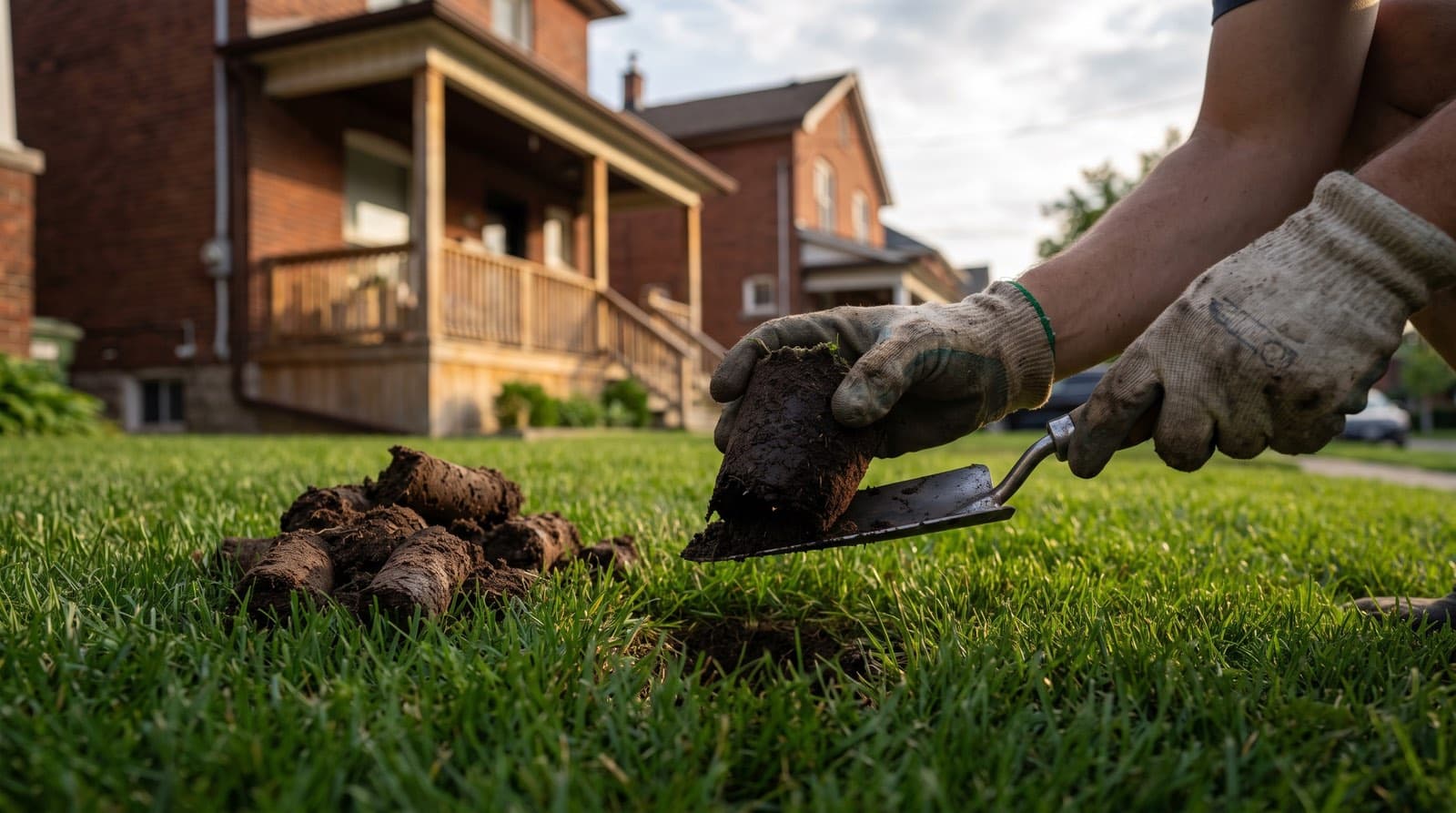
Answer First: Get a soil test from one of Ontario's OMAFRA-accredited labs, such as the University of Guelph, SGS in Guelph, or Activation Laboratories in Ancaster (Government of Ontario). A standard test measures pH, phosphorus, potassium, magnesium and more, so you feed the lawn what it actually lacks instead of guessing. Most cool-season turf wants a pH of about 6.0 to 7.0; below that, the report will tell you to add lime. Take the sample by mixing 10 to 15 cores from across the lawn into one representative sample.
Most lawn fertilizer is bought on a hunch. A soil test replaces the hunch with two or three numbers that tell you exactly what the lawn needs, and it costs less than the bag of the wrong product you would otherwise buy.
Where do I get a soil test in Ontario?
From an OMAFRA-accredited lab. Ontario recognizes a specific set of accredited soil-testing laboratories, and using one means the results follow a provincial standard rather than a hardware-store test kit (Government of Ontario). Several are within easy reach of the GTA.
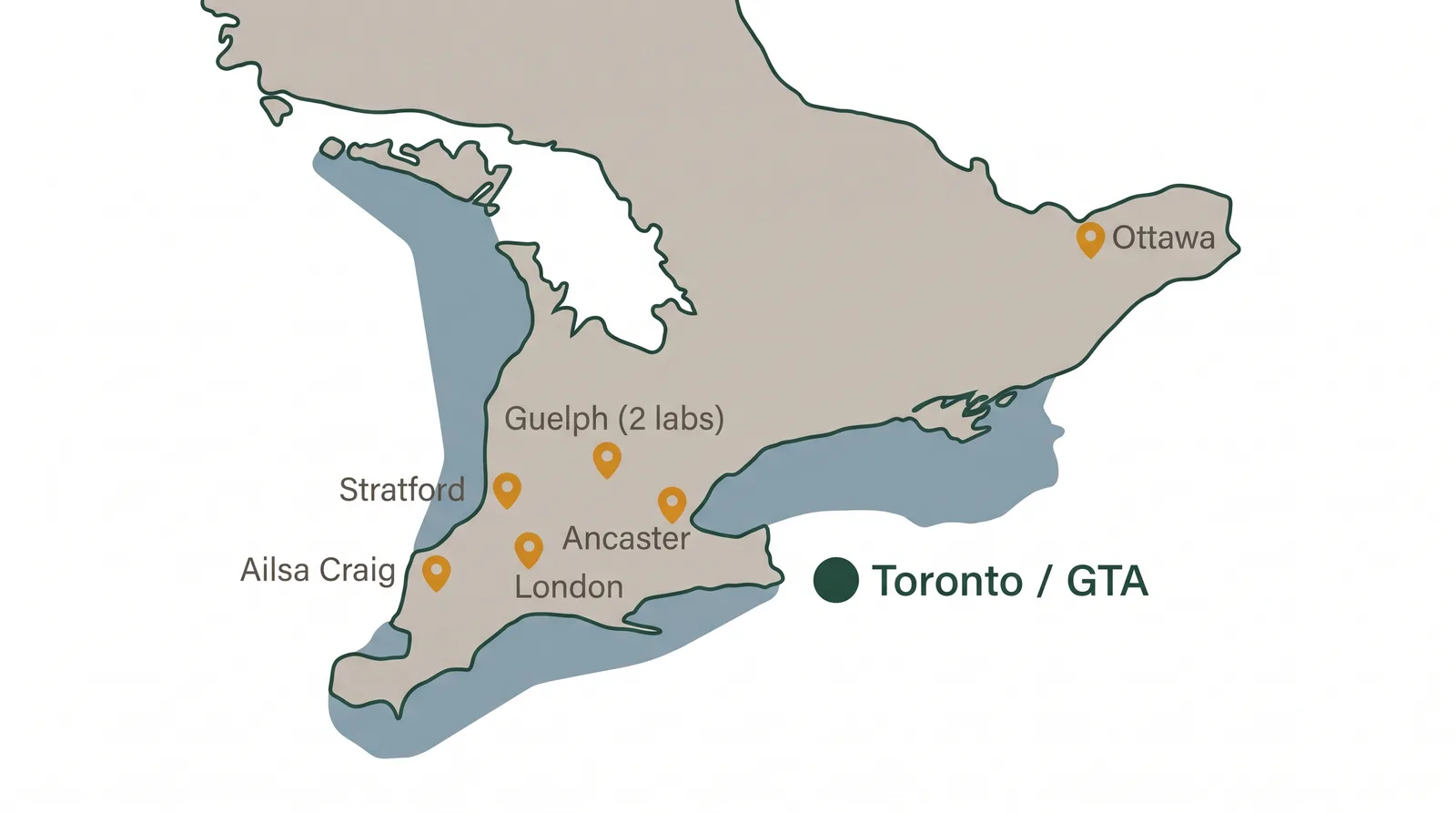
The accredited labs include the Agriculture & Food Laboratory at the University of Guelph and SGS Canada Crop Science, both in Guelph; Activation Laboratories in Ancaster; A&L Canada Laboratories in London; Stratford Agri-Analysis in Stratford; Eurofins in Ottawa; and Honeyland Ag Services in Ailsa Craig. You collect the sample, fill out the lab's submission form, choose a basic soil or turf package, and mail it in.
Quotable: Ontario recognizes eight OMAFRA-accredited soil labs, several near the GTA, including the University of Guelph and Activation Laboratories in Ancaster. An accredited test follows a provincial standard, unlike a hardware-store kit.
How do I take a proper soil sample?
The sample is where most home tests go wrong. One scoop from one spot tells you about that spot, not your lawn. A representative sample is a blend.
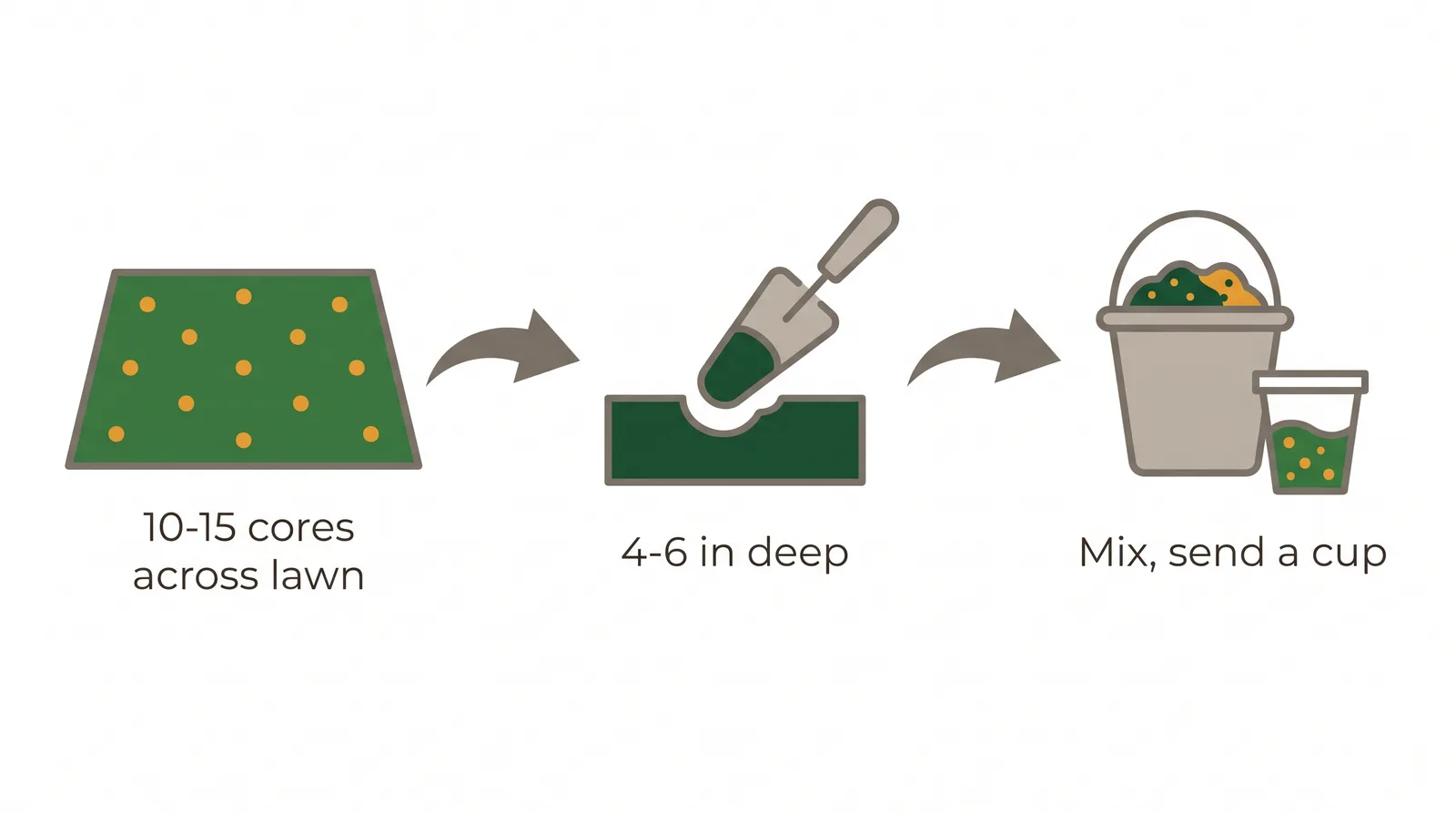
- Collect 10 to 15 cores from spots spread across the whole lawn, not one corner.
- Sample to root depth, about 10 to 15 cm (4 to 6 inches), where the grass actually feeds.
- Mix them in a clean plastic bucket and pull out any thatch, stones or roots.
- Send a cup or two of the blended soil, following the lab's form.
Sample areas that behave differently, the shady back lawn and the baked front strip, separately, since they may need different treatment.
How do I read the results?
An Ontario accredited test measures pH, buffer pH, nitrate-nitrogen, phosphorus, potassium, magnesium, and zinc and manganese as index values, and most labs add organic matter (OMAFRA). For a lawn, four numbers do most of the work.
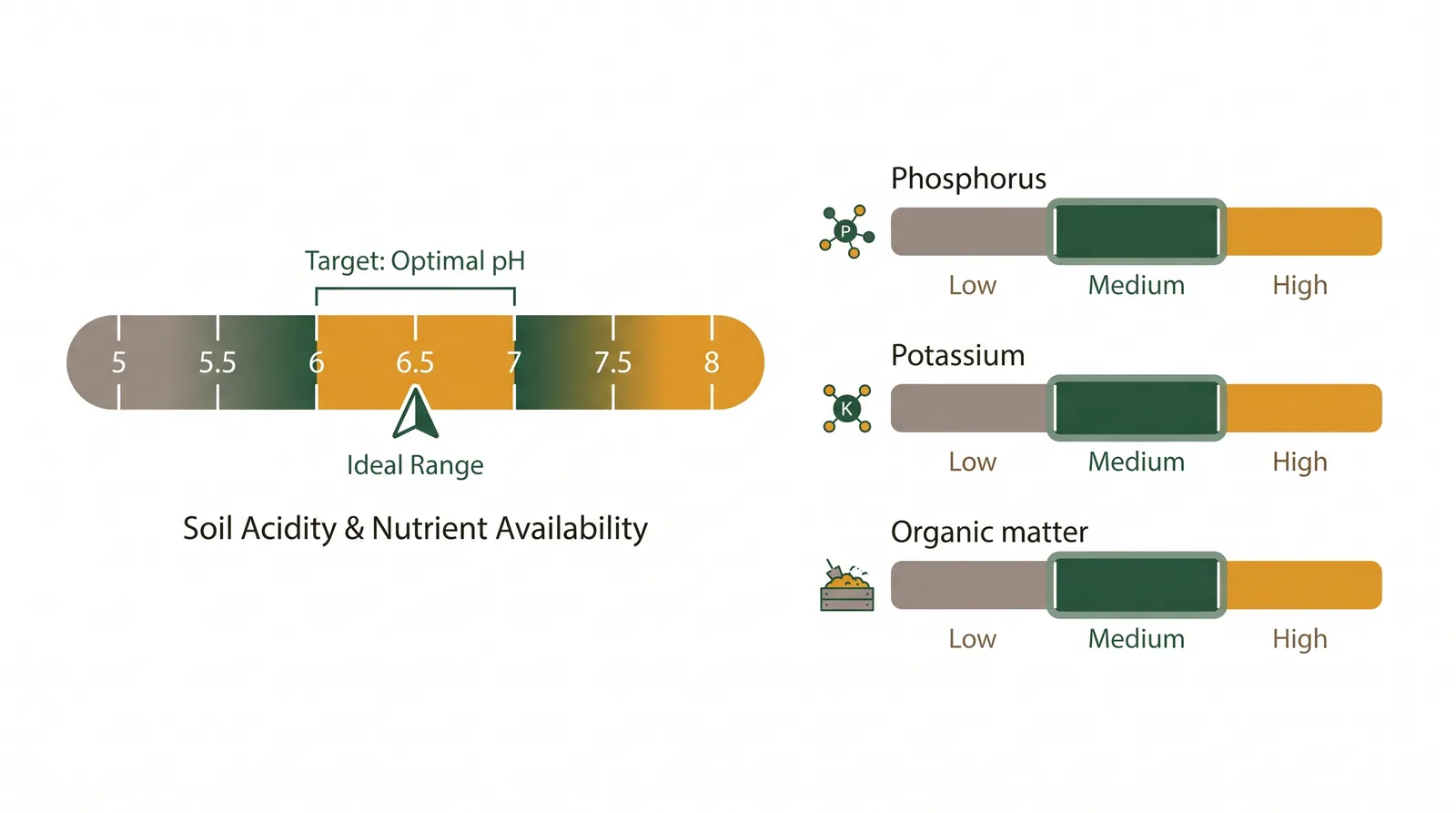
- pH — the master number. Most cool-season turf grows best at about 6.0 to 7.0 (Penn State Extension). Below 6.0, the report recommends lime; above 7.5, common on GTA clay, you adjust feeding instead.
- Phosphorus (P) — drives root and seedling growth. If it reads high, do not add more; Ontario lawns are often already high in phosphorus.
- Potassium (K) — helps the lawn handle drought, cold and disease. Low potassium is worth correcting before winter.
- Organic matter — the soil's health. Low organic matter on clay is why compost topdressing helps so much.
The lab usually converts these into a recommendation, so you leave with a specific action, lime this much, add this nutrient, rather than a wall of figures.
From the data: Of the 249 lawn-care companies YardQuote tracks across the GTA (July 2026), 220 carry three or more reviews at an average of 4.75 stars. The best programs start from a soil test, not a standard four-step bag, because feeding a lawn what it already has is wasted money.
What do I do with the results?
Act on the two or three numbers that are off, and ignore the rest. If pH is low, apply the recommended lime; if potassium is low, use a fertilizer that supplies it; if organic matter is low on clay, topdress with compost, which pairs perfectly with fall aeration in when to aerate your lawn in Toronto. A test that comes back balanced is a result too: it means the problem is not the soil, and you can look at compacted soil or watering instead.
You can compare vetted lawn-care crews who work from a soil plan on the Toronto lawn care cost page or in your area, such as lawn care in Scarborough or Etobicoke.
Want a lawn program built on what your soil actually needs? Request a quote and compare up to three vetted local lawn-care pros side by side. Your contact details only go to the one you pick.