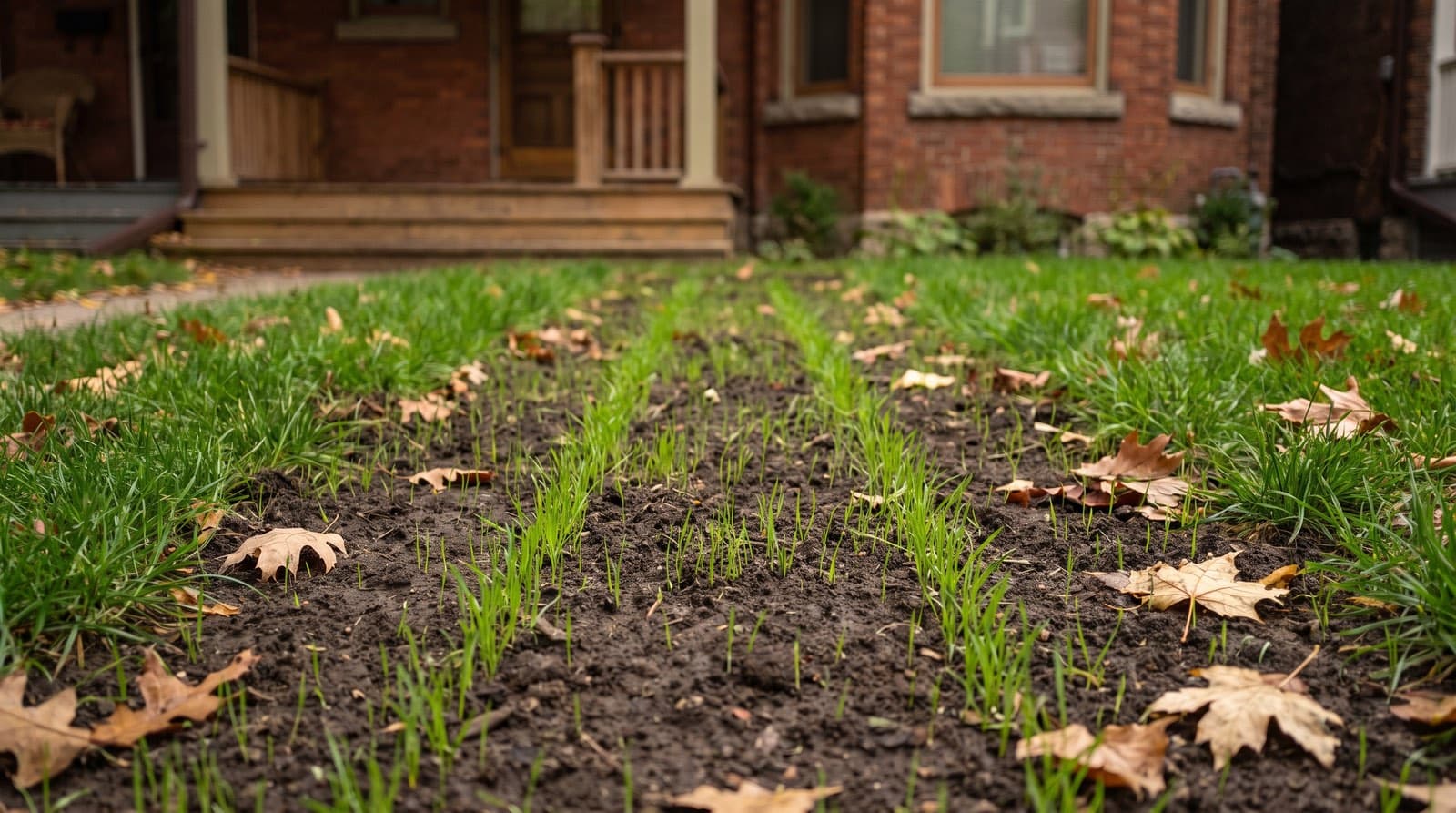
Answer First: Overseeding spreads grass seed over an existing lawn to thicken it, and works best after aeration; slice seeding (also called slit seeding) uses a machine to cut grooves in the soil and drop seed directly in, giving far better seed-to-soil contact and germination (Michigan State University Extension). Choose overseeding for a lawn that is thinning but still decent, and slice seeding for one that is badly thin or patchy. Both go down best in early fall, kept moist until they germinate.
Both methods add new grass to an existing lawn, and both are booked under the vague word "reseeding." The difference is where the seed ends up, and that one detail decides whether it grows.
What is overseeding?
Overseeding — spreading new grass seed over an existing lawn to thicken thin turf and crowd out weeds, without tearing the lawn up. It is the lighter, cheaper option, and it is the right call when a lawn is thinning but still has reasonable coverage.
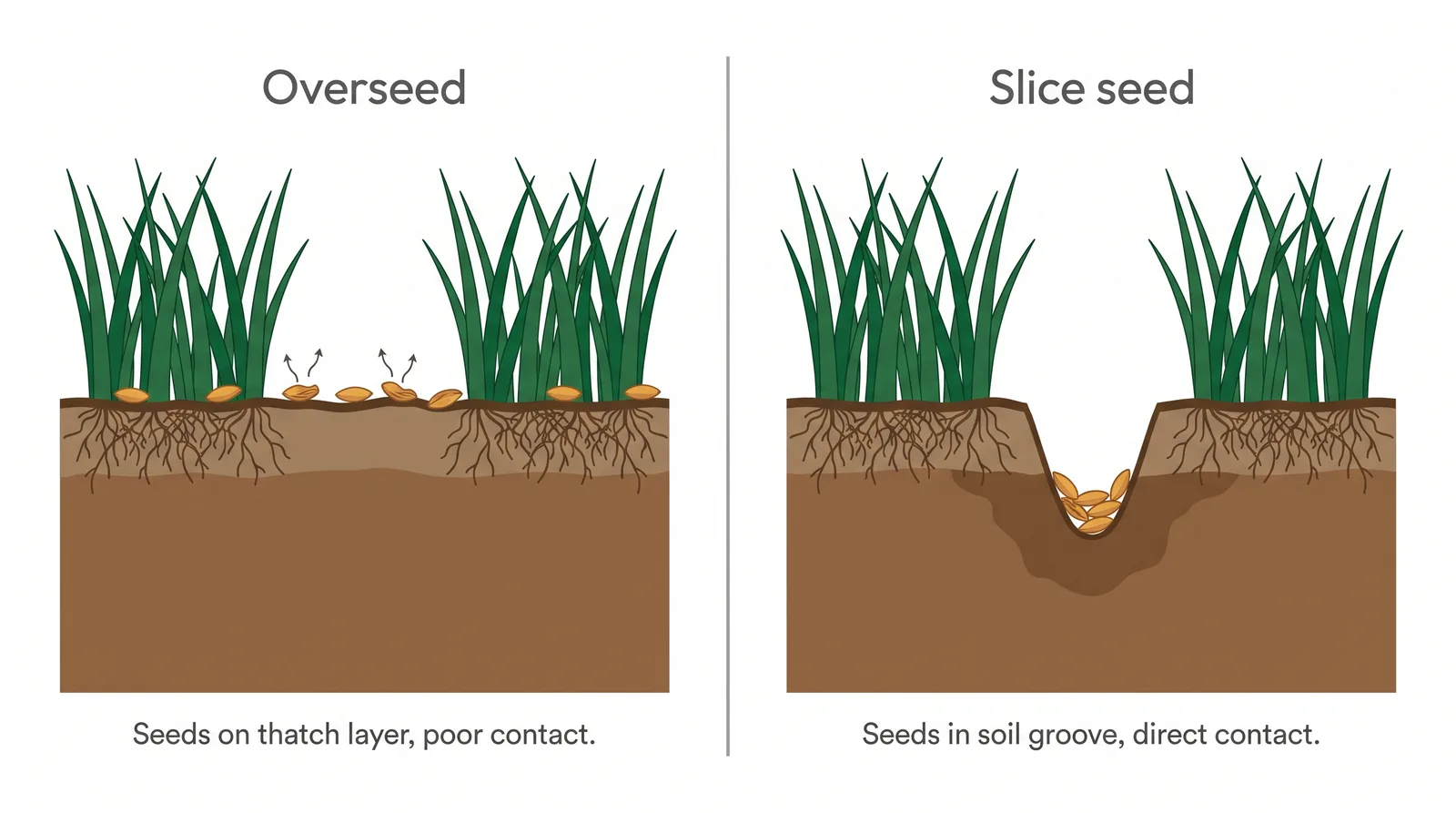
The catch is contact. Seed broadcast onto an untouched lawn largely lands on thatch and existing grass, where it dries out and never germinates. That is why the method works only if you help the seed reach soil: mow low, then core aerate or run a slit seeder first, so the seed has somewhere to land (University of Maryland Extension). Overseeding straight onto an undisturbed lawn is the most common way people waste a bag of seed.
What is slice seeding?
Slice seeding (slit seeding) — a machine cuts shallow grooves, or slits, into the soil and drops seed directly into them, so the seed sits in soil rather than on top of it. It needs no soil preparation and gives strong results because the seed makes direct contact with the ground (Michigan State University Extension).
For the best coverage, a slit seeder is run in two directions perpendicular to each other, which knits the new grass in evenly. Because it places seed straight into the soil, slice seeding is the method for a lawn that is badly thin, worn along paths, or spotted with bare patches that overseeding alone would not fill.
Quotable: Slice seeding cuts grooves in the soil and drops seed directly in, giving the seed-to-soil contact that broadcast overseeding usually misses. Seed on thatch dries out; seed in soil grows.
Why does seed-to-soil contact matter so much?
Because it is the single factor that decides whether seed becomes grass. Seed needs to sit against moist soil to absorb water and germinate; seed resting on thatch or leaf blades dries out between waterings and dies (Penn State Extension). Everything about these two methods comes back to that one requirement.
That is also why the two are often combined with aeration. Overseeding after core aeration drops seed into the open holes, and slice seeding builds the contact into the machine itself. Either way, the goal is identical: get the seed into the soil, not onto it. The timing case for aeration, which pairs directly with overseeding, is in when to aerate your lawn in Toronto.
Which one does my lawn need?
Match the method to how bad the lawn is.
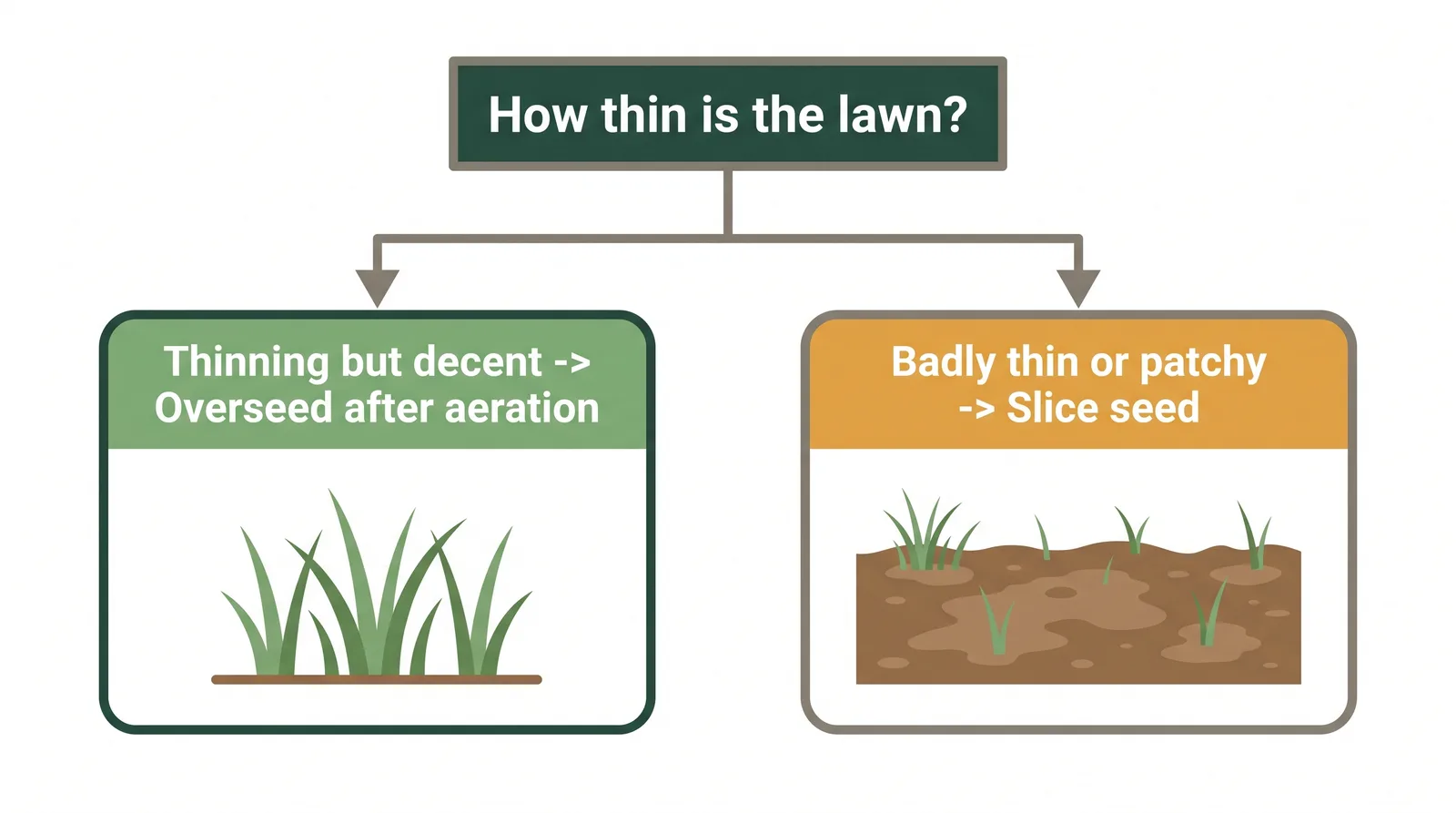
- Overseed if the lawn is thinning but still has decent coverage. It is cheaper and lighter, and paired with aeration it thickens the turf well.
- Slice seed if the lawn is badly thin, worn or has bare patches. The direct seed-to-soil contact gives much higher germination where a lawn needs real rebuilding.
From the data: Of the 249 lawn-care companies YardQuote tracks across the GTA (July 2026), 220 carry three or more reviews at an average of 4.75 stars, and most sell a fall aeration-and-overseeding package. Ask whether a thin lawn is a slice-seeding job instead; on a badly worn lawn it establishes far better than broadcast seed.
How do I care for new seed after either method?
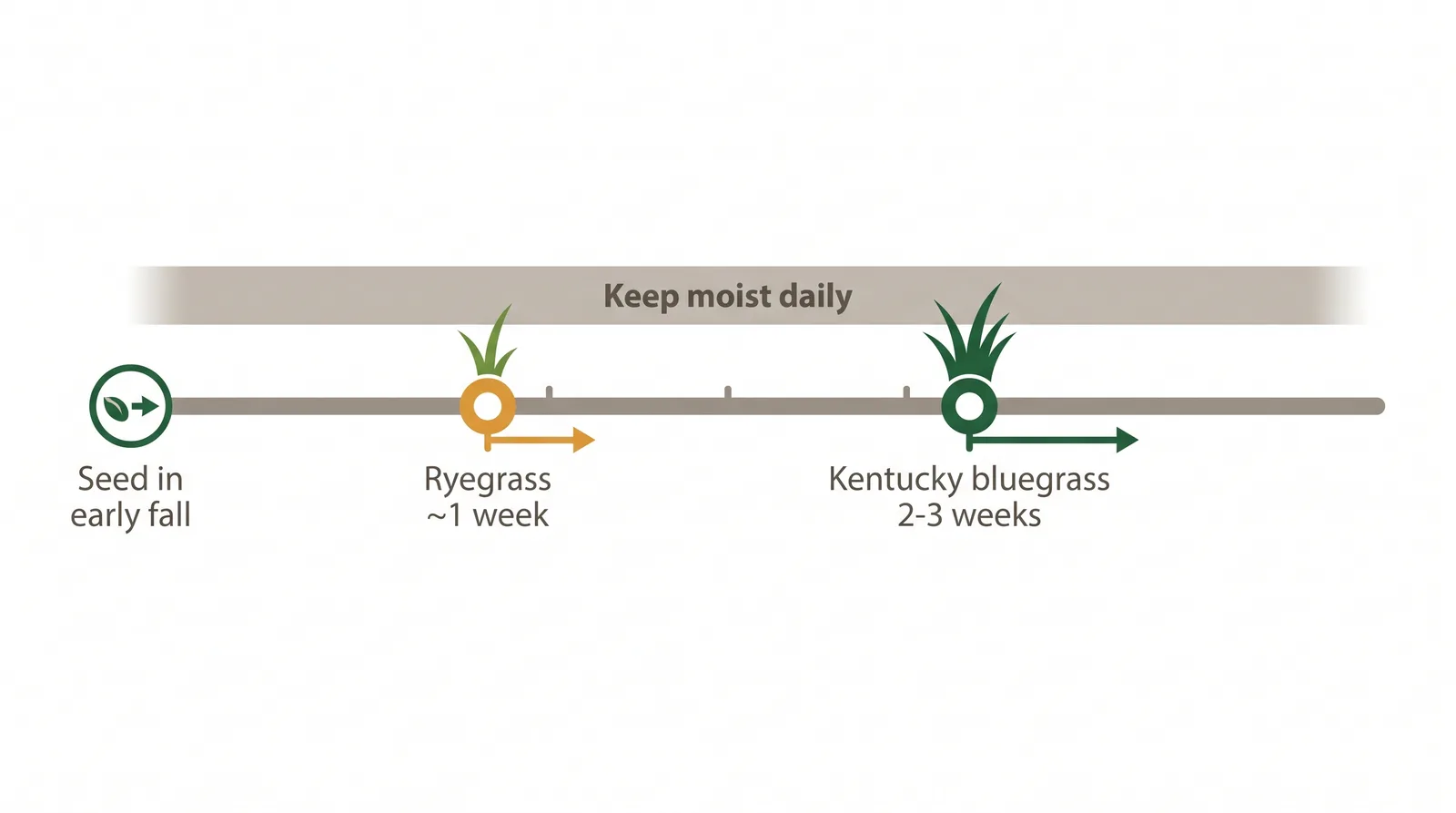
Keep it moist and be patient. After seeding, the area must stay consistently damp until everything has germinated, which means light, frequent watering at first, the one time daily watering is correct. Different grasses come up at different speeds: perennial ryegrass sprouts in about a week, while Kentucky bluegrass can take 2 to 3 weeks (Michigan State University Extension).
Once the new grass is established, switch from frequent shallow watering to the deep, infrequent watering that grows deep roots, covered in the best time to water grass in Toronto. If the lawn is so far gone that even slice seeding feels optimistic, fresh sod may be the faster route, weighed out in the sod installation cost guide. You can also compare vetted crews on the Toronto lawn care cost page or in your area, such as lawn care in North York.
Not sure whether your lawn needs overseeding or a full slice-seed? Request a quote and compare up to three vetted local lawn-care pros side by side. Your contact details only go to the one you pick.