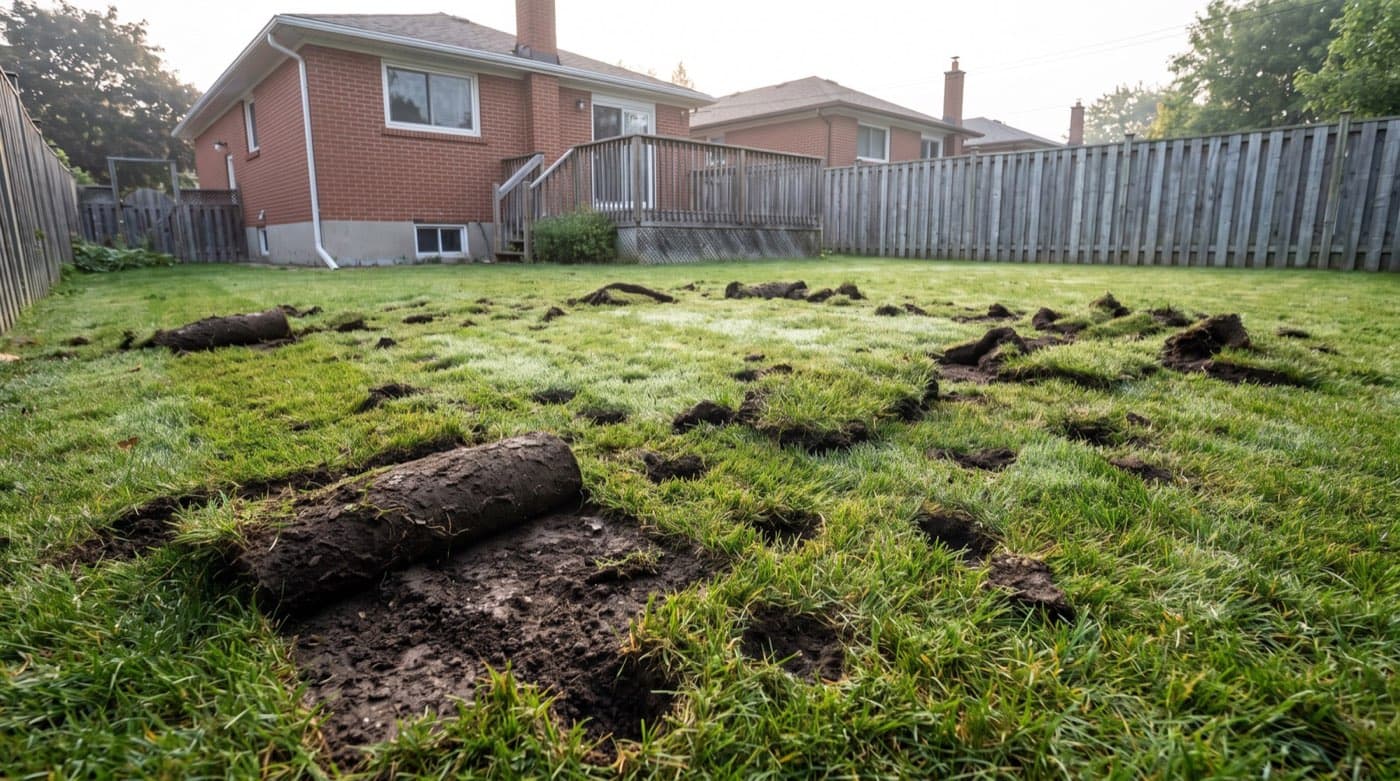
Answer First: If skunks or raccoons are digging up your Toronto lawn overnight, leaving small round holes and chunks of sod flipped back, they are hunting grubs. The animals eat the beetle larvae in your soil, not the grass, and the damage they cause is usually worse than the grubs' own. The fix is to remove the food source: control the grubs with beneficial nematodes, and the digging stops. The City does not remove healthy wildlife from private property, so this is a lawn problem, not a wildlife-removal one.
Waking up to a lawn that looks rototilled overnight is alarming, and the instinct is to declare war on the raccoons. But the animals are the messenger. They are telling you the soil below is full of grubs, and once you deal with that, they lose interest. Here is how to read the signs and stop it.
Why are animals tearing up your lawn?
Because your soil is feeding them. Skunks and raccoons dig small round holes and roll back chunks of sod to reach the grubs underneath, and they are most active after rainfall when grubs move up near the surface (City of Toronto). This peaks in spring and fall, exactly when grubs feed closest to the top of the soil.
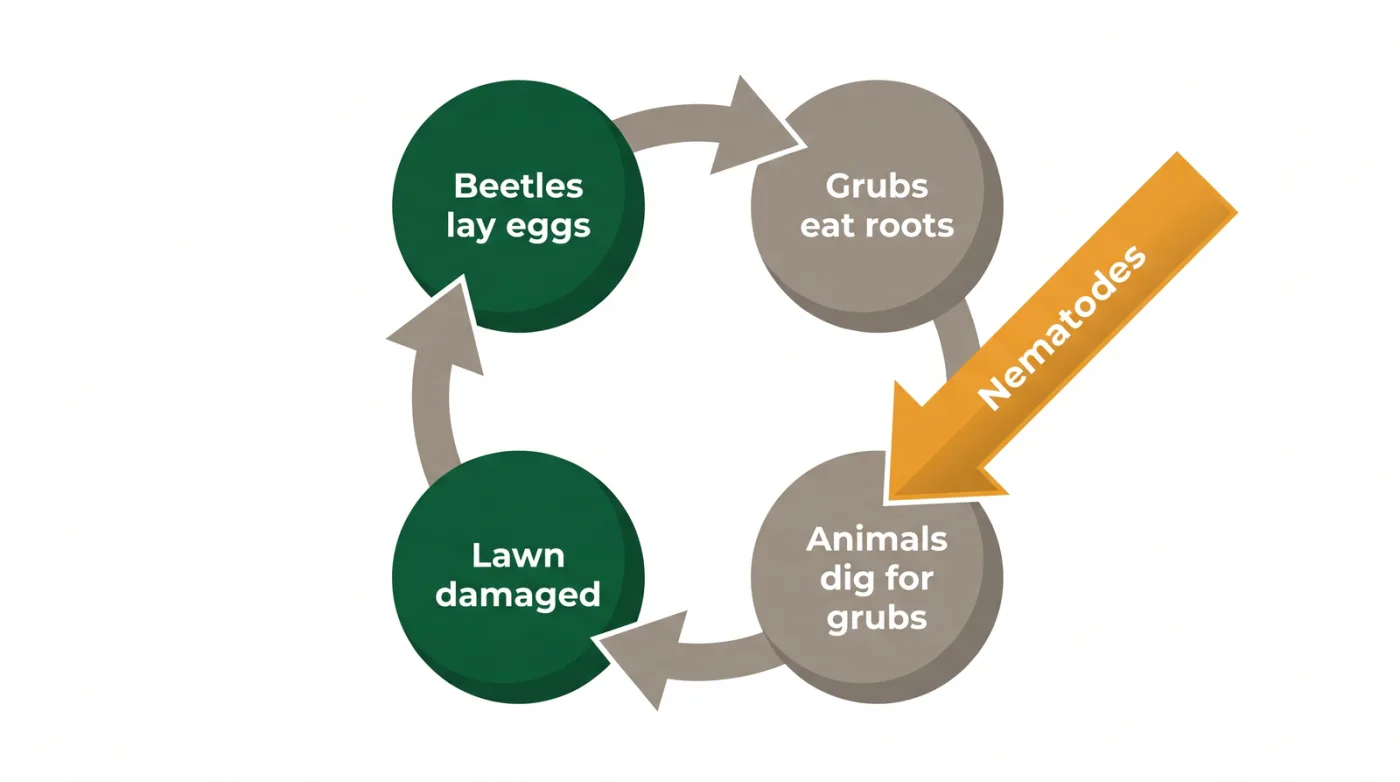
The important part: they are after the grubs, not the grass. A lawn with no grubs does not get dug. So the digging is really a free grub-detection service, an unpleasant one, but a clear signal.
Quotable: Skunks and raccoons do not eat grass. When they flip up your Toronto lawn overnight, they are hunting the grubs in the soil, which means the digging is a symptom of a grub problem, not a wildlife problem.
The animal damage is worse than the grubs
Here is the twist most homeowners miss. The grubs thin and brown the lawn from below, but the skunks and raccoons pulling back the turf to get them usually cause the bigger mess (Ontario). Large sections of sod get flipped and shredded in a single night.
That is actually good news for repair. If the sod is flipped but the roots are intact, you can often press it back down, water it, and let it re-root, rather than replacing everything.
How to make it stop: control the grubs
You cannot deter your way out of a grub buffet. Scarecrows and lights move animals for a night; the grubs pull them right back. The durable fix is to remove the food.
Beneficial nematodes are the Ontario-legal grub control, since the province's cosmetic pesticide ban rules out conventional grub insecticides. These are microscopic organisms you water into moist soil, where they attack the grubs. Timing matters, aimed at the larvae, and the soil must stay damp for the nematodes to survive and work.
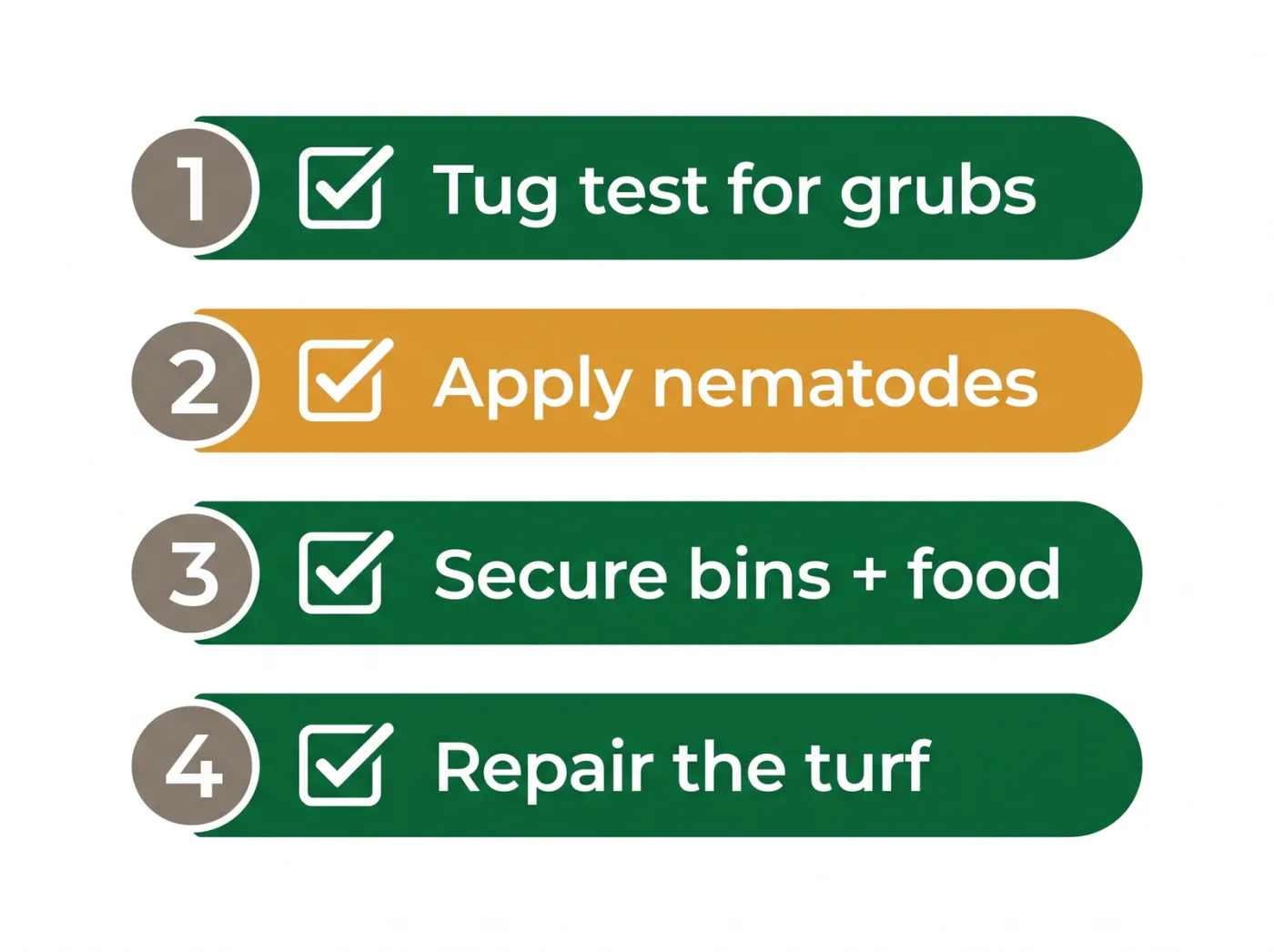
A thick, deep-rooted lawn also tolerates far more grubs before the population gets big enough to attract animals, so overseeding and proper watering are long-term prevention. To confirm grubs are the cause, do the tug test from our guide to grubs versus chinch bugs: if the turf lifts like a loose carpet, grubs are underneath.
From the data: YardQuote tracks 249 lawn care companies across the GTA, and 88% of the rated ones hold 4.5 stars or higher (YardQuote tracking, July 2026). Grub-and-animal damage is a seasonal call every fall, so the well-reviewed crews book the nematode window early.
What Toronto's wildlife rules mean for you
Do not count on the City to haul the animals away. Toronto does not remove healthy wildlife from private property; managing the conflict through prevention and deterrence is the resident's responsibility (City of Toronto). Toronto Animal Services and wildlife groups handle sick, injured, or orphaned animals, not routine lawn digging.
Trapping is rarely the answer either. Ontario rules cap relocation at one kilometre from where the animal was caught, so a relocated raccoon is often back, and a new one takes its place if the grubs remain. While you deal with the grubs, reduce other attractants: secure garbage and green bins, and remove pet food and fallen fruit that give animals a second reason to visit.
Repair the lawn once the grubs are gone
With the grubs under control, the lawn recovers quickly. Press any flipped sod back down and water it where the roots are still attached, and it usually knits back in. For bare or shredded patches, rake them out and overseed or re-sod, keeping the new grass watered while it roots.
Fall is the strongest repair season in Toronto, the same window that makes the fall lawn care jobs so productive. A thicker lawn built through good seasonal care is also what keeps the next grub cycle small enough that the animals never bother.
If the digging returns year after year, it is worth a professional grub program and turf repair. Compare current ranges on the lawn care cost page or browse vetted local pros in the lawn care directory for North York.
Tired of patching the same torn-up lawn every fall? Request a quote and compare up to three vetted local lawn care pros side by side. Your contact details only go to the one you pick, and a good pro treats the grubs, not just the holes.