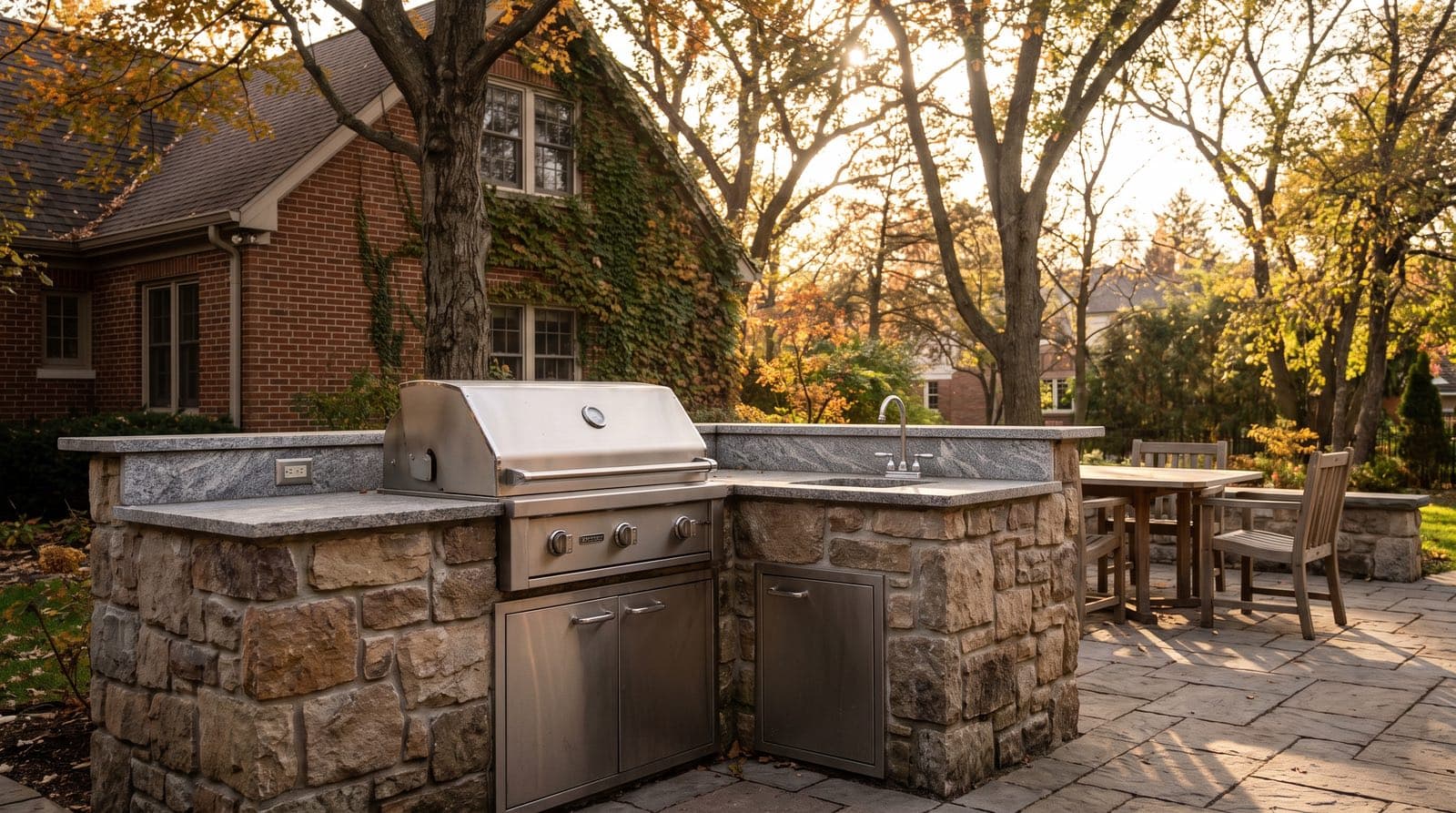
Answer First: An outdoor kitchen survives Canadian winters when it is built from freeze-thaw-proof materials, stainless steel, natural stone or porcelain, and sealed masonry, on a rigid, frost-stable base like a concrete slab or well-compacted gravel. The failure is not cold but freeze-thaw: water soaks into porous materials, freezes, expands, and cracks them. Get the materials and the base right, then winterize each fall by draining the water lines, and the kitchen lasts.
An outdoor kitchen is a beautiful idea in July and a pile of cracked stone by April if it is built like a California patio. Toronto's winters do not politely leave it alone. The trick is that everything that kills an outdoor kitchen here traces back to one process, freeze-thaw, and once you design around that, the whole project gets simpler.
What actually damages an outdoor kitchen in winter?
Freeze-thaw, not the cold itself. Water works its way into porous materials and unsealed joints, freezes, expands, and forces the material apart, and Toronto runs that cycle dozens of times a winter.
Freeze-thaw is the repeated cycle of water soaking into a material, freezing and expanding, then thawing, which cracks stone, masonry, tile, and concrete over time. It is the single biggest threat to any outdoor build in the GTA.
There are two failure points. The first is materials: a porous countertop or cheap tile drinks water and cracks. The second is the base: as the ground freezes it heaves and shifts, and a kitchen on a weak foundation micro-settles and pulls its rigid countertop apart. Design against both and the winter becomes a non-event.
Quotable: Cold does not wreck an outdoor kitchen; freeze-thaw does. Water gets into the wrong material, freezes, expands, and cracks it, over and over, all winter. Beat that one process and the kitchen survives.
Which materials survive a Toronto winter?
Stainless steel, natural stone, porcelain, and sealed masonry. Each one either keeps water out or flexes with temperature instead of cracking.
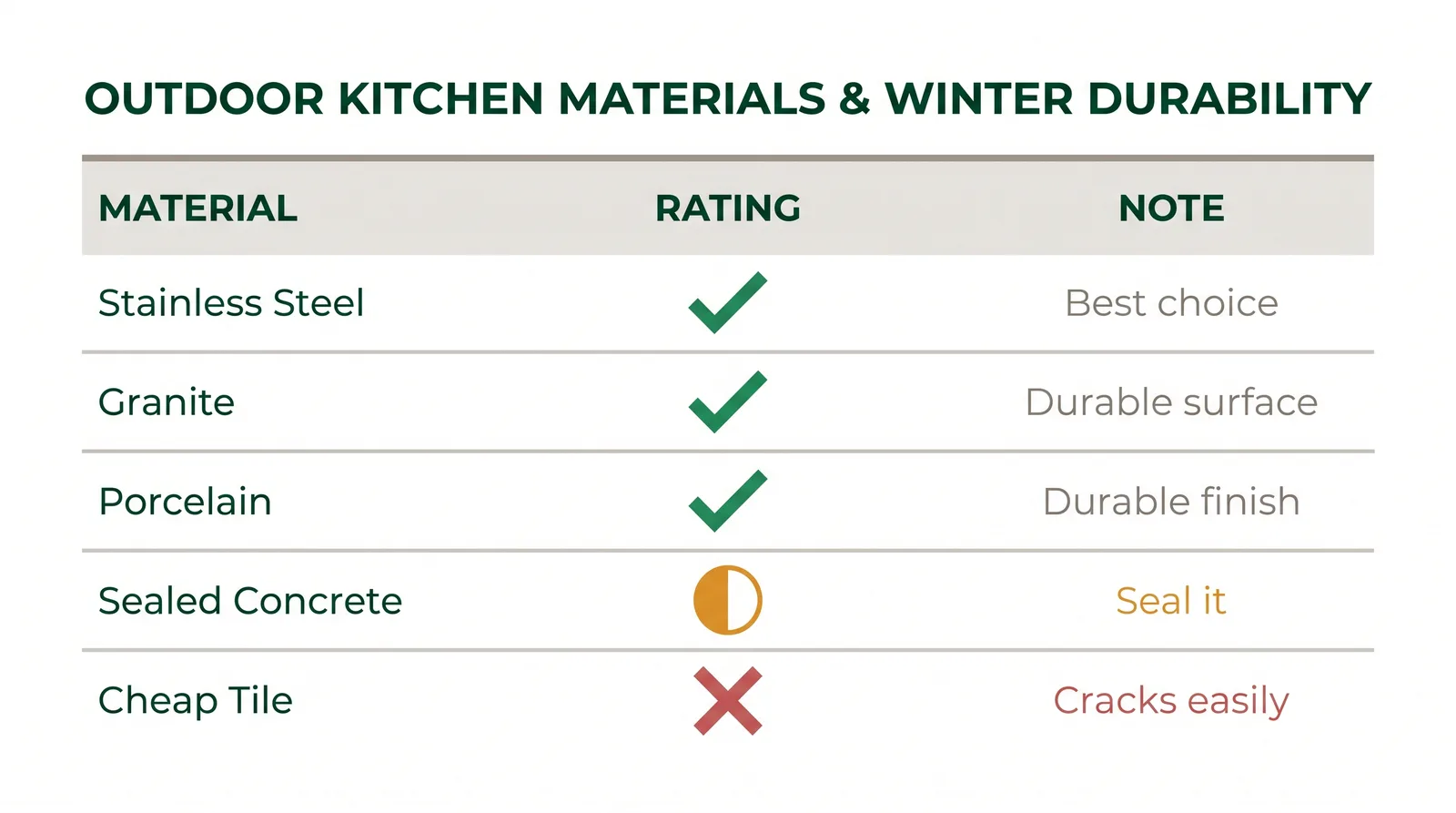
- Stainless steel is the workhorse for cabinets, doors, and frames. It expands and contracts through freeze-thaw without cracking and does not even need to be covered.
- Natural stone (granite) and porcelain or ultra-compact surfaces make the best countertops, resisting moisture and cold far better than porous alternatives.
- Sealed concrete and masonry block work well for the structure, but concrete must be sealed to keep water out, or it cracks over time.
- Avoid porous, water-absorbing materials and cheap tile, which soak up moisture, freeze, and fail within a few seasons.
The design lesson is to spend on the envelope that faces the weather. A stainless frame with a granite or porcelain top on a masonry base is the combination that reliably survives, and it happens to look clean and modern too.
Quotable: For a Canadian outdoor kitchen, stainless steel, granite or porcelain, and sealed masonry are the materials that last. They either keep water out or move with temperature instead of cracking, which is the whole game in freeze-thaw country.
How do you build and winterize one to last?
Set it on a rigid base, then drain the water out of it every fall. Materials survive the winter; plumbing and foundations are what people forget.
Build the kitchen on a poured concrete slab or a deep, well-compacted gravel base so it does not shift as the ground freezes and heaves. This is the same base logic that keeps a patio flat, covered in our guide on the best time for interlocking in Toronto, and skipping it is why heavy stone-and-steel kitchens crack after a couple of winters. Placing the kitchen near the house also shortens the gas, water, and power runs it needs.
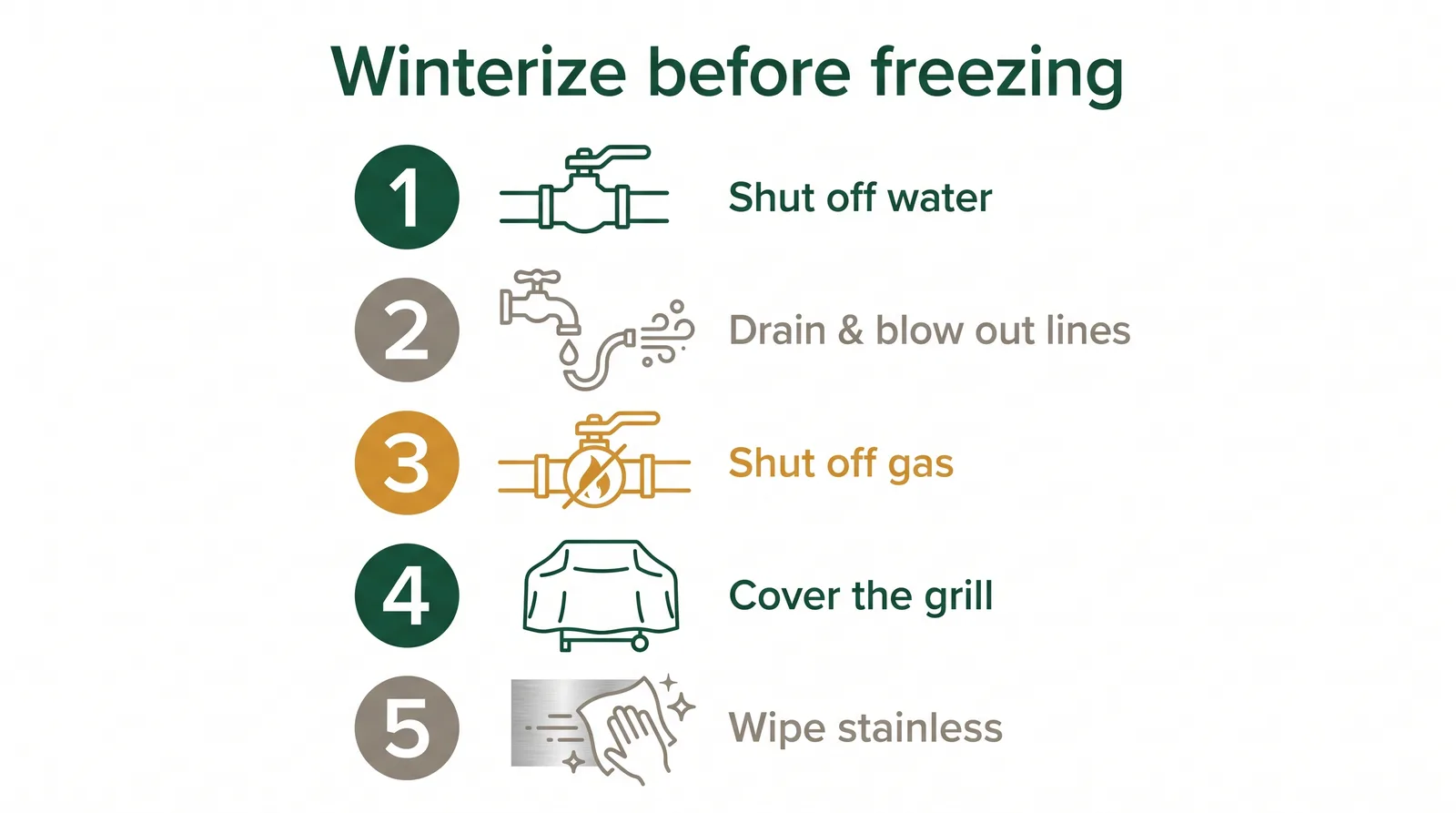
Then winterize before the first hard freeze, around 3°C:
- Shut off the water supply from inside the house.
- Drain the lines by opening the outdoor tap or sink, and clear them fully with compressed air if you can, because water left in a pipe freezes and splits it.
- Shut off the gas supply to the kitchen.
- Cover or store the grill and any appliance not rated to stay exposed, and wipe down stainless surfaces so they resist the season.
One caution on utilities: a permanent gas line or electrical run for an outdoor kitchen is not a DIY job. Gas work must be done by a licensed technician, electrical by a licensed electrician, and depending on the build you may need a permit, so confirm local requirements before anything is connected. Where the kitchen fits into the wider yard, and how much hard surface it should take, is a question of getting the hardscape and softscape ratio right.
From the data: YardQuote tracks 650 landscaping companies across the GTA, and 613 carry three or more Google reviews with an average rating of 4.77 (YardQuote tracking, July 2026). The builders worth hiring for an outdoor kitchen talk about base preparation and winter drainage before they talk about finishes, because in Toronto that is what separates a kitchen that lasts from one that cracks by spring.
If you are planning a full outdoor living space, compare local pros and ranges on the Toronto landscaping cost page or browse landscaping companies in Etobicoke and other areas.
Want an outdoor kitchen built to survive the winter, not just the summer? Request a quote and compare up to three vetted local pros side by side. Your contact details only go to the one you pick.