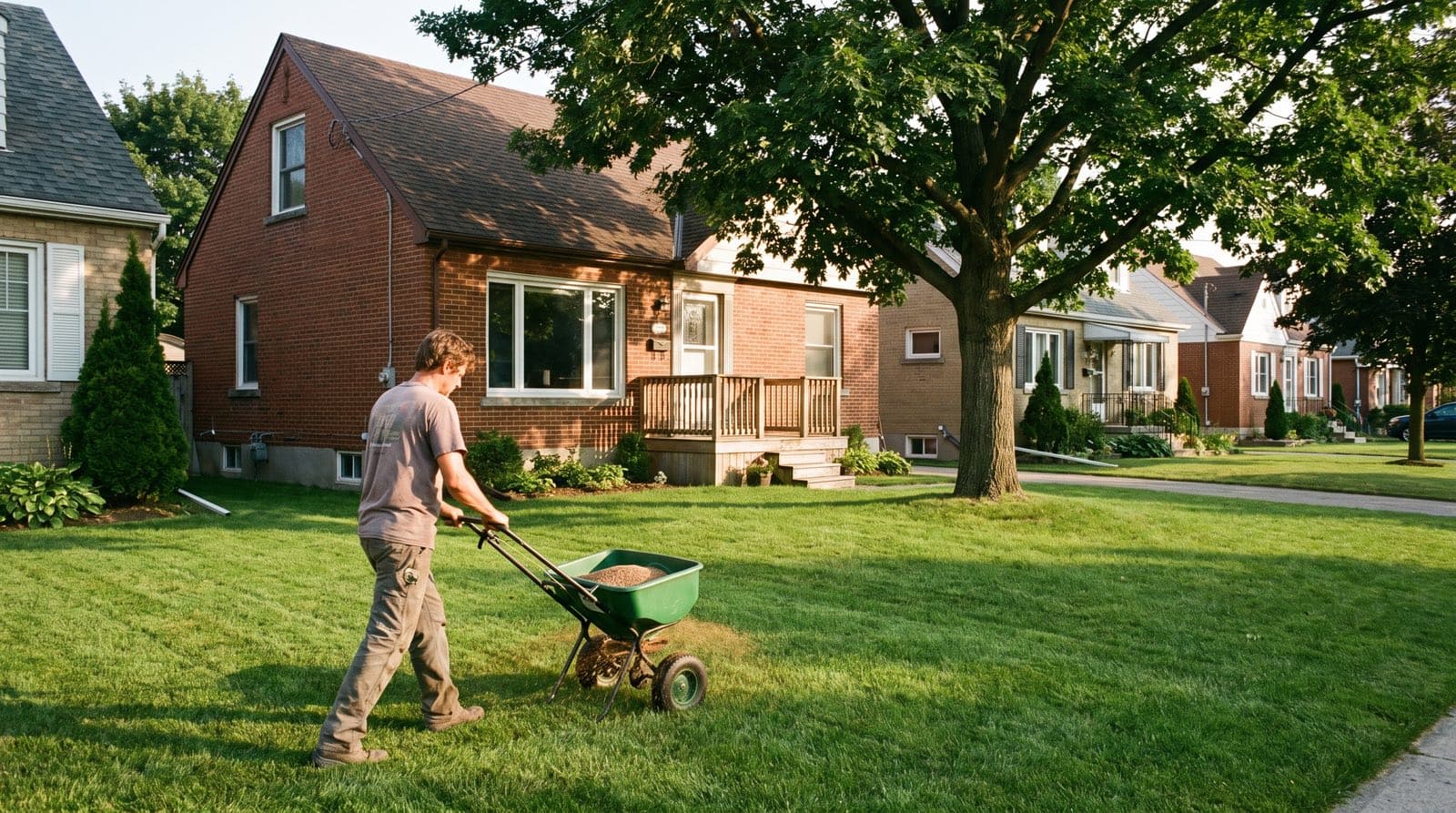
Answer First: Ontario bans chemical pesticides for cosmetic use on lawns and gardens under the Pesticides Act and Regulation 63/09, administered by the Ministry of the Environment, Conservation and Parks. The ban has stood since 2009 and was kept when the rules were overhauled in 2020. You can still legally use products on the province's Allowable List: corn gluten meal, insecticidal soap, Bt, horticultural vinegar, diatomaceous earth, iron-based (FeHEDTA) herbicides like Fiesta, and biological controls such as nematodes for grubs.
The confusion is understandable. The chemical weed-and-feed your parents used is gone from the shelves, but the lawn service down the street still shows up with a spray tank, and nobody quite explains where the line is. Here is exactly what Ontario's ban prohibits, what it still permits, and why the gap between those two is smaller than it looks.
What does Ontario's pesticide ban actually prohibit?
Chemical pesticides used for cosmetic purposes, meaning to make a lawn or garden look nicer rather than to protect health or safety. The rule lives in the Pesticides Act and its regulation, Regulation 63/09, and is administered by the Ministry of the Environment, Conservation and Parks.
Cosmetic use means applying a pesticide to lawns, gardens, patios, driveways, parks, and schoolyards for appearance rather than for a genuine health or safety reason. That is the category Ontario prohibits for chemical products.
In practice, that rules out synthetic weed-and-feed, glyphosate sprays like Roundup on the lawn, and the old chemical grub and broadleaf killers. It does not matter that they work; if the purpose is cosmetic and the product is a banned chemical, it is not allowed on a home lawn.
One point that trips people up: the ban was not lifted when Ontario rewrote its pesticide rules effective in 2020. The overhaul retired the old numbered pesticide classes and replaced the cosmetic-use list with a single "List of Active Ingredients Authorized for Cosmetic Uses," but the core prohibition stayed exactly where it was.
Quotable: Ontario's cosmetic pesticide ban has held since 2009 and survived the 2020 rewrite of the rules. What changed was the paperwork, a single Allowable List replacing the old classes, not the ban itself.
What can you legally use on an Ontario lawn?
More than most people think. The ban does not leave you with a bucket and good intentions; it leaves you with a specific list of low-risk and biological products that are permitted for cosmetic use.
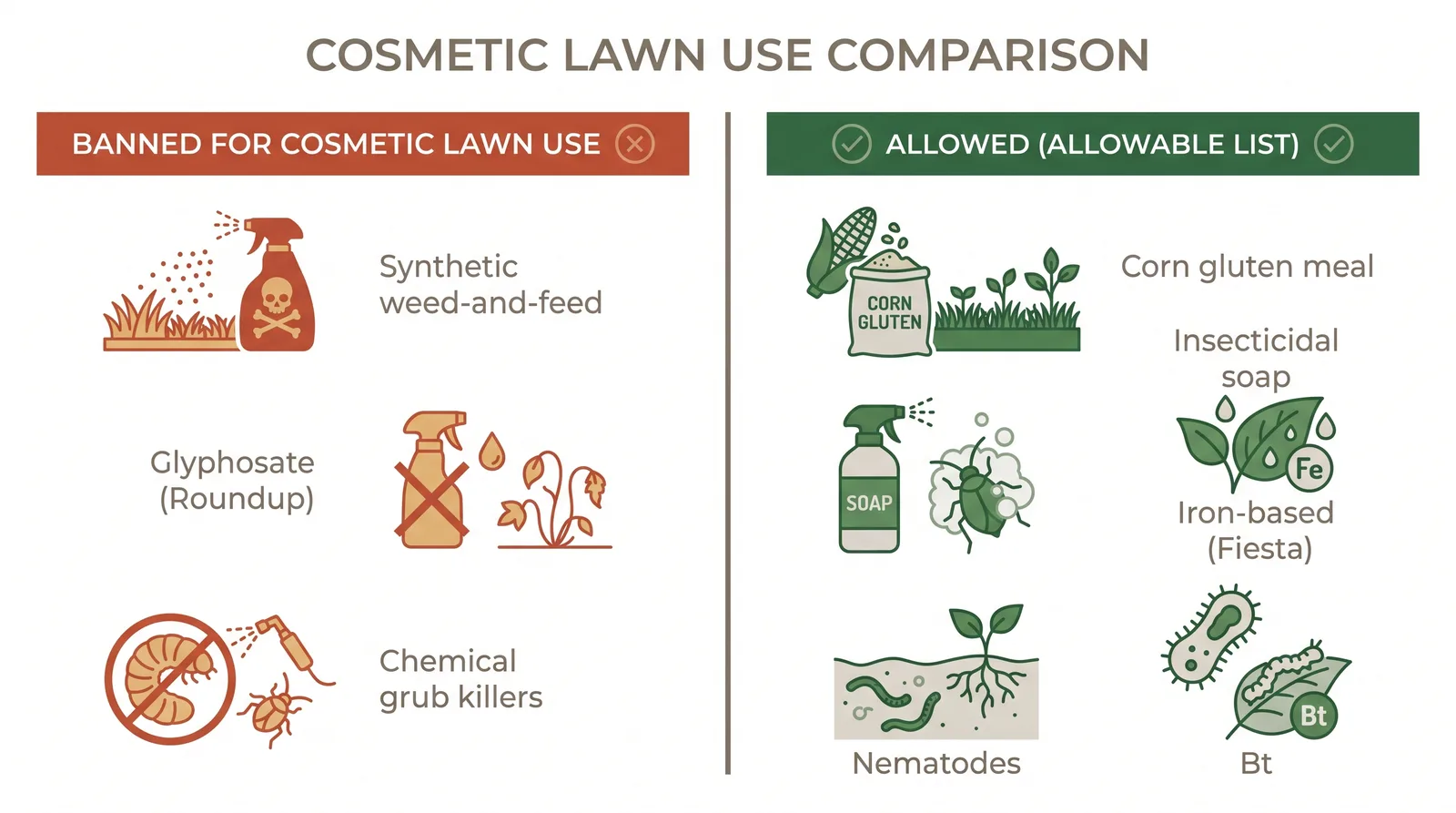
Here is what stays legal for a home lawn:
| Allowed product | What it does | Use it for |
|---|---|---|
| Corn gluten meal | Natural pre-emergent | Suppressing crabgrass seed in early spring |
| Iron-based (FeHEDTA), e.g. Fiesta | Reduced-risk herbicide | Spot-treating broadleaf weeds like dandelion |
| Insecticidal soap / horticultural oil | Low-risk insecticide | Soft-bodied lawn and garden insects |
| Bt (Bacillus thuringiensis) | Biological insecticide | Certain caterpillars and larvae |
| Beneficial nematodes | Biological control | Grubs, applied in the late-summer window |
| Horticultural vinegar, diatomaceous earth | Low-risk, contact | Small spot weed and insect control |
The common thread is that these are low-risk or biological. Nematodes and Bt are living controls, not chemicals, which is why they sidestep the ban entirely. The rest are reduced-risk active ingredients the province has cleared for cosmetic use.
From the data: YardQuote tracks 249 lawn care companies across the GTA, and 220 carry three or more Google reviews with an average rating of 4.75 (YardQuote tracking, July 2026). The better-reviewed operators long ago rebuilt their programs around these allowed products and around overseeding and aeration, which is a useful filter: a company promising to "spray your weeds away" the old way is either using an allowed product it should be able to name, or cutting a corner.
Why do I still see people spraying lawns?
Because the ban has real exceptions, and because some of what looks like banned spraying is actually an allowed product. Both are worth understanding before you assume a neighbour is breaking the rules.
The exceptions written into the ban cover golf courses, specialty turf, specified sports fields, agriculture and forestry, arboriculture, structural pest control inside buildings, cemeteries, and health-and-safety uses such as controlling poison ivy, giant hogweed, or a wasp nest. A licensed applicator working one of these is fully within the rules. And on an ordinary lawn, a company applying iron-based weed control or insecticidal soap is spraying something the ban permits.
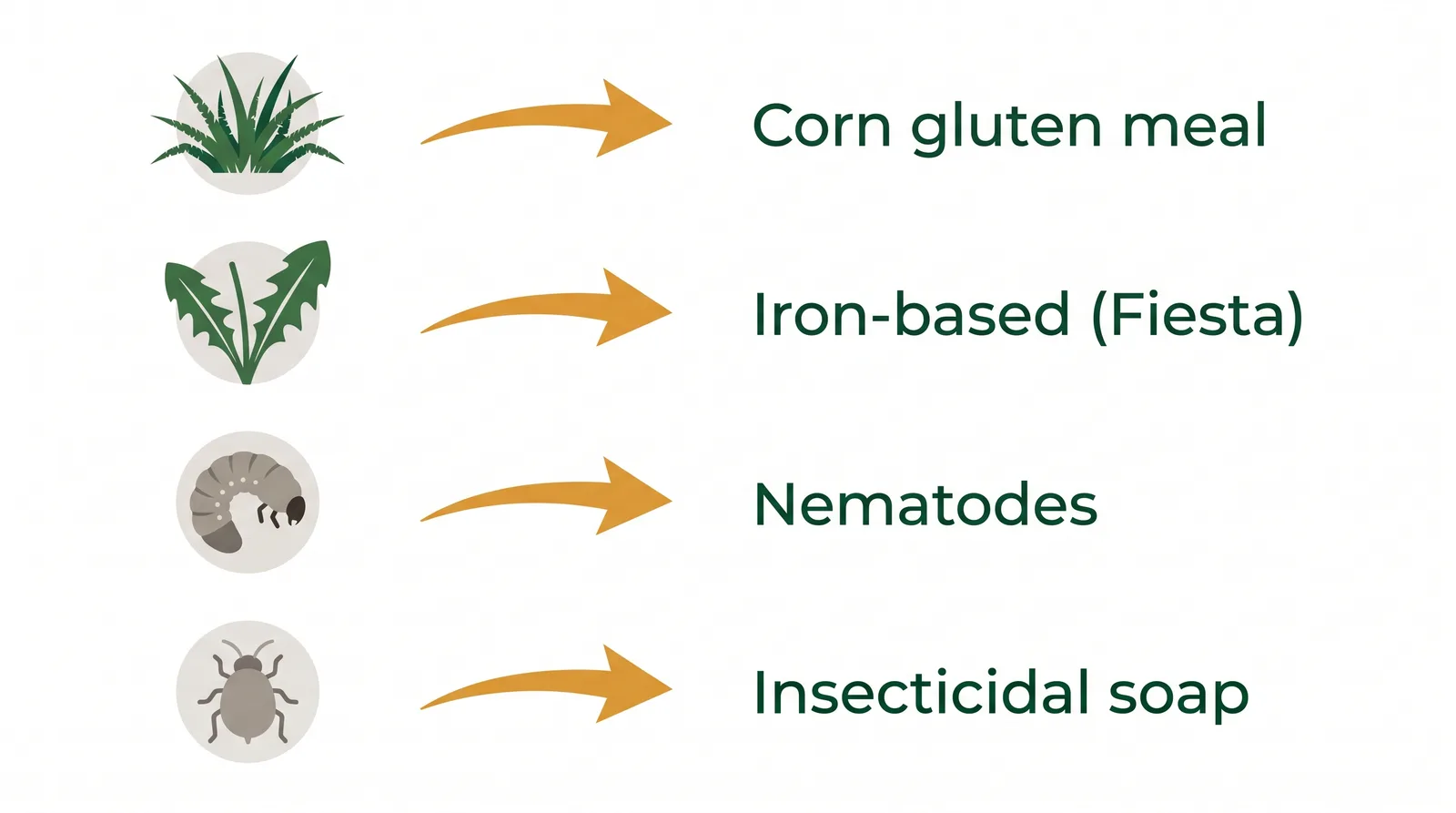
The takeaway is that "banned" does not mean "nothing works." Match each problem to its legal control, crabgrass to corn gluten, broadleaf weeds to iron-based herbicide, grubs to nematodes, soft-bodied insects to insecticidal soap, and you rarely miss the chemical you gave up. Our companion guides go deeper on the two problems homeowners ask about most: how to get rid of grubs in Ontario and identifying and fixing common lawn weeds.
Quotable: The Ontario pesticide ban keeps exceptions for golf courses, sports fields, agriculture, and health-and-safety hazards like poison ivy and wasp nests. That is why you still see spraying that would be illegal on a home lawn kept purely for looks.
Most of a good Ontario lawn now comes from method rather than chemistry: mowing tall, watering deep, feeding, and overseeding each fall, with the allowed products handling specific problems. You can compare local pros and current rates on the Toronto lawn care cost page or browse lawn care companies in North York and other areas.
Want a lawn service that works within the rules and can name what it uses? Request a quote and compare up to three vetted local lawn care companies side by side. Your contact details only go to the one you pick.