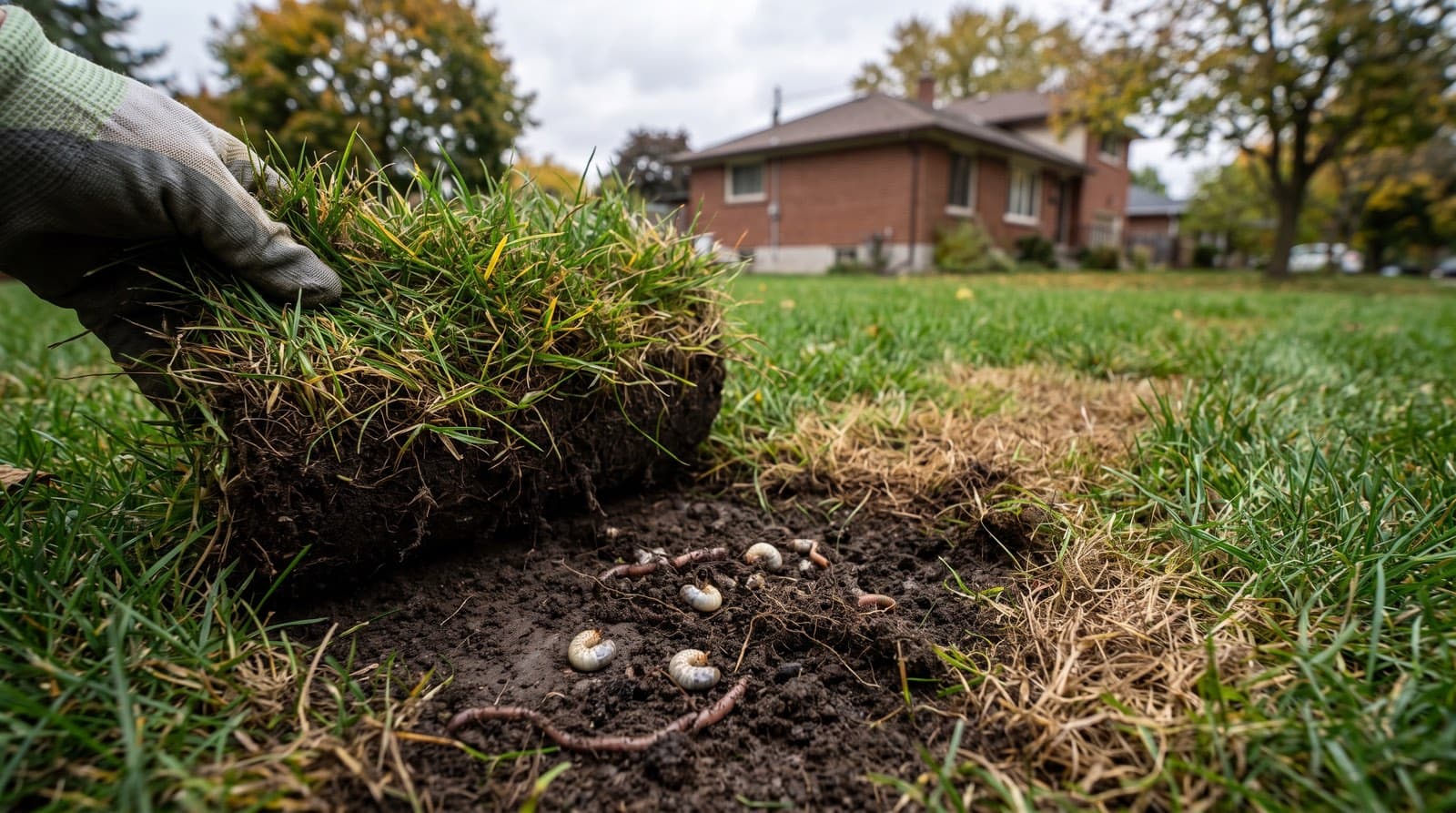
Answer First: In Ontario you cannot buy the chemical grub killers sold elsewhere, because the Pesticides Act (Regulation 63/09) bans synthetic pesticides for cosmetic lawn care. The control that actually works is beneficial nematodes: microscopic organisms you water into the lawn that infect and kill young grubs. Timing is the whole game. Apply them late August through September, when this year's grubs are small and feeding near the surface, and keep the lawn moist for about 10 days after.
Your lawn was fine in July and by late September it is peeling up in brown sheets, with raccoons finishing off what the grubs started. The frustrating part for most Toronto homeowners is what happens next: they go looking for the grub killer they remember from years ago, and it is not on the shelf. Here is what replaced it, and why the calendar matters more than the product.
What actually kills grubs in Ontario now?
Beneficial nematodes, applied in a narrow late-summer window. Ontario's cosmetic pesticide ban took the old synthetic grub insecticides off the table for lawns, so the effective legal option is biological.
Beneficial nematodes are microscopic roundworms that hunt grubs in the soil, enter them, release a bacterium that kills the grub within a few days, then multiply and move on to the next one. They are sold as a paste or powder you mix with water and spray or pour over the lawn. Because they are a living biological control rather than a chemical, they are not caught by the ban.
The catch is that they are fragile. Nematodes die in sunlight and dry out fast, so you apply them on a cloudy day or in the evening, water the lawn before and after, and keep it consistently moist for about 10 days so they survive long enough to do the job. Soil temperature needs to sit between roughly 10 and 30°C.
Quotable: Ontario's pesticide ban did not leave lawns defenceless against grubs. It swapped the chemical for a biological one: beneficial nematodes, which infect and kill young grubs and stay legal because they are a living control, not a synthetic pesticide.
When do I apply nematodes for grubs in the GTA?
Late August through September, and the timing is not flexible. Grubs are only reachable and vulnerable at one stage of their life, and that stage is early fall.
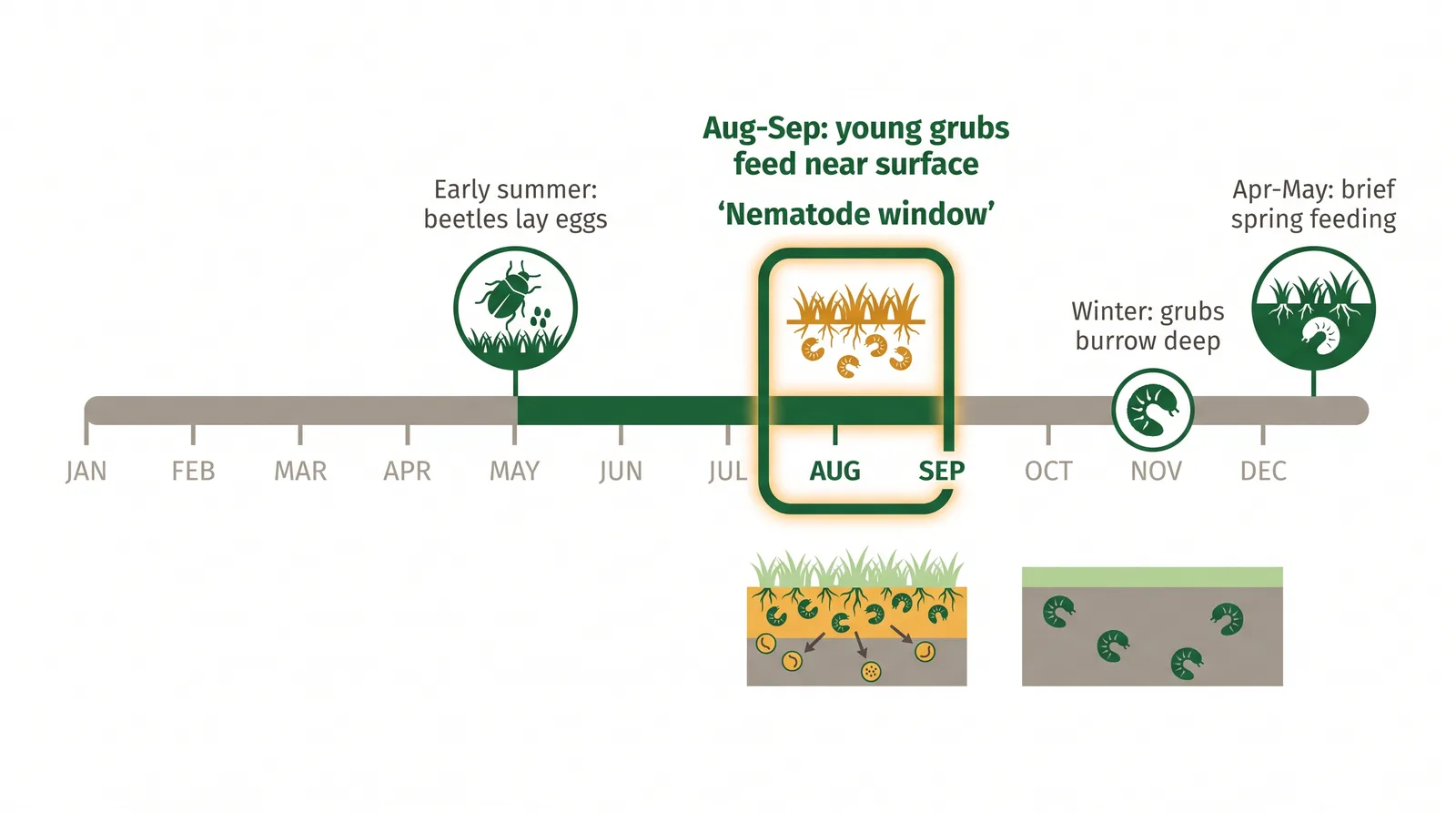
Here is the cycle that sets the schedule. Adult European chafer and Japanese beetles, the two main culprits in the GTA, lay eggs in the lawn in early summer. Those eggs hatch into small grubs that feed hungrily near the surface through late August and September, which is your window. As the soil cools they burrow deep to overwinter, out of reach. They return to feed briefly in spring before pupating into next year's beetles.
That is why fall beats spring. In the late-summer window the grubs are young, shallow, and easy for nematodes to find. The weaker spring window (late April to early May, once soil passes 10°C) catches them large and on their way out. If you see damage in October, treat the following late summer, not next spring.
Quotable: Grubs are only vulnerable to nematodes for a few weeks in late summer, when this year's larvae are small and feeding near the surface. Miss late August through September and you are waiting a full year for the next real chance.
How do I confirm it is grubs before I treat?
Do the flap test, because treating for grubs you do not have is wasted money, and the late-summer window is too valuable to spend on a guess. Several lawn problems make brown patches; only grubs make the lawn lift like carpet.
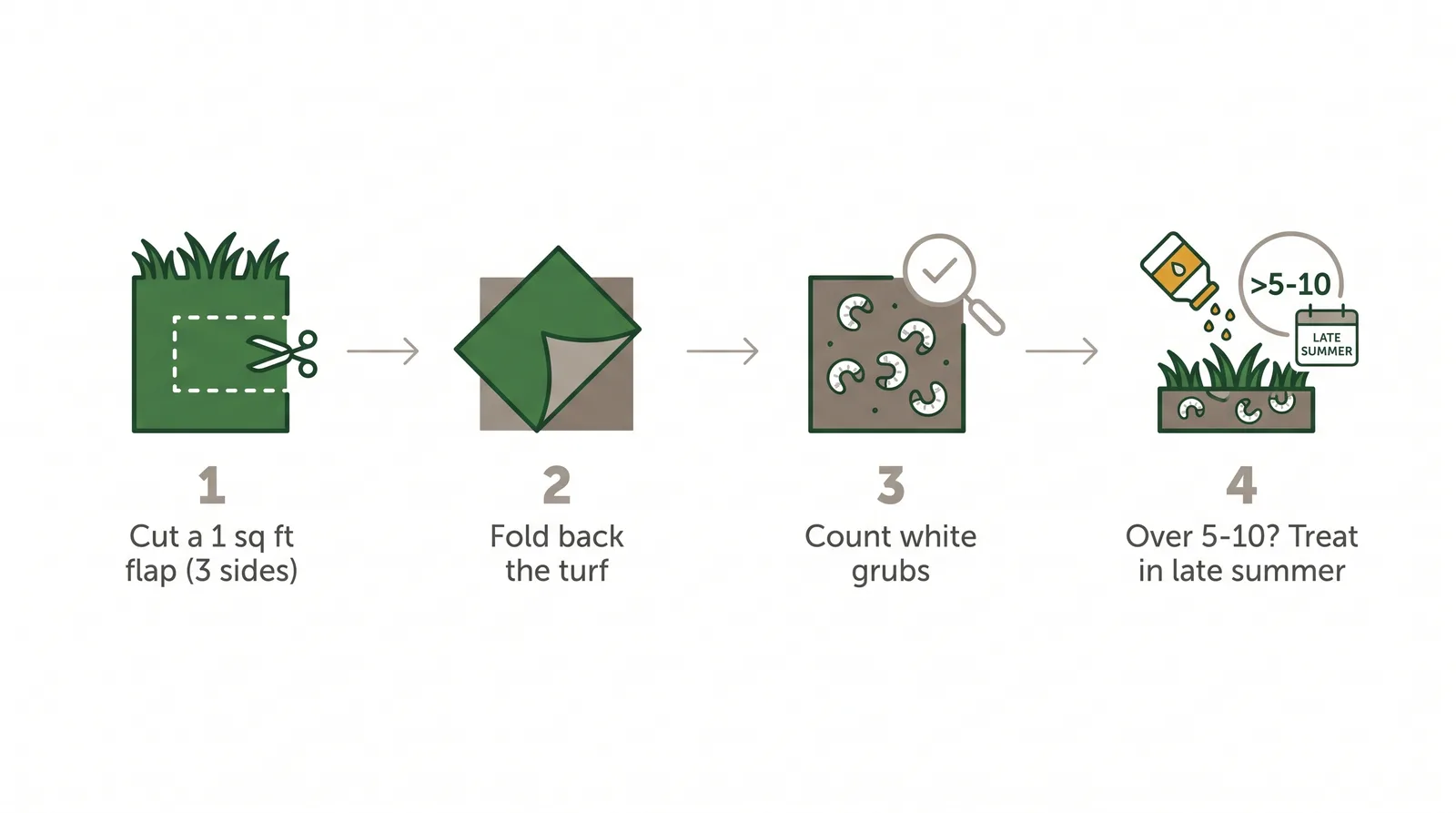
Watch for three signs, then confirm with a count:
- Spongy, liftable turf. Irregular brown patches in late summer or fall that feel soft and peel up easily, because the grubs have chewed through the roots holding the grass down.
- Animals digging. Skunks, raccoons, and birds tearing up sections of lawn at night are feeding on the grubs, and are often the first thing you notice.
- The count. Cut three sides of a one-square-foot flap, fold it back, and count the white C-shaped grubs in the top few centimetres. More than about 5 to 10 per square foot is the point at which most guidance says to treat. Fewer than that, and a healthier lawn is the better fix.
From the data: YardQuote tracks 249 lawn care companies across the GTA, and 220 carry three or more Google reviews with an average rating of 4.75 (YardQuote tracking, July 2026). Many offer nematode application as a seasonal service, which matters here because the treatment lives or dies on timing and moisture, and a pro who books the right week and waters correctly beats a rushed weekend attempt.
What if the lawn is already damaged?
Repair and prevent at the same time, because bare grub-damaged patches are exactly where weeds move in next. Rake out the dead turf and reseed the patches, and conveniently the best seeding window (mid-August to mid-September) overlaps the nematode window, so you can treat and repair in one pass. Our guide on when to plant grass seed in Ontario covers that timing in detail.
Longer term, prevention does most of the work. Beetles avoid thick, tall, well-rooted turf, so mowing high at about 3 inches, watering deeply but infrequently, and overseeding each fall makes your lawn both less attractive to egg-laying beetles and better able to survive the grubs that do hatch. And because the chemical shortcut is gone, keep the rest of your lawn care legal too: our explainer on Ontario's pesticide ban and what you can actually use lists the products that stay on the right side of the rules. You can compare local pros and current rates on the Toronto lawn care cost page or browse lawn care companies in Scarborough and other areas.
Want a pro to time the treatment and repair right? Request a quote and compare up to three vetted local lawn care companies side by side. Your contact details only go to the one you pick.