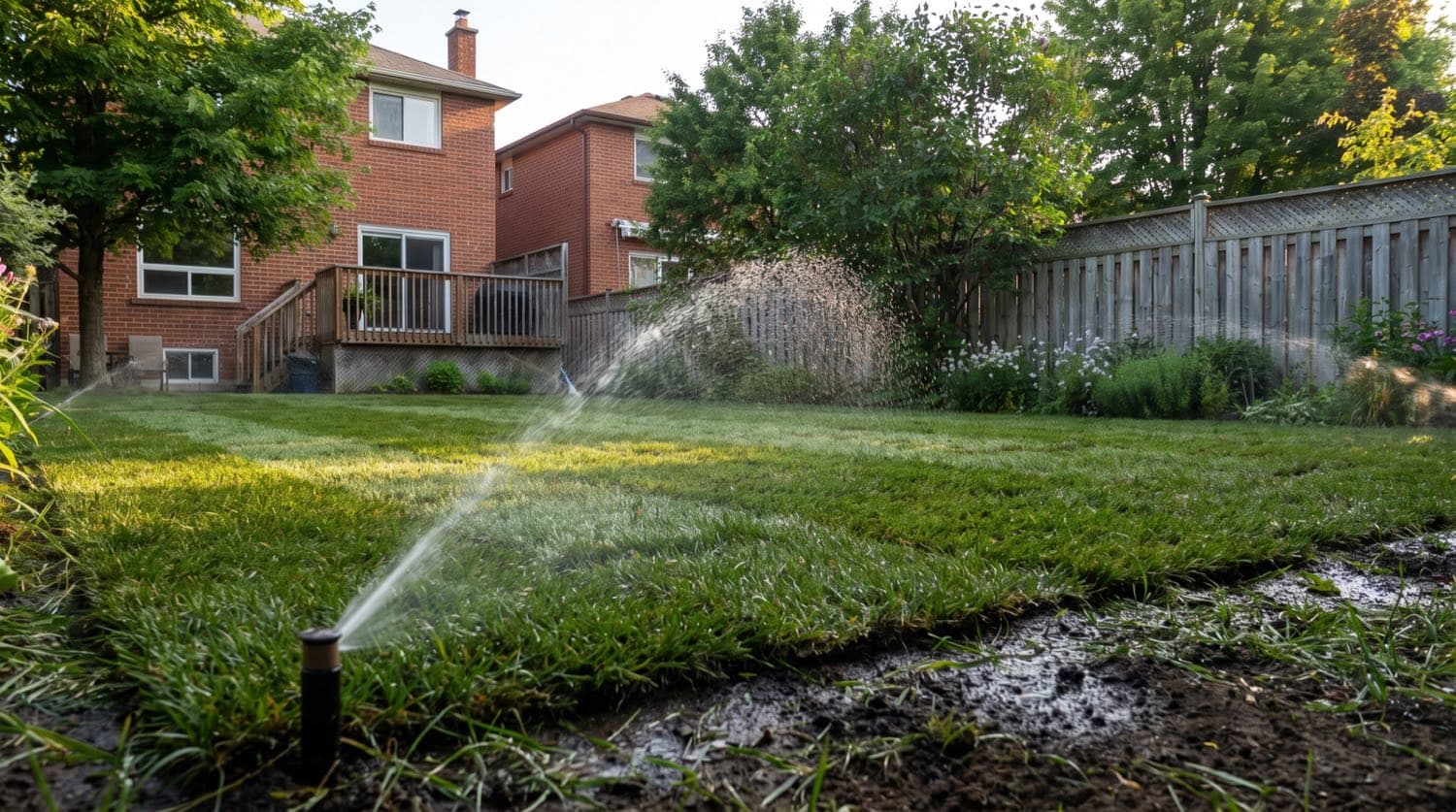
Answer First: New sod lives or dies in its first 30 days, and watering is 90% of it. Water within 30 minutes of laying, then daily for the first two weeks to keep it and the soil beneath constantly moist (about 1 to 1.5 inches a week). Stay off it and do not mow for two to three weeks, until it resists a gentle tug; then mow at the highest setting, removing only one-third. Wait 4 to 6 weeks to fertilize (Michigan State). Taper the watering as the roots take hold.
Fresh sod looks finished the day it goes down, which is exactly the trap. It is not a lawn yet; it is a mat of grass with almost no roots, and for the next month its only job is to knit into the soil. What you do in that window, mostly with a hose, decides whether it takes.
How do you water new sod?
Constantly at first, then less and less. Get the first watering on within about 30 minutes of the sod being laid, because the thin cut turf dries out fast, then water daily for the first two weeks to keep both the sod and the soil under it moist (Michigan State). Aim for roughly 1 to 1.5 inches of water a week in total, delivered in the early morning so the blades dry through the day.
The mistake that kills sod is watering the grass but not the soil beneath it. The roots have to grow down into damp earth, so the water needs to soak through the sod into the ground below. Lift a corner after watering: if the soil under it is only damp on top, water longer. As the sod roots, taper off:
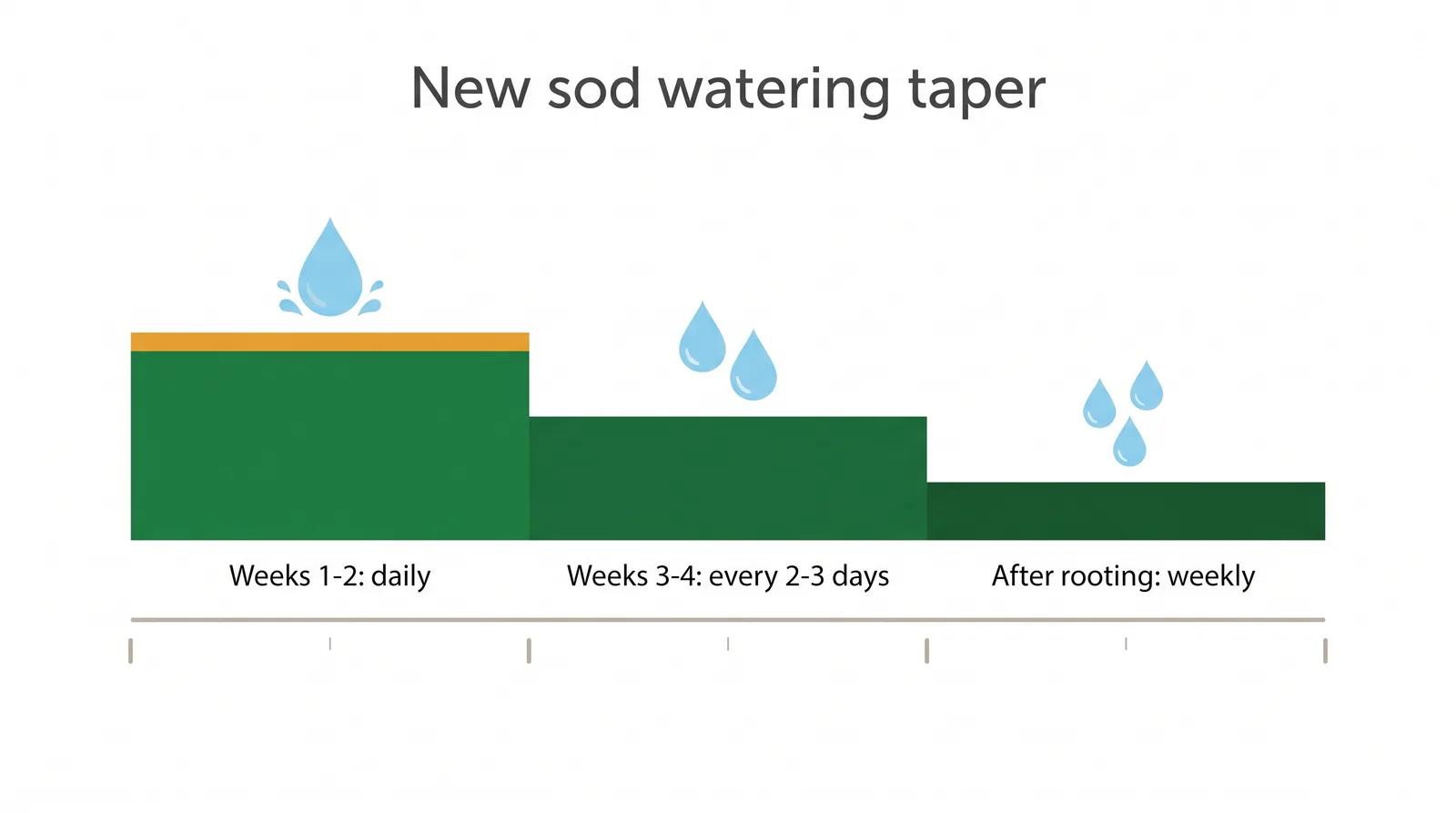
- Weeks 1 to 2: daily, keeping it consistently moist (more than once a day in a hot GTA July).
- Weeks 3 to 4: every two to three days, letting the surface dry slightly between.
- After rooting: about once a week, deeply, to train deep roots.
Quotable: New sod needs its first watering within 30 minutes of being laid and daily water for two weeks, because a cut roll has almost no roots and dries out fast. Water the soil beneath the sod, not just the blades.
When can you first mow new sod?
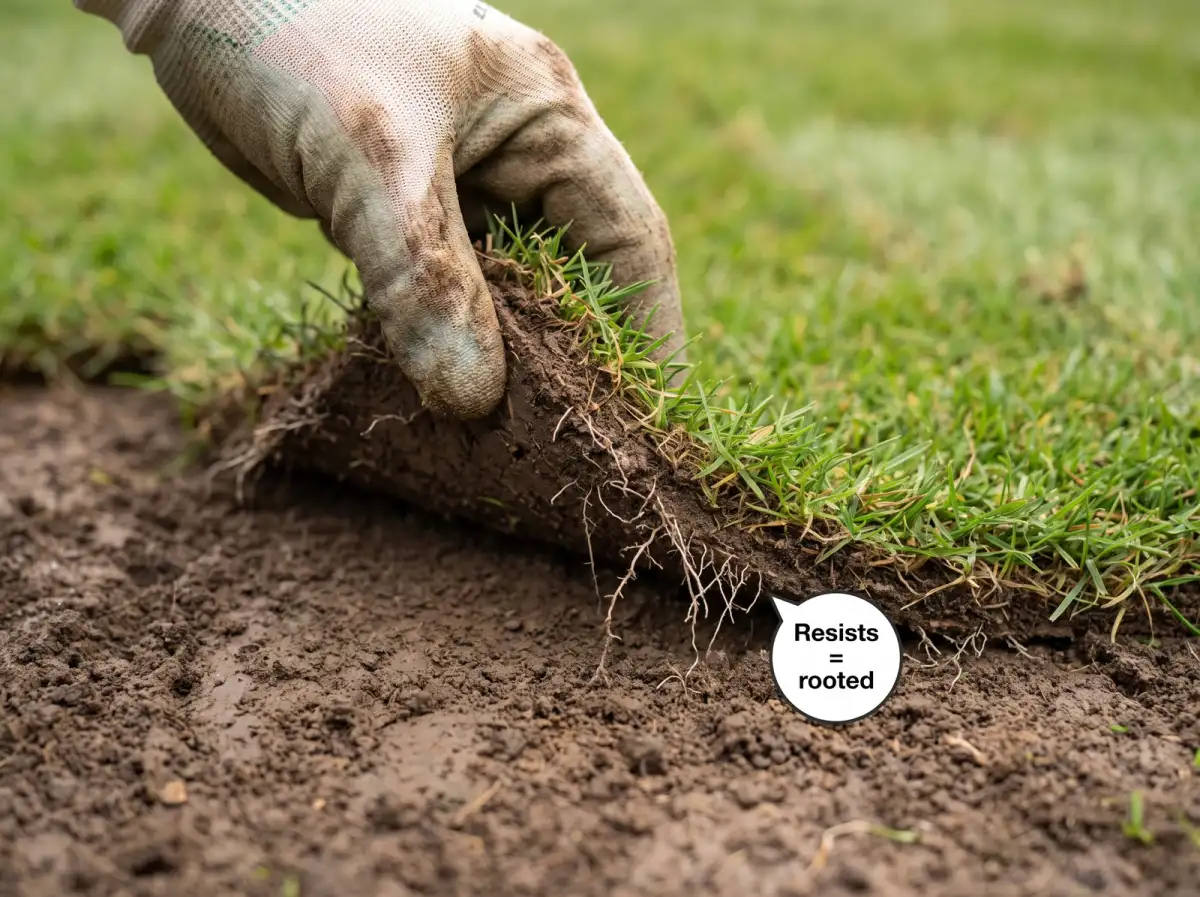
When it holds on. The signal to mow is the tug test: gently pull up a corner of the sod, and if it resists because roots have gripped the soil, it is ready, usually two to three weeks after laying. Do not mow before then, because the first few weeks are the critical rooting window and mowing too early tears the sod loose (Purdue).
Do the first cut carefully:
- Let it dry enough to walk on without sinking, so the mower does not rut the soft base.
- Sharp blade, highest setting. A dull blade shreds young grass; a high cut leaves more leaf to feed the new roots.
- Remove only one-third of the blade height, the same rule that protects any lawn, so you do not shock it.
Keep foot traffic off the sod until this first mow. Walking on it presses the roots away from the soil and leaves depressions in the wet base.
When should you fertilize new sod?
Later than you think. Wait about 4 to 6 weeks before the first feeding (Michigan State). New sod is almost always laid over a starter fertilizer worked into the root zone, so it has what it needs to root, and piling on more nitrogen too early does more harm than good.
The evidence is clear on this. A University of Florida study found that sod left unfertilized was just as green at 30 days as fertilized sod, while the fertilized sod leached out twice as much nitrogen into the soil, which is both wasted money and a water-pollution risk. When you do feed, at 4 to 6 weeks, use the safe rate of no more than 1 pound of actual nitrogen per 1,000 square feet, since young turf burns easily.
From the data: YardQuote tracks 113 sod-installation companies across the GTA, 102 of them with three or more reviews at an average of 4.80 stars, the highest-rated category we track (YardQuote tracking, July 2026). Many include a starter fertilizer and a watering schedule with the install, so ask what aftercare a quote covers before you compare prices.
What should you avoid in the first 30 days?
A few common mistakes undo good sod. Steer clear of these while it roots:
- Foot traffic and pets. Stay off it for two to three weeks; pressure breaks soil contact and leaves dips.
- Letting it dry out. Brown, shrinking edges and gaps at the seams mean it dried; new sod cannot recover from a hard dry-down the way an established lawn can.
- Overwatering after rooting. Constant sogginess past the first two weeks suffocates roots and invites fungus in warm GTA weather. Taper on schedule.
- Mowing too early or too short. Wait for the tug test, then cut high and take only a third.
- Early fertilizer. Hold it until 4 to 6 weeks; the starter fertilizer under the sod is enough.
The 30-day plan at a glance
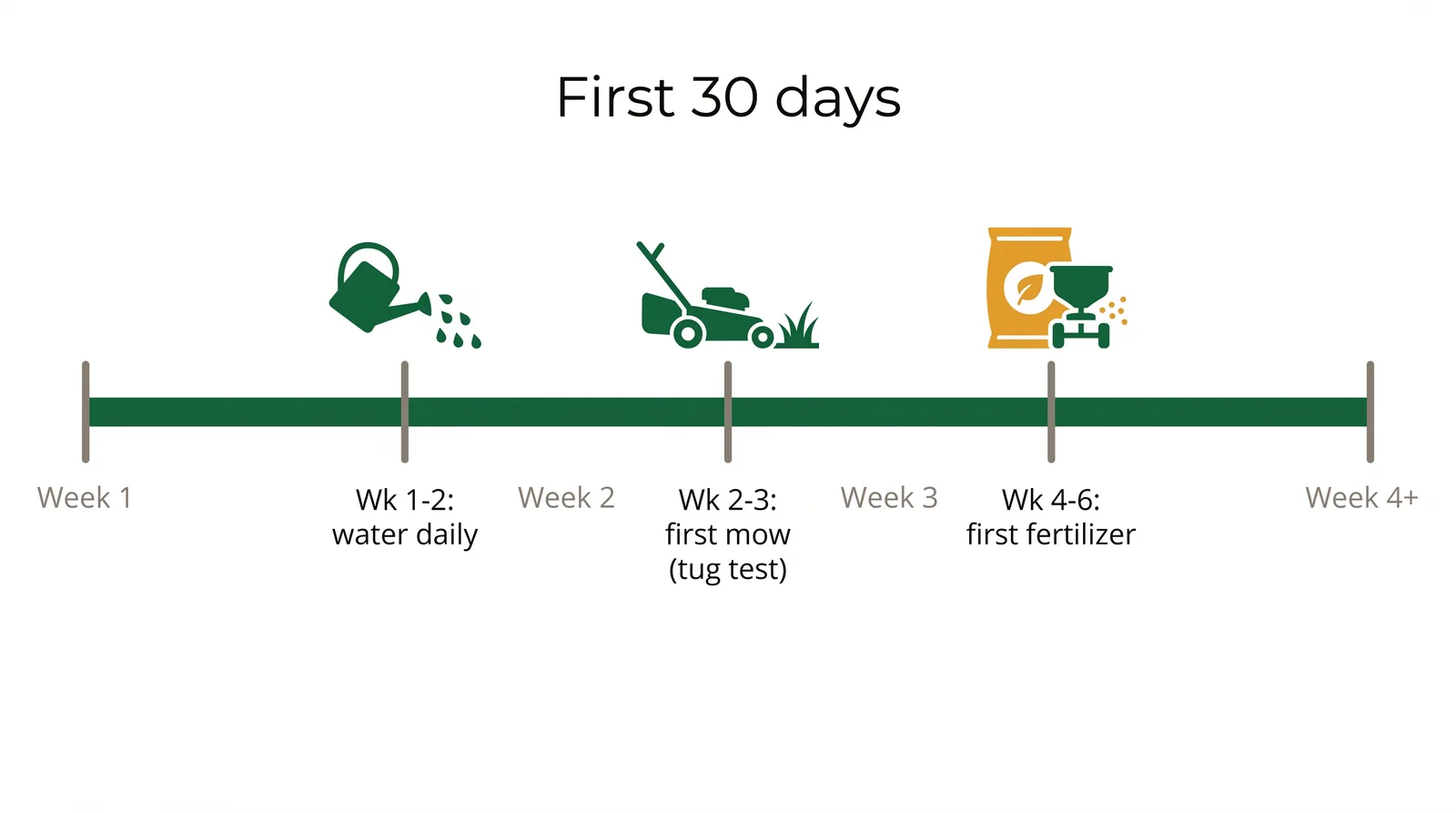
Rooting follows a predictable arc, so the care does too. Week one and two are about constant moisture; week three is the first mow once it passes the tug test; week four onward is tapering water and, at four to six weeks, the first feeding.
Timing the install for spring or early fall makes all of this easier, because cool, damp GTA weather does half the watering for you. A midsummer lawn is more demanding: plan on watering the first two weeks more than once a day, and check whether new sod qualifies for an exemption if your area runs a summer watering schedule.
If you are still at the groundwork stage, our guide to preparing your yard for sod covers grading and the root zone, and if you are choosing grass, tall fescue versus Kentucky bluegrass explains which suits your yard. You can compare installed pricing on the sod installation cost page or browse sod installers in Scarborough and other GTA areas.
Want your new sod installed and set up to thrive? Request a quote and compare up to three vetted local pros side by side, and ask each what aftercare they include. Your contact details only go to the one you pick.