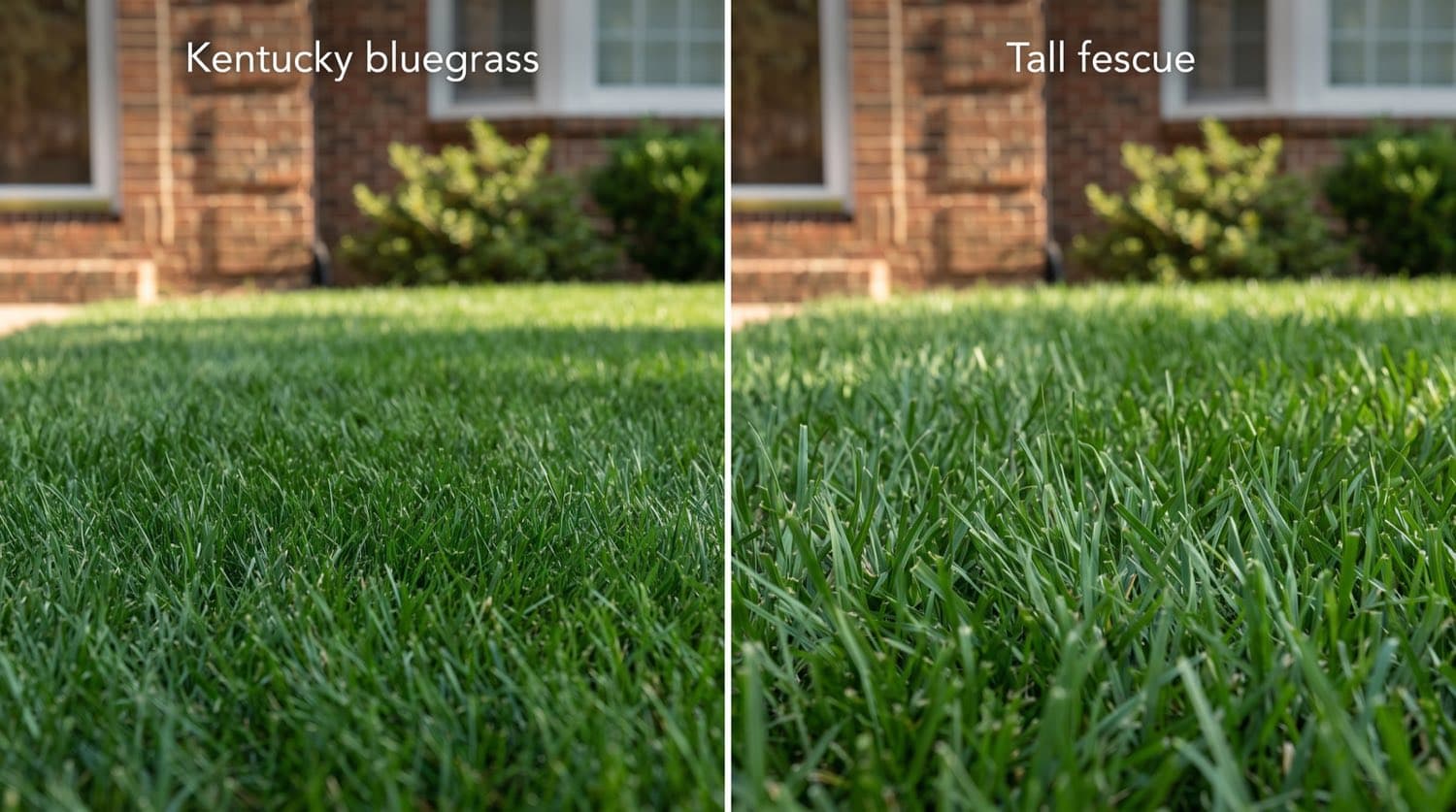
Answer First: For an Ontario lawn, Kentucky bluegrass and turf-type tall fescue are both cool-season grasses, so the choice is about your yard. Kentucky bluegrass self-repairs through underground runners and looks fine-textured, but it needs 6 to 8 hours of sun plus regular water and fertilizer. Tall fescue roots 2 to 3 feet deep, tolerates drought, heat, and shade, and needs 30 to 40% less fertilizer, but it will not fill its own bare spots. For most GTA yards, a blend of the two is the smartest pick.
Every sod farm will hand you Kentucky bluegrass by default, and for a sunny, watered front lawn it is a great answer. For a shaded backyard, a dry corner, or a homeowner who would rather not fertilize four times a year, it is the wrong one. Here is how to tell which grass your yard is actually asking for.
What is the difference between tall fescue and Kentucky bluegrass?
The core difference is how they grow: Kentucky bluegrass spreads, tall fescue clumps. Kentucky bluegrass sends out underground runners that fill bare spots on their own, while tall fescue grows in bunches and cannot repair damage without overseeding (Iowa State). That one trait drives most of the trade-offs.
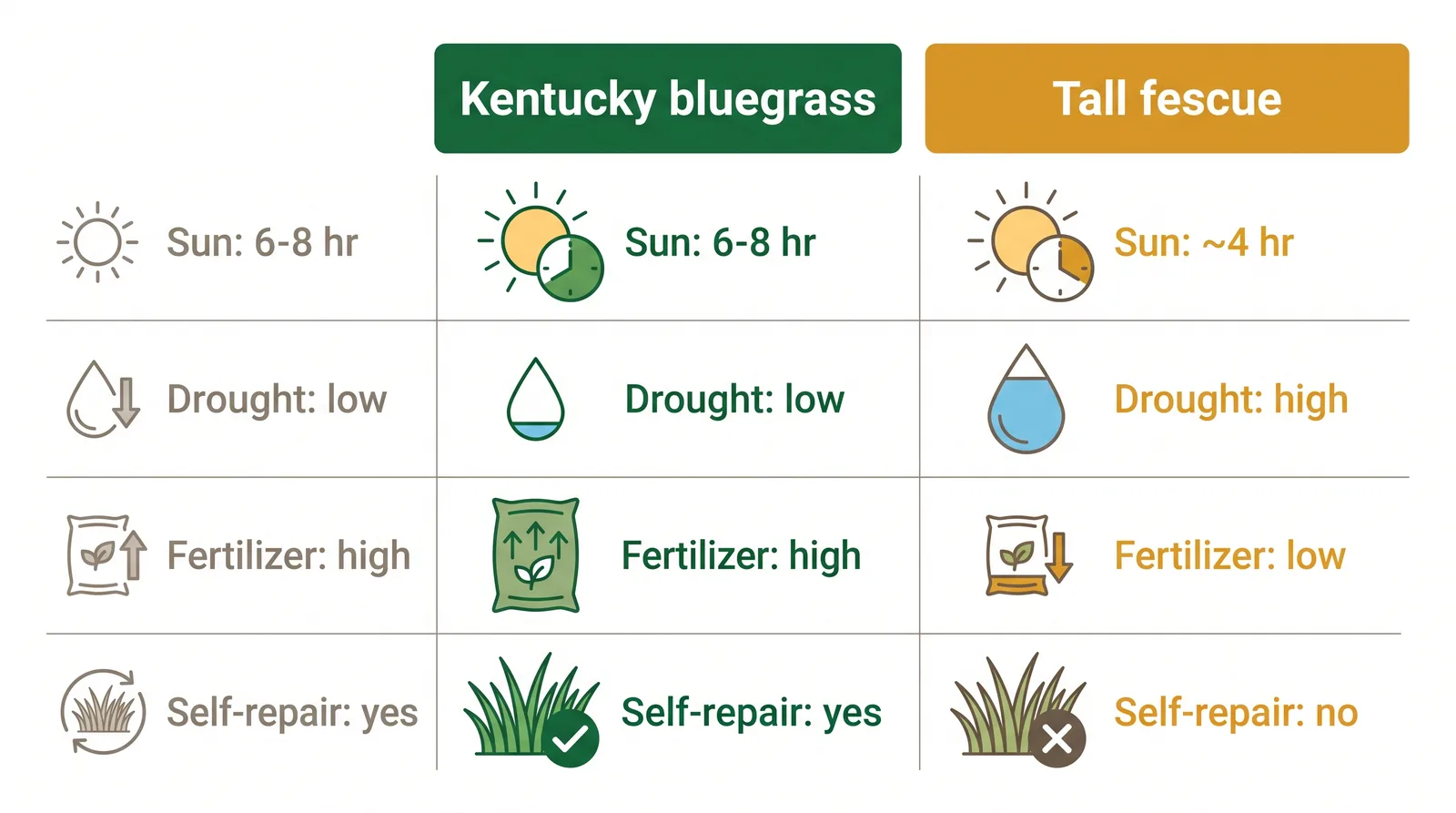
| Trait | Kentucky bluegrass | Turf-type tall fescue |
|---|---|---|
| Growth habit | Spreads by underground runners, self-repairs | Bunch-type, does not self-repair |
| Texture | Fine, classic lawn look | Coarser, still attractive |
| Sun needed | 6 to 8 hours | About 4 hours (shade tolerant) |
| Drought and heat | Goes dormant, browns in dry heat | Deep roots, stays green longer |
| Fertilizer | Higher, feed every few weeks in season | 30 to 40% less |
| Mowing height | 2 to 3 inches | 3 to 4 inches |
| Best for | Sunny, watered, fine-lawn yards | Shade, drought, low-maintenance |
Turf-type tall fescue — a modern, finer-bladed version of tall fescue bred for lawns, with deep roots, strong drought and heat tolerance, and low fertilizer needs, sold as a low-maintenance alternative to Kentucky bluegrass.
Quotable: Kentucky bluegrass spreads by underground runners and fills its own bare spots; turf-type tall fescue grows in bunches and cannot, so a worn fescue lawn has to be overseeded to recover.
Which handles Ontario's climate better?
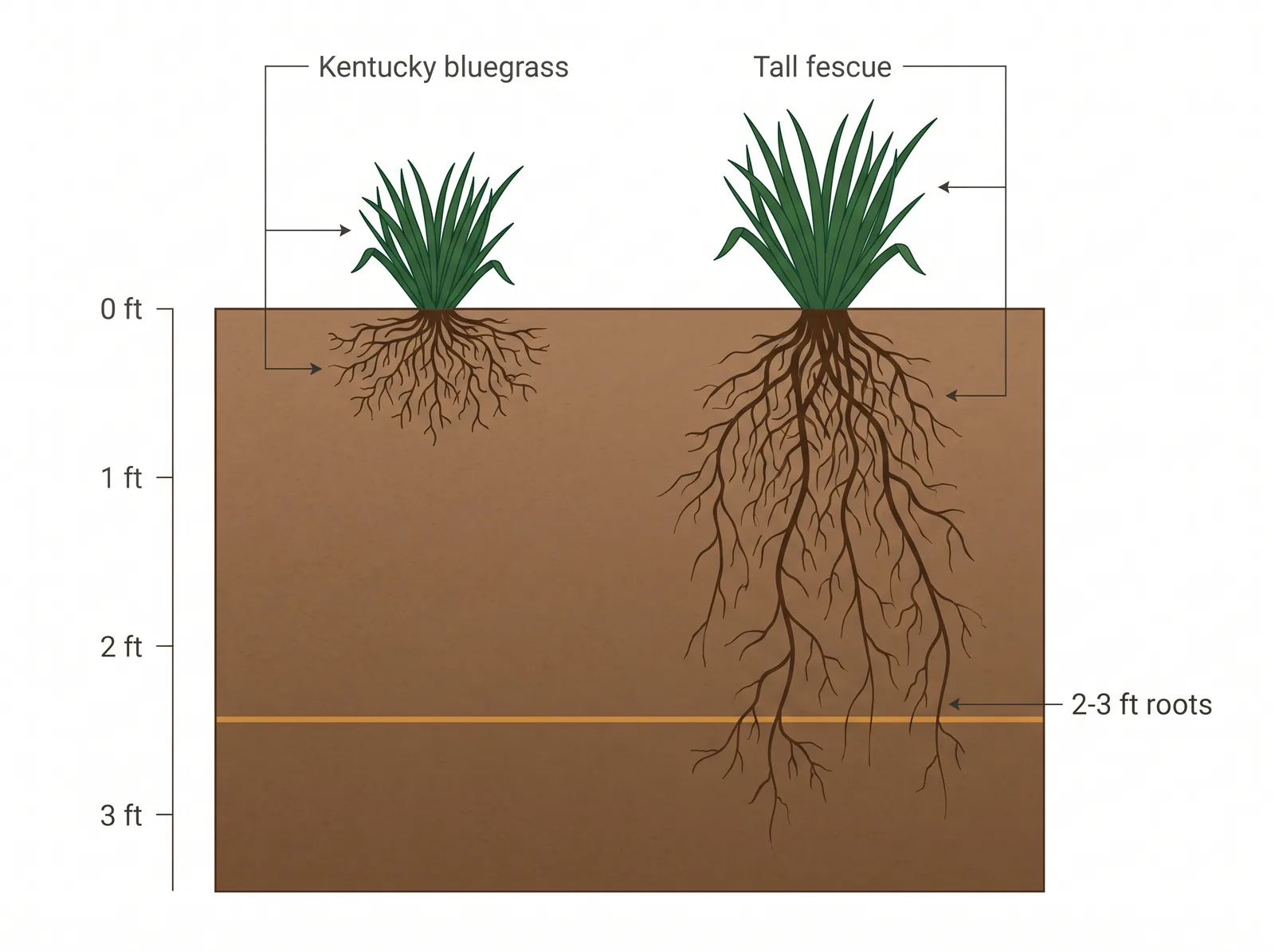
They split the seasons. Both survive Ontario winters without trouble, so the deciding season is summer, and there tall fescue wins on toughness. It roots 2 to 3 feet deep and pulls water from soil layers bluegrass cannot reach, so it stays green through a dry GTA July while bluegrass browns out (Iowa State).
Bluegrass is not fragile, though; it just copes differently. In a summer drought it goes dormant and brown to protect itself, then greens back up from its underground runners once rain or watering returns. So the honest framing is: tall fescue stays green with less water, and bluegrass survives drought but looks rough until it rebounds.
Which is better for a shady Toronto yard?
Tall fescue, clearly. Kentucky bluegrass needs 6 to 8 hours of direct sun to stay thick, and thins out below that; turf-type tall fescue holds on with around 4 hours. Toronto has a lot of shade, so this matters more here than in a treeless subdivision.
The classic problem spot is a backyard under mature maples, or the north side of a semi where the house throws shade most of the day. Bluegrass sod laid there goes patchy within a couple of seasons, and the thin turf invites weeds like creeping charlie. A fescue-heavy blend is the durable answer for those spots.
Quotable: Kentucky bluegrass needs 6 to 8 hours of sun to stay dense; turf-type tall fescue holds with about 4, which makes fescue the right grass for a Toronto yard shaded by mature maples.
Which needs less work and water?
Tall fescue is the low-maintenance grass. It needs 30 to 40% less fertilizer than Kentucky bluegrass, and its deep roots mean less watering to stay green (Michigan State; NC State Extension). Bluegrass is the higher-input grass: it wants regular feeding through the season and more frequent watering, and under heavy fertilizer it can build thatch and draw insects.
There is one point in bluegrass's favour on upkeep: because it self-repairs, a bluegrass lawn heals foot traffic, pet spots, and small damage on its own, while a fescue lawn needs you to overseed those spots. So fescue asks for less feeding and watering, and bluegrass asks for less patching.
From the data: YardQuote tracks 113 sod-installation companies across the GTA, 102 of them with three or more reviews at an average of 4.80 stars, the highest-rated category we track (YardQuote tracking, July 2026). When you request quotes, ask which grass the roll is: the default is usually Kentucky bluegrass, and a fescue blend often has to be specified.
So which should you plant in the GTA?
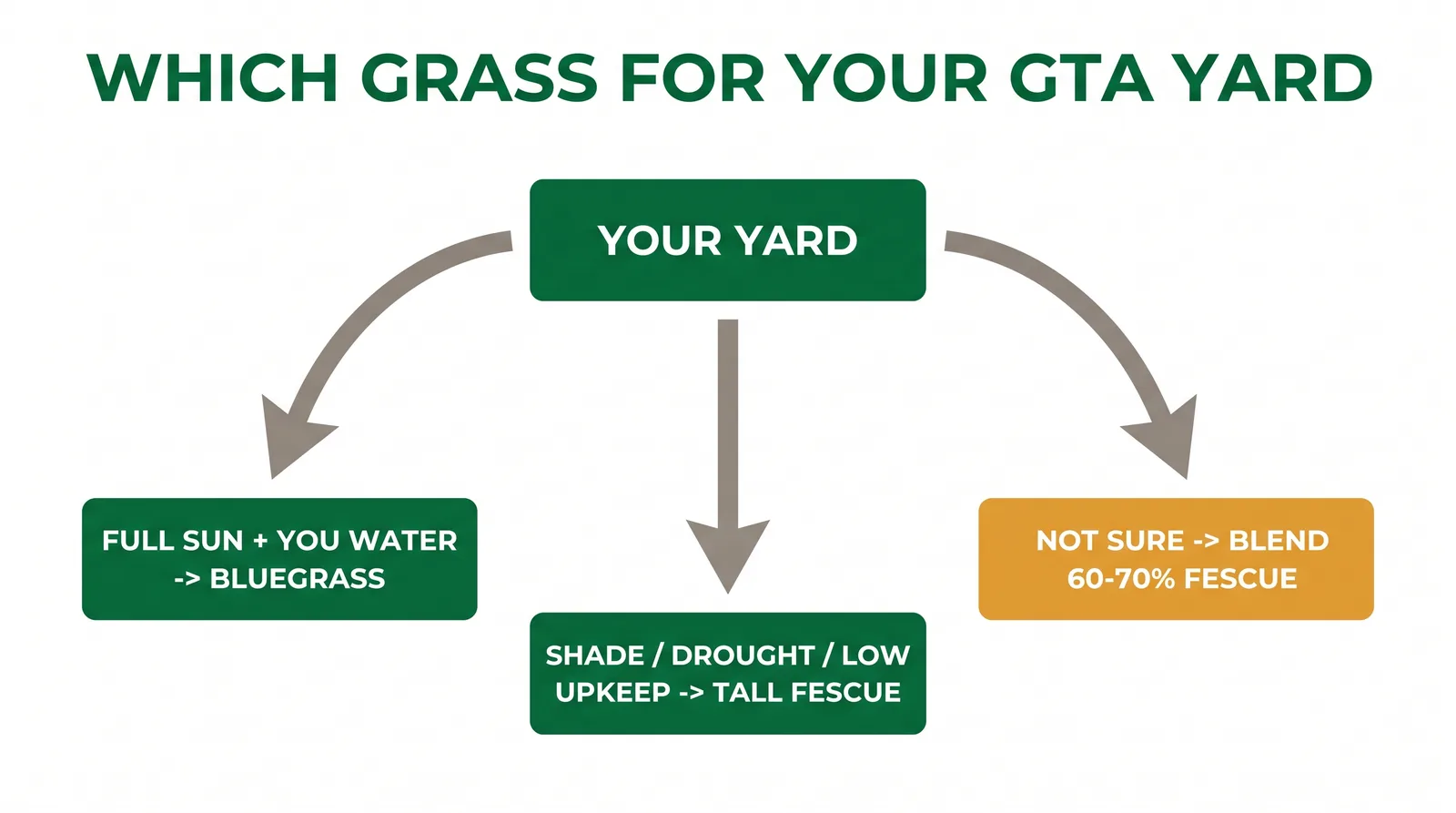
Match the grass to the site, and when in doubt, blend. Here is the short decision:
- Choose Kentucky bluegrass if the yard gets 6+ hours of sun, you want the finest-textured lawn, and you are willing to water and feed it. Its self-repair is a real bonus for high-traffic family yards.
- Choose turf-type tall fescue if the yard is shaded, dries out, has poorer soil, or you want the lowest-upkeep lawn that stays green with less water and fertilizer.
- Choose a blend (about 60 to 70% fescue, 20 to 30% bluegrass) for most GTA lots, because it combines fescue's toughness with bluegrass's fine texture and self-healing, and covers sun and partial shade on the same property.
If you are seeding rather than sodding, our sod cost per square foot breakdown and the grass seed cost page show what each route runs, and once you have picked a grass, preparing your yard for sod covers the groundwork. You can compare installed pricing on the sod installation cost page or browse sod installers in North York and other GTA areas.
Not sure which grass your yard should have? Request a quote and compare up to three vetted local pros side by side, and ask each which grass they would lay and why. Your contact details only go to the one you pick.