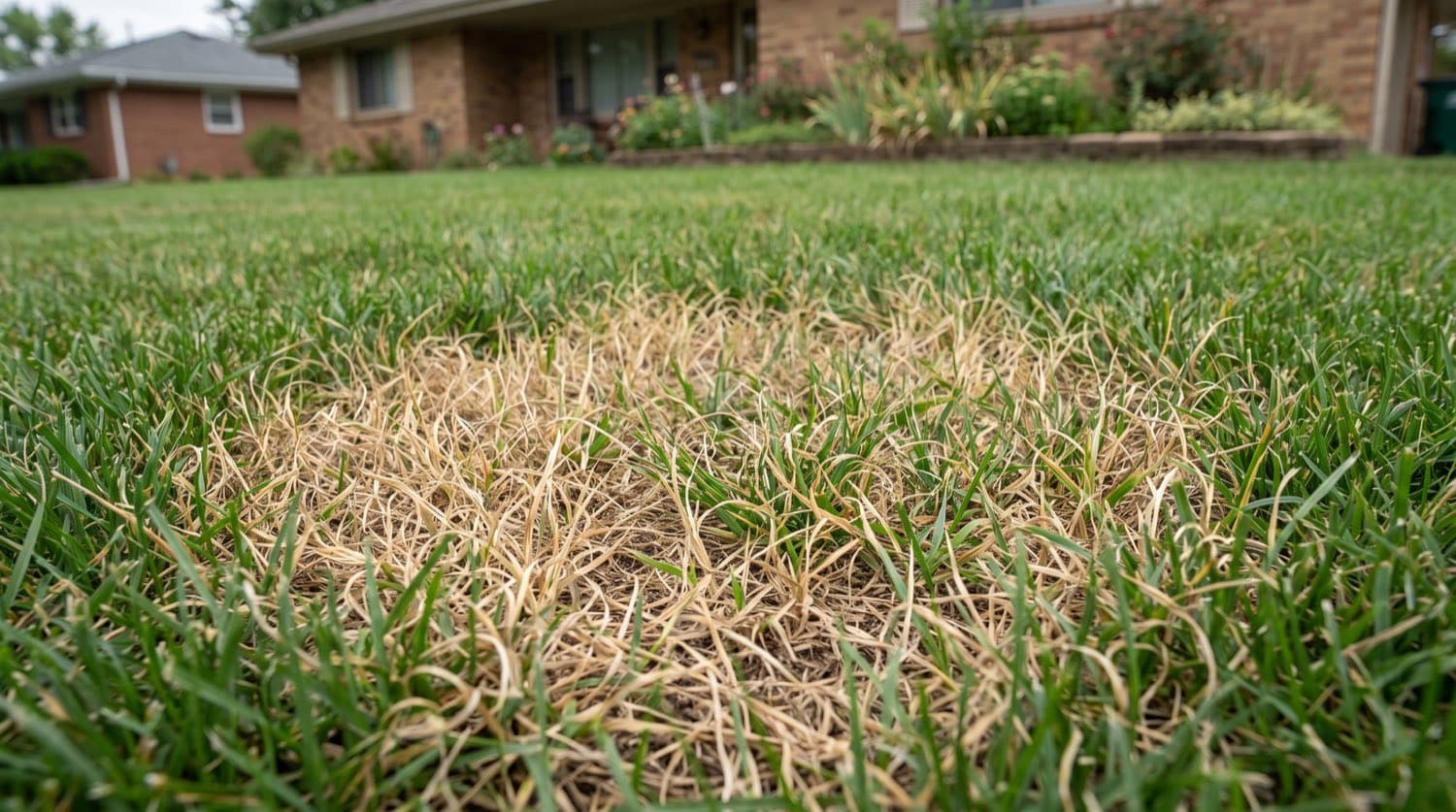
Answer First: Most Ontario lawn diseases are cosmetic, not fatal, and you identify them by pattern, colour, and season: pink-red threads mean red thread, orange dust that rubs off is rust, dark green rings with mushrooms are fairy ring, silver-dollar bleached spots are dollar spot, and matted patches after snowmelt are snow mold. Because Ontario's cosmetic pesticide rules put homeowner fungicides largely off the table, the real treatment for almost all of them is cultural: mow high, water deep and infrequently in the morning, and feed the right amount of nitrogen.
A patch of off-colour grass sends a lot of Toronto homeowners looking for a spray. The better first move is a closer look. Nearly every lawn disease you will meet in the GTA leaves a signature you can read, and most of them are telling you the grass is stressed, not dying.
How do you identify a lawn disease?
Read three clues in order: the pattern, the blade, and the season. The pattern is the shape of the damage (scattered spots, a ring, or a diffuse patch). The blade is what you see up close (threads, powder, lesions, or bleaching). The season narrows it further, because most turf fungi have a temperature and moisture window they live in.
That order matters because the same brown patch can be a disease, drought, dog urine, or grubs, and jumping straight to "fungus" wastes time and money. If the grass tugs up like a loose carpet, that is grubs, not disease. If it follows the dog's path, that is urine. A true fungal disease shows a consistent blade-level symptom across the affected area.
Turfgrass disease — damage caused by a fungus colonizing the grass, distinct from damage caused by insects, drought, pets, or a dull mower. It shows a repeatable symptom on the blades themselves, not just browning.
What are the common lawn diseases in Ontario?
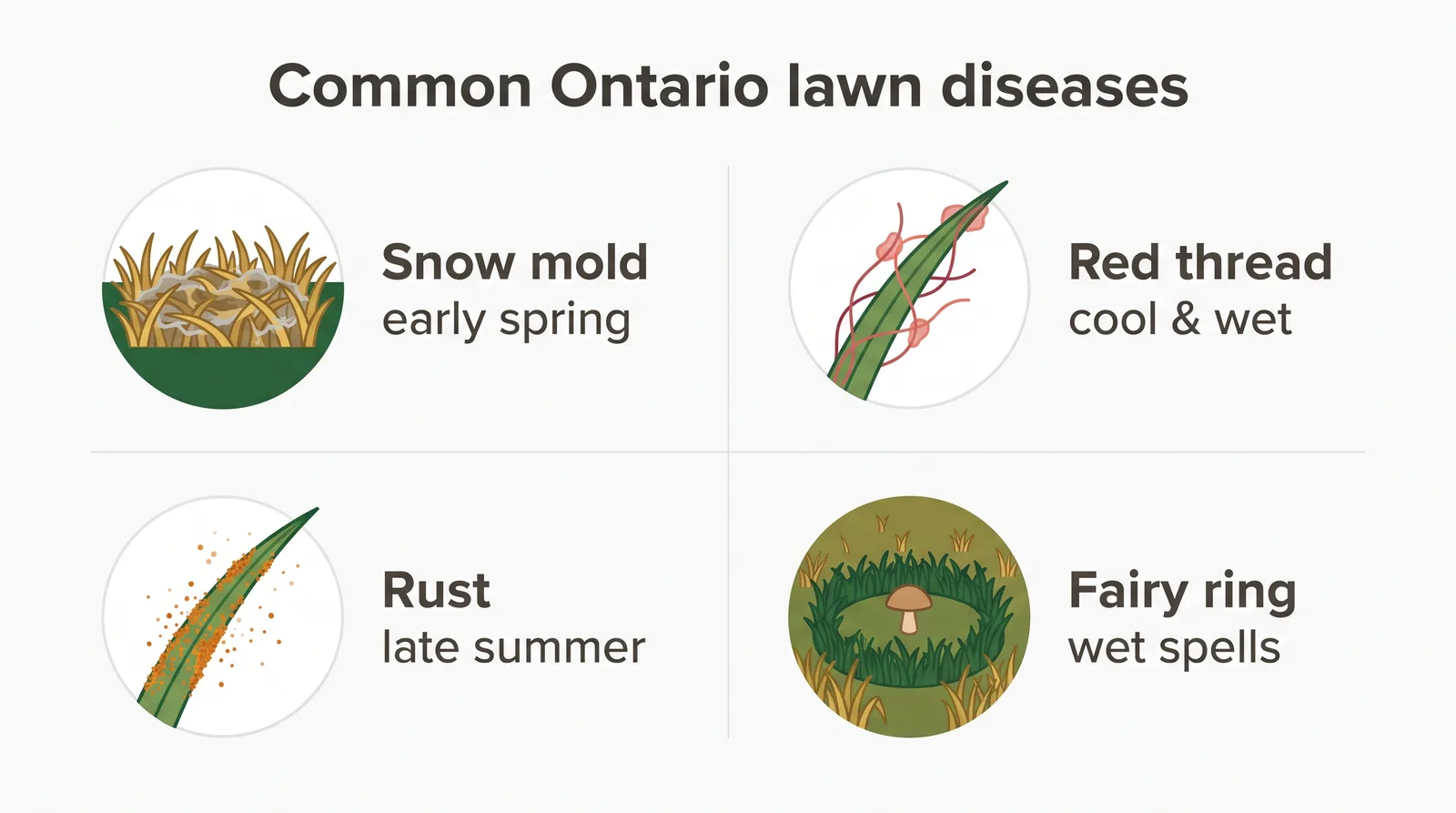
Five diseases account for most of what GTA homeowners see. The chart below is the fast identification pass; each one has a distinct look and season.
| Disease | What it looks like | When it shows | Kills the lawn? |
|---|---|---|---|
| Snow mold | Matted, straw-coloured or pinkish circular patches | Early spring, right after snowmelt | Rarely; rakes out and recovers |
| Red thread | Ragged patches with fine pink-red threads on blade tips | Cool, wet spring and fall | No, cosmetic |
| Rust | Orange-yellow powder that rubs off on shoes and mower | Late summer into fall | No, cosmetic |
| Dollar spot | Small, silver-dollar-sized bleached spots | Warm, humid summer | Can thin turf if widespread |
| Fairy ring | Dark green ring or arc, often with mushrooms | Summer, especially in wet spells | No, cosmetic |
Quotable: Five diseases cover most Ontario lawns: snow mold after snowmelt, red thread and rust in cool or shaded low-vigour turf, dollar spot in humid summers, and fairy ring in wet weather. Four of the five are cosmetic.
Snow mold is the one tied hardest to Toronto's climate, appearing as matted patches when a long-lasting snowpack finally melts (Penn State Extension). Rake the matted areas to let them dry and the grass usually greens back up. The deeper dives on three of the others live in our guide to fairy rings, rust, and red thread.
Why can't you just spray a fungicide in Ontario?
Because provincial rules largely take that option away, and for cosmetic diseases you do not need it. Ontario restricts the use of pesticides, including many fungicides, applied to lawns for purely cosmetic reasons, so the products a homeowner in another province might grab are not generally available for lawn use here (Ontario).
This lines up with what university turf programs recommend anyway. For home lawns, the extension consensus is that cultural control comes first and chemical control is rarely warranted for cosmetic diseases (Penn State Extension; University of Maryland Extension). In Ontario the ban simply makes the recommended path the only path.
Quotable: Ontario's cosmetic pesticide rules put lawn fungicides largely out of reach, but that matches the university advice anyway: for cosmetic lawn disease, cultural care is the first and usually only treatment needed.
What cultural fixes work on almost every lawn disease?
The same short list of good habits starves most turf fungi of the conditions they need. This is the actual treatment, not a stopgap.
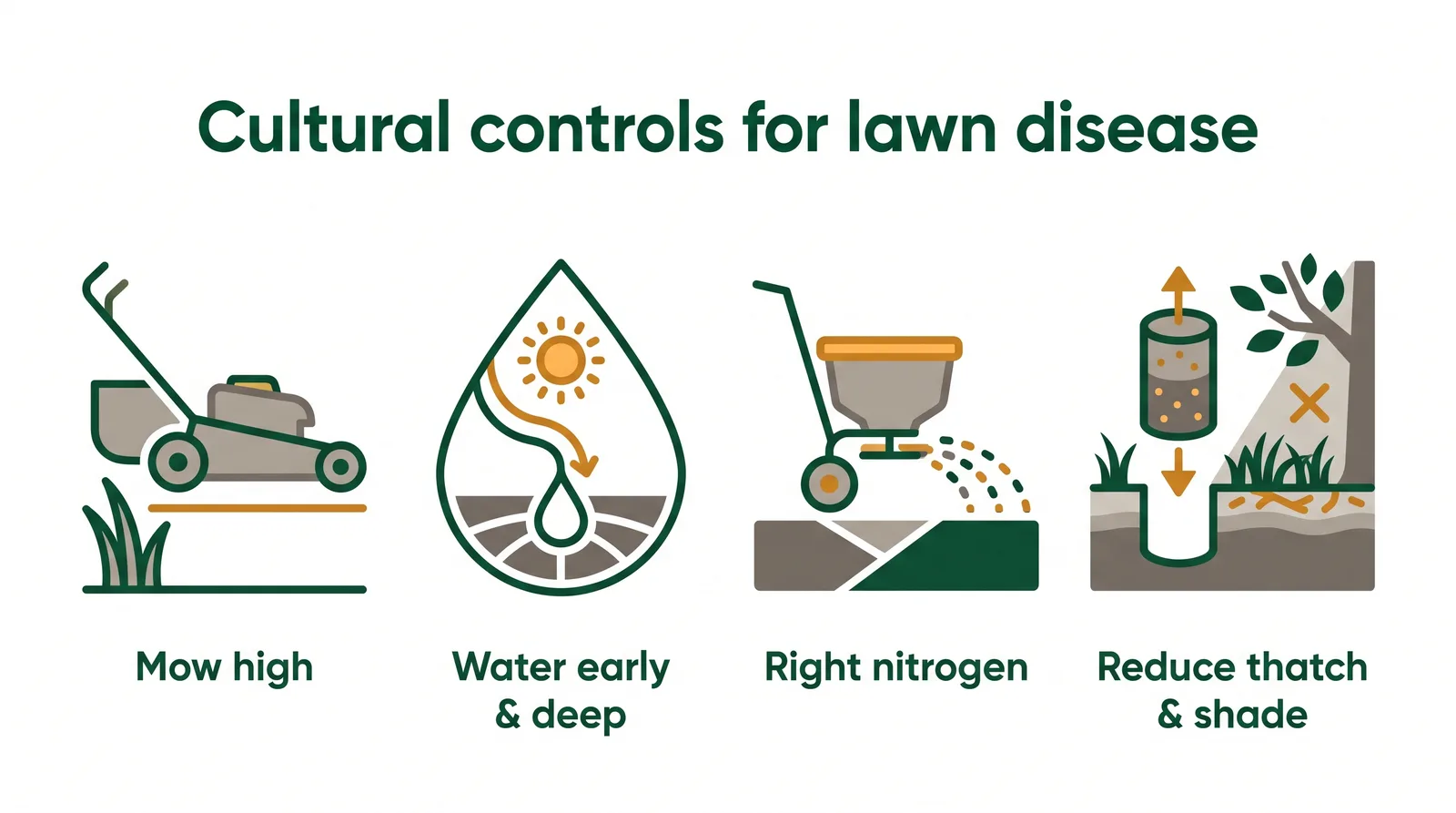
- Mow high and sharp. Cut at 3 inches or more with a sharp blade; taller grass is more disease-resistant and a clean cut heals faster than a torn one.
- Water deep, infrequent, and early. One good soak beats daily sprinkling, and morning watering lets the blades dry before night, which is when fungi spread. Overwatering in a humid Toronto summer is a leading cause of disease.
- Feed the right amount of nitrogen. Low-vigour, underfed turf is prone to red thread and rust, while overfeeding creates soft growth that invites other diseases. Match the season, and lean on a fall feeding.
- Reduce thatch and shade. Core aeration cuts the thatch layer that harbours fungi, and thinning a dense tree canopy lets damp turf dry out. Persistent shade problems have their own fix in our guide to bare spots under trees.
From the data: YardQuote tracks 249 lawn-care companies across the GTA, and 220 of them carry three or more reviews with an average rating of 4.75 (YardQuote tracking, July 2026). A well-reviewed crew that leads with mowing, watering, and aeration advice, not a fungicide upsell, is the one working within Ontario's rules.
When is it not actually a disease?
Before you treat anything, rule out the look-alikes. Drought browning is uniform and follows the sun; it greens up after rain. Dog urine leaves small dark-green-edged dead spots on the dog's route. Grubs make the turf spongy and liftable because the roots are chewed off. A dull mower shreds blade tips to a frayed tan, which looks like disease from a distance but is a blade problem, not a fungus.
If the pattern matches one of the five diseases and better care does not turn it around in a few weeks, that is when a pro visit earns its keep. You can compare vetted crews on the lawn-care directory for Scarborough, check seasonal service rates on the Toronto lawn-care cost guide, or request a quote.
Not sure whether it is disease, drought, or grubs? Request a quote and compare up to three vetted local crews side by side. Your contact details only go to the one you pick.