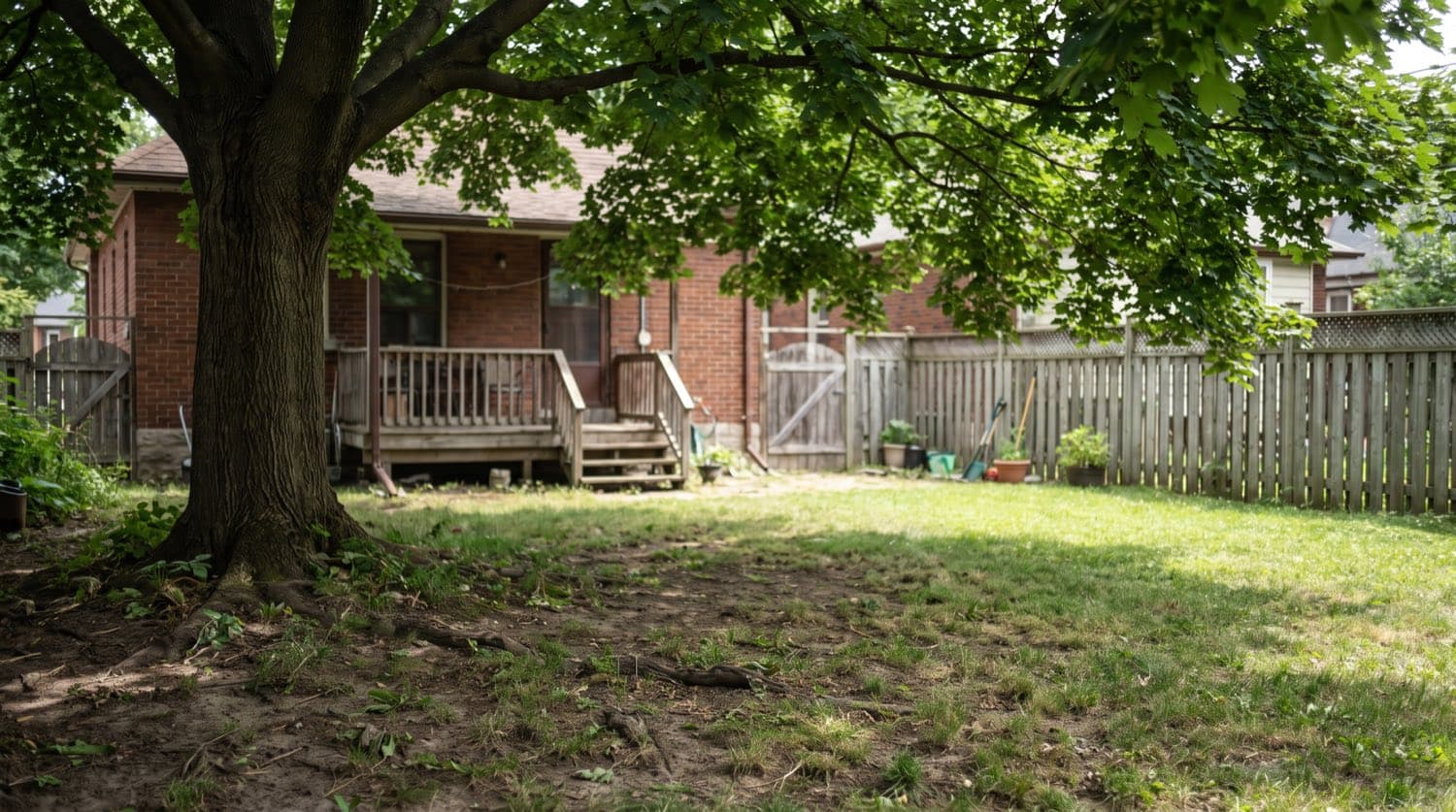
Answer First: Grass thins under trees because two problems stack up: the canopy blocks sunlight, and the tree's roots outcompete the turf for water and nutrients. Fix it by letting in more light (thinning the canopy), switching to fine fescue, the most shade-tolerant cool-season grass, and overseeding in fall. But if the spot gets less than about 2 hours of direct sun a day, stop fighting it and switch to a mulch ring or shade groundcover, which looks better and protects the tree.
Every established Toronto yard with a mature maple has this spot: a thin, muddy patch under the canopy where grass refuses to hold. Throwing more seed at it rarely works, because seed was never the problem. Light and roots were.
Why won't grass grow under your tree?
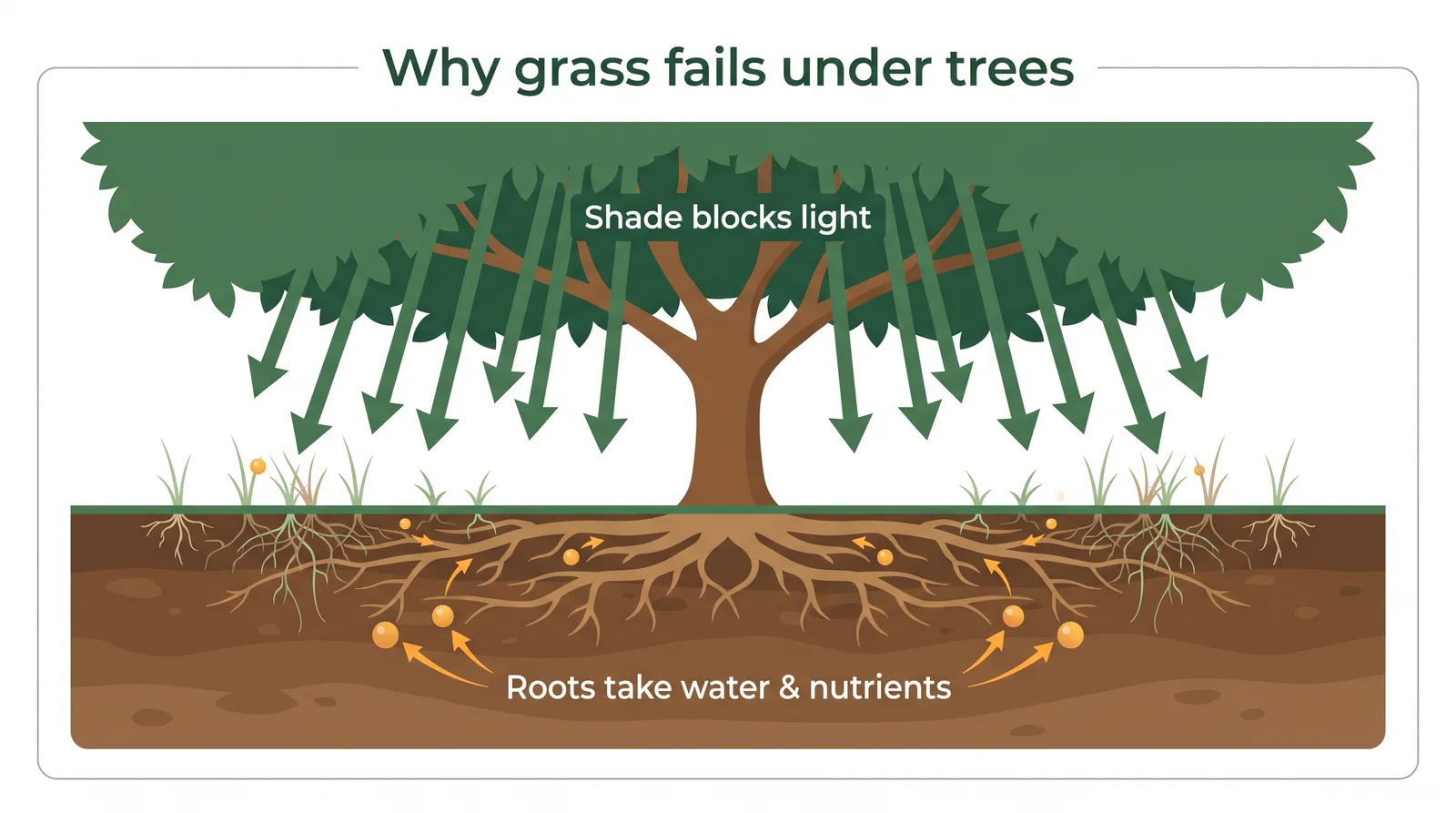
Because it is losing two fights at the same time. The first is light: turf grass needs a real dose of daily sun, and a dense canopy cuts it below what the grass can live on. The second is underground competition. A tree's shallow feeder roots spread through the same top few inches of soil the grass roots need, and they are far better at pulling out the available water and nutrients (Penn State Extension).
Either problem alone thins a lawn. Together they create the bare, compacted patch you see under most big GTA shade trees. That is why the fix is never just more seed; you have to change at least one of the two conditions first.
Root competition — the tree's feeder roots and the grass roots drawing from the same shallow layer of soil, with the larger tree winning most of the water and nutrients. It is half the reason grass fails under a canopy, the other half being shade.
Step one: let more light in
The single most effective move is to reduce the shade, and that means thinning the tree's canopy so more light filters through to the ground. Selectively removing some interior and lower branches, called crown thinning, can lift the light on the turf below without harming the tree or ruining its shape.
This is real pruning, so timing and technique matter, especially on oaks and bleeder trees, and anything beyond small limbs is a job for a certified arborist. Our guide to when to prune trees in Ontario covers the windows that keep the tree healthy while you open it up. Get the light right and the rest of the plan actually has a chance.
Quotable: Under a tree, thinning the canopy to let in light does more for the grass than any seed you can buy. Change the light first, then change the grass.
Step two: plant the right grass
Once light is coming through, switch to the grass built for shade. Fine fescues, the hard, red, Chewings, and sheep fescues, are the most shade-tolerant cool-season grasses, and hard fescue is the best of the group (University of Maryland Extension). If you are reseeding a shady patch in the GTA, a fine fescue blend is the right call, not the Kentucky bluegrass that dominates sunny lawns.
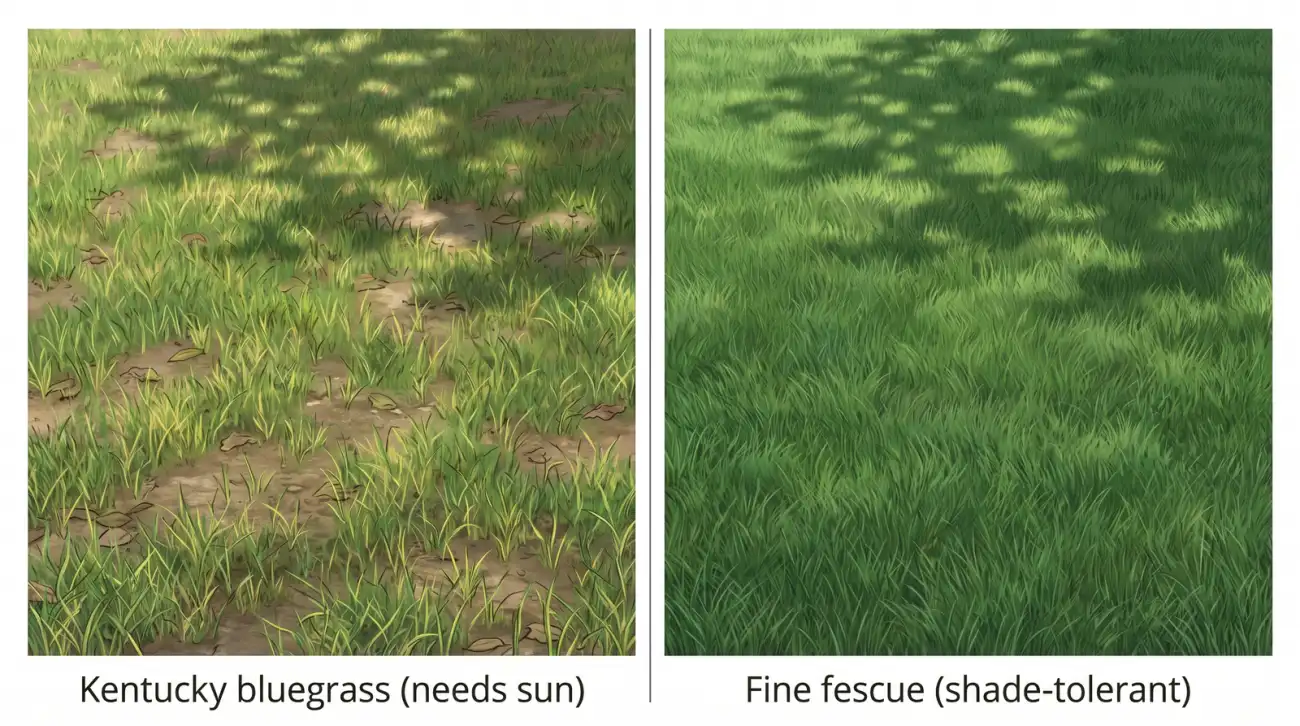
Fine fescue has limits worth knowing. It still needs a minimum of roughly 2 hours of direct sun a day, it does not take heavy foot traffic, and it likes to be mowed high (3 inches or more) and fed lightly, no more than about 2 pounds of nitrogen per 1,000 square feet a year (Penn State Extension). Treat a shade lawn like a sunny one and you will overfeed and overcut it into failure.
Step three: overseed in fall and keep it thin-but-alive
Sow the fine fescue in fall, the best seeding window in the GTA's climate, after loosening the bare soil so seed meets dirt. Keep it watered until it establishes, then accept that a shade lawn is a maintenance relationship: you will likely overseed the same area every fall, because turf under a canopy stays naturally thinner than turf in the open.
Pair the reseeding with the same care that helps any struggling lawn: mow high, water deep and infrequent, and feed lightly. If you are overseeding anyway, doing it alongside aeration and overseeding gives the new seed the best soil contact. And keep an eye out for shade-driven disease, since damp, low-light turf is prone to the problems in our lawn disease identification guide.
When should you stop fighting it?
When the spot gets less than about 2 hours of direct sun a day, grass will keep failing no matter what you plant, and the honest move is to stop. Below that threshold, a mulch ring around the trunk, a shade-tolerant groundcover, or a bed of shade perennials looks far better than bare, eroding soil.
Giving up on grass there is also better for the tree. A mulch ring keeps mowers and foot traffic away from the trunk and surface roots, and it holds soil moisture the tree wants. One caution: never fix a bare patch by dumping several inches of new topsoil over the root zone to "level" it, because burying a tree's roots can suffocate and kill it. Work with thin topdressing only.
From the data: YardQuote tracks 249 lawn-care companies and 650 landscaping companies across the GTA, the large majority carrying strong review histories (YardQuote tracking, July 2026). Whether the answer is a fine fescue overseeding or a mulch-and-shade-bed redesign, there is a well-reviewed pro for either path.
You can compare vetted crews on the lawn-care directory for East York, check seeding options and pricing on the grass seed and lawn cost guide, or request a quote.
Not sure whether to reseed or redesign that patch under your tree? Request a quote and compare up to three vetted local pros side by side. Your contact details only go to the one you pick.