Answer First: Fairy rings, rust, and red thread are all cosmetic Ontario lawn diseases that rarely kill grass. Rust and red thread both mean the turf is underfed and growing slowly, so a correct nitrogen feeding is the main fix for both. Fairy ring is different: it feeds on buried organic matter, so feeding only masks it while core aeration and deep watering do the real work. Because Ontario's cosmetic pesticide rules make lawn fungicides largely unavailable, all three are cultural-care problems.
These three show up on GTA lawns more than any others, and they scare homeowners more than they should. None of them is a lawn-killer. Two of them are the grass asking to be fed, and the third is just soil fungi doing their job a little too visibly.
What causes fairy rings and how do you fix them?
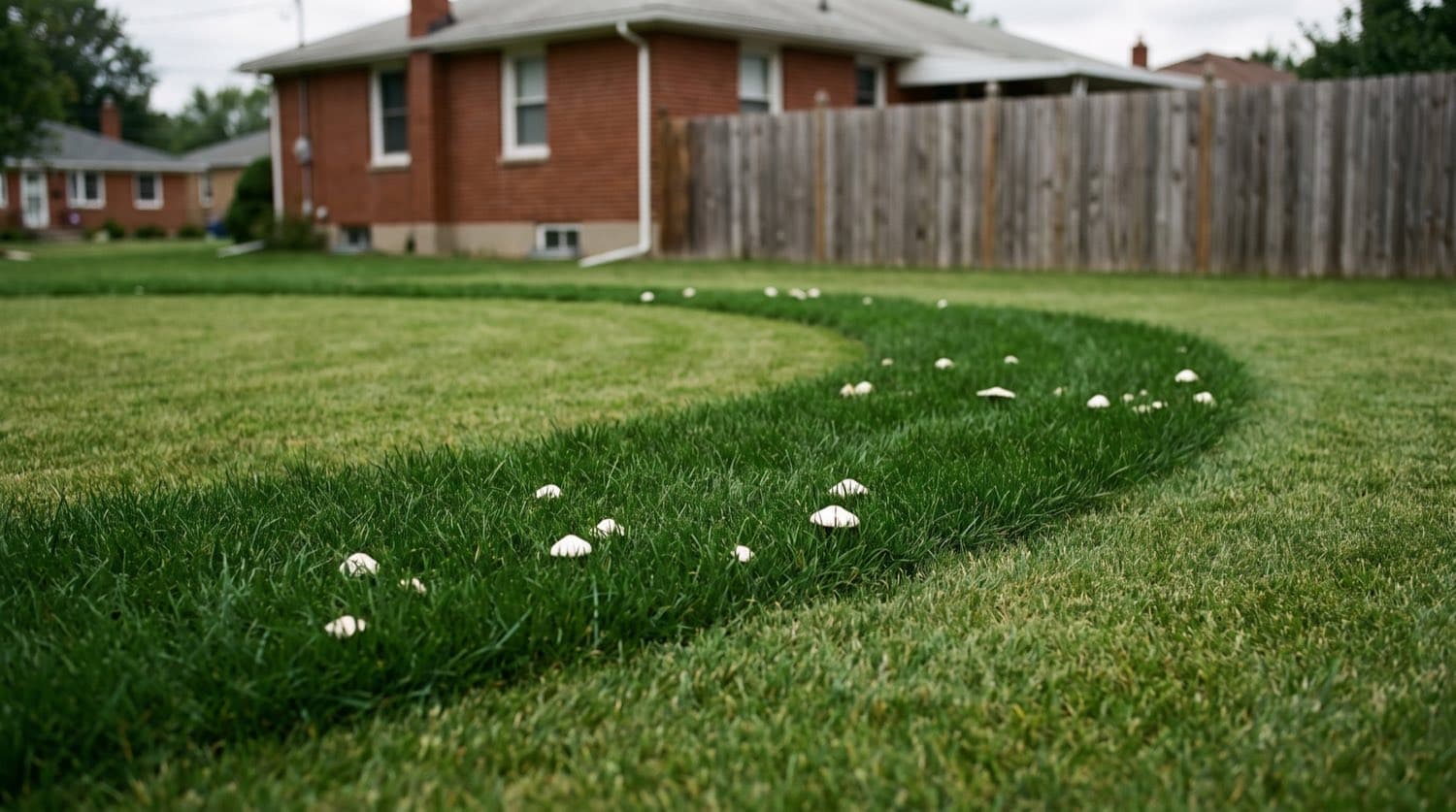
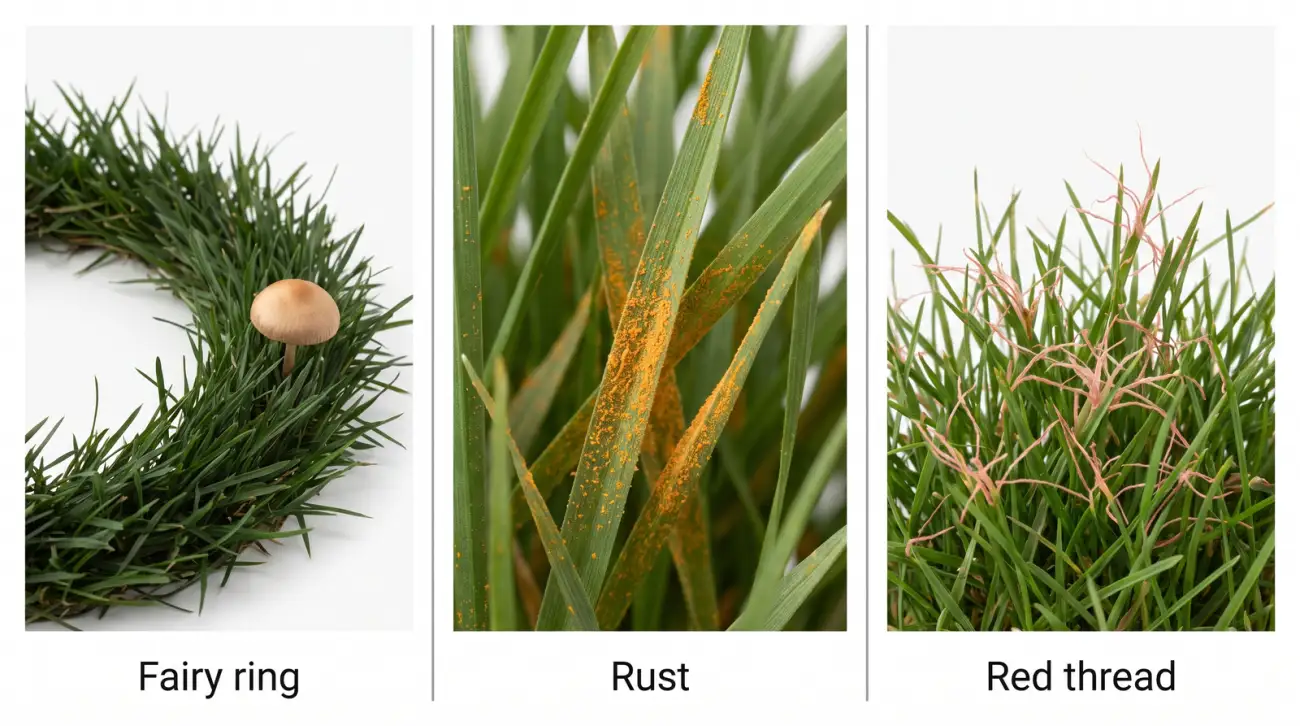
A fairy ring is a circle or arc of darker green grass, often ringed with mushrooms, caused by soil fungi breaking down organic matter underground. As the fungus decomposes buried thatch, roots, or old wood, it releases nitrogen that greens up the grass right above it, which is why the ring stands out from the rest of the lawn (University of Minnesota Extension).
Fairy rings are cosmetic and do not kill a lawn; many fade on their own, so waiting is a legitimate first choice. To manage an active ring, core aerate to break up thatch and help water soak through the water-repellent soil that can build up under the ring, then water deeply. If the ring shows only as a dark green band, feeding the rest of the lawn nitrogen to match the colour makes it disappear visually. One thing that usually does not work is a fungicide, which is typically ineffective against fairy ring even where it is available.
Fairy ring — a ring or arc of dark green grass and sometimes mushrooms, produced by soil fungi decomposing organic matter and releasing nitrogen into the turf above. It is a soil condition made visible, not a grass infection.
What is lawn rust and how do you get rid of it?
Rust is a fungus (Puccinia species) that coats grass blades in orange-yellow powdery spores in late summer and into fall. The giveaway is the powder itself: walk across an infected lawn and it rubs off orange onto your shoes, and it will dust the mower and your hands (Iowa State University Extension).
Rust settles on turf that is growing slowly, whether from low nitrogen, drought stress, shade, or the natural slowdown of late season. The fix is to get the grass growing again: feed it to push fresh growth, mow regularly and bag the clippings to physically carry spores off the lawn, water in the morning so blades dry through the day, and open up shade where you can. It weakens the grass a little but rarely does lasting harm.
Quotable: Lawn rust is the orange dust that rubs off on your shoes in late summer. It means the grass is growing too slowly, so feeding and mowing it back into active growth is the cure, not a spray.
What is red thread and should you worry about it?
Red thread shows as ragged, bleached patches stitched through with fine pink to red threads on the tips of the grass blades. It favours cool, wet weather, so in the GTA it turns up in spring and again in fall. Like rust, it is a disease of low vigour, striking turf that is growing slowly because it is underfed or otherwise stressed (Penn State Extension).
The reassuring part is that red thread is cosmetic and the grass recovers. The fix is a light feeding of quick-release nitrogen, about 0.5 to 1 pound per 1,000 square feet, to push the lawn back into healthy growth, backed by proper watering and mowing. Home lawns do not need a fungicide for it, and one note from the turf research matters: certain fungicide groups can actually make red thread worse, another reason cultural care is the safer path.
What do these three diseases have in common?
Two of the three tell the same story. Rust and red thread are both diseases of slow, underfed turf, so the single most useful thing you can do for either is feed the lawn the right amount of nitrogen for the season and keep it growing steadily. Get the feeding and watering right and both tend to clear on their own.
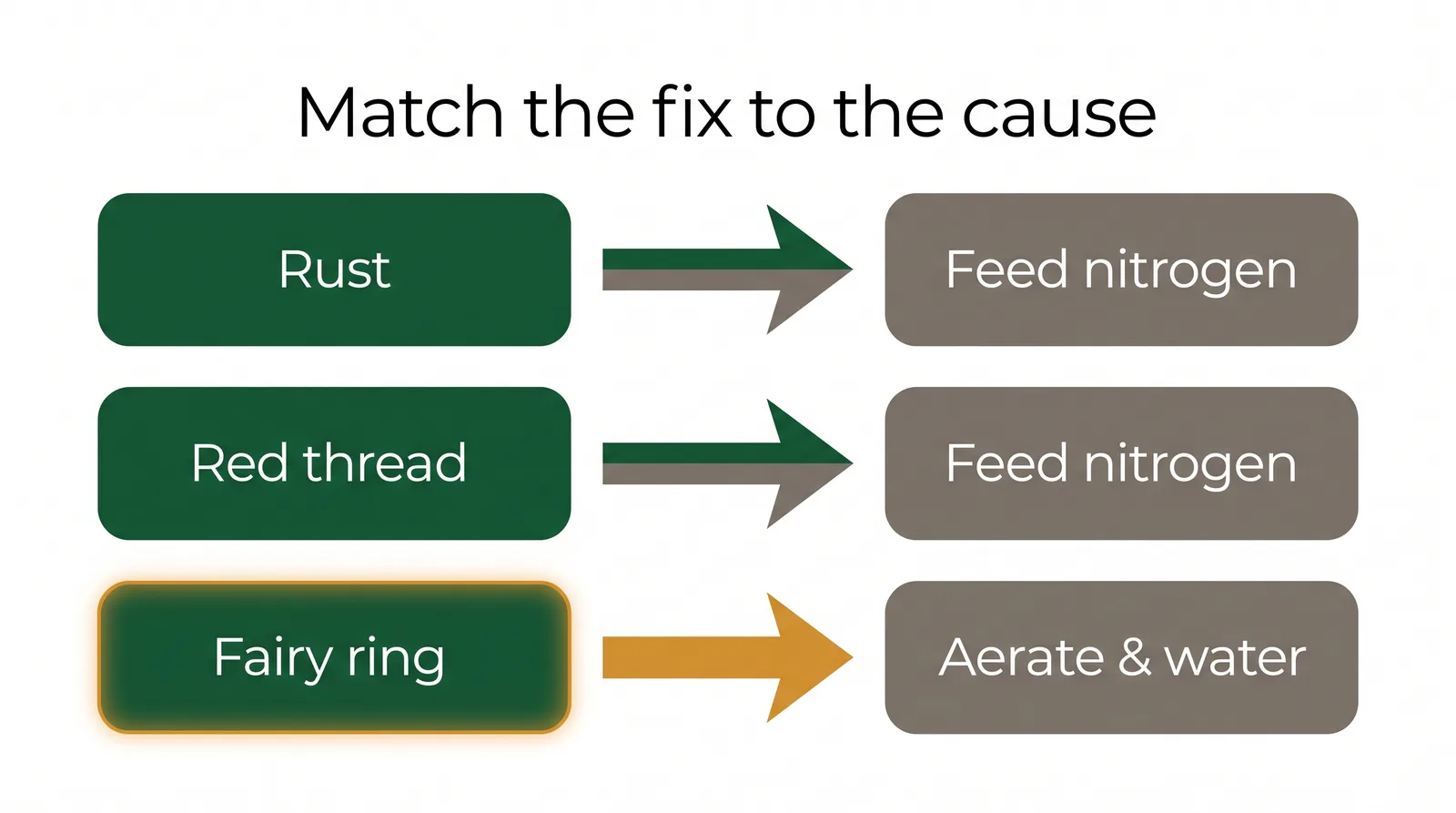
Fairy ring breaks that pattern. It is not about how well-fed the grass is; it is about organic matter buried in the soil, so nitrogen only masks it rather than curing it. That difference is worth knowing before you spend a season feeding a lawn expecting the ring to vanish. All three, though, land in the same place in Ontario: with lawn fungicides largely off the table under the cosmetic pesticide rules, cultural care is the treatment. For the full field guide to what else might be on your lawn, see our lawn fungus and disease identification guide.
From the data: YardQuote tracks 249 lawn-care companies across the GTA, 220 with three or more reviews and an average rating of 4.75 (YardQuote tracking, July 2026). For a cosmetic disease, that depth of well-reviewed pros means you can get a feeding-and-aeration plan without paying for an unnecessary chemical program.
When is it worth calling a pro?
Reach out when the diagnosis is uncertain, when the same patches keep returning despite a year of good care, or when disease is thinning the turf enough to need overseeding to fill in. Rust and red thread that persist usually point to an underlying issue, compaction, deep shade, or a feeding schedule that is off, that a pro can pin down. Shade-driven cases often trace back to tree cover, which our guide to bare spots under trees addresses directly.
You can compare vetted crews on the lawn-care directory for North York, check seasonal service pricing on the Toronto lawn-care cost guide, or request a quote.
Want a pro to diagnose the patch and set a feeding plan that fits Ontario's rules? Request a quote and compare up to three vetted local crews side by side. Your contact details only go to the one you pick.