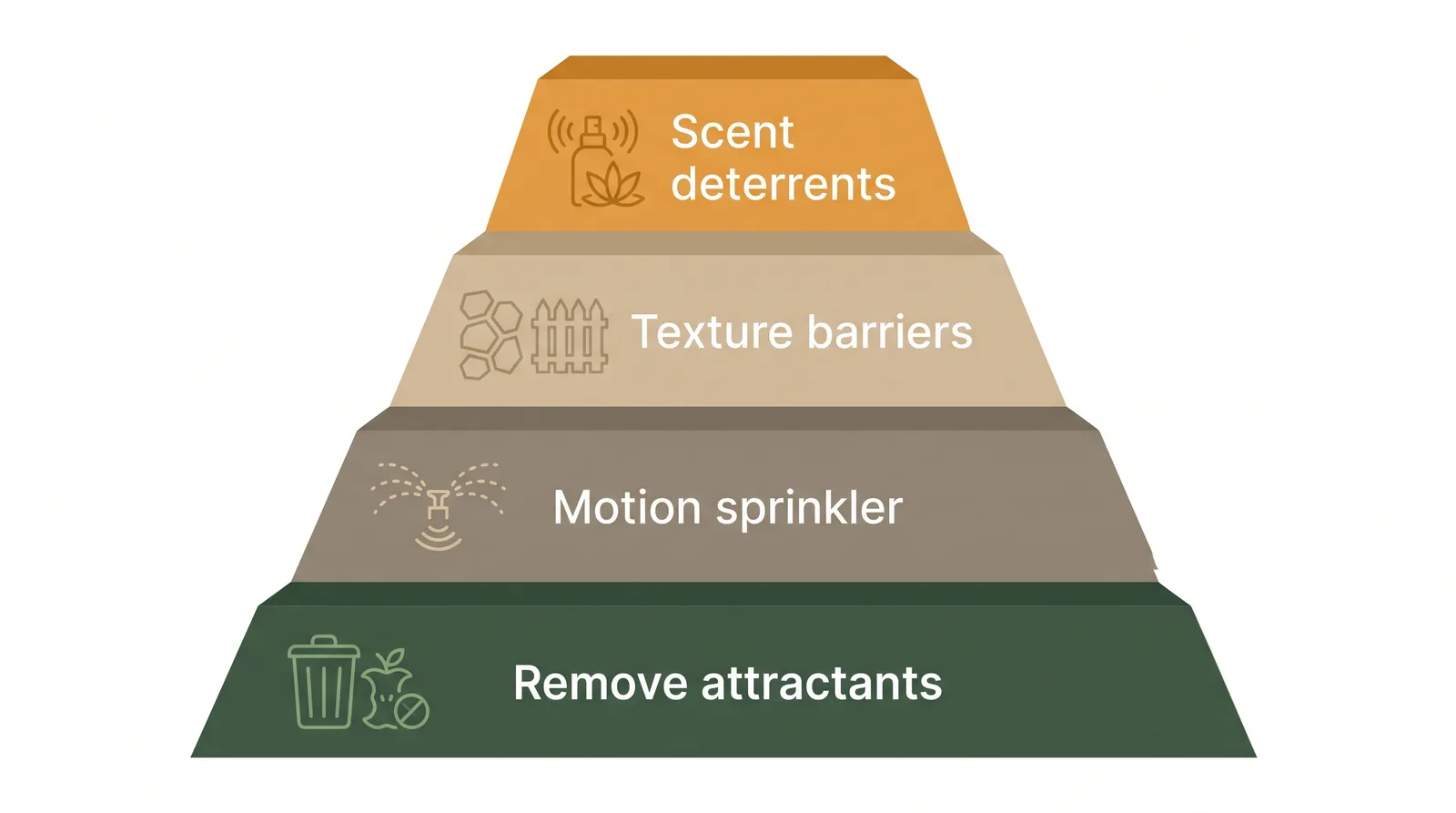
Answer First: Keep cats and dogs out of your yard humanely by combining three things: remove what attracts them (secure garbage, pet food indoors, less cover), make the ground unwelcoming (motion-activated sprinklers, chicken wire under soil, sharp mulch), and use scent deterrents like citrus or coffee grounds. Motion-activated sprinklers are the most reliable single tool. Skip predator-urine products, poisons, and traps, which are inhumane and, in Toronto, feeding or harming wildlife can bring a fine.
A cat using your flower bed as a litter box, a neighbour's dog cutting through your lawn, a raccoon peeling back the turf overnight. The humane fixes are cheap and they work, but only if you start with why the animal is there in the first place.
Remove the attractants before buying any gadget
The most effective step costs nothing: stop feeding and sheltering the animals you want gone. A yard with open garbage, pet food, or dense low cover is an invitation, and no sprinkler outworks a free meal.
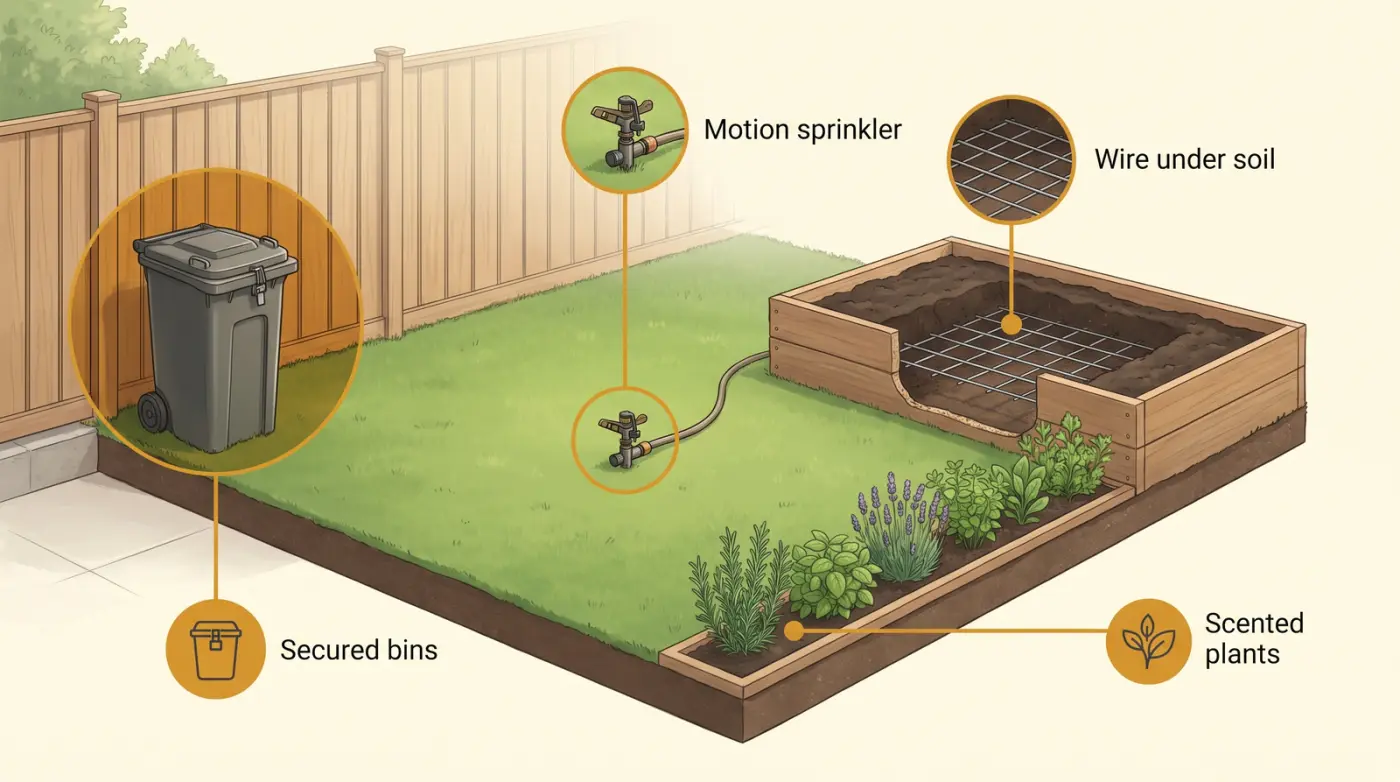
The City of Toronto's own wildlife guidance is built on exactly this. Secure garbage in tightly sealed bins, bring pet food indoors after feeding, remove or bird-proof feeders, and thin out low foliage so there is nowhere to hide (City of Toronto). The same logic that keeps coyotes and raccoons off a property keeps stray cats and roaming dogs moving along too.
Quotable: No deterrent outworks a free meal. Securing garbage, bringing pet food indoors, and cutting back low cover removes the reason animals visit a yard in the first place.
What is the most effective deterrent?
A motion-activated sprinkler. It is the one tool that reliably retrains cats, dogs, and wildlife on its own, because the response is instant, harmless, and consistent.
The device uses an infrared sensor to fire a short blast of water the moment an animal crosses into range (Humane World for Animals). Animals dislike the surprise and the water, learn the yard is unpredictable, and start routing around it. It runs day and night without you present, which is why animal-welfare groups recommend it for larger yards where scents and barriers are hard to maintain.
How to keep cats out of garden beds
Cats want loose, exposed soil to dig in, so the fix is to make the surface unpleasant and hide the dirt. This is about texture and scent, and it is entirely humane.
- Texture barriers. Lay small-gauge chicken wire just under the soil, spread sharp-edged mulch or pine cones, or place plastic carpet runners knobby-side up in beds. Cats avoid surfaces that are uncomfortable to stand and dig on.
- Scent deterrents. Citrus peels, spent coffee grounds, and aromatic plants like rosemary, rue, and lavender are unpleasant to cats but harmless. They wash out in the rain, so refresh them.
- Less bare soil. Plant densely so little ground shows. The Humane Society notes that reducing exposed soil removes the digging spot cats are hunting for.
Motion-activated sprinkler — a hose-connected sprinkler with an infrared motion sensor that releases a brief, harmless spray when an animal enters its range, training the animal to avoid the area without any physical harm.
Why is something digging up my lawn overnight?
Usually grubs. When raccoons or skunks roll back sections of turf after dark, they are digging for the grubs living in the root zone, so the animal is a symptom and the grubs are the cause.
Remove the surface attractants first, then deal with what is under the grass. If the digging keeps up in the same patches, you likely have a grub problem worth treating, the same pests that cause spongy yellow patches you can peel back like a loose carpet. A motion sprinkler discourages the nighttime raids while you address the food source below.
From the data: Of the 249 lawn-care companies YardQuote tracks across the GTA, 220 carry three or more Google reviews at an average of 4.75 stars (YardQuote tracking, July 2026). A well-reviewed crew can confirm whether grubs, not just wandering pets, are behind the damage, so you treat the real cause.
What not to do
The cruel shortcuts are also the least effective, and some cross a legal line. Predator-urine repellents are discouraged by animal-welfare groups because the ingredient is often collected by inhumane means. Poisons and unpermitted trapping harm animals and, in Toronto, feeding or harming wildlife can draw a fine and is reportable to 311. Humane deterrence is not only kinder, it holds up better, because a retrained animal stays away while a harmed one is simply replaced by the next.
For the lawn damage animals leave behind, our guides to dog urine spots on grass and why grass turns yellow cover the repairs, and you can compare rated crews on the lawn care cost page or browse lawn care in Etobicoke. If grubs are the real reason something is digging, a pro can confirm it.
Dealing with a lawn that pets or wildlife have torn up? Request a quote and compare up to three vetted local pros side by side. Your contact details only go to the one you pick.