Answer First: Sod, hydroseeding, and seed are three points on a speed-versus-cost line. Installed sod runs about $1.50 to $4.50 per square foot in the GTA and gives an instant lawn; hydroseeding is about $0.10 to $0.30 and germinates in a week or two; plain seed is cheapest at $0.05 to $1.25 depending on prep but takes months to mature (YardQuote pricing, July 2026). Choose sod for speed and slopes, seed for the lowest cost, hydroseed for large areas on a budget.
Three contractors can quote your new lawn three completely different ways, and the prices will not be close. The gap is not markup, it is method: you are really choosing how much to pay to skip the waiting.
What is the real difference between sod, hydroseeding, and seed?
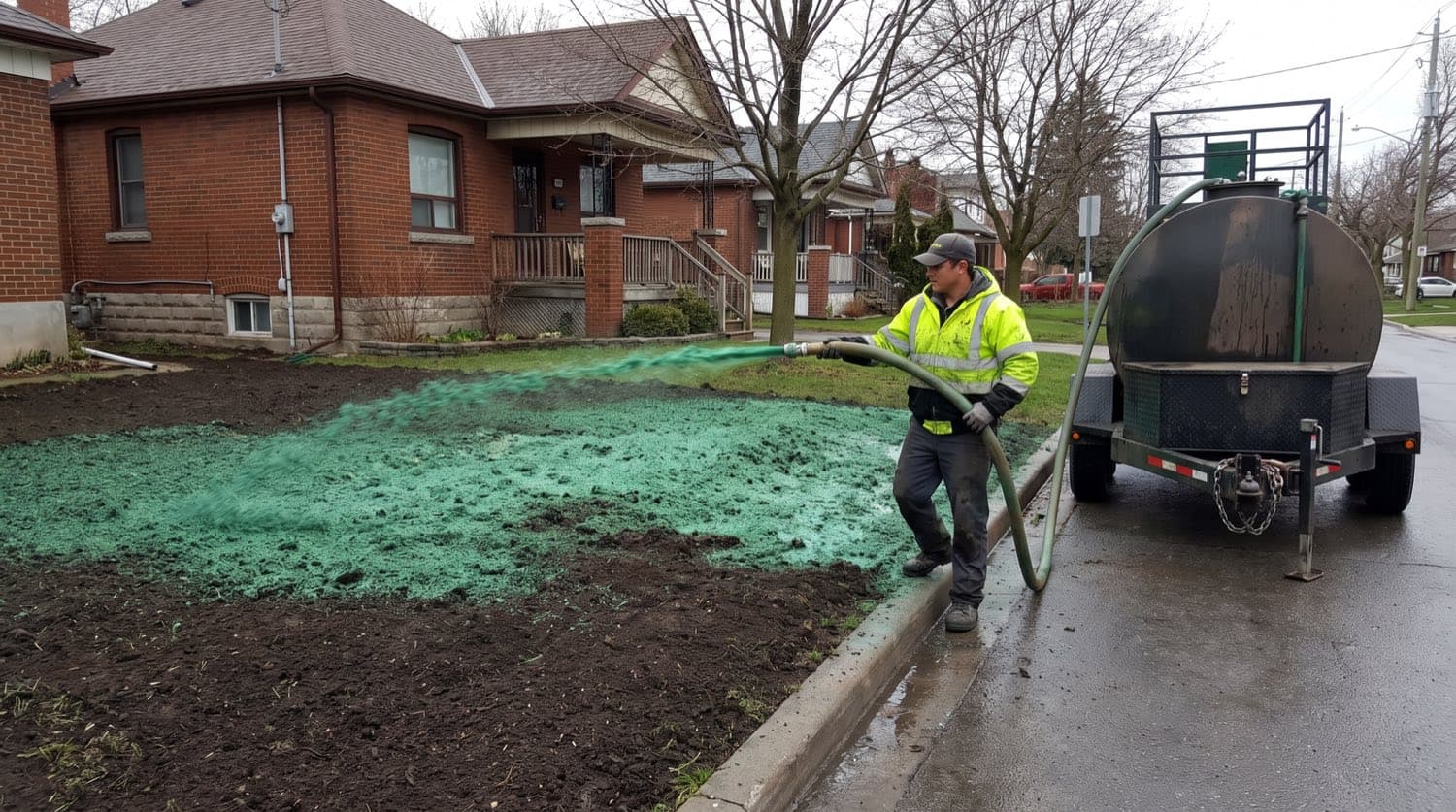
They are three ways to get grass onto bare soil, trading money for time. Sod is mature grass grown on a farm and rolled out as an instant lawn. Seed is exactly what it sounds like, spread on prepared soil to germinate in place. Hydroseeding sprays a slurry of seed, mulch, fertilizer, and a sticky tackifier that holds it on the ground and keeps the seed moist.
The single biggest difference is time to a usable lawn. Sod is walkable the day it is laid and rooted in 2 to 3 weeks. Seed and hydroseed both germinate in roughly 1 to 2 weeks but need months to mature into durable turf. Everything else, cost, grass choice, slope performance, follows from that speed tradeoff.
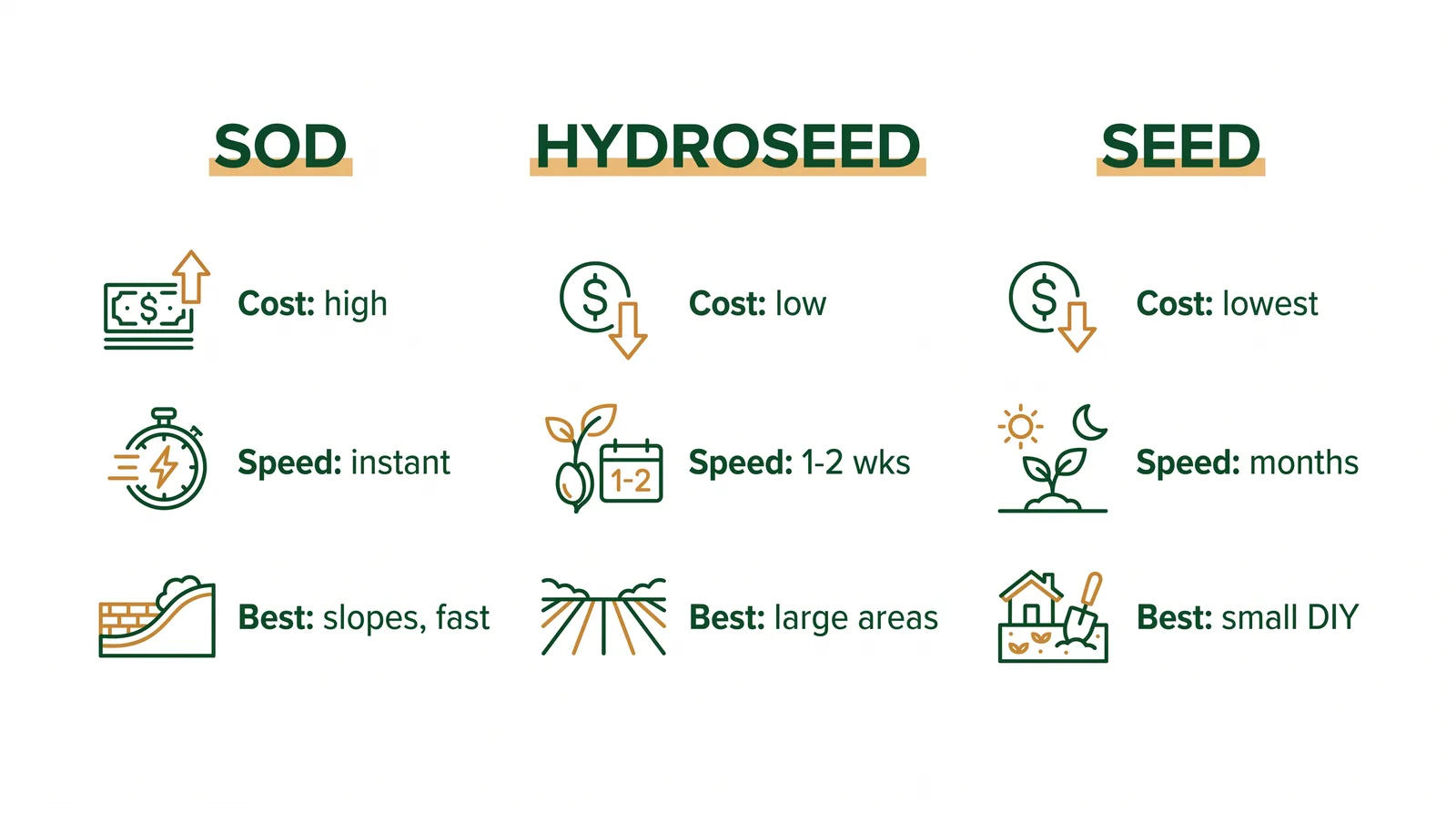
Quotable: Sod, hydroseed, and seed all end in a lawn; they differ in how long you wait and how much you pay. Sod is instant and priciest, seed is cheapest and slowest, and hydroseeding germinates faster than dry seed for a fraction of sod's cost (University of Maryland Extension).
How much does each method cost in the GTA?
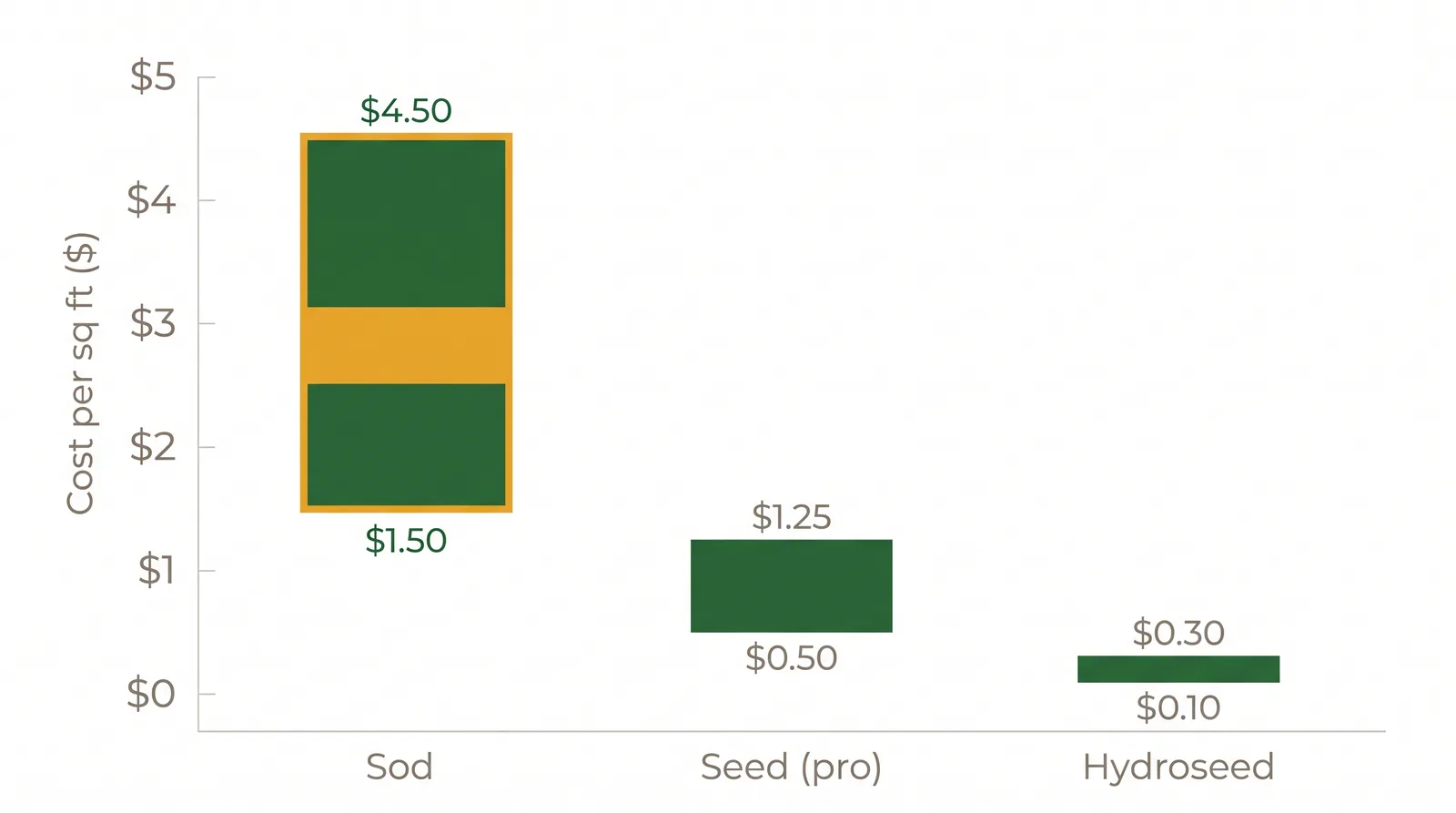
The spread is enormous, which is why the quotes look so different. Below are real GTA price ranges from YardQuote's cost data, per square foot installed.
| Method | Cost per sq ft (GTA) | 2,000 sq ft lawn |
|---|---|---|
| Sod, installed | $1.50 – $4.50 | $3,000 – $9,000 |
| Seed, professional with prep | $0.50 – $1.25 | $1,000 – $2,500 |
| Hydroseeding | $0.10 – $0.30 | $200 – $600 |
| Seed, DIY materials only | $0.05 – $0.10 | $100 – $200 |
From the data: Across YardQuote's cost datasets, installed sod runs roughly 10 to 40 times the price of seed or hydroseed per square foot (July 2026). On a small front yard the dollar gap is modest, but on a 3,000 sq ft lawn it is the difference between a few hundred dollars and five figures.
Which method should you actually choose?
Match it to your site and your patience, not just the price. Each method wins in different conditions.
- Choose sod if you want an instant, usable lawn, you are covering a slope that needs holding right away, or the area is high-visibility and you cannot wait through a patchy establishment. You are paying for speed and certainty.
- Choose seed if budget is the priority and you can wait, especially for a small yard you seed yourself in the fall. You also get the widest choice of grass varieties, since you are not limited to what the sod farm grows.
- Choose hydroseeding if you have a large or sloped area, want faster, more even germination than hand-spread seed, and want to stay well under sod's cost. The mulch and tackifier resist erosion better than loose seed.
Timing matters for both seeded options: the fall window is best for cool-season grasses in Ontario, as we cover in overseeding fall versus spring. And whichever you pick, good soil prep comes first, since even sod fails on bad ground, which is the theme of why sod fails and the install mistakes to avoid.
To price your options, compare the sod installation cost page and the grass seed lawn cost page, or browse sod installation companies by area for quotes.
Not sure which method fits your yard and budget? Request a quote and compare up to three vetted local pros side by side. Your contact details only go to the one you pick.