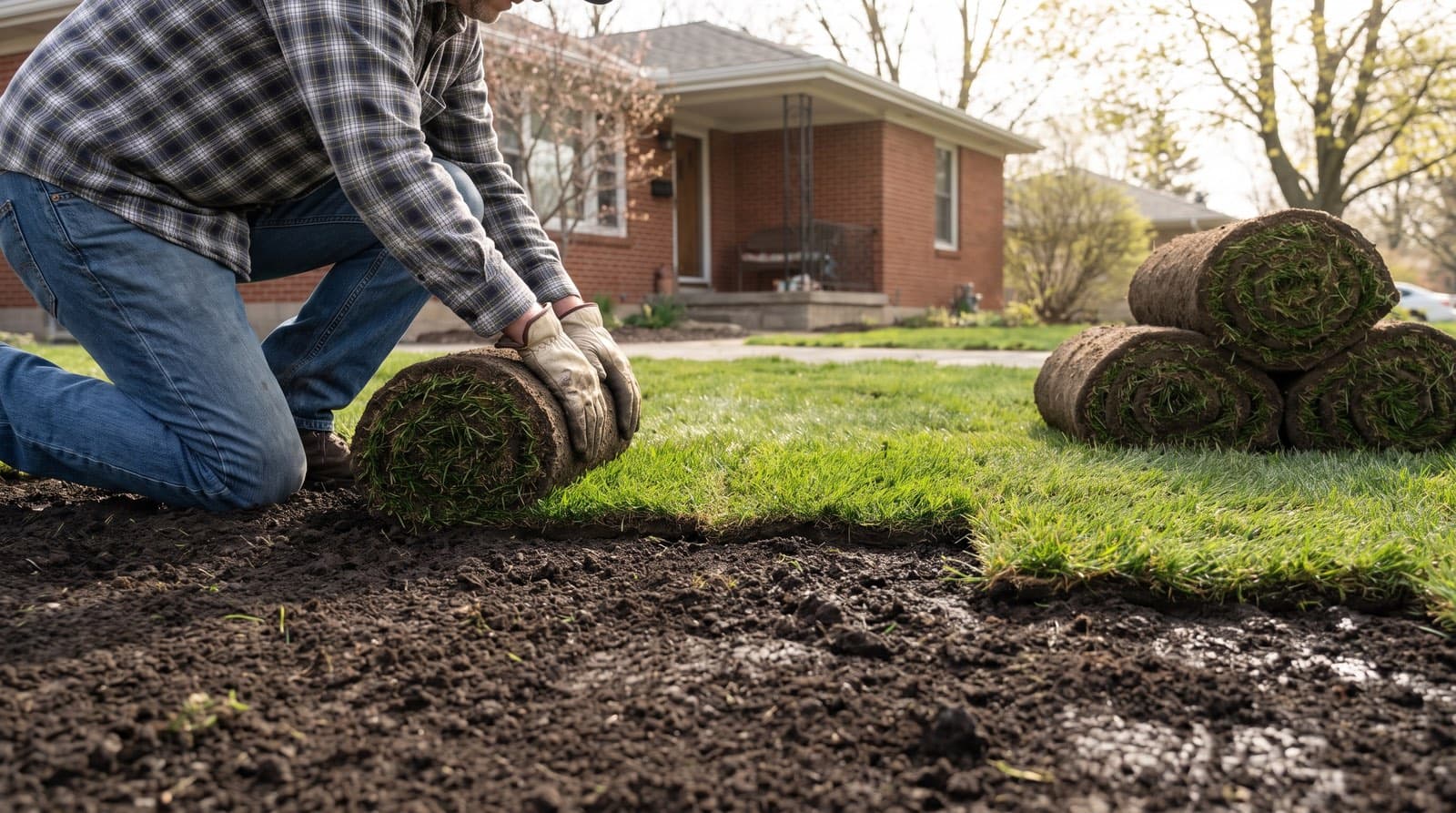
Answer First: To install sod yourself: remove the old lawn, add 2 to 4 inches of fresh topsoil and level it, lay the rolls in a tight staggered brick pattern with no gaps, roll to press the roots down, then water within the first hour and keep it soaked for two to three weeks. The payoff is real: farm sod costs $0.35 to $0.90 per square foot versus $1.50 to $3.50 installed, because labour and prep make up 60 to 75% of a professional quote.
Sod looks like the easy option: buy a lawn on rolls, unroll it, done. The unrolling is the easy part. Whether your new lawn takes or dies in patches is decided before a single roll goes down, in the prep, and in the watering that follows. Here is the full method, and an honest look at what doing it yourself actually saves.
Is installing sod yourself worth it?
Usually yes, if your yard is flat, accessible, and does not need regrading. The savings are almost entirely labour, and labour is most of the bill.
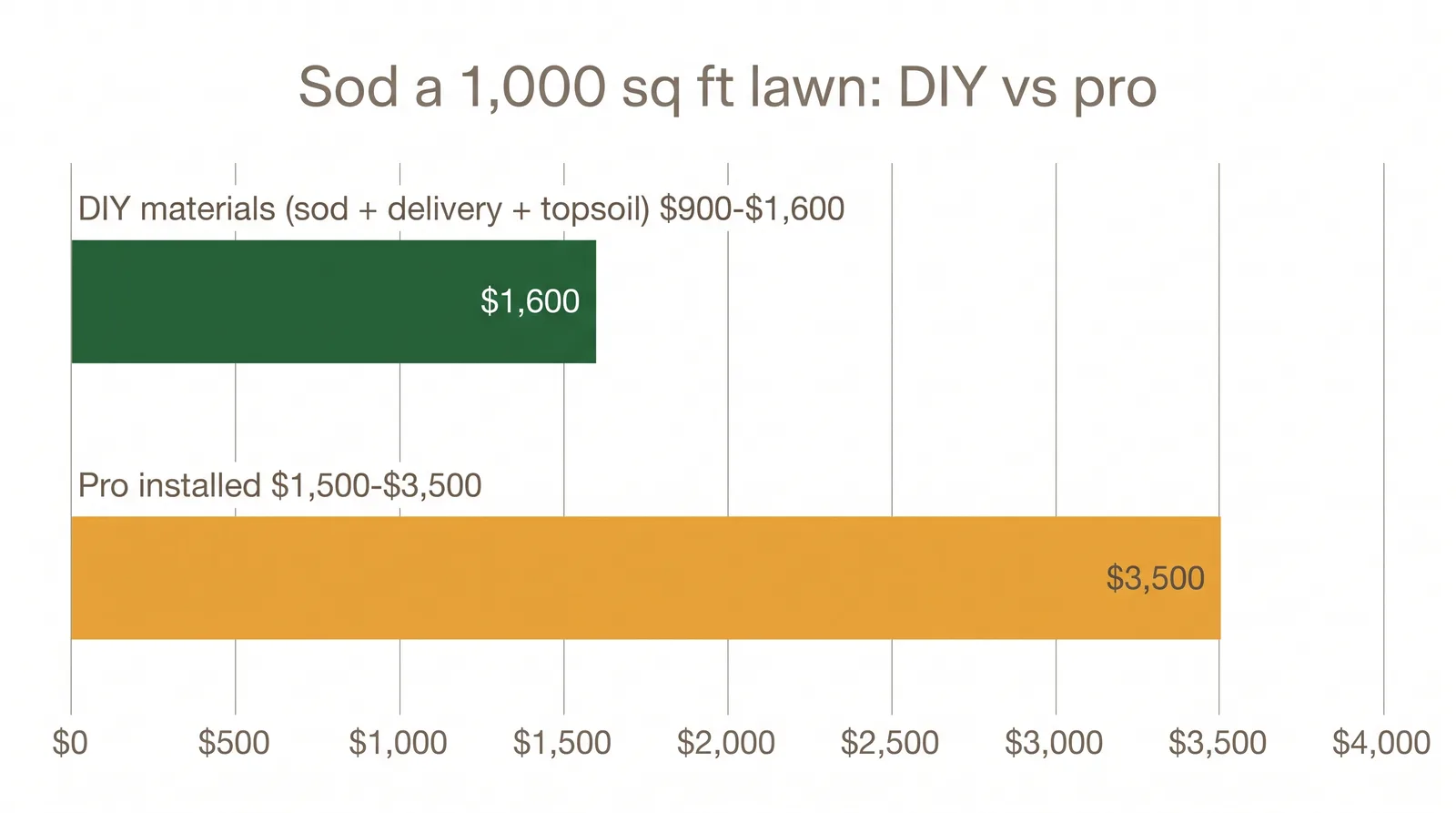
The numbers, from current GTA sod pricing, make the case. Farm sod is $0.35 to $0.90 per square foot, but a full professional install runs $1.50 to $3.50. That gap is not markup; it is the removal, topsoil, grading, laying, and disposal a crew does for you. For a 1,000 square foot lawn, doing it yourself means roughly $500 to $900 in sod, $80 to $200 for delivery, and $300 to $500 for topsoil, against $1,500 to $3,500 installed.
From the data: Across GTA sod contractors, farm sod is only $0.35 to $0.90 per square foot while installed sod runs $1.50 to $3.50, meaning labour, prep, and disposal account for roughly 60 to 75% of an installed quote (YardQuote pricing data, July 2026). That share is exactly the money DIY keeps, and exactly the work you take on instead.
Skip DIY if your yard needs regrading (a $1,000 to $5,000 job on its own), has drainage problems, or is large and on a deadline, because sod is perishable and must be laid within a day of delivery. To size an order, use the sod calculator and check current rates on the Toronto sod installation cost page.
How do you prepare the ground for sod?
Prep is most of the job, and most of what makes a sod lawn succeed or fail. Do not rush it to get to the satisfying part.
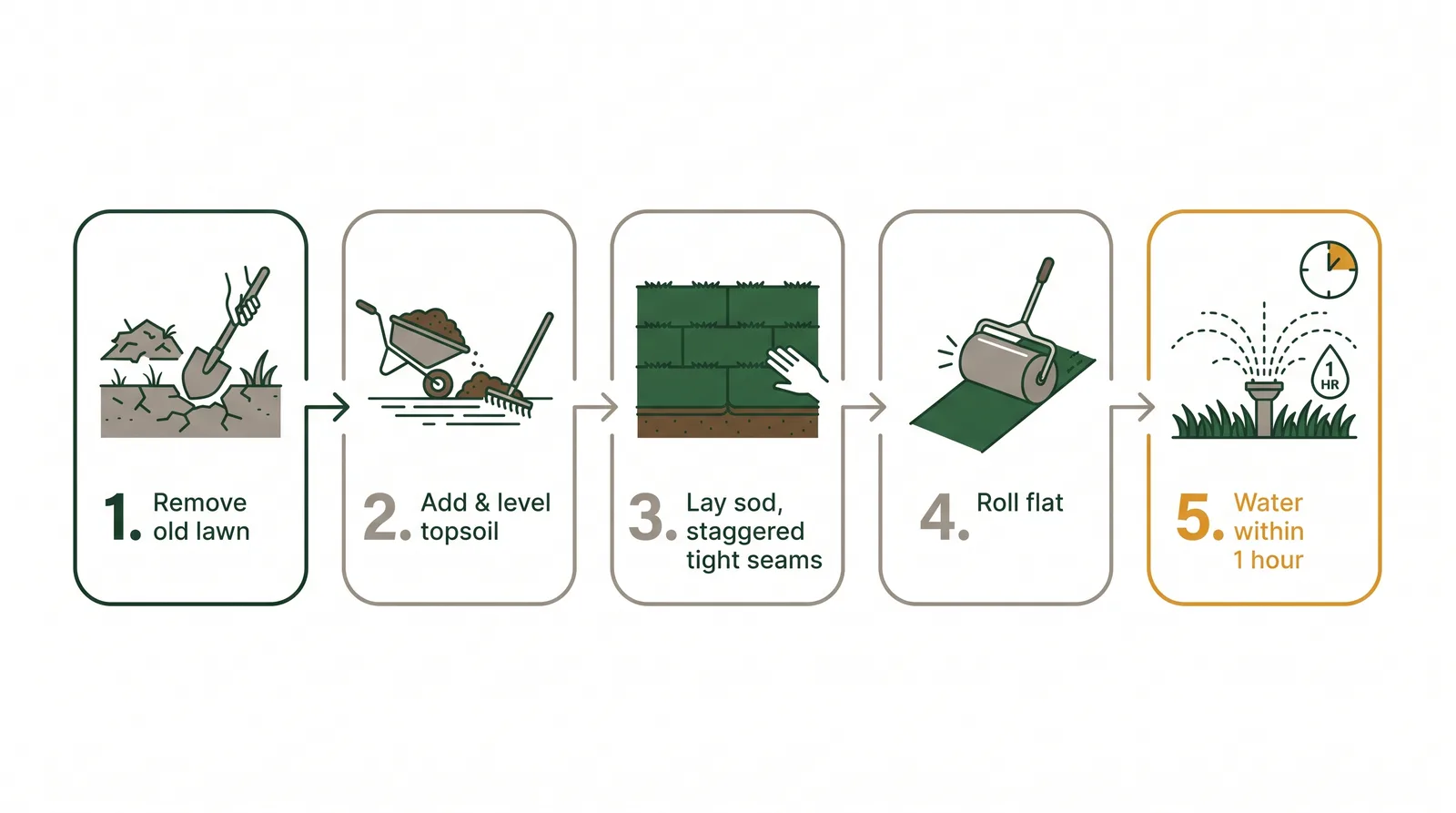
- Remove the old lawn and debris. Strip the existing turf, rocks, and roots so you are working with bare soil.
- Add topsoil and level. Loosen the ground, spread 2 to 4 inches of fresh screened topsoil, and rake it smooth with no high spots or dips. Grade it to slope gently away from your foundation.
- Firm and moisten. Lightly roll or tamp the soil so it is stable but not compacted, then water it before the sod goes down.
Buying topsoil yourself is a real saving: bulk screened topsoil starts around $36 per cubic yard at supply yards, versus $80 or more per yard for small delivered loads, where delivery dominates the price. If your yard is more uneven than a rake can fix, that is a grading job first, covered in our guide on regrading and grass removal costs.
How do you lay and water the sod?
Lay it tight like bricks, roll it, and then water like you mean it. This is the part that looks easy and still goes wrong when rushed.
Start along a straight edge, a driveway, walkway, or fence line, and lay the first row in a clean line. Butt each piece tightly against the last with no overlap, and stagger the seams from row to row like bricklaying so the joints never line up. Cut pieces to fit around curves and beds with a sharp knife. The two failures to avoid are gaps, which dry out and brown at the edges, and stretching the sod, which shrinks back and opens those gaps as it dries. Once everything is down, roll the whole lawn to press the roots into the soil and remove air pockets.
Then water, on a schedule that does not forgive neglect. Put down about an inch within the first hour so moisture reaches the soil beneath the sod. For the next two to three weeks keep that soil constantly moist, which in Toronto summer heat can mean 1 to 1.5 inches of water daily, and keep all foot traffic off for at least 14 days while the roots knit in. Getting the timing right matters as much as the technique: our guide on when to lay sod in Toronto covers the spring and early-fall windows, and if you are still deciding between products, see the best grass types for Toronto lawns.
Quotable: New sod needs about an inch of water within the first hour and constantly moist soil for two to three weeks, up to 1.5 inches daily in Toronto summer heat. Underwatering in the first fortnight kills more DIY sod lawns than any laying mistake.
Do the first mow only once the sod has rooted, usually two to three weeks in, when a gentle tug no longer lifts it, and never cut more than a third of the blade height. If the prep, grading, or scale is beyond a weekend, compare local pros and rates on the Toronto sod installation cost page instead.
Want to weigh DIY against a done-for-you quote? Request a quote and compare up to three vetted local sod installers side by side. Your contact details only go to the one you pick.