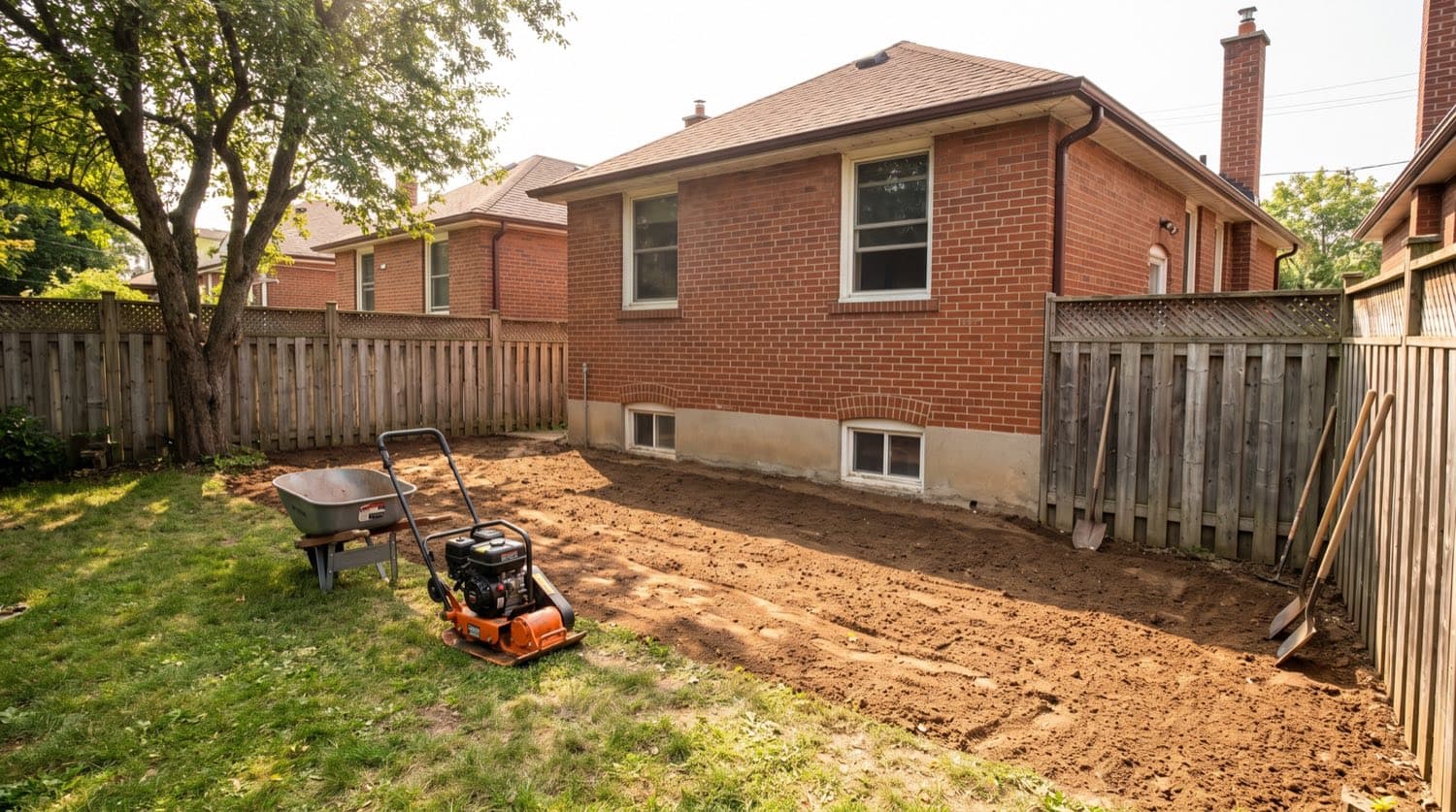
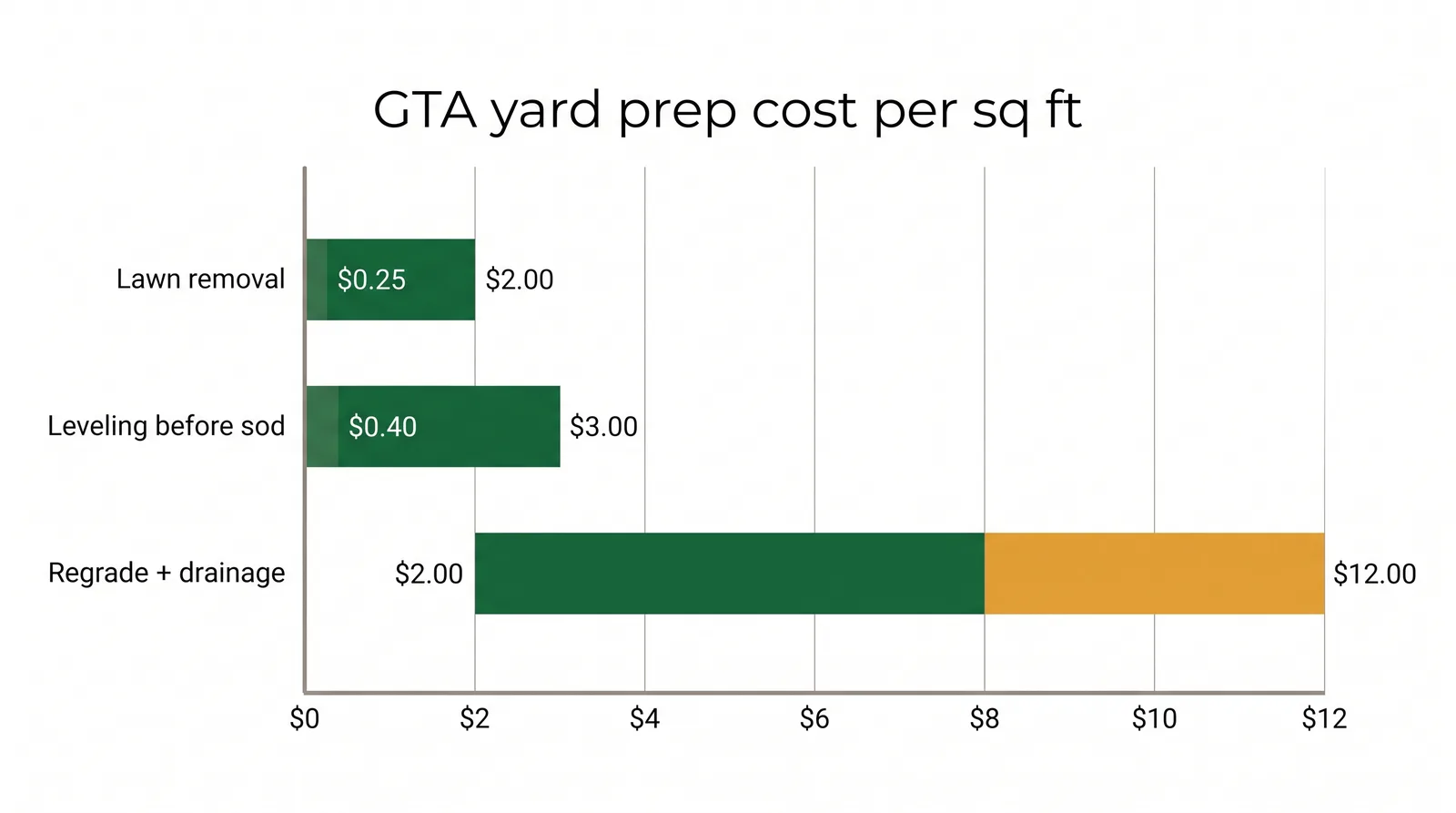
Answer First: Removing an old lawn in the GTA costs $0.25 to $2.00 per square foot, and regrading a typical Toronto backyard runs $1,000 to $5,000 total, or roughly $2 to $12+ per square foot once soil is hauled away and drainage is fixed (SB Excavation; The Sprinkler Company, 2026). Simple leveling before sod is far cheaper at $0.40 to $3.00 per square foot. The gap between those numbers is almost entirely dirt: how much gets moved, and where it goes.
Your backyard pools water after every rain, or the old lawn is more weed than grass, and you want to start over. Two different jobs hide inside that plan, and they cost wildly different amounts. Stripping the turf is cheap. Reshaping the ground so water actually drains is where the real money sits, and most quotes blur the two together.
How much does it cost to remove an old lawn in Toronto?
Stripping and disposing of an old lawn runs $0.25 to $2.00 per square foot in the GTA, with about $0.75 as the typical standalone rate (JHC Landscaping; The Sprinkler Company). For a 1,000 sq ft yard that is roughly $250 to $2,000 depending on how it is booked.
The single biggest lever is whether removal rides along with another job. Booked on its own, a crew has to show up, cut and lift the sod, load it, and pay to dump it, so you cover the full mobilization. Bundled into a sod replacement or a regrade, that same removal drops to $0.25 to $0.50 per square foot, because the crew and the disposal bin are already on site (The Sprinkler Company). Old turf is heavy and wet, and GTA disposal charges by weight, which is why the haul-away is a real line item and not a rounding error.
Quotable: In the GTA, stripping an old lawn costs $0.25 to $2.00 per square foot as a standalone job, but drops to $0.25 to $0.50 when bundled into a sod install or regrade, because the crew and disposal bin are already on site.
How much does yard regrading cost in the GTA?
Regrading a typical Toronto backyard costs $1,000 to $5,000 total, with $2,500 as the common midpoint (SB Excavation). Measured per square foot, light grading sits around $2 to $5, rising to $5 to $12 or more where soil has to be removed or drainage rebuilt (The Sprinkler Company, 2026).
The word "regrade" covers a huge range, which is why quotes spread so far. On one end it is a crew re-sloping the dirt you already have and rolling it smooth. On the other it is excavating low spots, trucking soil away, importing clean fill, and shaping a proper fall away from the house. A full grading-and-drainage correction package runs $3,500 to $9,000 (Design Landscaping), and if the fix needs a French drain, add $25 to $40 per linear foot (The Sprinkler Company). Fresh topsoil to finish the surface adds another $300 to $500 per 1,000 square feet supplied and spread.
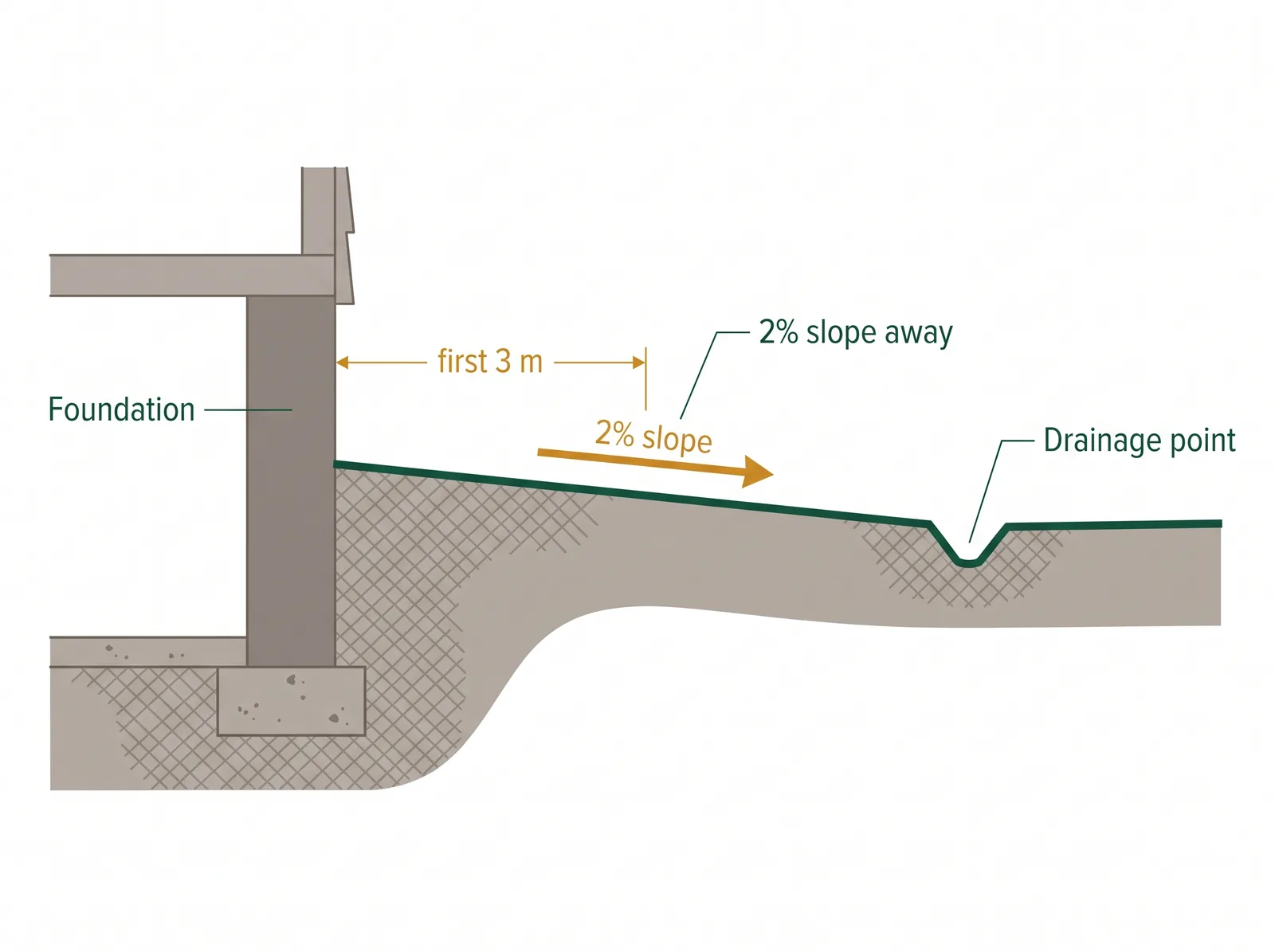
Lot grading — reshaping the surface of your yard so surface water flows in a controlled direction, normally away from the foundation and toward the street or a drainage point, rather than pooling or running onto a neighbour.
From the data: Across YardQuote's sod and landscaping cost datasets (computed July 2026), the grading lines run from $0.40 per square foot for the lightest leveling to $12+ for a regrade with drainage, roughly a 30x spread. "Regrading" is not one price because it is not one job.
What actually drives the price of a regrade?
Four things move a regrade quote far more than the size of the yard does. None of them show up in the finished, flat, green result, which is exactly why cheap bids skip them.
How much soil has to move. Re-sloping the existing dirt is cheap. Cutting down high spots and hauling the excess to a disposal site is not. Excavation, soil removal, bin rental, and tipping fees are usually the biggest hidden items on any grading job (Design Landscaping).
Whether drainage is part of it. Fixing a wet yard often means more than tilting the surface. A French drain, a catch basin, or a swale to carry water away adds real cost, with French drains alone at $25 to $40 per linear foot.
Site access. Downtown Toronto semis and laneway-only yards frequently block a machine, forcing hand-digging and wheelbarrow hauls that multiply labour hours. A tight Etobicoke side yard with no gate for a mini-excavator costs more than the same job on a machine-accessible suburban lot, before any soil is touched. GTA crew labour runs $50 to $150 per hour, so lost hours add up fast.
How bad the starting grade is. Scarborough's heavy clay holds water and resists shaping. A yard that already slopes toward the house, or sits below the neighbours, needs more cut, more fill, and sometimes a drain the flat lot next door never would.
What do Toronto's rules say about regrading?
You own the surface, but not the right to send your water next door. Under Toronto Municipal Code Chapter 629, you cannot regrade in a way that directs stormwater onto a neighbouring property, and drainage has to be managed on your own lot. The working standard is a slope of about 2% falling away from your foundation for the first 3 metres, which keeps water off the house without flooding the fence line.
A few more rules shape the job and the budget:
- Boulevard work needs a permit. The grassed strip between your property line and the curb is City-owned. Any landscaping or grading there requires a City of Toronto right-of-way permit before work starts.
- Call before you dig. Ontario One Call utility locates are legally required before excavation. They are free, but book about five business days ahead.
- Terracing a slope can trigger a permit. A retaining wall over 1.0 metre of exposed height, or any wall that redirects drainage, needs a City building permit and usually engineered drawings.
Quotable: Under Toronto Municipal Code Chapter 629, a homeowner cannot regrade a yard so stormwater drains onto a neighbour; the standard fall is roughly 2% away from the foundation for the first 3 metres, with all drainage managed on the owner's own lot.
How do you keep a grass-removal and regrade quote honest?
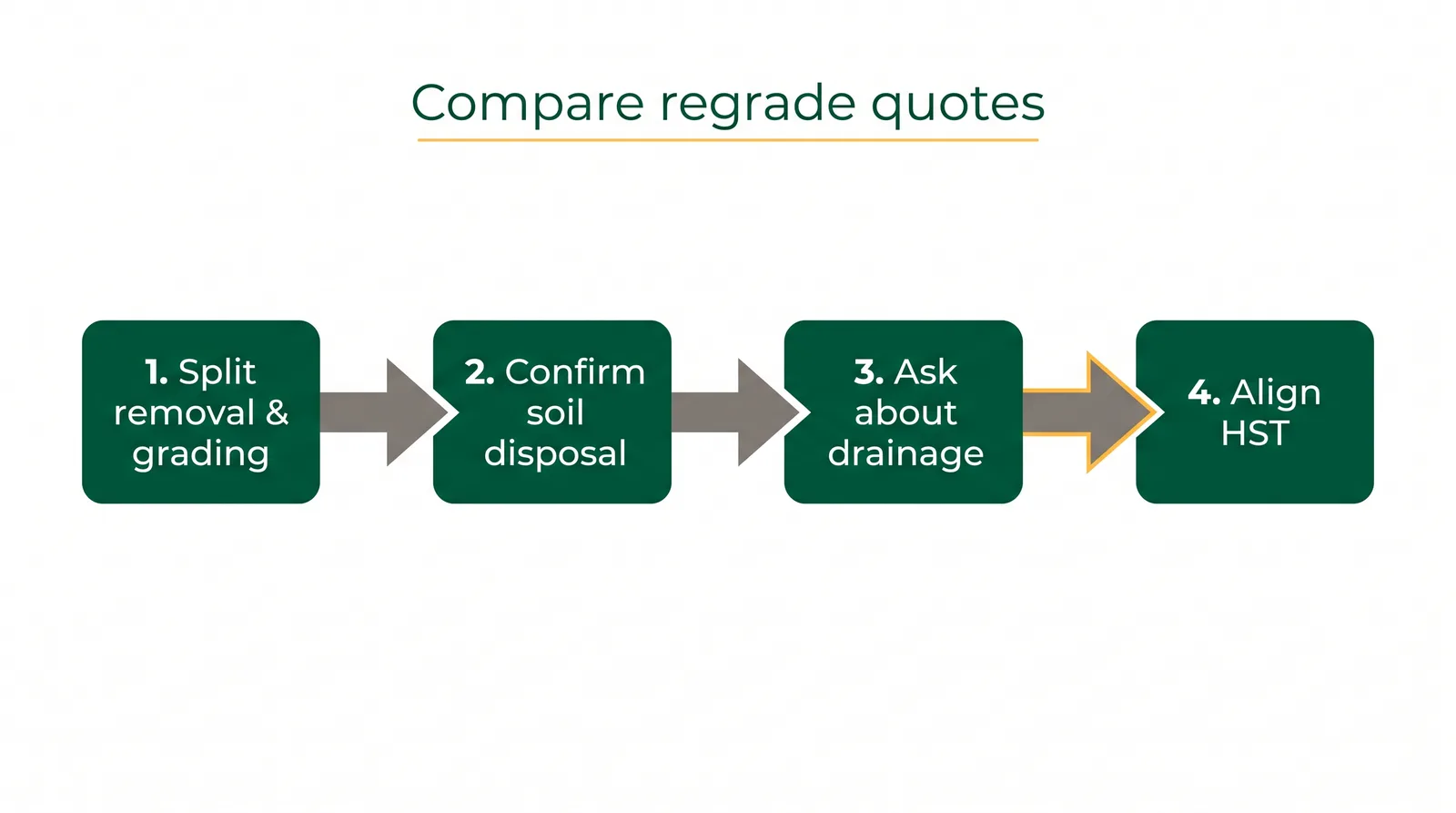
Compare the scope, not the bottom line. A $1,200 quote and a $4,500 quote for "regrade the backyard" are usually two different jobs, and the cheap one wins by leaving out the parts you cannot see. Run every bid through the same checks.
- Separate removal from grading. Ask for the strip-and-dispose cost and the grading cost as distinct lines. A bundled number that hides removal makes it impossible to tell whether disposal is even included.
- Confirm where the soil goes. "Grading" that never mentions hauling, bin rental, or tipping fees is quoting a re-slope, not a real regrade. On a wet yard that is the line that matters.
- Ask whether drainage is included. If the problem is pooling water, a quote with no French drain, catch basin, or swale is not solving it. It is just moving the puddle.
- Check the tax basis. In Ontario, 13% HST applies to landscaping labour and materials. On a $4,000 regrade that is $520, enough to reorder your quotes if one is shown pre-tax and another all-in.
Once removal, hauling, drainage, and HST are lined up the same way across bids, the leftover price difference is real, and that is where review history breaks the tie. YardQuote tracks 650 landscaping companies across the GTA, 613 of them carry three or more reviews, and the average rating is 4.77 (YardQuote tracking, July 2026), so there are plenty of well-reviewed crews to choose from without gambling on the lowest unknown bid.
You can see current GTA ranges on the regrading and landscaping cost page or check what fresh turf runs afterward on the sod installation cost page, and if you are stripping the lawn to start over, our breakdown of sod cost per square foot covers the next step. To browse vetted crews near you, see landscaping companies in Scarborough and other GTA areas.
Want to know what your grass removal and regrade should actually cost? Request a quote and compare up to three vetted local pros side by side, with removal, grading, and drainage broken out as separate lines. Your contact details only go to the one you pick.