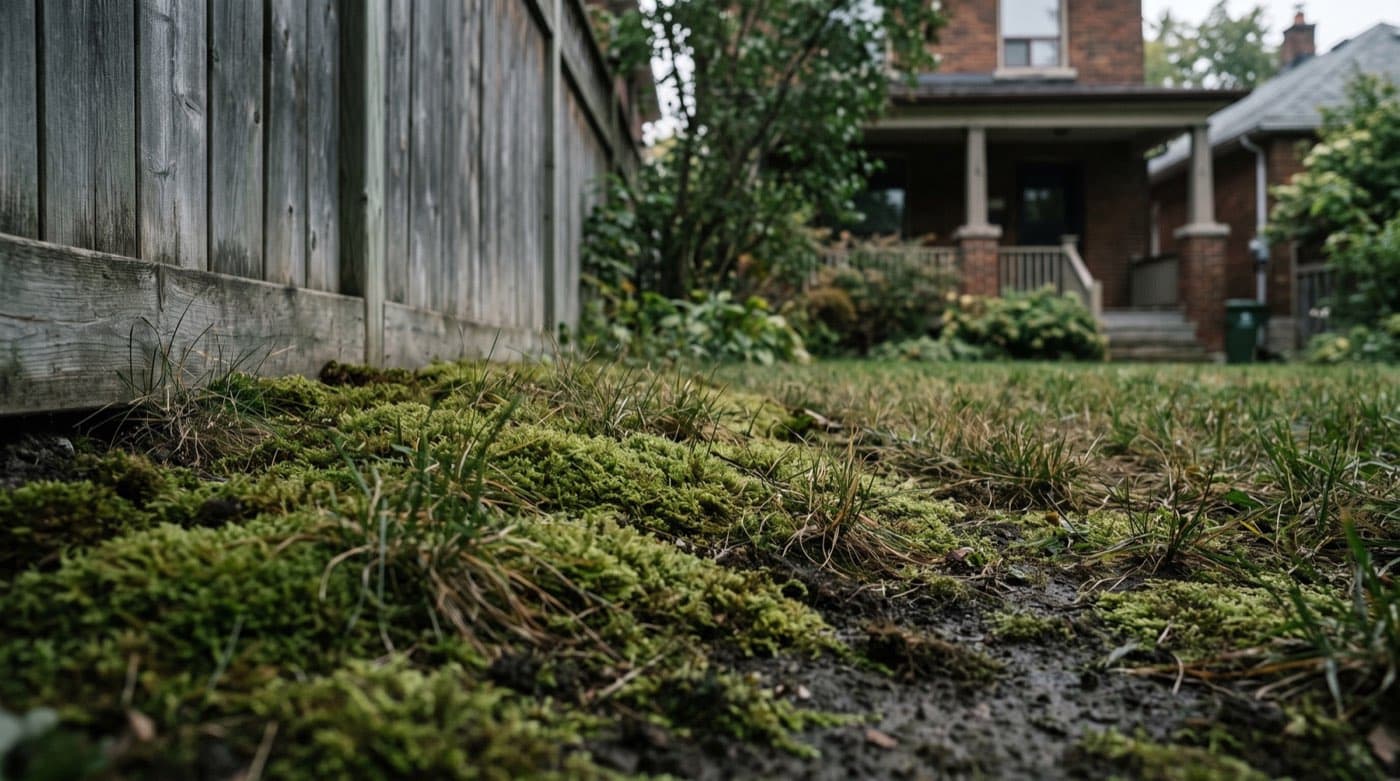
Answer First: Moss in a lawn is a symptom, not the disease. It grows where grass cannot compete: shade, compacted soil, poor drainage, low fertility, or acidic soil. Iron products like ferrous sulfate will blacken and kill the moss within days, but it returns unless you fix the underlying condition. The lasting fix is to give grass the upper hand, more light, aeration, better drainage, proper feeding, and overseeding with shade-tolerant fescue.
If you have moss, the moss is not your real problem. It is a flag telling you the spot has already lost its grass and turned into conditions where moss thrives. That is why the scrape-and-forget approach fails every year. Fix what the moss is telling you, and it stops coming back.
Why is moss growing in your lawn?
Because something there favours moss over grass. Moss does not attack or choke out healthy turf; it simply colonizes the weak, bare ground grass has already abandoned. The usual Toronto causes are:
- Shade. Too little light for grass, common on the north side of a house or under the mature tree canopy in older neighbourhoods like the Annex or Riverdale.
- Compaction. Hard, compacted soil, and the GTA's heavy clay compacts easily, chokes grass roots but suits moss.
- Poor drainage. Low spots that stay wet after rain.
- Low fertility. Thin, underfed grass that cannot fill in.
- Acidic soil. Low pH that grass dislikes.
Usually it is a combination, for example a shady, low corner with compacted clay. Naming the cause is the whole job, because the fix follows directly from it.
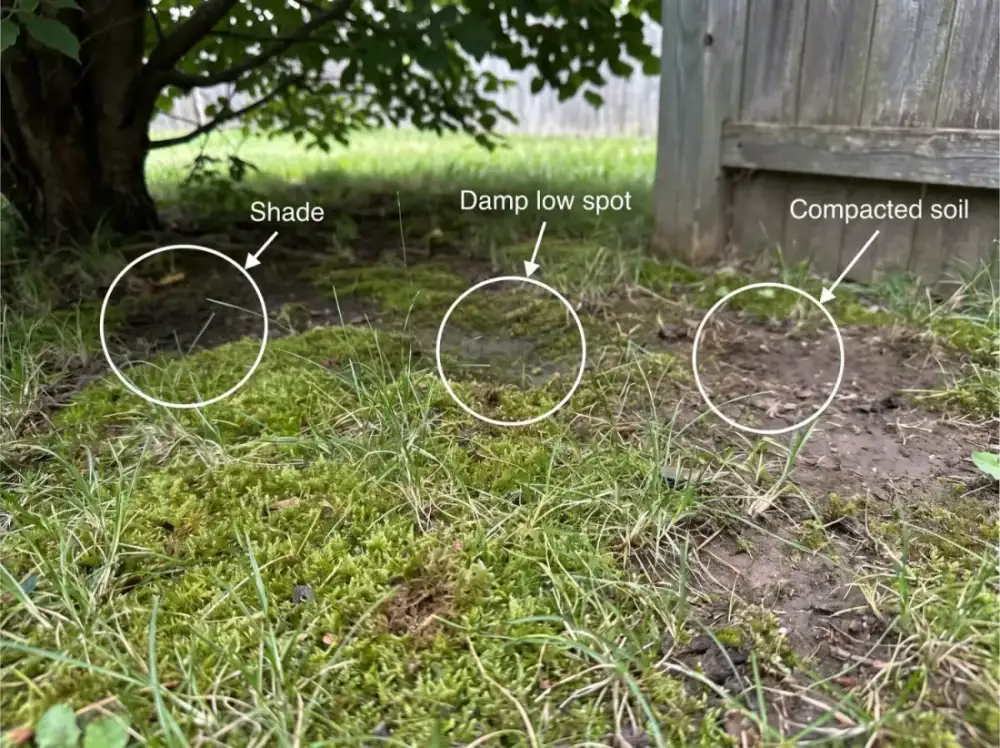
Quotable: Moss does not kill grass. It moves into ground grass has already lost to shade, compaction, poor drainage, or low fertility, which is why treating the moss without fixing the cause never lasts.
Does iron sulfate actually kill moss?
Yes, quickly, but only on the surface. Iron products, mainly ferrous sulfate, blacken and kill moss within days and green up the surrounding grass at the same time, which is why they are the common quick fix.
Ferrous sulfate — an iron-and-sulfur compound used to burn off moss and deepen grass colour, sold as lawn "moss control." It kills what is there but does nothing about why the moss grew.
Two cautions. Iron stains concrete, so keep it off sidewalks and driveways, and too much scorches grass, so follow the label rate. And because it treats only the symptom, budget for the real work below or you will be re-applying it every spring.
On the legal question: iron-based moss controls are generally available in Ontario because they are not among the synthetic cosmetic pesticides banned under the provincial ban in force since 2009 (Landscape Ontario). Even so, the durable approach is cultural, not chemical.
The real fix: help grass win
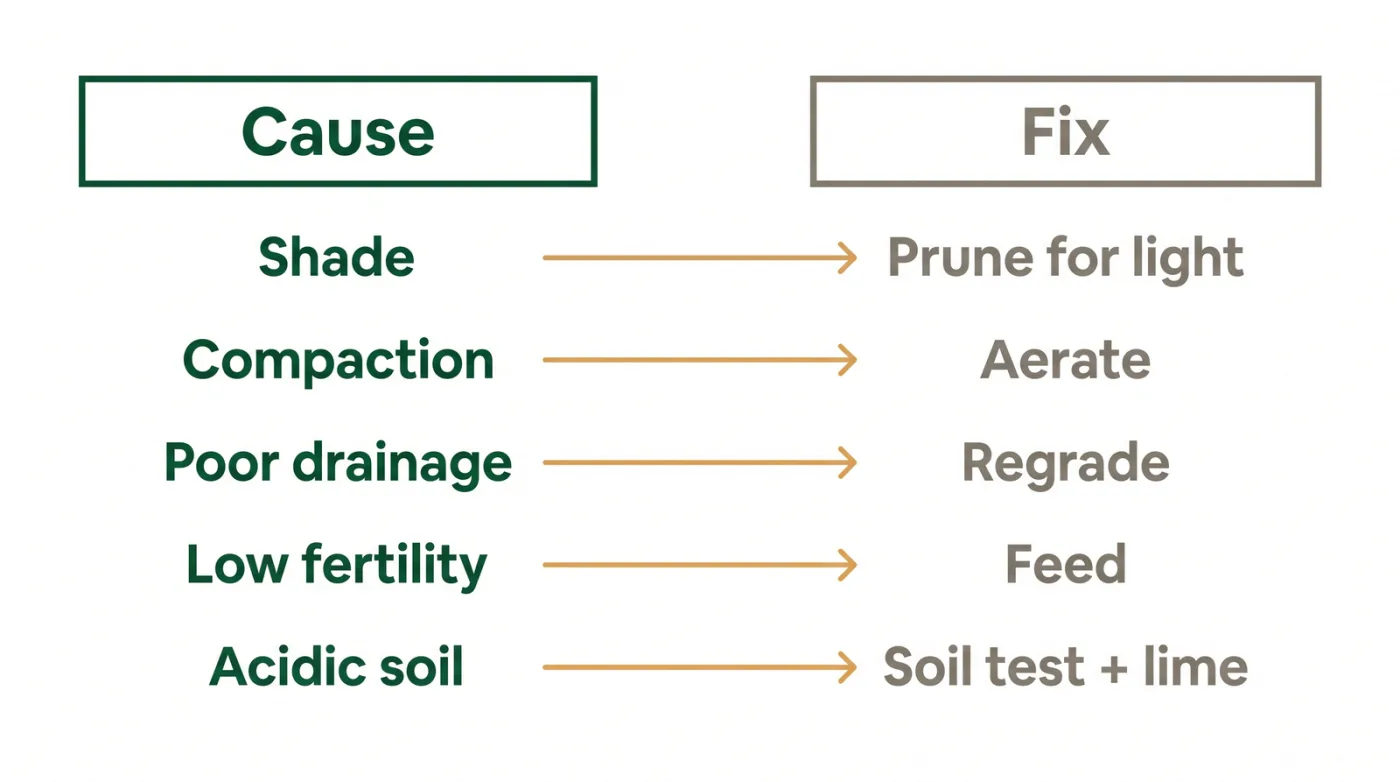
Match the fix to the cause you identified. This is the part that keeps moss gone.
- Add light. Prune overhanging branches and thin the tree canopy to get more sun onto the area. If a spot is deep, permanent shade, accept it and switch to a shade garden or mulch rather than fighting for grass.
- Relieve compaction. Core-aerate the area to open up the clay so grass roots and water can move.
- Improve drainage. Regrade low spots that hold water, or address the wet source, so the ground is not permanently damp.
- Raise fertility. Feed the lawn properly so grass is vigorous enough to fill in; thin, starved grass loses to moss.
- Test pH, then lime only if needed. A soil test tells you whether acidity is part of the problem. Add lime only if the test confirms low pH, not on a guess.
- Rake it out and overseed. Scarify or rake the dead moss out, then overseed the bare ground with shade-tolerant fine fescue so grass, not moss, claims the space.
From the data: YardQuote tracks 249 lawn care companies across the GTA, and 88% of the rated ones hold 4.5 stars or higher (YardQuote tracking, July 2026). A good pro will name the cause, shade, compaction, or drainage, before selling you a treatment.
When to do it in Toronto
Early spring or early fall, when grass grows fast enough to fill the ground you clear (Ontario). Clear the moss, correct the cause, then overseed so grass wins the race for the bare soil.
Fall is especially strong in Toronto because the soil is still warm while the air is cool, ideal for the cool-season grasses that make up most local lawns. The same timing logic runs through our fall lawn care guide and spring lawn care checklist; overseeding into corrected ground is the move in both seasons.
If the mossy area is large or keeps returning, the cause is usually drainage or grading, which is worth a professional look. Compare current ranges on the lawn care cost page or browse vetted local pros in the lawn care directory for Etobicoke.
Fighting the same mossy patch every year? Request a quote and compare up to three vetted local lawn care pros side by side. Your contact details only go to the one you pick, and a good pro fixes the cause, not just the moss.