Answer First: Ontario's cosmetic pesticide rules ban the synthetic "crabgrass preventers" sold elsewhere, so the legal way to beat crabgrass here is corn gluten meal plus mowing habits. Spread about 20 lb of corn gluten meal per 1,000 sq ft in early spring, once the top inch of soil holds 50 to 55°F (10 to 13°C), before the seed sprouts. Then mow at 3 inches to shade the soil and overseed to thicken the lawn. Iron-based herbicides do nothing to crabgrass because it is a grass, not a broadleaf weed.
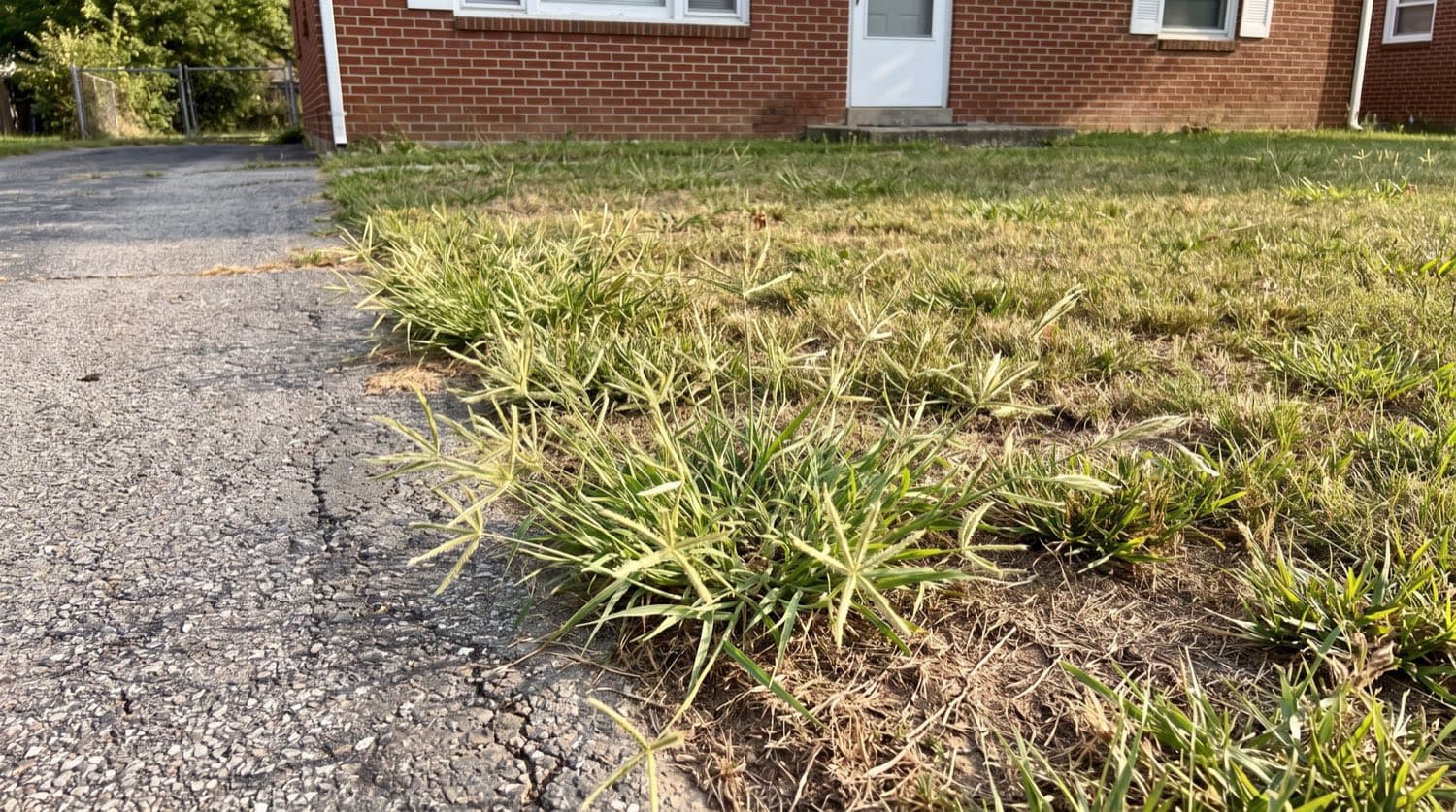
Crabgrass shows up in the same places every August: the thin, baked strip along the driveway, the edge of the sidewalk, the sunny patch where the grass gave up. It is not bad luck. Those are the exact conditions crabgrass needs, and they are the conditions you can change.
Why can't you use normal crabgrass killer in Ontario?
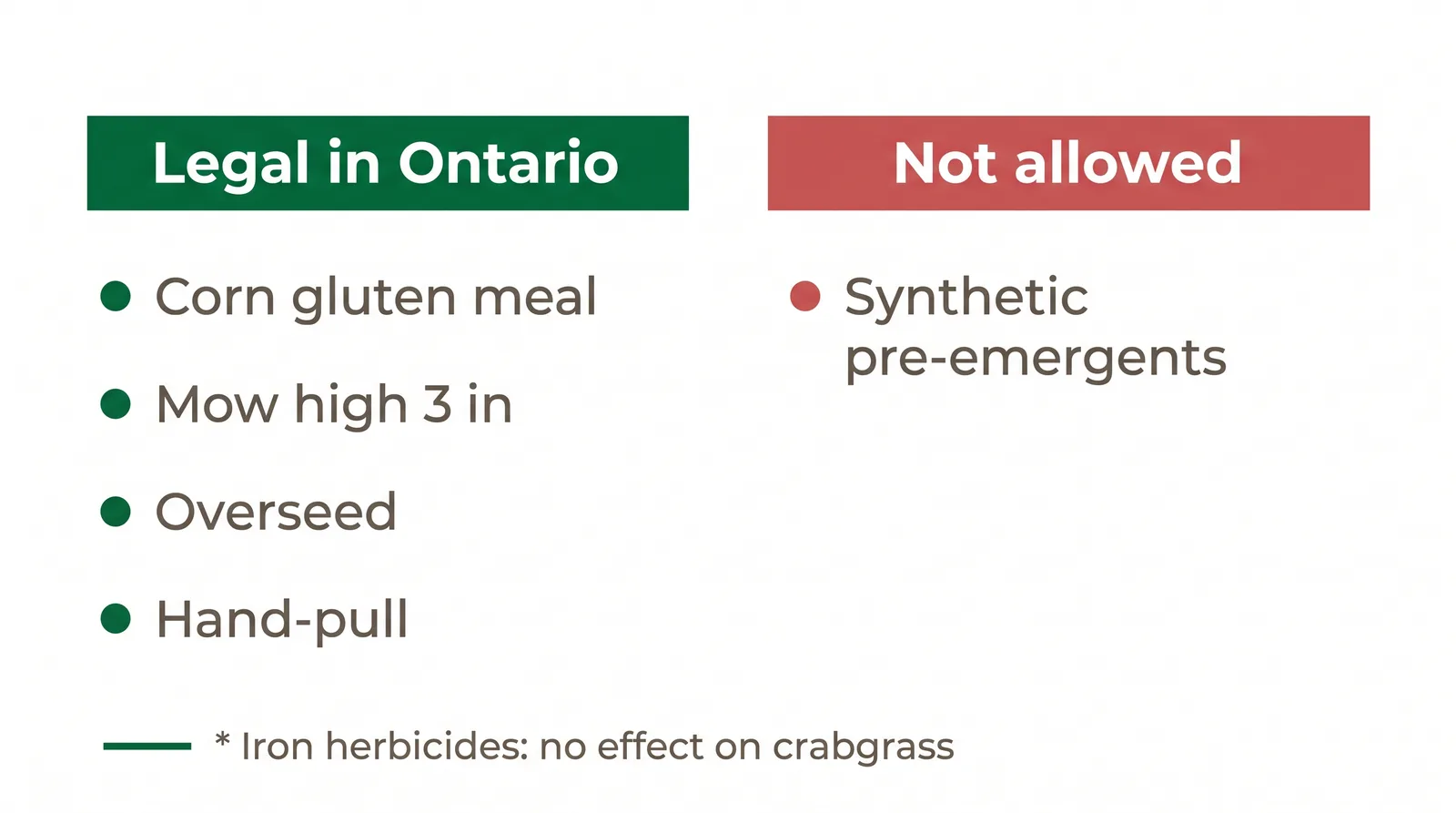
Because the synthetic pre-emergent herbicides in a typical "crabgrass preventer" are banned for cosmetic lawn use in the province. Ontario's rules restrict home lawns to a short allowable list of lower-risk products, and the conventional crabgrass chemicals are not on it (Ontario.ca). What is allowed is corn gluten meal, a natural pre-emergent.
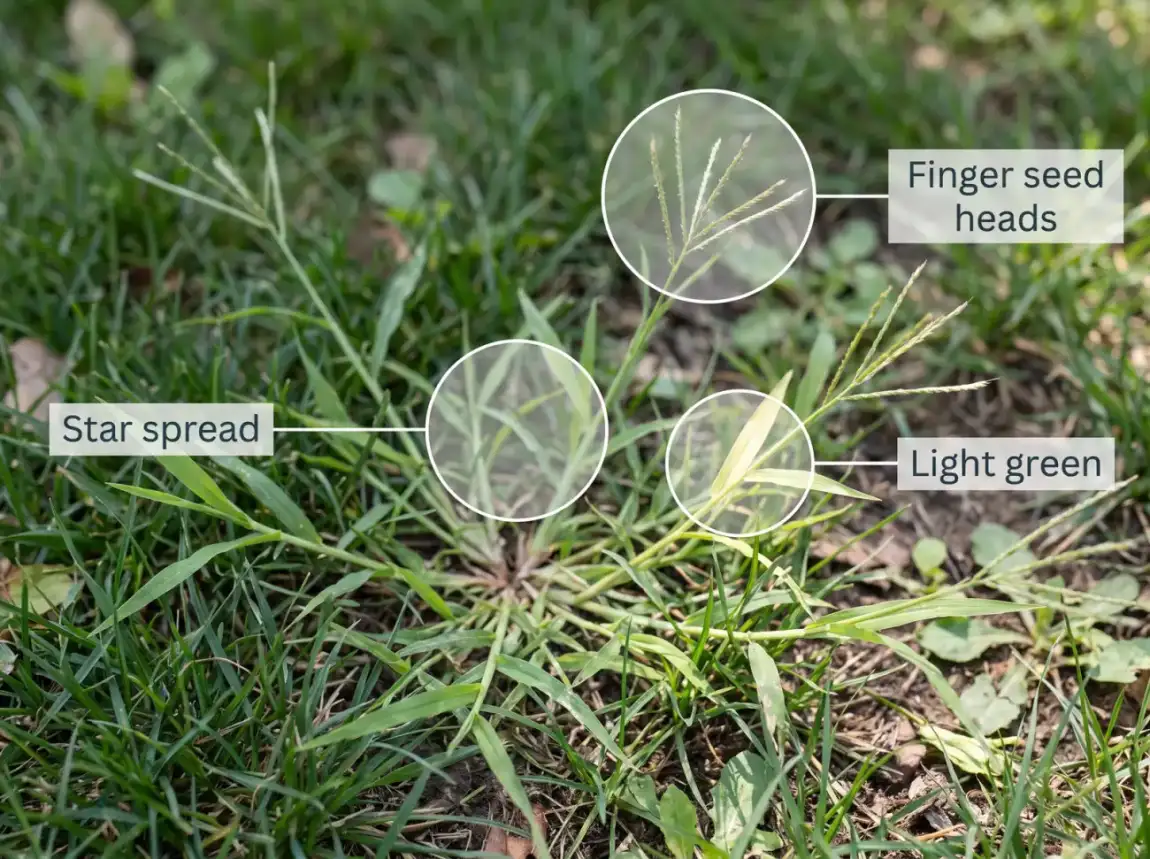
Crabgrass (Digitaria) — a low-growing annual grassy weed that sprouts from seed each spring, spreads outward in a flat star or crab-leg shape from a central point, and sets thousands of seeds before dying at the first frost.
That annual life cycle is the weakness to exploit. Crabgrass does not overwinter as a plant; it comes back only from seed. Stop the seed from sprouting in spring, and stop this year's plants from seeding, and you starve next year's crop.
Quotable: Ontario bans the synthetic pre-emergents in standard "crabgrass preventer," so corn gluten meal is the legal chemical option, applied at about 20 lb per 1,000 sq ft in early spring before the seed sprouts.
How and when do you use corn gluten meal?
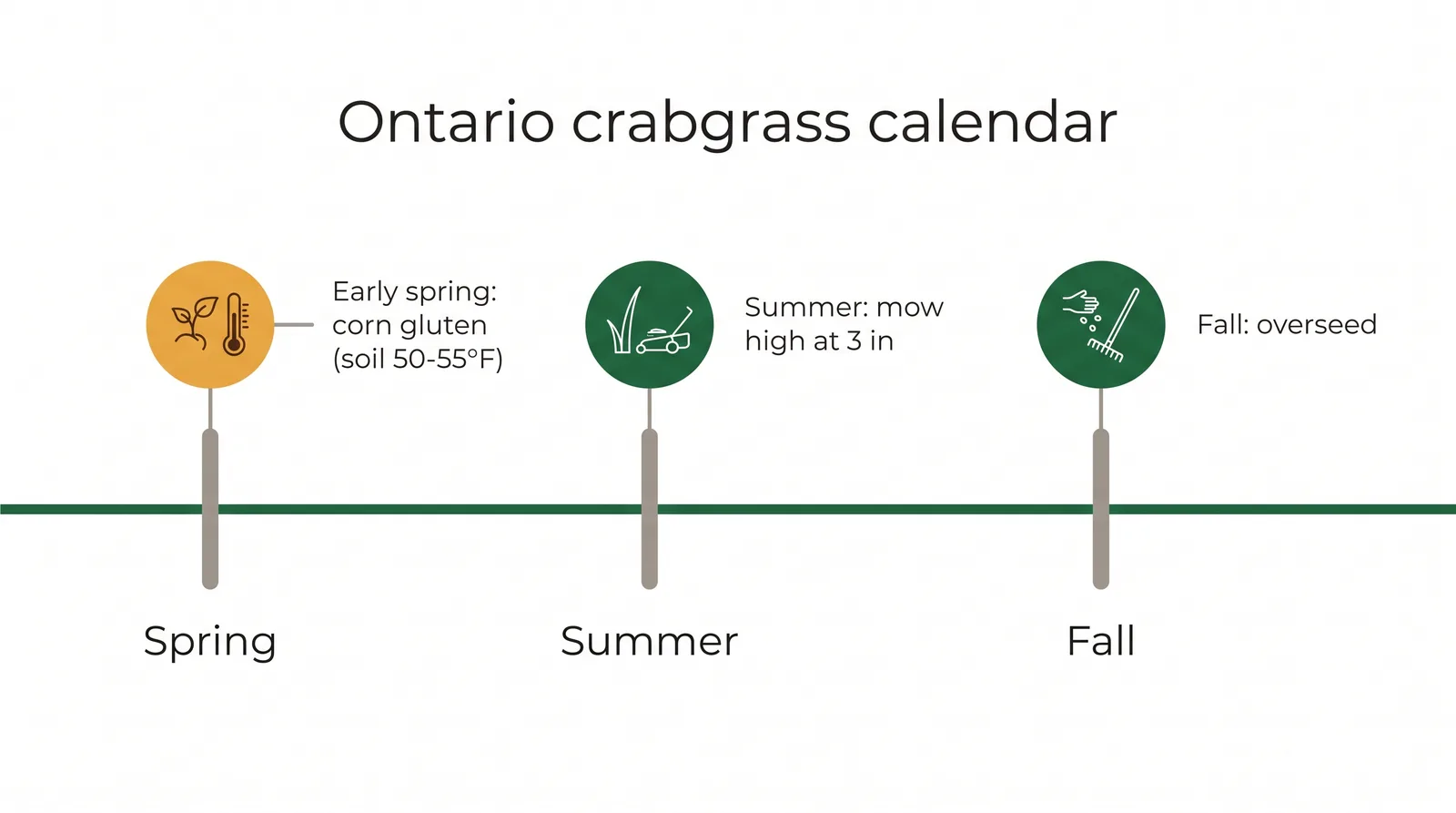
Timing decides whether corn gluten meal works or wastes your money. It is a pre-emergent, meaning it stops seeds from rooting, so it has to be down before the crabgrass germinates, not after you see it.
- Rate: about 20 lb per 1,000 sq ft (Iowa State).
- Timing: early spring, once the top inch of soil is consistently 50 to 55°F (10 to 13°C), which in the GTA is usually late April to early May, around when forsythia and lilacs bloom.
- Honest caveat: research results on corn gluten are mixed, and it often underperforms synthetic pre-emergents (University of Maryland). Treat it as one part of the plan, not the whole thing.
- The overseeding catch: corn gluten stops all seeds from rooting, including grass seed. Never apply it and overseed at the same time. Overseed in fall, and hold corn gluten for the following spring.
Why does mowing height matter so much?
Because crabgrass seed needs light and warm soil to germinate, and tall grass denies it both. Mowing at 3 inches instead of scalping keeps the soil shaded and cooler, which blocks a large share of the seed from ever sprouting (UConn). This is the cheapest and most overlooked crabgrass control there is.
It also explains where crabgrass wins. The hot, short strips along Toronto driveways, curbs, and sidewalks heat up fastest and dry out most, so the soil is warm, bright, and thin, exactly what the seed wants. Raising the mower and keeping those edges thick removes the opening.
What is the full Ontario-legal crabgrass plan?
Layer prevention, mowing, and turf density, because no single legal method beats crabgrass alone. The goal is a lawn so thick and tall that seed cannot find bare, sunny soil.
- Corn gluten meal in early spring, at 20 lb per 1,000 sq ft, timed to soil temperature before germination.
- Mow at 3 inches all season to shade and cool the soil, and never scalp, especially along hot driveway and sidewalk edges.
- Hand-pull young plants before they set seed. Each plant left to seed funds thousands of next-year sprouts, so pulling in July and August pays off the following summer.
- Overseed in fall with cool-season grass to thicken thin spots and edges, the openings crabgrass exploits.
- Water deeply and less often to favour deep-rooted turf over shallow-rooted weeds.
From the data: YardQuote tracks 249 lawn-care companies across the GTA, 220 of them with three or more reviews at an average of 4.75 stars (YardQuote tracking, July 2026). A common mistake we see is homeowners buying an iron-based weed product for crabgrass; those only work on broadleaf weeds, so a pro's real value on crabgrass is timing the corn gluten and rebuilding thick turf, not spraying.
When should you bring in a pro?
When crabgrass has taken the whole lawn, when the driveway and sidewalk edges reseed it every year no matter what you do, or when the turf is too thin to compete. Rebuilding density with fall overseeding and correctly timed spring corn gluten is a schedule, and a program keeps it on track.
If the lawn is more weed than grass, our guide to starting over with grass removal and regrading covers the reset, and since scalping feeds crabgrass, choosing weekly over bi-weekly mowing helps keep the lawn tall and dense. You can compare overseeding and weed-program pricing on the grass seed cost page and the lawn care cost page, or browse lawn care companies in Etobicoke and other GTA areas.
Want a legal, properly timed crabgrass plan for your lawn? Request a quote and compare up to three vetted local pros side by side. Your contact details only go to the one you pick.