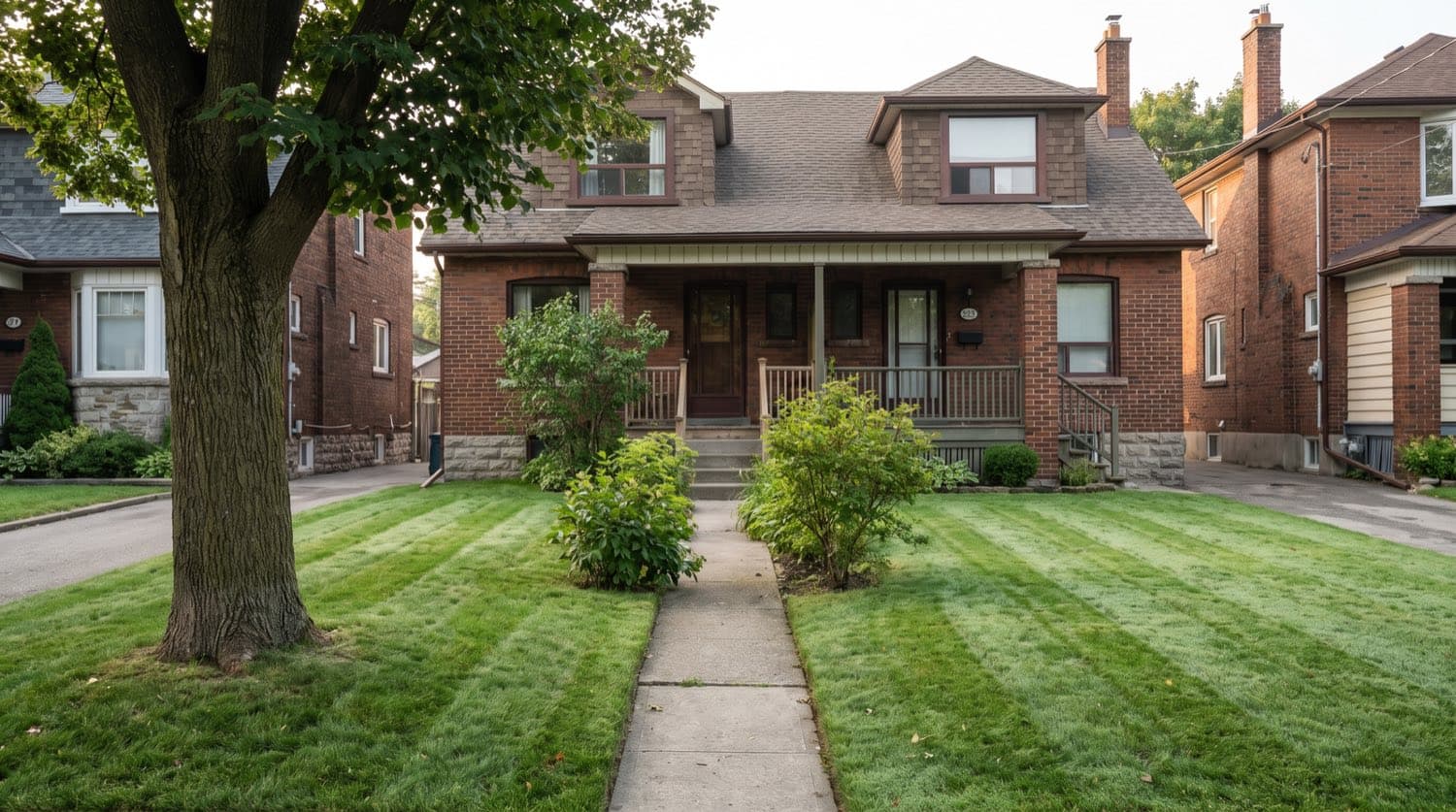
Answer First: Weekly mowing costs less per visit ($35 to $45 for a small GTA lot) but more per season, while bi-weekly costs 25% to 50% more per visit ($50 to $60) yet less over the year because you buy half as many cuts (Maverick Landscaping). Over a full Toronto season, weekly runs about $1,080 and bi-weekly about $720 for the same lot. Bi-weekly's real cost is not money, it is a rougher cut that can stress the lawn and brush against the City's 20 cm grass limit in spring.
The pitch for bi-weekly service sounds obvious: half the visits, half the cost. It is half true. You do pay less over a season, but not because each cut is cheaper. Each cut is actually pricier, and the savings come with a lawn that spends the growing season a little too shaggy.
Is weekly or bi-weekly lawn mowing cheaper?
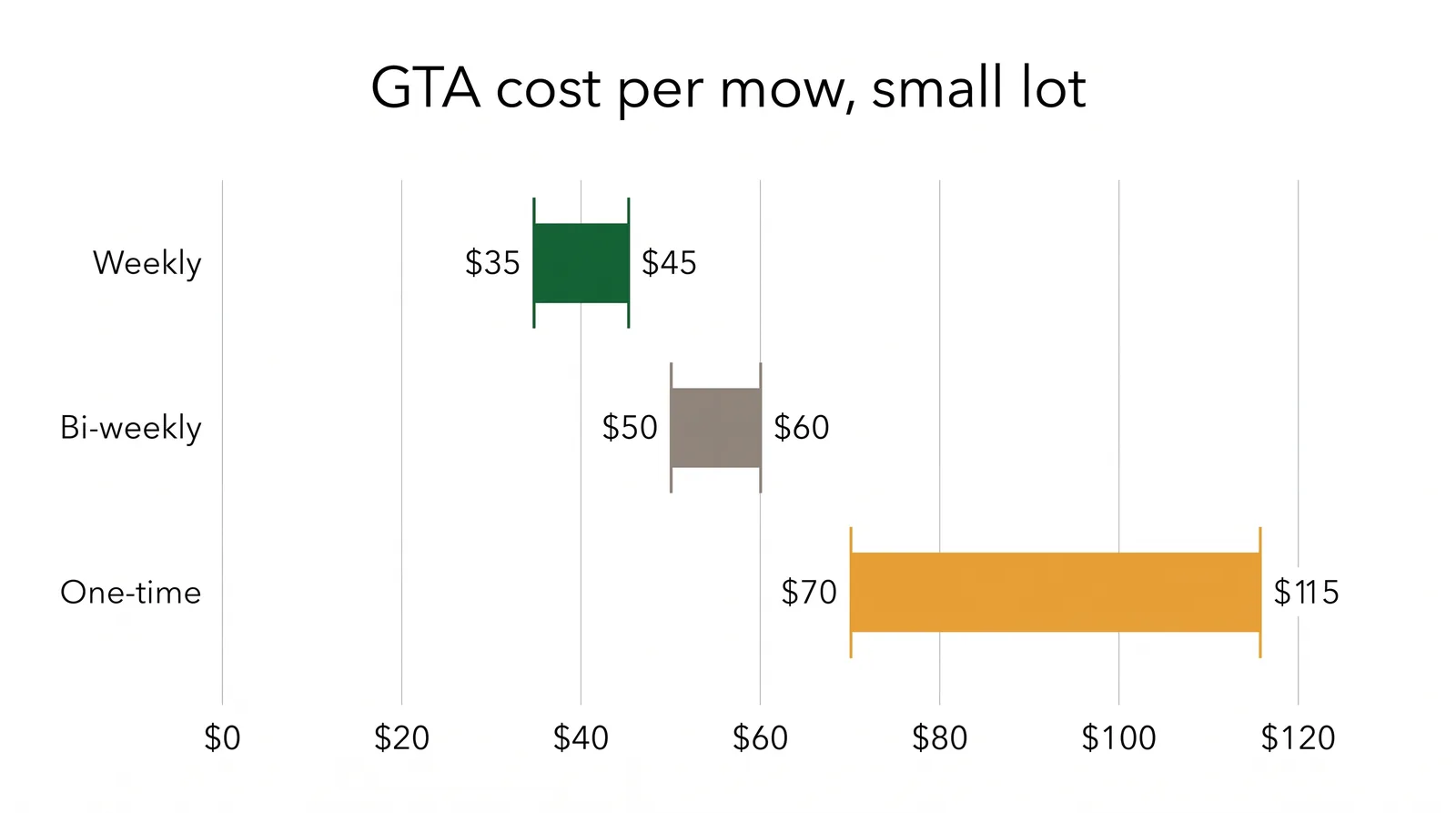
It depends whether you mean per visit or per season, and the answer flips between the two. Per visit, weekly wins: a small GTA lot runs $35 to $45 weekly versus $50 to $60 for a bi-weekly or one-time cut (Maverick Landscaping). Per season, bi-weekly wins, because you are buying roughly half as many cuts.
Here is why the per-visit price moves the "wrong" way. A weekly lawn is short and easy, so the crew is in and out. A bi-weekly lawn has two weeks of growth: taller, denser, sometimes damp underneath, often needing a slower pass or a second cut, with more clippings to bag or mulch. Contractors price that extra labour in. Green Building Canada shows the same pattern nationally, with one-time cuts at $65 to $100+ against $25 to $55 for weekly service.
Quotable: In the GTA, the same small lawn costs $35 to $45 for a weekly cut but $50 to $60 bi-weekly, a 25% to 50% per-visit premium, because two weeks of growth is slower and messier to mow.
What does each option cost over a full GTA season?
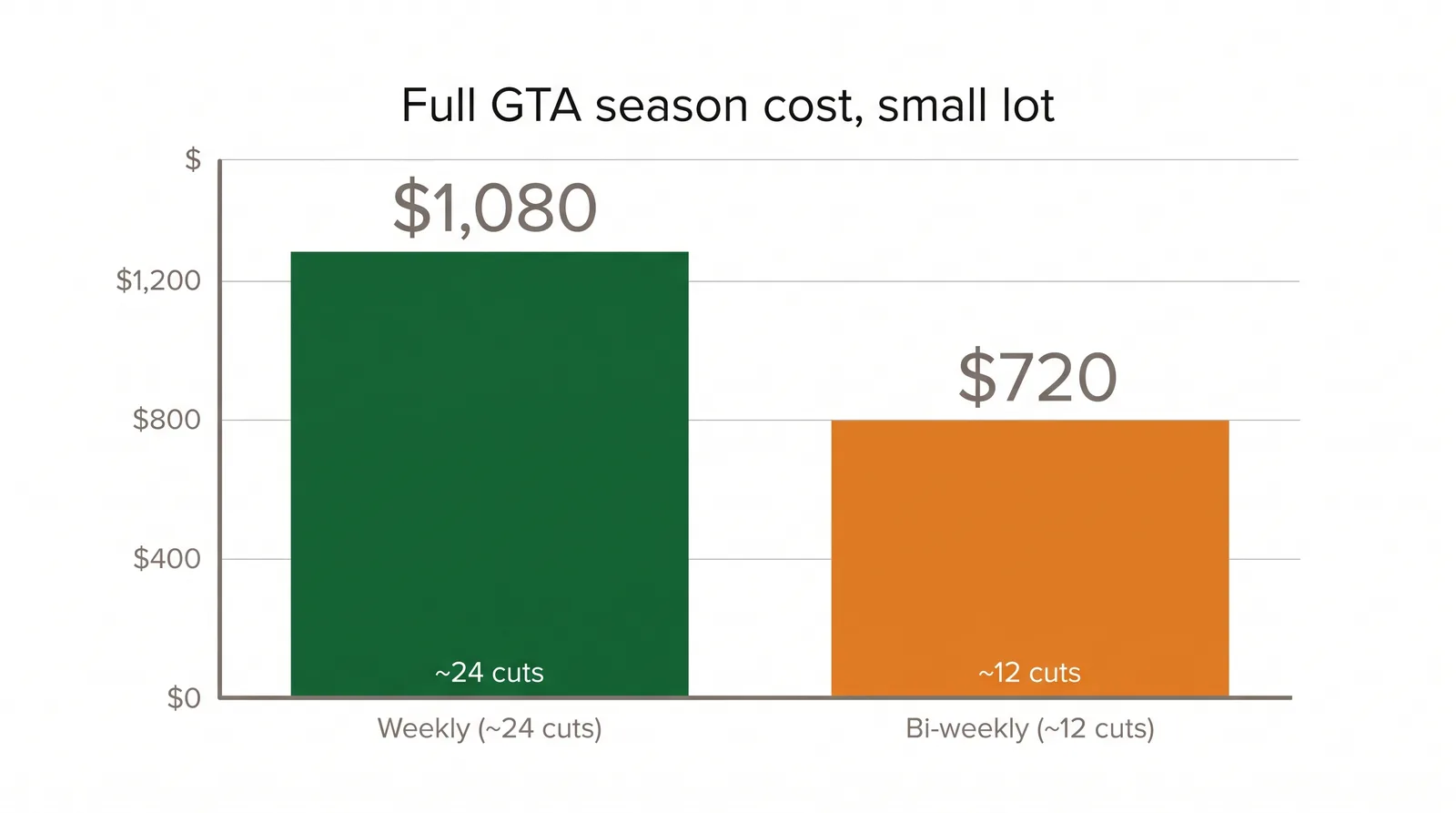
Over a full Toronto season, weekly service runs about $1,080 and bi-weekly about $720 for the same small lot, so bi-weekly saves roughly $300 to $400 a year. The season math is where the real comparison lives, not the per-visit sticker.
The GTA mowing season runs mid-April to early November, about 24 to 28 weekly cuts. Weekly at $45 across roughly 24 cuts is about $1,080, which lines up with the $1,200 to $1,800 range for a full seasonal contract (Absolute Home Services). Bi-weekly halves the visit count to about 12, and even at the higher $60 per cut that is around $720. Fewer visits beat the higher rate.
From the data: Across the GTA lawn-care price lists YardQuote tracks, the same small lot is quoted $35 to $45 weekly versus $50 to $60 for a one-time or bi-weekly cut. The per-visit premium for skipping weeks is real, but it never fully closes the season-long gap that comes from simply booking fewer cuts.
One number to add to both totals: 13% HST. GTA price lists quote before tax, so a $179 monthly plan is really about $202, and a $1,500 seasonal contract lands near $1,695 out the door.
Does bi-weekly mowing hurt your lawn?
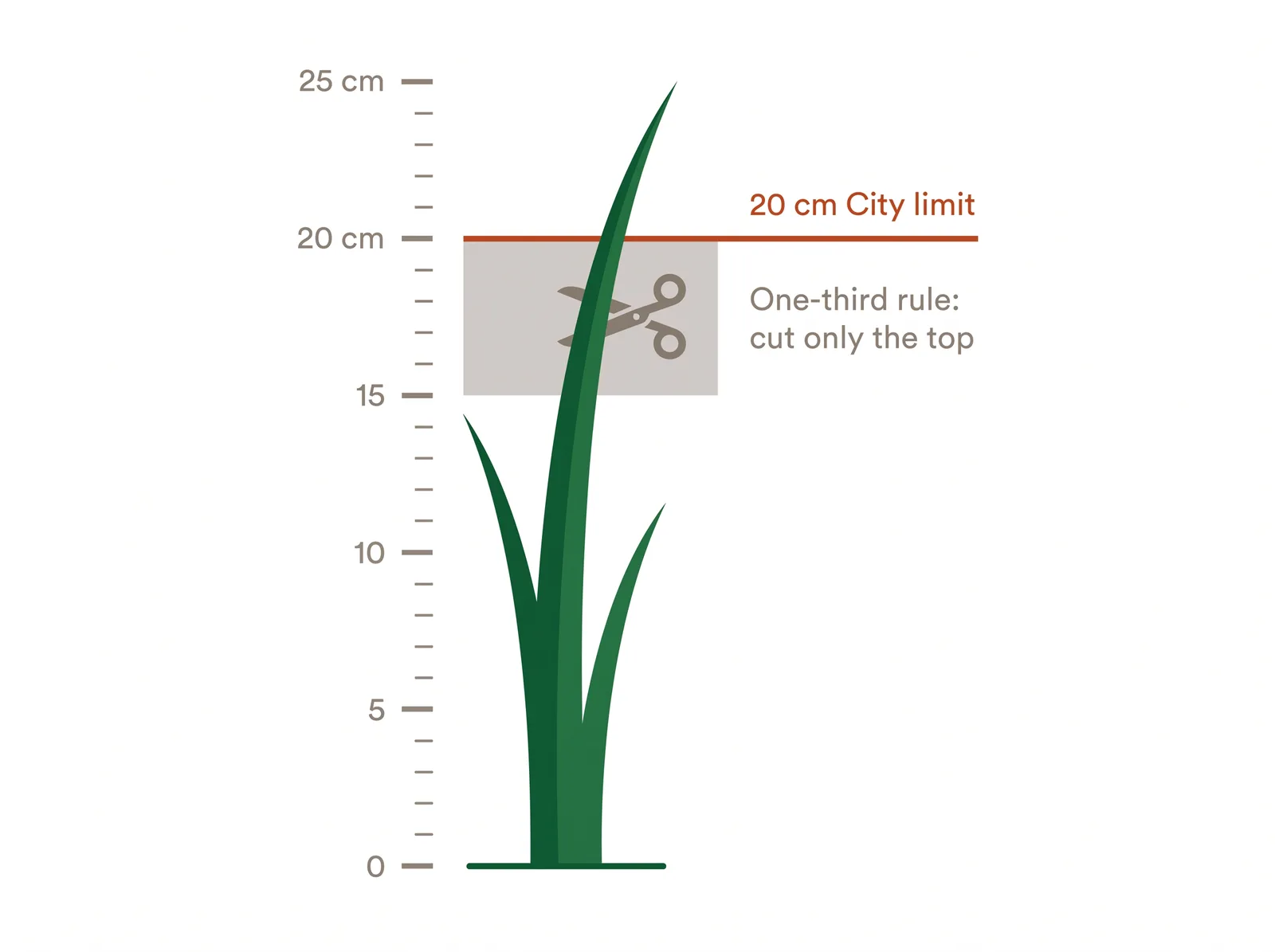
In spring, often yes. The cost of bi-weekly is not really in dollars, it is in lawn health, and the rule that explains it is the one-third rule: never cut off more than one-third of the grass blade's height in a single mow. Take more and you shock the plant, thin the roots, and open bare soil to weeds and heat.
Cool-season GTA grass, mostly Kentucky bluegrass and fescue, grows fastest in the cool, wet stretch of May and June. In two weeks it can easily outgrow that one-third cushion, so a bi-weekly cut in peak season means scalping a stressed lawn back to size. The same two-week gap in the July and August heat, when growth slows or the lawn goes semi-dormant, is barely noticeable.
The one-third rule — a lawn-care guideline that says a single mow should remove no more than the top third of the grass blade, because cutting deeper stresses the plant, weakens the roots, and invites weeds and drought damage.
Quotable: The one-third rule says a single mow should never remove more than the top third of the grass blade; in the GTA's fast May-to-June growth, a two-week bi-weekly gap routinely breaks it, which stresses cool-season lawns.
Can you get in trouble for mowing too rarely in Toronto?
There is a legal floor under how long you can stretch between cuts. Toronto Municipal Code Chapter 489 requires grass and weeds on private property to stay under 20 cm, about 8 inches. Cross it and the City can order the lawn cut and bill the cost to your property tax account, and neighbours can report an overgrown yard to 311.
Bi-weekly service does not normally breach the limit, but a neglected lawn in wet spring growth can approach it, especially if a cut gets skipped or rained out. If your lot is a corner, note that Toronto expects you to maintain the grassed City boulevard fronting your property too, which is extra turf most quotes for corner lots already include.
So which should you choose?
Match the schedule to the season instead of picking one for the whole year. Weekly earns its extra cuts in spring; bi-weekly earns its savings in summer.
- Choose weekly from May through June, and any wet stretch, when cool-season grass grows fast enough that two-week gaps break the one-third rule and risk the 20 cm limit. Weekly also keeps a corner lot's boulevard tidy and each cut cheaper.
- Choose bi-weekly in the July and August heat when growth slows, if your lawn is small and you are comfortable with a slightly longer look, and if the seasonal savings of $300 to $400 matter more than a manicured finish.
- Split the season for the best of both: weekly in spring, bi-weekly in high summer, back to weekly for the fall flush. Ask contractors to price a flexible schedule; many will.
Whichever you pick, commit to a schedule rather than calling for one-off cuts, which run $70 to $115 in the GTA and cost the most of any option. Bundled seasonal packages also run 10% to 20% below buying each visit separately (Maverick Landscaping).
Once you have decided on frequency, compare pros on more than price. YardQuote tracks 249 lawn-care companies across the GTA, 220 of them carry three or more reviews, and the average rating is 4.75 (YardQuote tracking, July 2026), so there are plenty of well-reviewed crews for either schedule. You can check current per-visit and seasonal ranges on the lawn care cost page, estimate your own lot with the lawn mowing cost calculator, or browse lawn care companies in North York and other GTA areas. The same normalize-first logic in our guide to why Toronto quotes vary applies here too: confirm turf area, frequency, and HST before you compare bids.
Want to know what weekly or bi-weekly service should cost for your yard? Request a quote and compare up to three vetted local pros side by side on the same schedule and lot size. Your contact details only go to the one you pick.