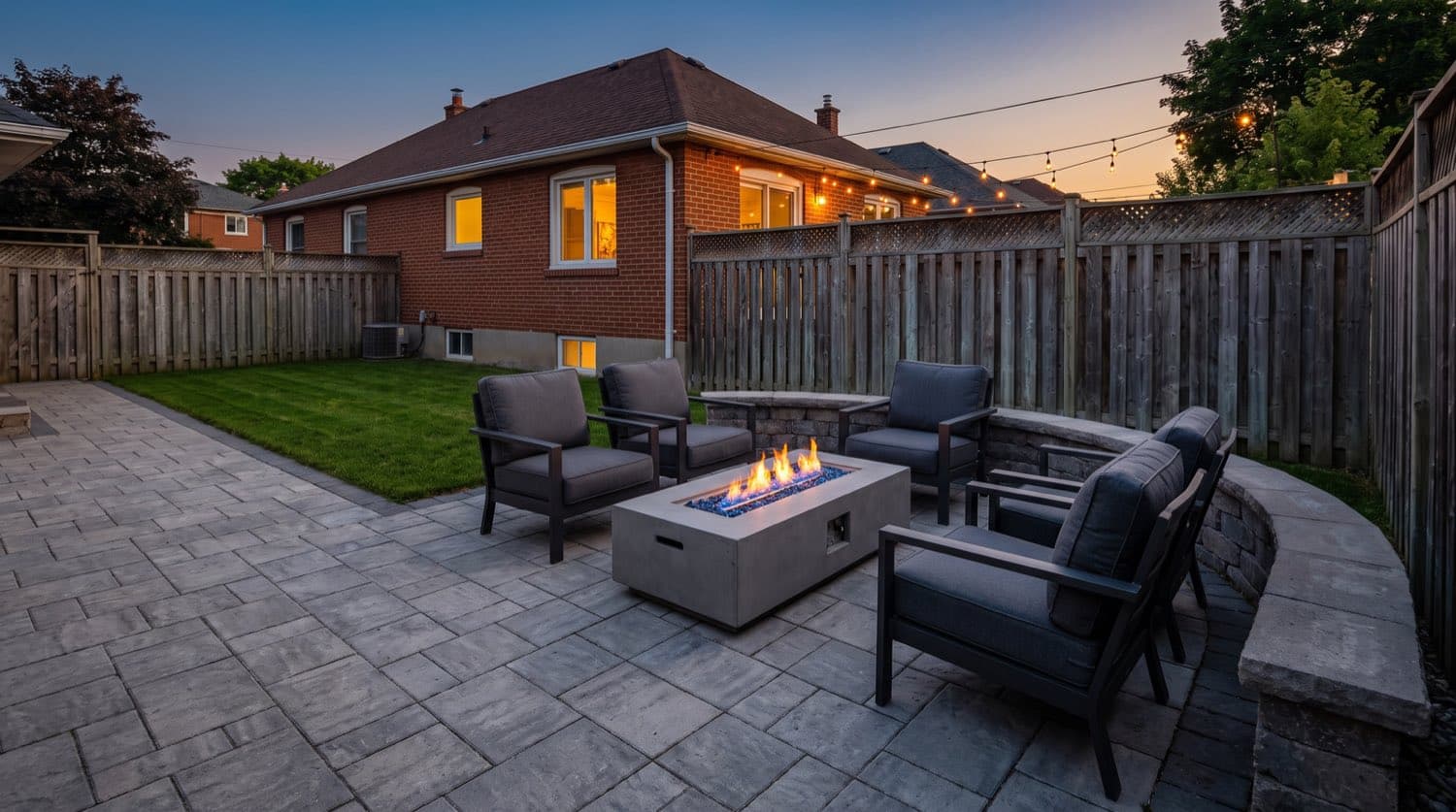
Answer First: In Toronto, a wood-burning backyard fire pit is not legal: the City prohibits open-air burning and solid-fuel appliances. A legal fire feature is a CSA- and ULC-approved gas or propane unit, supervised, run per the manufacturer's instructions, and kept away from combustibles. Design the yard around it: a circular or U-shaped seating layout on a non-combustible stone or gravel base, with a clear fire zone separated from dining and open lawn.
Before you plan a fire-pit backyard, one fact reshapes the whole design: in Toronto, the classic wood-burning fire pit is against the rules. The good news is that a well-designed gas fire feature looks just as good and is fully legal.
Are fire pits even legal in Toronto?
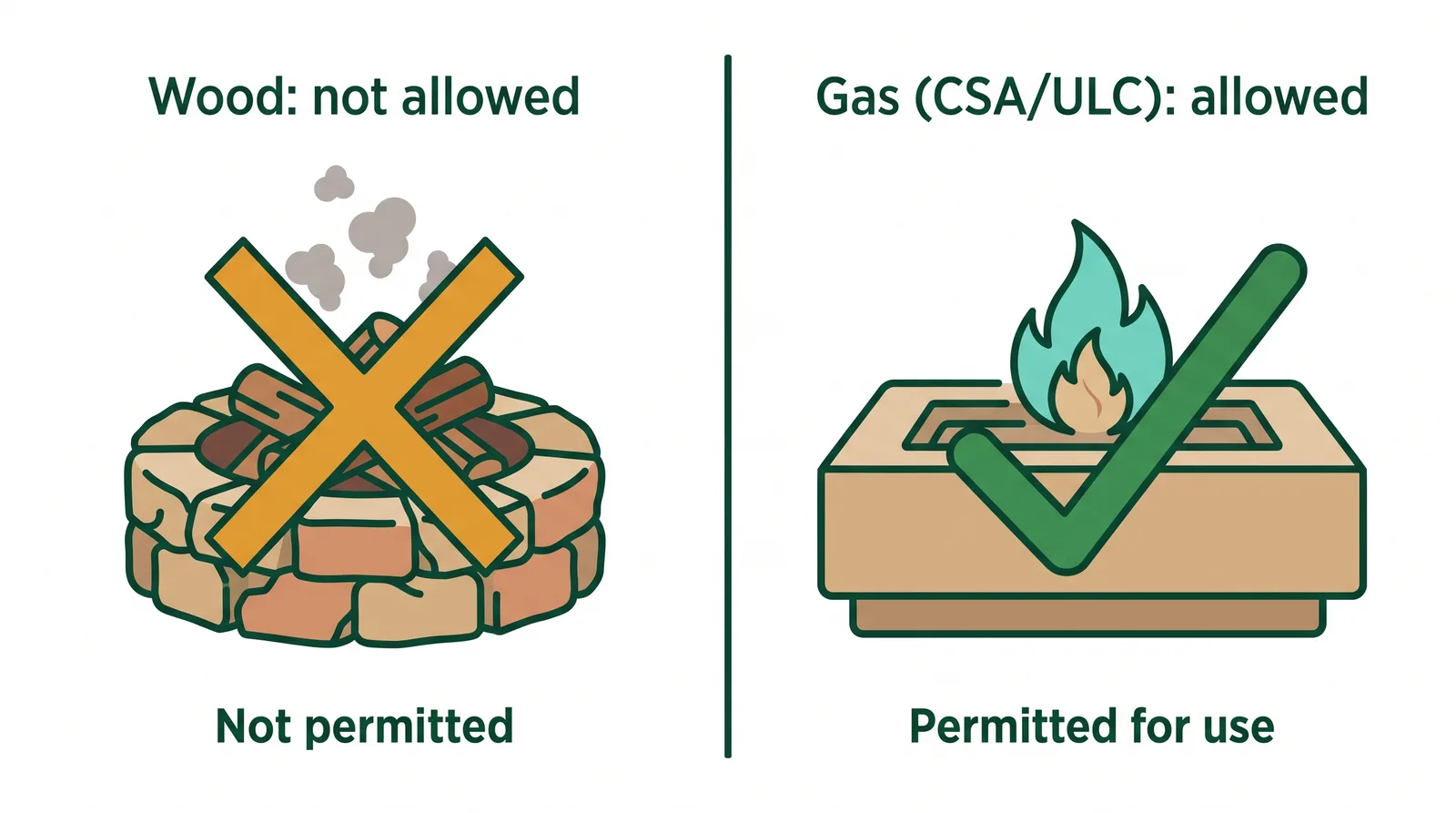
Wood ones are not. The City of Toronto prohibits open-air burning, and solid-fuel appliances, the wood-burning fire pit most people picture, are not permitted (City of Toronto). This is the single most important thing to know before spending on a fire-pit yard, and it is exactly what most design articles get wrong.
What is allowed is a gas or propane fire feature that carries CSA and ULC approval. These campfire-effect units are permitted as long as they are supervised at all times, operated per the manufacturer's instructions, and kept away from combustibles. So the design question in Toronto is not "wood or gas," it is "which gas fire feature," and the whole layout builds from there.
Quotable: In Toronto, wood-burning fire pits are not legal, the City prohibits open-air burning. A CSA- and ULC-approved gas or propane fire feature is the legal way to have a backyard fire.
The core layout: centre the seating on the fire
A fire-pit yard works when the seating wraps the fire so everyone faces in. The two reliable layouts are a full circle and an open U-shape, both set on a non-combustible base.
- Circular layout. Chairs or a ring of built-in seat walls surround the fire feature evenly. It seats the most people and feels the most social.
- U-shape (or arc). Seating on three sides leaves one side open for a view, a path, or a walk-out from the house. It suits a yard with a focal point beyond the fire.
Set either on a non-combustible patio, stone pavers or compacted gravel, never a wood deck or bare lawn under the unit. Built-in seat walls save space in a small yard and give the whole feature a permanent, finished look.
Zone the rest of the yard
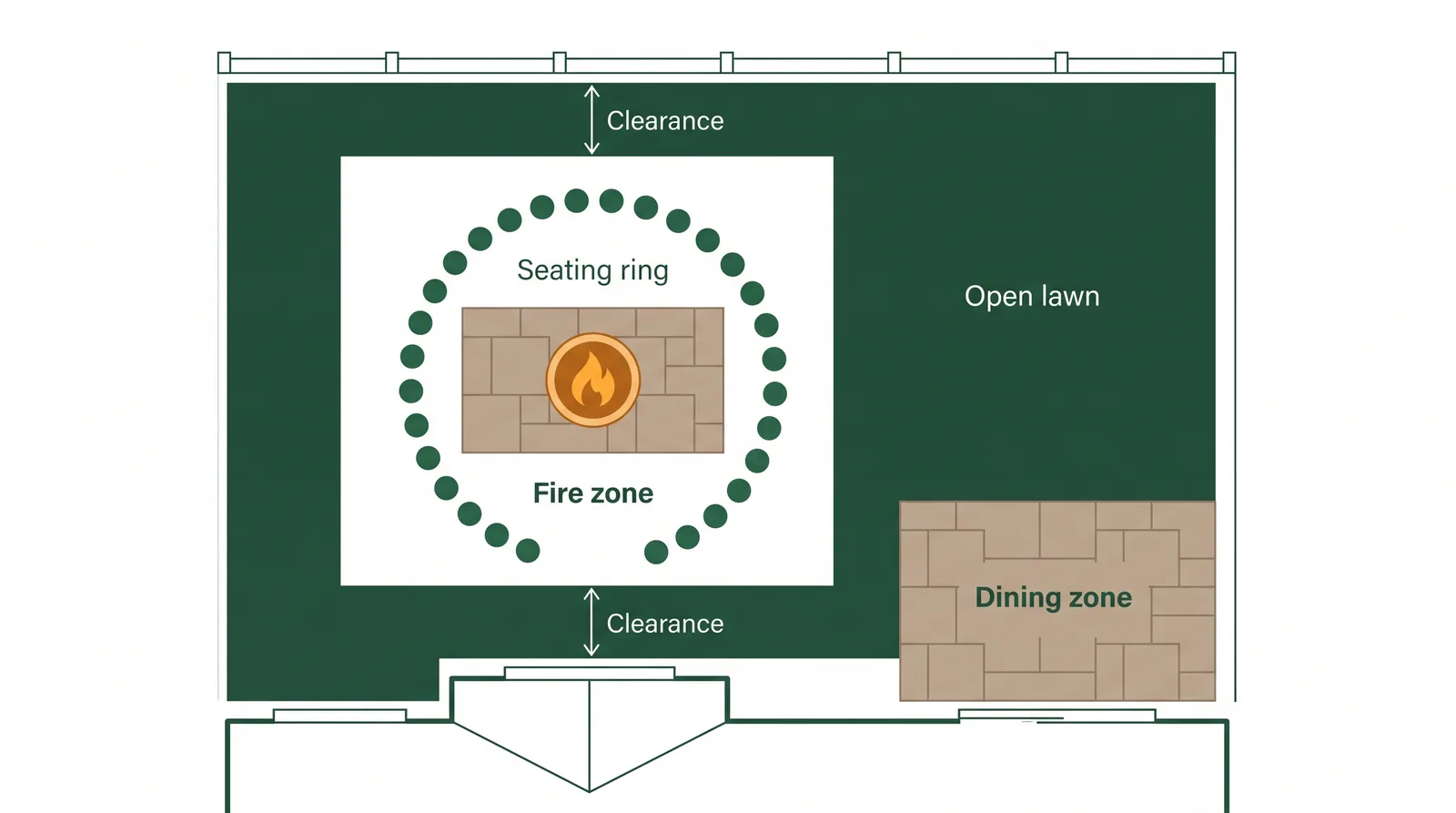
A fire feature should not swallow the whole backyard. The best fire-pit layouts give the yard two or three zones so it works for more than one evening use.
- Fire zone. The seating ring and fire feature on their non-combustible pad, the social heart of the yard.
- Dining or lounge zone. A separate patio area for a table or loungers, so cooking and eating are not crowded around the flames.
- Open lawn. Keep some green for kids, pets, or just breathing room; a yard that is all hardscape feels smaller, not bigger.
Connect the zones with a simple path and the yard flows. This is the same non-combustible surfacing where our rock and gravel landscaping ideas come in, since gravel and pavers make the ideal fire-feature base.
From the data: YardQuote tracks 650 landscaping companies across the GTA, and 613 carry three or more Google reviews at an average of 4.77 stars (July 2026). Hardscape and fire-feature installs are common work, so a well-reviewed crew that knows Toronto's fire rules is easy to find.
Safety and clearances that keep it legal
Legal and safe are the same checklist here, because the City's rules are safety rules. Get these right and your fire feature stays compliant.
- Use an approved gas unit. CSA- and ULC-approved only; no wood, no open flame.
- Supervise it. The unit must be attended whenever it is running.
- Follow the manufacturer's clearances. Distances to the house, fences, foliage, and structures come from the unit's instructions, which the City requires you to follow.
- Non-combustible base. Stone or gravel under and around the fire, well clear of the fence line and any overhanging branches.
Non-combustible base — a fire-feature foundation of stone pavers, concrete, or compacted gravel rather than wood or turf, so nothing under or immediately around the fire can catch.
For plant choices that keep well back from the fire zone, see our low-maintenance landscaping guide, and when you are ready to build, our checklist on how to choose a landscaping company in Toronto helps you pick a crew that builds to code. To plan and price the hardscape, see the landscaping cost page and the landscape design cost page, or browse landscaping in Scarborough.
Want a fire-feature backyard that is actually legal in Toronto? Request a quote and compare up to three vetted local pros side by side. Your contact details only go to the one you pick.