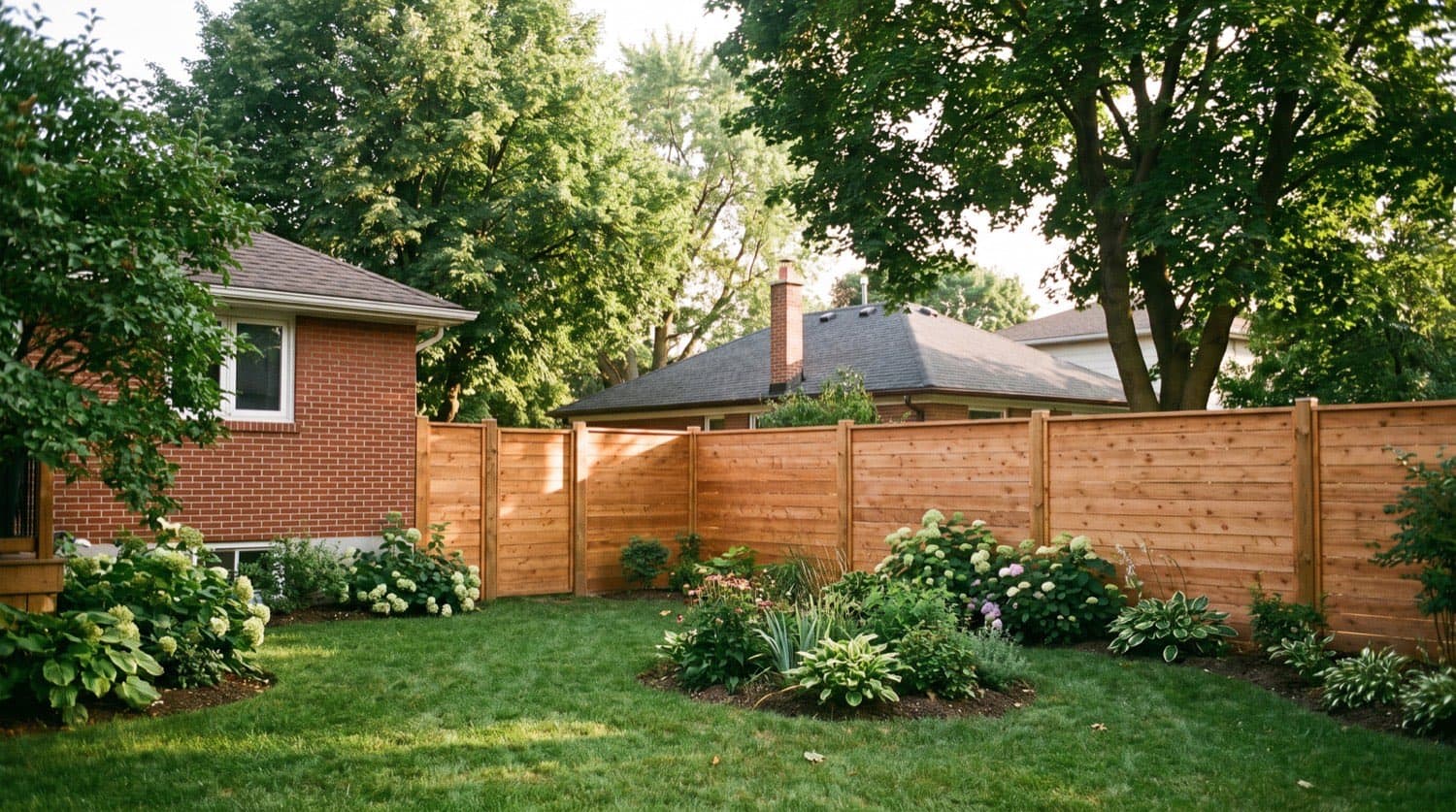
Answer First: Toronto does not require a building permit for a standard residential fence, but Municipal Code Chapter 447 caps how tall it can be: 1.2 metres in the front yard within 2.4 metres of the street, and 2.0 metres in the back and side yards, measured from average grade. The one fence that does need a permit is a swimming pool enclosure, which follows its own stricter rules.
Fences are where good neighbours quietly break the law. Most people build to whatever the last owner did, or to whatever the lumber yard sold them, and never check the number. The number is not complicated, and getting it right is cheaper than taking a finished fence down.
Do I need a permit to build a fence in Toronto?
For a normal fence, no. Toronto does not issue or require a building permit for a standard residential fence. What it does is regulate the fence through Municipal Code Chapter 447, adopted as By-law 641-2018, which sets maximum heights, prohibited materials, and sight-line rules. You do not file paperwork; you just have to build within the limits.
The exception is a swimming pool enclosure. That is treated as a safety structure, needs a permit before you excavate, and carries its own rules covered further down.
Quotable: In Toronto, a standard residential fence needs no building permit, but it must comply with Municipal Code Chapter 447. A swimming pool enclosure is the exception and does require a City permit.
How high can my fence be?
It depends on where the fence sits on your lot. Chapter 447, Table 1 sets the limits, and they are measured a specific way: from the average grade level, taken perpendicular to and one metre away on either side of the fence. That "one metre out" detail matters on a sloped or bermed yard, because it stops people from building a berm to sneak extra height.
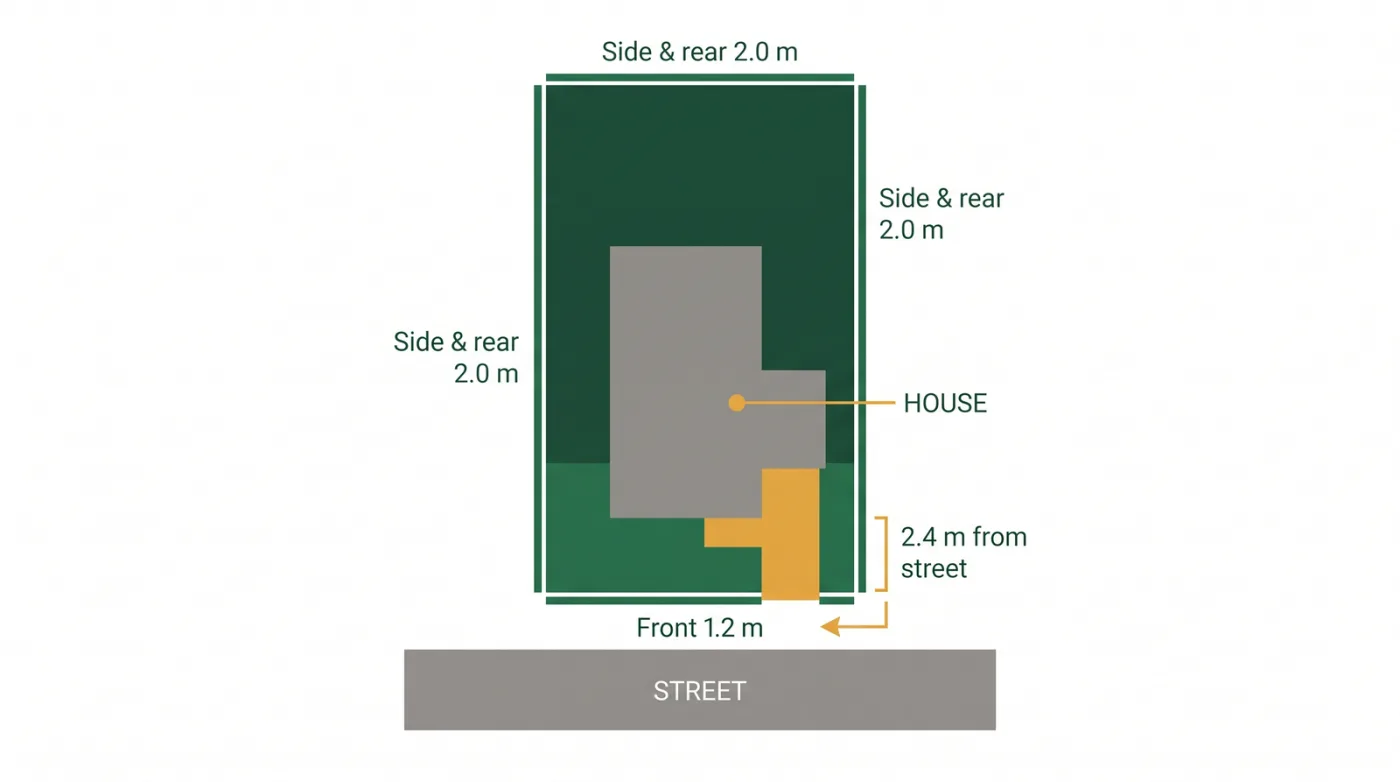
For a single or multiple residential property, the core limits are:
| Where the fence is | Maximum height |
|---|---|
| Front yard, within 2.4 m of the lot line abutting a public street | 1.2 m |
| Front yard, more than 2.4 m from that lot line | 2.0 m |
| Side and rear yard (the general "any other fence") | 2.0 m |
| On an unroofed deck, not in a front yard | 2.0 m above the deck surface |
| Certain rear fences abutting a public walkway, transit corridor, or non-residential land | up to 2.5 m |
The pattern is simple once you see it: the City keeps the front yard low and open near the street for sight lines and streetscape, then lets you build a real privacy fence once you are back from the road or into the side and back yards.
From the data: Of the 650 landscaping companies and 61 retaining-wall specialists YardQuote tracks across the GTA, many install boundary fences as part of a yard build. The disputes we see written up in reviews are almost never about workmanship — they are about a fence built to the wrong height near the street, then contested.
The front-yard 2.4 metre rule, in plain terms
This is the clause people miss. A fence in your front yard within 2.4 metres of the lot line that faces a public street cannot exceed 1.2 metres. Push the fence deeper into the yard, more than 2.4 metres back from that street-facing lot line, and the cap rises to 2.0 metres.
So a 1.8 metre privacy fence right along the front sidewalk is over the limit; the same fence set back into the yard, past the front wall of the house, is generally fine. On a corner lot, the front yard is measured from the shorter street-facing lot line, which catches a lot of corner-lot owners by surprise. A public lane does not count as a public highway for this rule, which changes the math for laneway lots.
One more sight-line rule: any fence within 2.4 metres of a driveway has to be open-mesh chain link or an equivalent see-through construction, so it does not block the view of the sidewalk as you pull out.
What fences and materials are banned?
Chapter 447 also rules out a short list of materials outright, regardless of height:
- Barbed wire, chicken wire, or other sharp material — prohibited, unless the fence is a tall permitted one over 2.5 metres and the sharp material sits above 2.5 metres on brackets angled inward at 45 degrees.
- Sheet metal or corrugated metal panels — not allowed in any fence.
- Electrified fences — prohibited, except on agricultural land actually raising livestock, at no more than 12 volts, with warning signs at 12-metre intervals.
- Snow fencing — allowed on private property only between November 15 and April 15.
Pool fences: the permit exception
If you are enclosing a swimming pool, the rules change and a permit becomes mandatory. A swimming pool under Chapter 447 is any outdoor structure that can hold water deeper than 600 millimetres, so many hot tubs and temporary pools are caught by it.
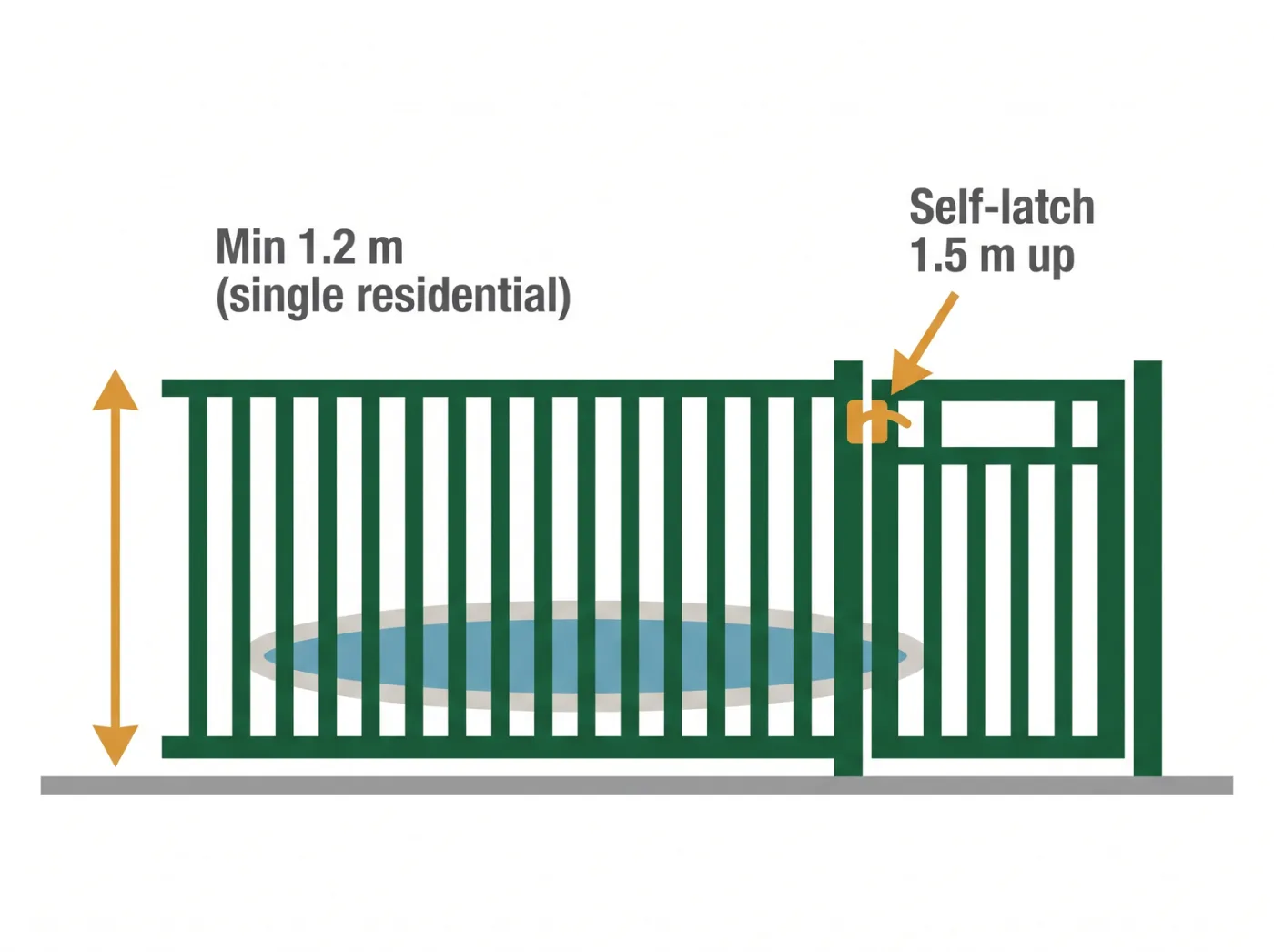
For a single residential property, the enclosure must be at least 1.2 metres high, and the requirements go beyond height:
- Permit first. You need a swimming pool enclosure permit from the City before you excavate or build the pool.
- A compliant gate. Every gate must be self-closing with a lockable self-latching device located inside near the top, or outside at least 1.5 metres above grade, and kept locked when the pool area is not in use.
- Inspection before water. You may not fill the pool until a City officer inspects and confirms the enclosure fully complies.
- Non-climbable design. The enclosure must present a non-climbable face, with no toehold openings wider than the bylaw allows for its lower 1.2 metres.
The City's pool enclosure guidance walks through the two-step permit path. Treat it as a safety build, not a privacy fence, because that is how the City reads it.
Planning the rest of the yard around the fence
A fence rarely goes in alone. If you are enclosing a raised sitting area, check first whether your deck needs a permit, since the fence-on-deck height is measured separately. If you are also rethinking the lawn, our note on artificial grass bylaws covers the front-yard landscaping rule that pairs with the fence sight-line rule. You can compare real GTA yard-build ranges on the landscaping cost page or the full costs hub.
Want to know what a compliant fence should cost for your lot? Request a quote and compare up to three vetted local pros side by side — your contact details only go to the one you pick.