Answer First: A dog-friendly backyard is built around durability and safety. Use tough surfaces (a wear-tolerant lawn or pet turf, plus pavers or pea gravel along the paths dogs patrol), keep toxic plants and cocoa-shell mulch out entirely, and cover the essentials: shade, fresh water, and a gap-free fence. Give a digger a designated dig zone, and check every new plant against the ASPCA toxic plants list before it goes in the ground.
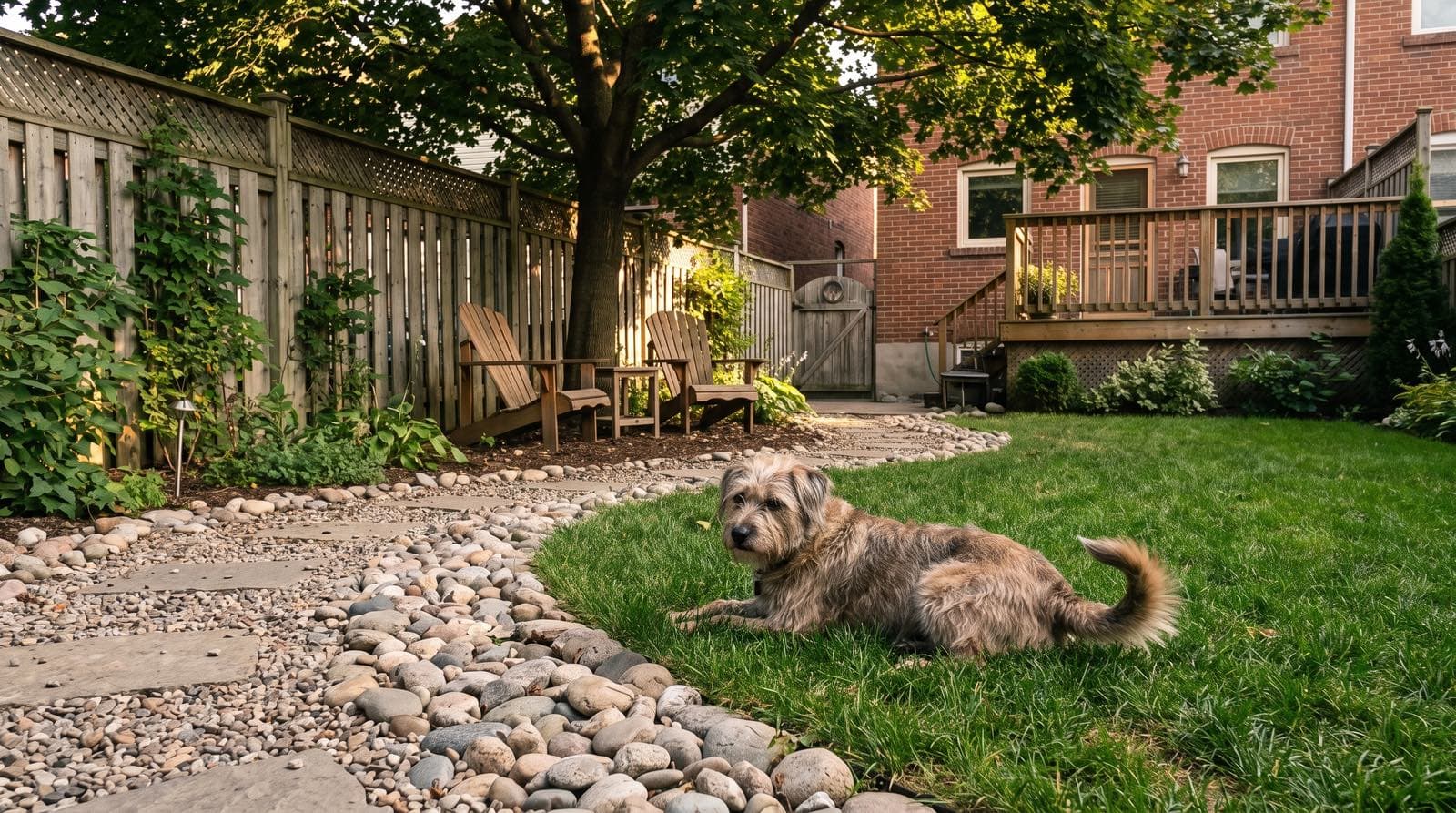
Dogs use a yard differently than people do. They run the same patrol line along the fence, dig in the same corner, and lie in the same shady spot, and a yard designed as if none of that happens turns into mud tracks and chewed beds. Design for how the dog actually uses the space and it stays nice for both of you.
How do you build a backyard that survives a dog?
Design around the dog's habits, especially the paths it already runs. Durability in the right places is what keeps the yard from wearing out.
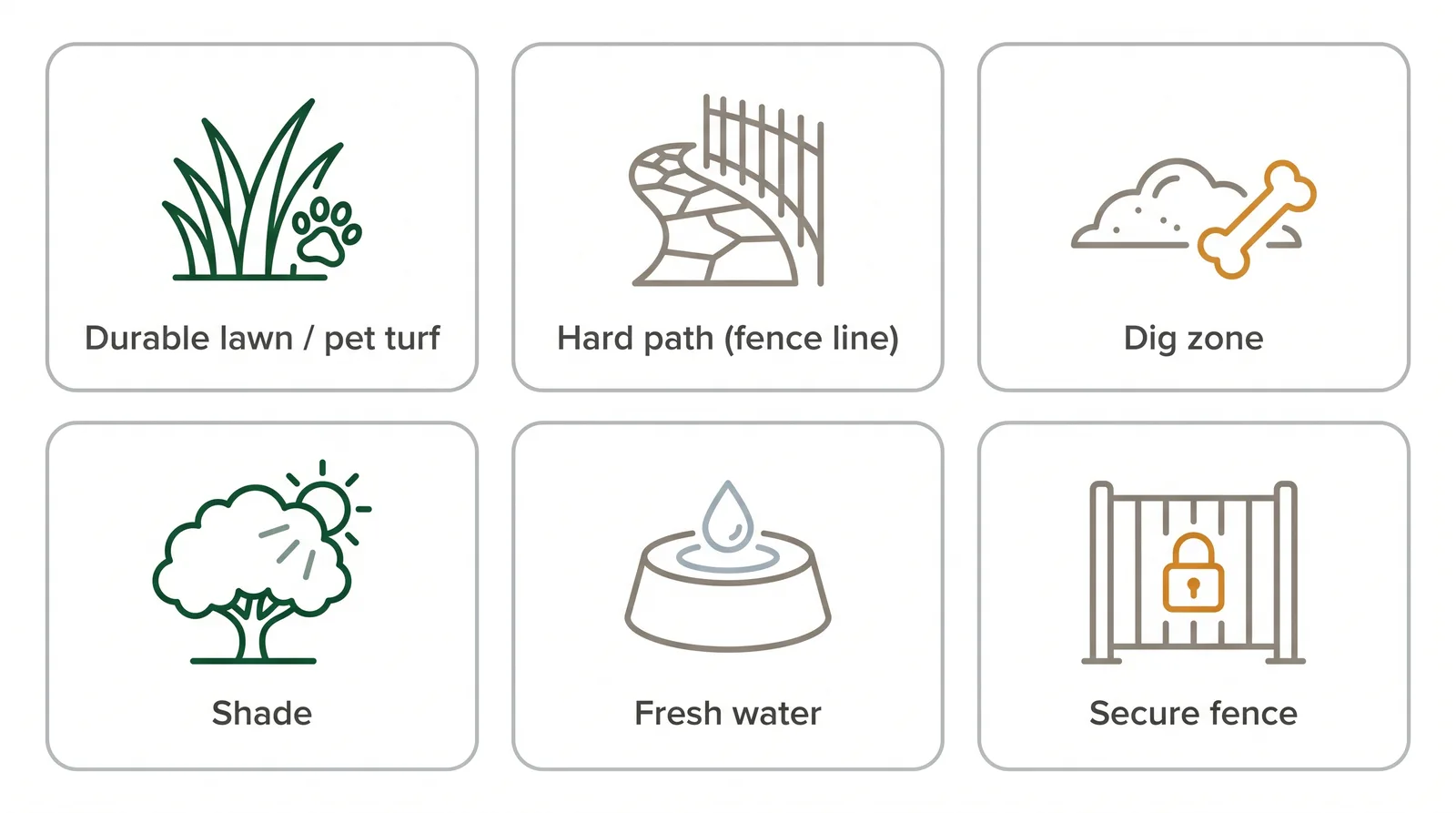
The core moves:
- A durable surface for the open area: a wear-tolerant grass like ryegrass or tall fescue, or pet-rated artificial turf that will not turn to mud.
- A hard path where the dog patrols: pavers or pea gravel along the fence line, where dogs wear a dirt track, so it never becomes mud.
- A designated dig zone: a sandbox or a mulched corner the dog is allowed to dig in, which spares the garden beds.
- Shade and water: a shaded spot and constant fresh water so the dog can cool off and stay hydrated.
- A secure fence: no gaps to squeeze through and nothing to dig under.
The wear-tolerant grass question is its own topic, and pet turf is a real option, covered in our guide on artificial grass for dogs. The point is to put toughness where the dog concentrates wear, not to armour the whole yard.
Quotable: Dogs run the same patrol path every day, usually along the fence. Put a hard surface there and it never becomes a mud track, which is the single most effective dog-friendly design move there is.
What is unsafe in a dog's backyard?
Toxic plants and cocoa mulch, first and foremost. A dog-friendly yard is as much about what you leave out as what you put in.
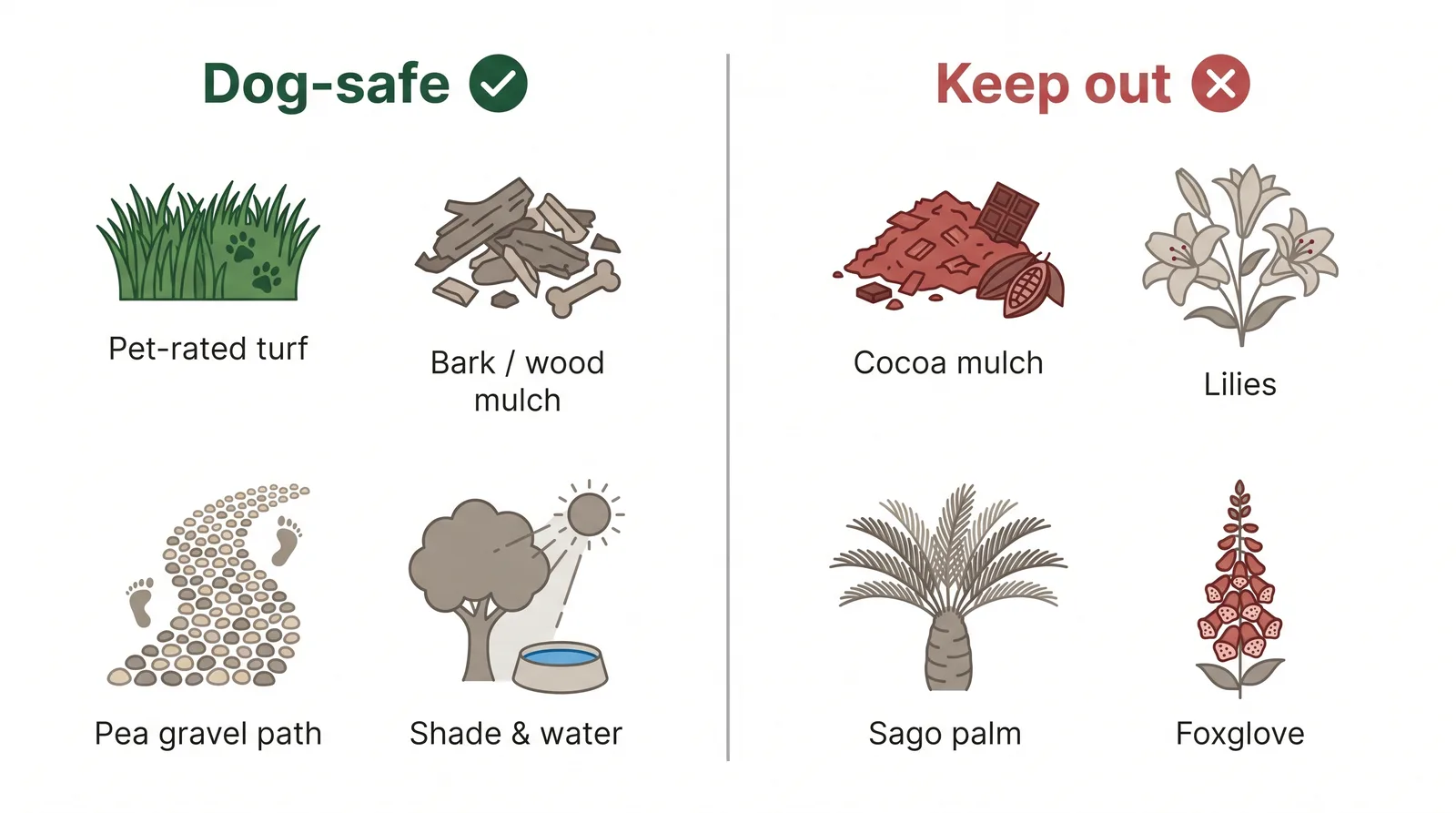
Many common landscape plants are toxic to dogs, including lilies, azaleas, rhododendrons, sago palm, foxglove, and yew. Before you plant anything new, check it against the ASPCA toxic and non-toxic plants list, which is the authoritative reference. And avoid cocoa-shell mulch entirely, because it is poisonous to dogs; use a plain bark or wood-chip mulch instead.
Cocoa mulch is a garden mulch made from cocoa-bean shells that smells like chocolate and contains the same theobromine that makes chocolate toxic to dogs. Keep it out of any yard a dog uses.
Beyond plants and mulch, store lawn chemicals securely, and remember that Ontario's cosmetic pesticide rules already limit what you can spray, which happens to suit a dog's yard well.
Quotable: Never use cocoa-shell mulch in a dog's yard: it smells like chocolate and is toxic for the same reason chocolate is. Check every new plant against the ASPCA toxic list before it goes in the ground.
What do Toronto dog owners specifically need?
Drainage, shade, and a fence that actually contains a digger. Toronto's conditions shape the details.
Heavy clay and urine together make mud and worn patches worse, so durable surfaces and good drainage earn their keep here. Mature-tree shade, common in older neighbourhoods, is a bonus for a dog but hard on grass, another reason pet turf or a hard surface often wins in the shaded run. And a secure, gap-free fence matters both to keep your dog in and, as our guide on keeping cats and dogs out of the yard covers, to manage the neighbourhood's other animals.
From the data: YardQuote tracks 650 landscaping companies across the GTA, and 613 carry three or more Google reviews with an average rating of 4.77 (YardQuote tracking, July 2026). Many now design pet-friendly yards, and the ones worth hiring ask how your dog uses the space, where it runs and digs, before recommending surfaces, which is exactly the thinking that keeps the yard intact.
To compare local pros and current ranges, see the Toronto landscaping cost page or browse landscaping companies in Scarborough and other areas.
Want a backyard your dog cannot wreck? Request a quote and compare up to three vetted local pros side by side. Your contact details only go to the one you pick.