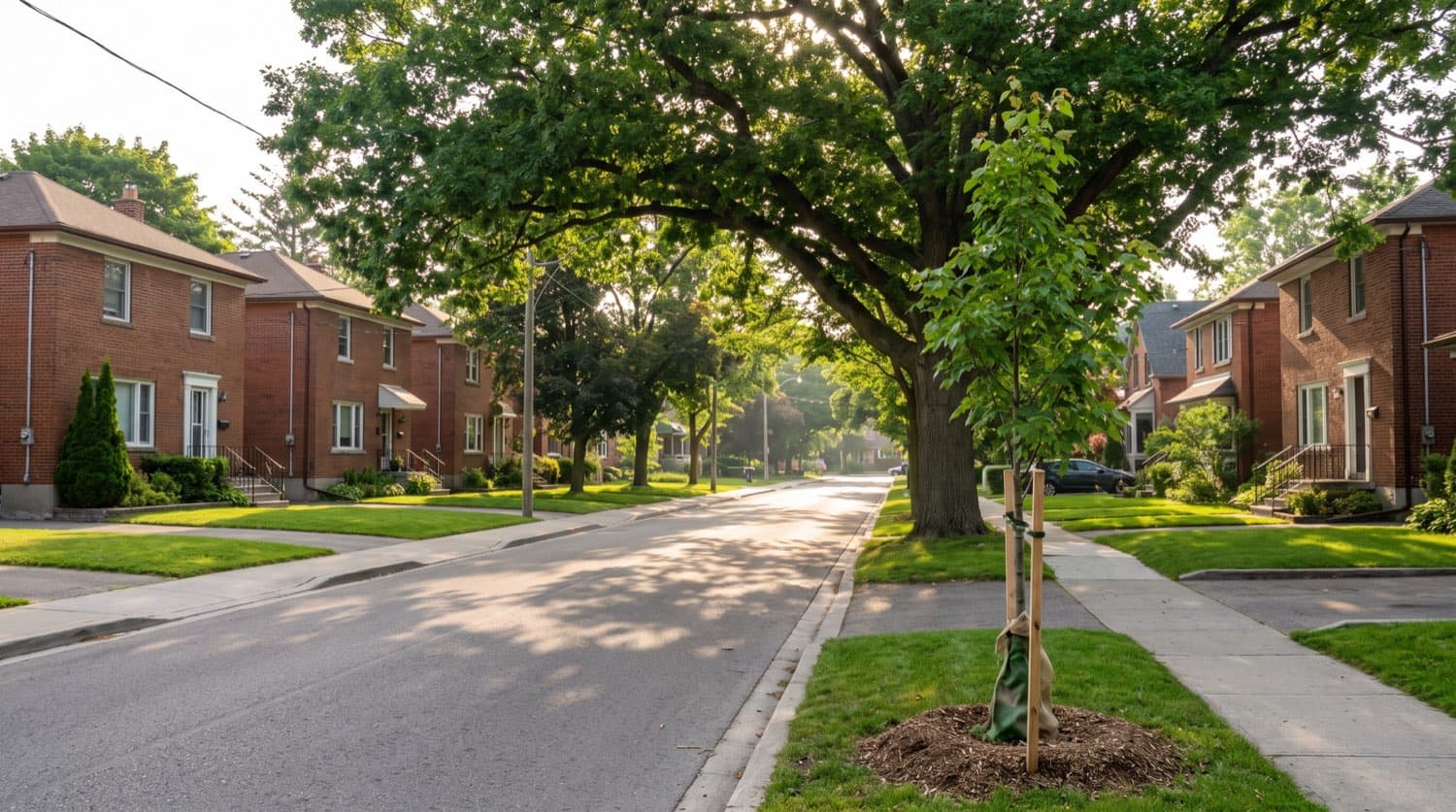
Answer First: The best trees to plant in Toronto are large-growing native shade species hardy to the local climate. On the City-owned strip in front of your home, the City plants deciduous shade trees like honey locust, Kentucky coffeetree, tulip tree, and native oaks, and it does not allow evergreens there because they block sightlines and cannot be pruned around wires. For your own yard, match the tree to the spot: small natives for tight lots, big shade trees for open yards, and cedars only for backyard privacy. Avoid invasive Norway maple and buckthorn.
"Best tree" is not one answer, it is a match. The right tree for a shaded downtown side yard is wrong for an open North York backyard under a hydro line. The City figured this out the hard way across a whole urban forest, and its rules are a useful shortcut for homeowners. Here is what to plant, where, and what to keep out of the ground.
What trees does the City of Toronto recommend?
The City's whole philosophy is large-growing, native shade trees that are hardy to Toronto. Native species support local wildlife, handle the local climate, and build the canopy the City wants, so they are the default recommendation for private yards too.
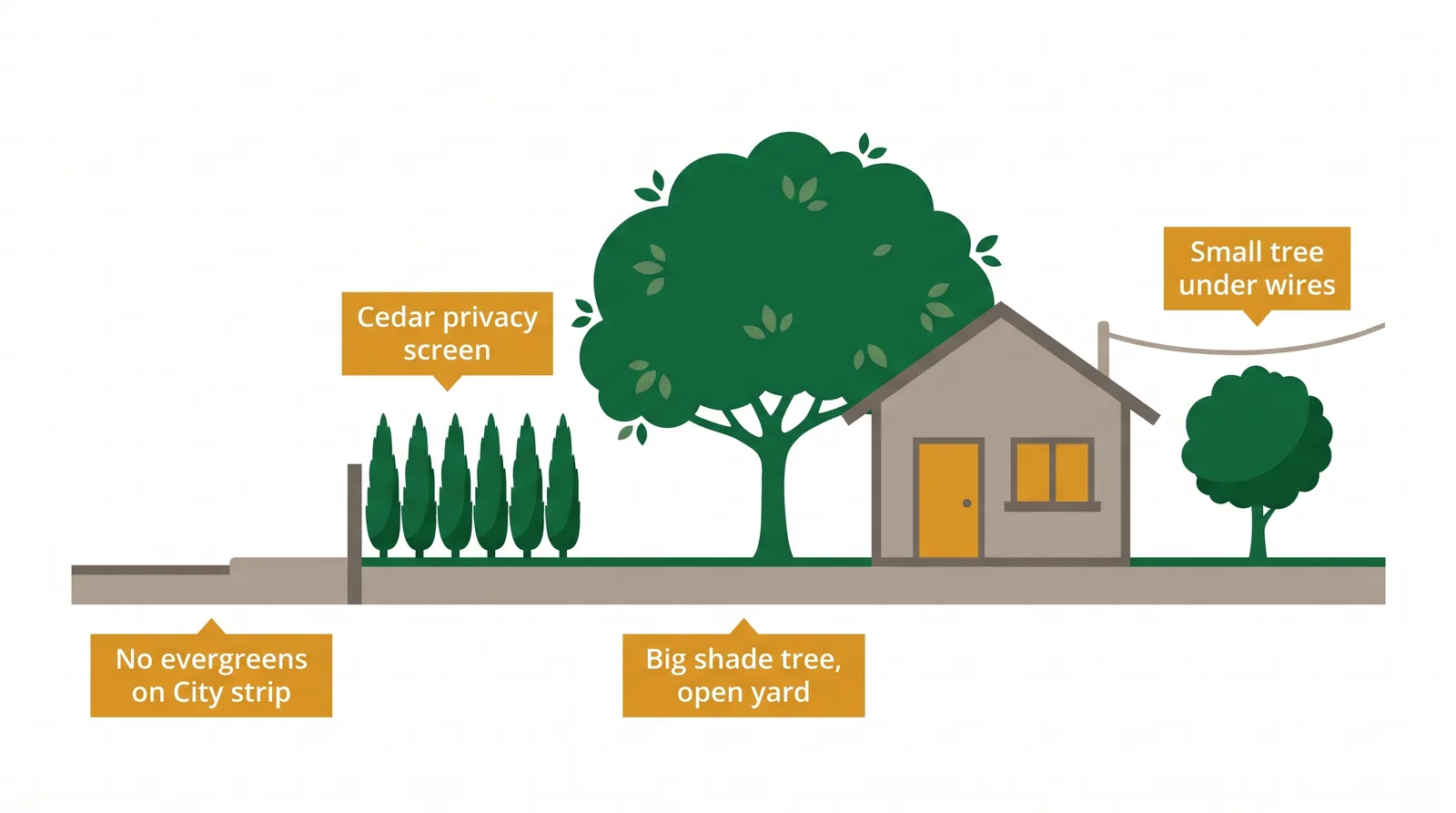
On the City road allowance, the strip between the sidewalk and the road, the City plants deciduous shade trees and chooses the species and spot with an on-site visit. Honey locust 'Skyline' is a common pick because it is native, hardy, fast, and tolerant of tough urban spots. Kentucky coffeetree suits locations near overhead wires thanks to its open branching. Tulip tree, white oak, and swamp white oak round out the native shade options.
Quotable: The City of Toronto plants large-growing native shade trees, honey locust, Kentucky coffeetree, tulip tree, and native oaks, on the road allowance, and does not allow evergreens there because they block sightlines and cannot be pruned to clear utility wires.
Which tree fits your yard? A situation-by-situation list
The best pick depends on your space, your light, and what is overhead. This table pairs common Toronto situations with native species that suit them.
| Your situation | Strong native picks | Notes |
|---|---|---|
| Small sunny yard | Smooth serviceberry, grey dogwood | Compact; spring flowers, bird value (LEAF) |
| Small shady yard | Pagoda dogwood, blue-beech (hornbeam) | Tolerate shade; stay small (LEAF) |
| Open yard, want shade | White oak, swamp white oak, tulip tree | Large canopy; long-lived |
| Near overhead hydro lines | Honey locust, Kentucky coffeetree | Open branching, compatible with wires |
| Backyard privacy screen | Eastern white cedar | Evergreen; about 20 ft tall, 7–10 ft wide |
For privacy specifically, an evergreen screen is a different job from a shade tree, and we cover the options in our guide to fast-growing privacy trees and hedges for the GTA. Whatever you plant, get the timing right, our guide on when to plant a tree in Toronto covers the spring and fall windows.
Right tree, right place, the principle of choosing a species whose mature size and needs fit the exact spot: enough room for the roots and canopy, the correct light, and clearance from wires, walls, and property lines. It is the single biggest predictor of whether a tree thrives or becomes a problem.
What trees should you avoid in Toronto?
Skip the invasives, no matter how cheap or fast they are. Two show up again and again in older Toronto yards and should not be replanted.
Norway maple is invasive in Ontario. It grows in dense stands that shade out native saplings and wildflowers, and it alters the soil against native plants. Common, or European, buckthorn is worse for a hedge shopper's purposes: it is often sold or spread as a quick screen, but it is classified as a noxious weed under Ontario's Weed Control Act and takes over natural areas. Also pass on weak, short-lived trees like Manitoba maple and hybrid poplar, which drop limbs and outgrow small lots fast.
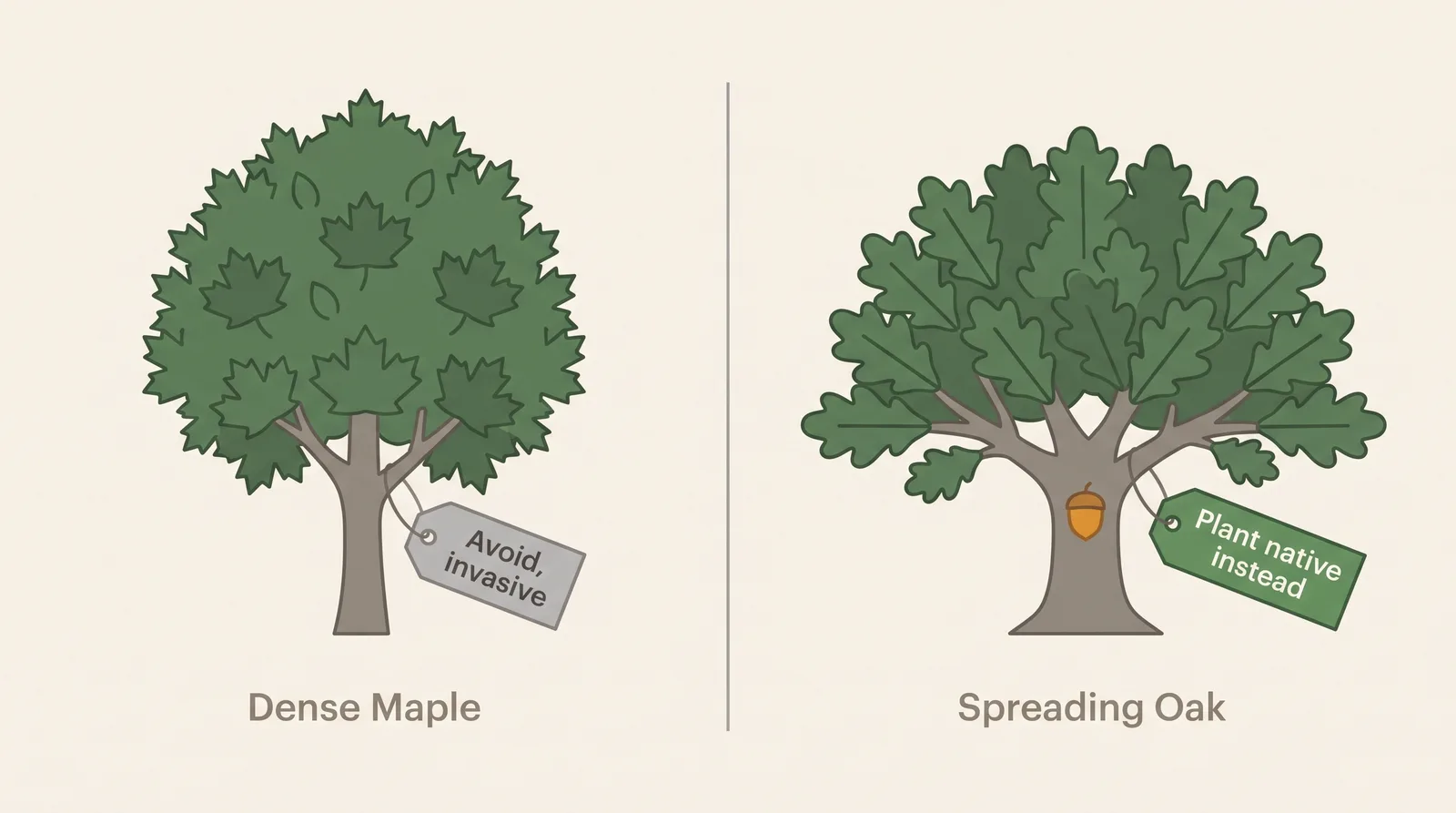
Quotable: Norway maple and common buckthorn are both invasive in Ontario, and buckthorn is a noxious weed under the Weed Control Act. For privacy or shade, a native tree does the same job without spreading into ravines and natural areas.
From the data: YardQuote tracks 650 landscaping companies across the GTA, and a supplied-and-planted tree from a pro runs about $150 to $500 each depending on species and size (YardQuote cost data, July 2026). Because the City's Free Tree Program and LEAF's subsidized planting can cover a native tree for far less, the smart order is to check those programs first, then hire out only the size or species they do not offer.
How to actually get the right tree in the ground
Start with the free routes. The City's Free Tree Program provides up to two native trees or shrubs per household in spring and fall, and a quick 311 request gets a free street tree planted and maintained on the City strip in front of your home. LEAF plants larger backyard trees at a subsidized cost with an arborist's help choosing the species.
If you are planting as part of a bigger yard project, or you want a specific larger caliper tree, a landscaping crew handles selection, delivery, and planting. Check current landscaping costs and browse rated crews on the landscaping directory for your area before you commit. Match the mature size to the spot now, and you avoid the far bigger cost later: once a tree passes 30 cm across the trunk, removing it needs a City permit.
Planning a tree or a fuller yard refresh? Request a quote and compare up to three vetted local pros side by side. Your contact details only go to the one you pick.