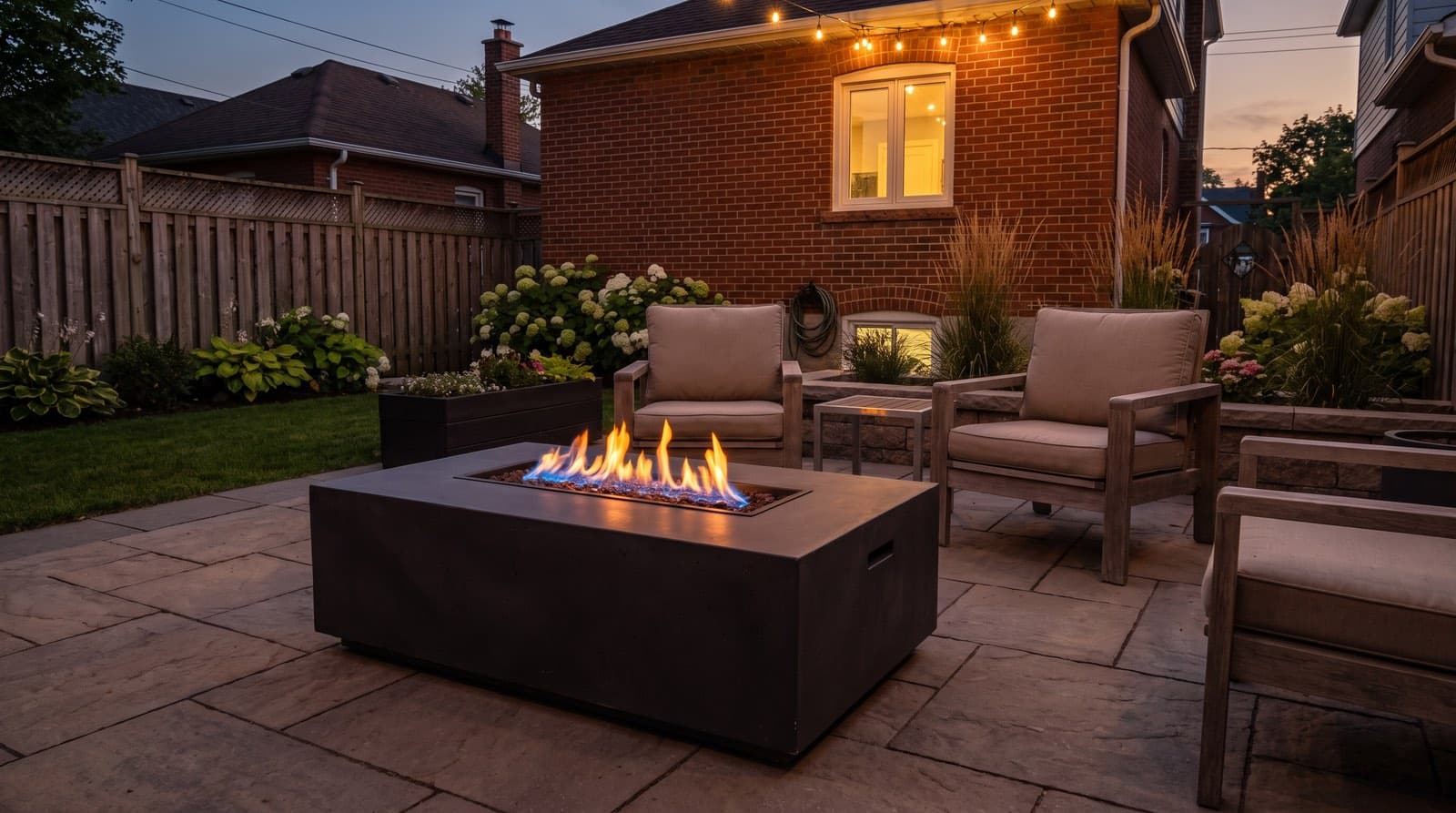
Answer First: In Toronto, wood-burning fire pits are not legal. The City prohibits open air burning, which specifically includes fire pits, bonfires, and chimineas, and states that solid-fuel appliances are unacceptable. The legal way to have a backyard fire is a ULC or CSA approved propane or natural gas fire pit or table, supervised at all times and used per the manufacturer's instructions. So in Toronto, "fire pit ideas" really means gas fire feature ideas.
Search "backyard fire pit ideas" and you get a hundred photos of crackling wood fires that would earn a Toronto homeowner a visit from the fire department. The city's rules are stricter than most people realize, and the good news is there is a legal, attractive way to have fire in your yard once you know what the bylaw actually allows.
Are backyard fire pits legal in Toronto?
Not the wood-burning kind. The City of Toronto prohibits open air burning, and it defines that to include exactly the thing most people picture: "bonfires, fire pits, sky lanterns and the use of various types of outdoor fireplaces (also known as a 'Chiminea')." The rule is blunt about fuel too: solid-fuel burning appliances are unacceptable.
That means a wood fire pit in your backyard is not permitted, whether it is a dug pit, a steel bowl, or a stone-ringed feature. Buying one at a hardware store does not make burning wood in it legal. The bylaw is about the fire, not the container.
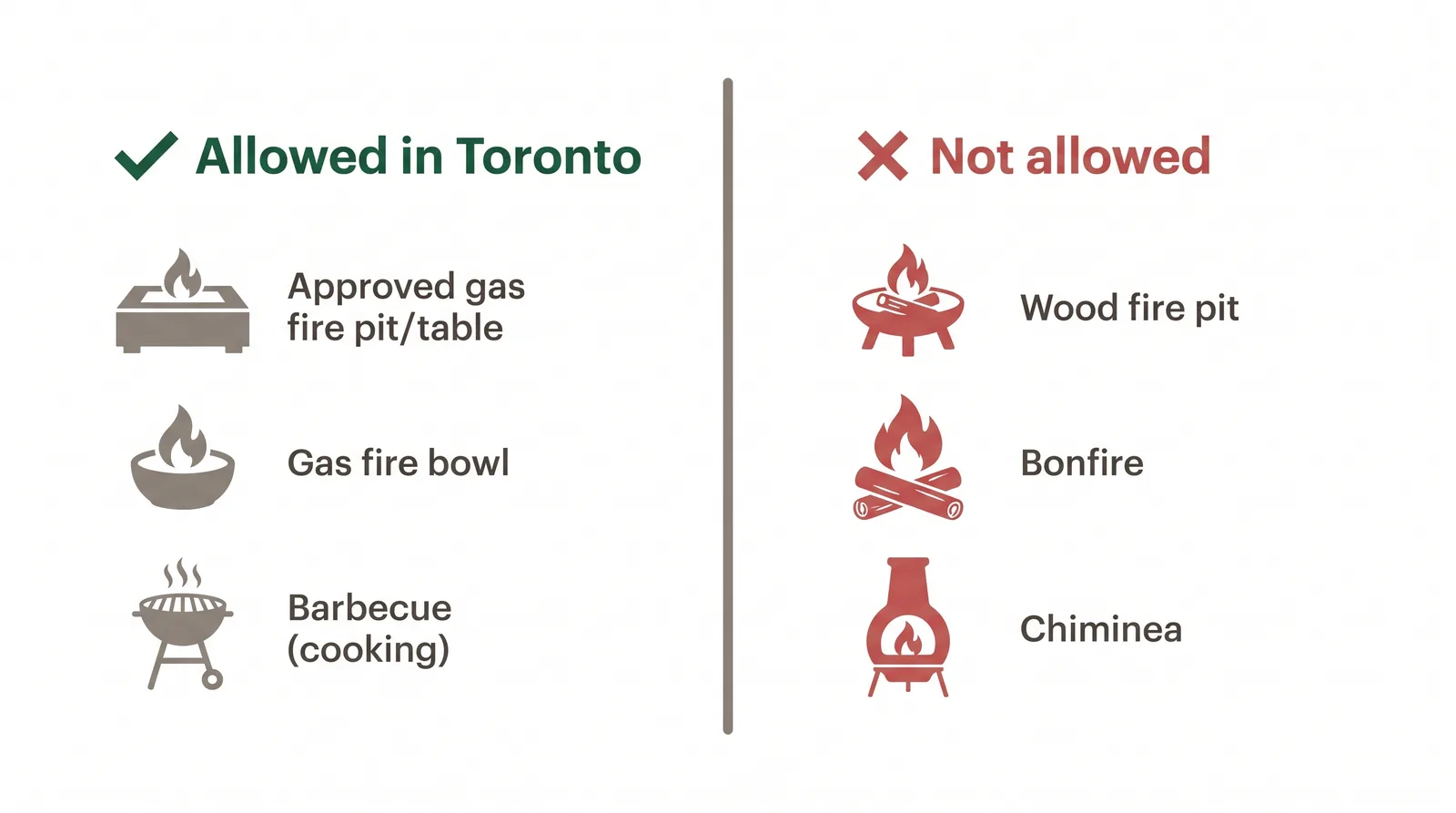
Quotable: Toronto prohibits open air burning, and the bylaw names fire pits, bonfires, and chimineas specifically. A wood fire pit in a Toronto backyard is not legal no matter where you bought it, because the rule is about the fire, not the fixture.
What kind of fire feature is legal in Toronto?
An approved gas fire feature. The City treats a propane or natural gas fire pit or table as acceptable under the Fire Code when it is ULC or CSA approved, supervised at all times, and operated in accordance with the manufacturer's instructions.
Approved gas fire feature means a propane or natural gas fire pit, bowl, or table carrying a ULC or CSA safety certification, which the Fire Code treats as an approved appliance rather than open air burning.
This is the design opening. A gas fire table doubles as patio furniture, a linear gas fire feature can anchor a seating wall, and a built-in gas fire pit set into a stone patio gives the look of the banned wood version without the flying embers, the smoke complaints, or the bylaw problem. Because there are no ashes or sparks, gas features also sit more safely on a finished patio.
A few ideas that fit both the bylaw and a Toronto backyard:
- Gas fire table as the centre of a seating area, pulling double duty as a coffee or dining table.
- Built-in gas fire pit set flush into a paver or natural-stone patio, with a stone or concrete surround.
- Linear fire feature built into a low seating or retaining wall for a modern look.
- Portable propane bowl for renters or small spaces, stored away when not in use.
Quotable: A ULC or CSA approved gas fire pit or table is the legal way to have backyard fire in Toronto, treated as an approved appliance rather than open air burning, as long as it is supervised and used to the manufacturer's instructions.
How do you place and use a fire feature safely?
Put it on a non-combustible surface and give it the clearances the manufacturer specifies. Because a gas feature is an approved appliance, the manufacturer's instructions are not just advice, they are part of what keeps it legal.
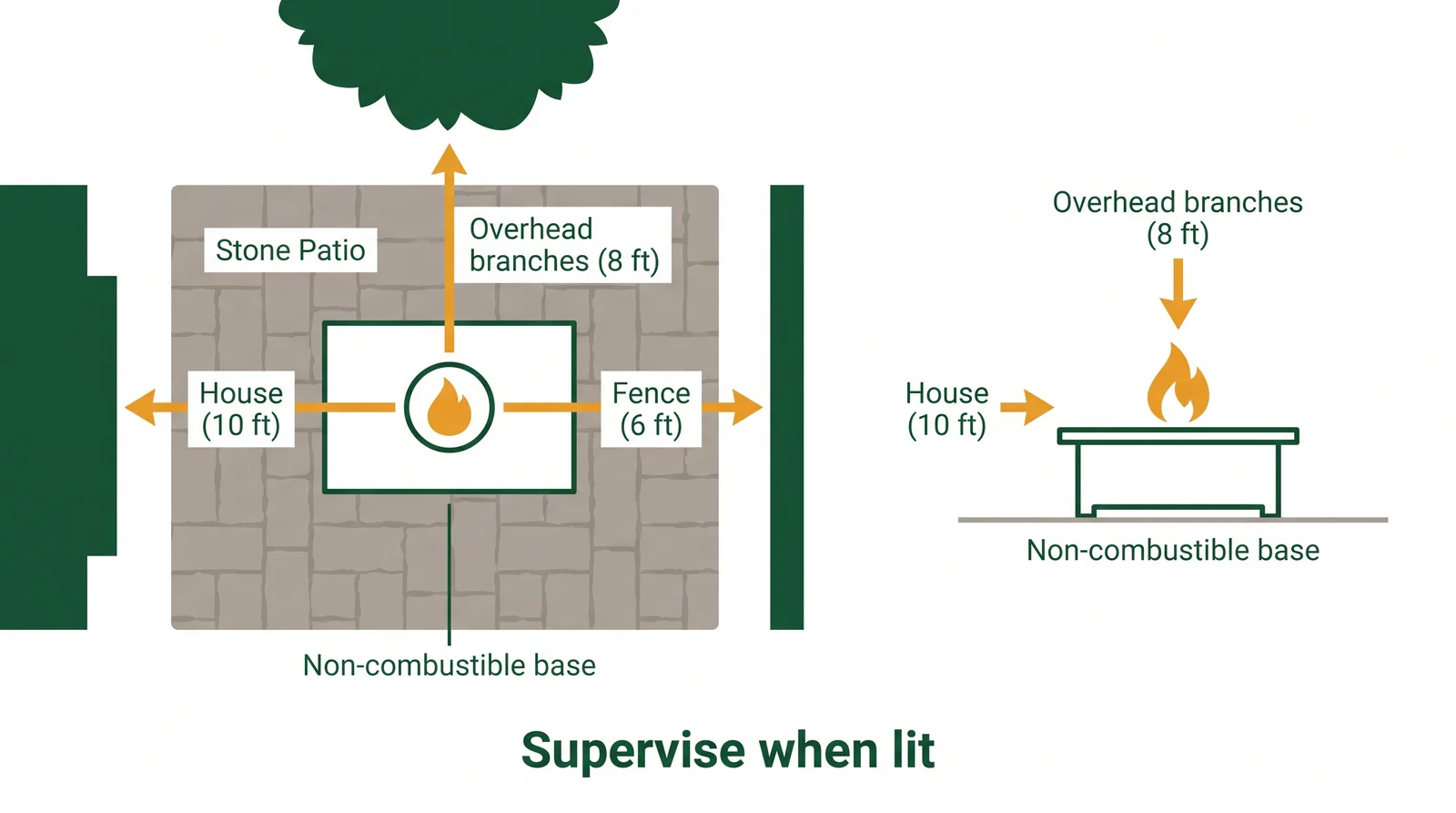
Set the feature on stone, concrete, or pavers rather than a wood deck or grass, and keep it back from the house, fences, and overhanging branches by the distances in the manual. Supervise it the entire time it is burning, and shut it off completely when you are done. Never run a permanent natural gas line yourself; that is work for a licensed gas technician, and a proper stone patio to set it on starts with the same base preparation covered in our guide on the best time for interlocking in Toronto. Balancing the fire feature into a full patio design is part of getting the hardscape and softscape ratio right.
And remember the one wood fire you can have: cooking. The Ontario Fire Code allows a small, confined fire on a grill, barbecue, or spit, sized to the food, supervised, and used only for cooking, never for burning leaves or rubbish. Provincial rules on outdoor fires are summarized on Ontario's outdoor fire page, but within Toronto the City's open air burning bylaw is what governs your yard.
From the data: YardQuote tracks 503 interlocking contractors across the GTA, and 464 carry three or more Google reviews with an average rating of 4.73 (YardQuote tracking, July 2026). Many build gas-ready fire features into patios, which is worth asking about, because a contractor who knows the bylaw will steer you to an approved gas feature and a proper non-combustible base instead of a wood pit that violates it.
To price the patio a fire feature sits in, see the interlocking cost page or browse interlocking contractors in Scarborough and other areas.
Want a fire feature that fits both your yard and the Toronto bylaw? Request a quote and compare up to three vetted local pros side by side. Your contact details only go to the one you pick.