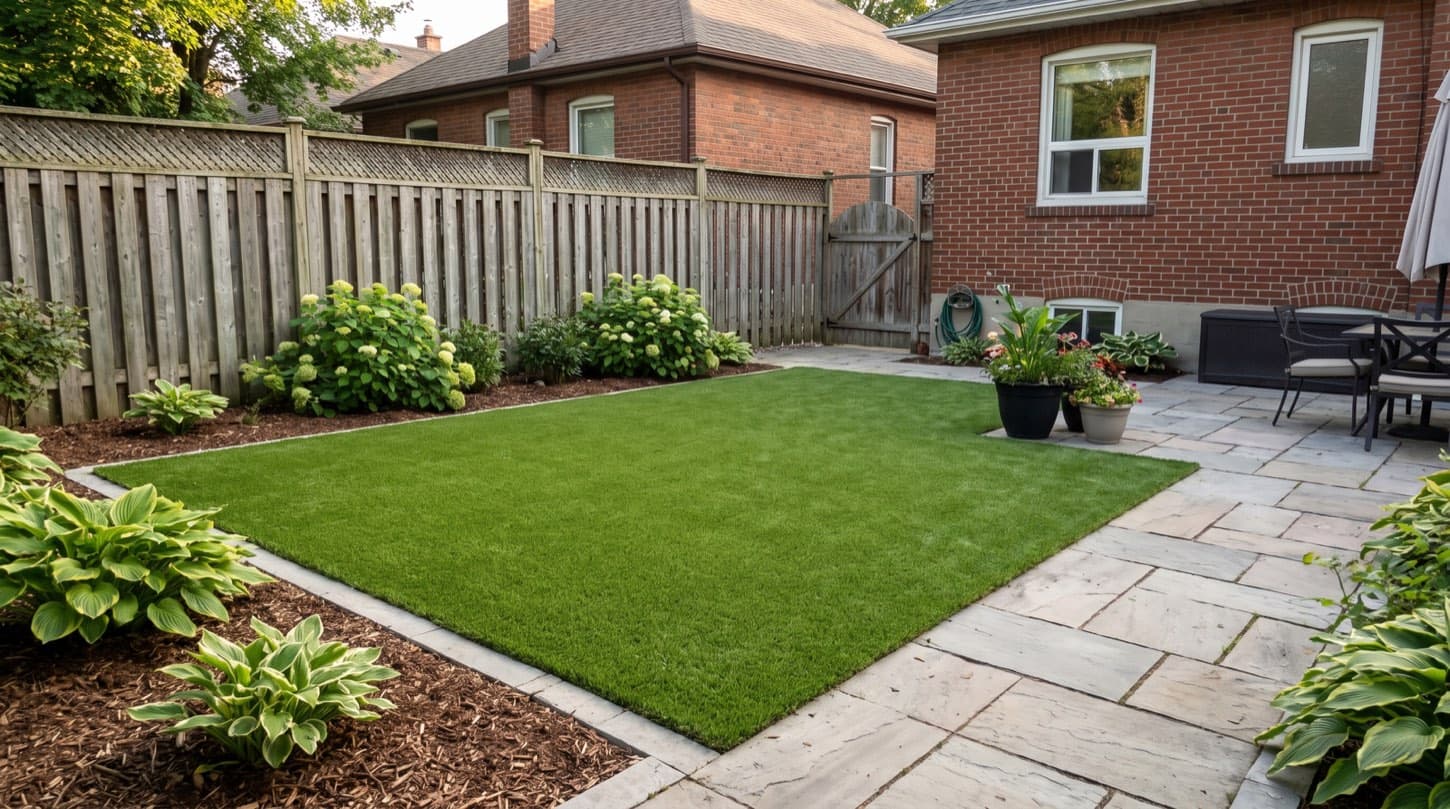
Answer First: A good artificial lawn comes down to three specs: pile height (blade length, aim for about 1.5 to 2 inches for a natural look), face weight (yarn density, about 70 to 90 oz per square yard for a home lawn), and a fully permeable backing for drainage. In Toronto, the compacted base matters as much as the turf — it's what stops heaving and icing through freeze-thaw winters. And know the bylaw first: turf is legal but doesn't count as the front-yard soft landscaping the City requires.
Artificial grass is sold on a showroom sample you rub with your hand, which tells you almost nothing about how it'll perform on your lot. The specs that matter are printed on the spec sheet, and the part that decides whether it lasts is under the turf, not in it.
The three specs that actually matter
Ignore the marketing names and look at three numbers. The Synthetic Grass Warehouse spec reference defines the two most important ones, and drainage is the third.
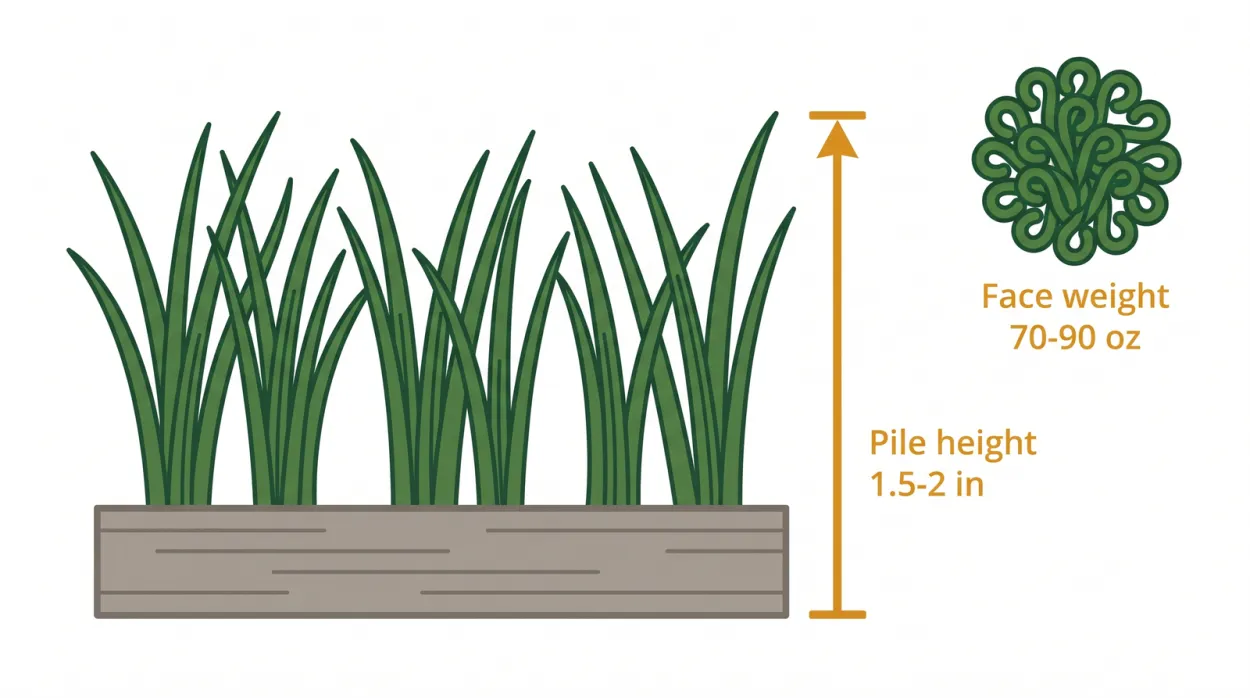
Pile height — the length of the grass blades, measured from the backing to the blade tips. About 1.5 to 2 inches looks like a real lawn; much longer flattens and looks shaggy, much shorter reads as a putting green.
Face weight — the ounces of yarn per square yard, not counting the backing. Higher means denser and softer underfoot; roughly 70 to 90 oz per square yard is the residential sweet spot for a full lawn.
The third spec is drainage, and it lives in the backing, not the blades. Look for a fully permeable backing so rain and snowmelt pass straight through. Pile height has nothing to do with drainage — that's a common showroom myth. Finish the checklist with a real warranty that covers wear and UV fading, since a cheap turf that greys in three summers is no bargain.
| Spec | What it is | Home-lawn target |
|---|---|---|
| Pile height | Blade length | ~1.5–2 in |
| Face weight | Yarn density per sq yd | ~70–90 oz |
| Backing | Drainage path | Fully permeable |
| Warranty | Wear + UV cover | Look for one |
Quotable: Buy artificial grass on three numbers, not the showroom feel: about 1.5 to 2 inches of pile height, 70 to 90 oz per square yard of face weight, and a fully permeable backing. Everything else is preference.
In Toronto, the base is the real job
Here's what the turf salesperson underplays: the compacted base under the grass matters as much as the grass. In Toronto's freeze-thaw climate, ground that isn't properly prepared heaves, and water that can't drain pools and freezes into a sheet.
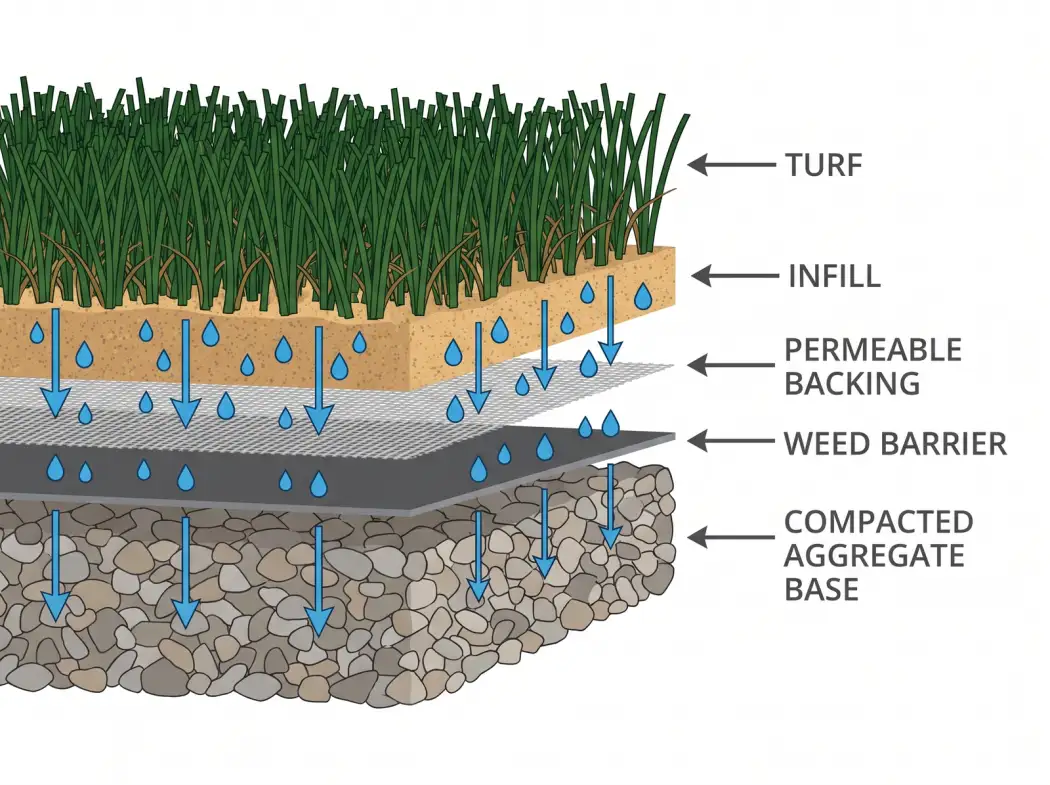
A proper install is a stack, top to bottom: the turf, an infill of silica sand brushed in to weigh it down and hold the blades up, a smooth setting layer, a weed barrier, and several inches of compacted crushed aggregate that drains and resists frost movement. The base is where a good installer spends the effort, because it's the layer that decides whether the lawn stays flat and dry.
Does it survive a Toronto winter?
Better than natural grass, honestly. The synthetic fibers are flexible, so they bend under snow load and spring back when it melts, and the lawn never turns to brown mud in a January thaw. With a draining base, snowmelt runs away instead of freezing on the surface, and you can leave light snow to melt or clear it gently.
The one seasonal caveat is the opposite end: dark synthetic turf in full summer sun gets noticeably hotter than living grass. In a sun-baked yard, a lighter-coloured blend and the cooling effect of a quick hose-down on the hottest days are worth knowing about.
From the data: Of the 650 landscaping companies YardQuote tracks across the GTA, artificial-turf installation is a distinct specialty, not every landscaper's core work. Because the base prep is what makes or breaks a Toronto install, it's worth asking a bidder directly how deep their aggregate base goes and how they handle drainage.
Before you buy: the Toronto bylaw
Legal, with one front-yard catch. Artificial turf is allowed on private residential property in Toronto and needs no permit. But the City does not count artificial turf as soft landscaping, so it can't fill the permeable planting share the zoning bylaw requires a front yard to keep. Backyards are far more open.
That distinction changes where turf makes sense, so it's worth reading our full guide to the artificial grass bylaw in Toronto before you commit to a front-yard install. If you're still weighing turf against a living lawn, our notes on shade grass that actually grows and the real cost of a natural sod lawn help you compare. You can also browse landscaping companies near you.
Deciding between artificial and natural for your yard? Request a quote and compare up to three vetted local pros side by side — your contact details only go to the one you pick.