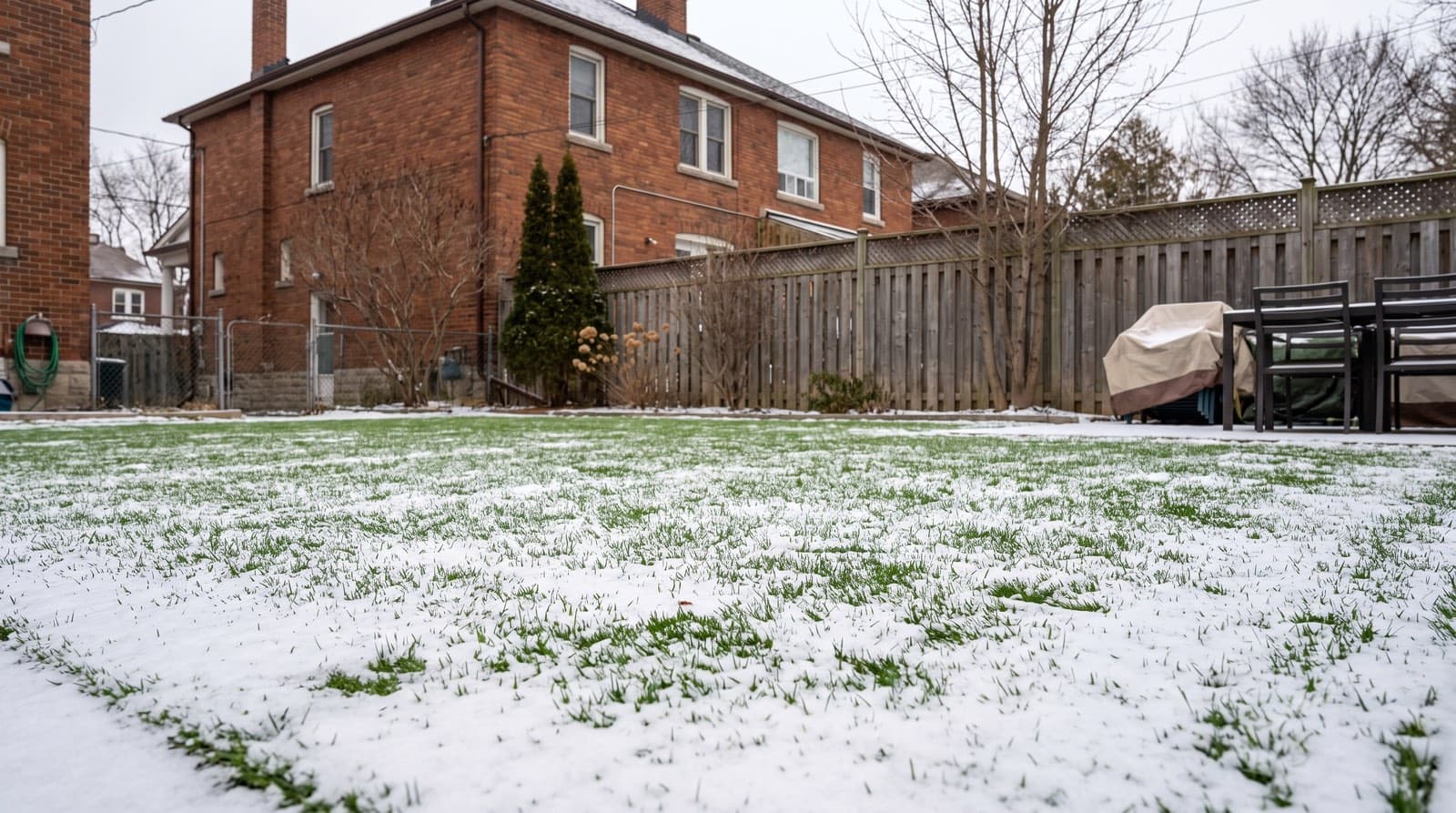
Answer First: Artificial grass is low-maintenance, not no-maintenance. Keep it looking new by rinsing off dust, brushing the fibres upright, and clearing leaves before they rot. In winter, let light snow melt or clear it with a plastic shovel or soft brush, never a metal one, and skip rock salt and chemical de-icers entirely, which damage the fibres and infill. Use plain sand for traction instead.
The pitch for artificial grass is no mowing, no watering, no work. The first two are true; the third is not quite. It trades the weekly chores of a real lawn for a much smaller set of seasonal ones, and doing those few things correctly, especially in winter, is what keeps it looking new instead of matted and mouldy.
How do you handle snow and ice on artificial grass?
Gently, and without salt. Artificial grass copes with winter well, but the tools and chemicals people reach for are what cause the damage.
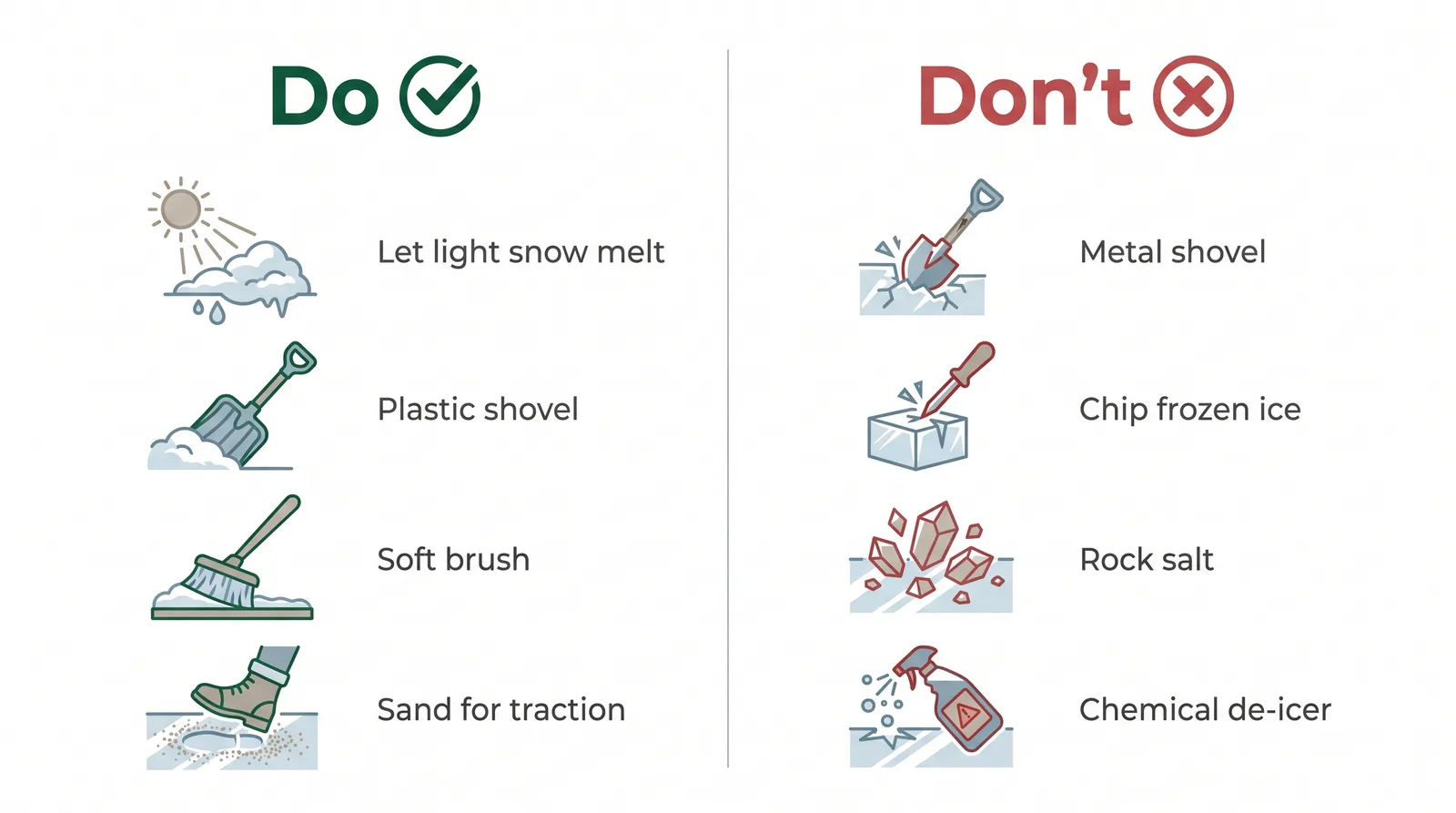
For light snow, the simplest move is to let it melt, because the turf drains and a thin layer clears itself. When you want it gone sooner, push it off with a plastic shovel or a soft-bristled brush, working along the surface rather than scraping into it. What to avoid matters more than what to do:
- No metal shovels or sharp edges, which tear the fibres and backing.
- No chipping at frozen ice, for the same reason. Clear snow before it compacts and you rarely face ice.
- No rock salt or chemical de-icers, which damage the fibres and degrade the infill. For traction on an icy patch, use plain sand or cat litter, which grips and rinses away later.
Quotable: The cold does not hurt artificial grass; a metal shovel and rock salt do. Push light snow with a plastic shovel or let it melt, and use sand, never salt, for traction on ice.
How do you keep artificial grass clean through the year?
Clear debris, rinse, and brush. These three habits cover almost all of it, and leaves are the one that catches Toronto homeowners out.
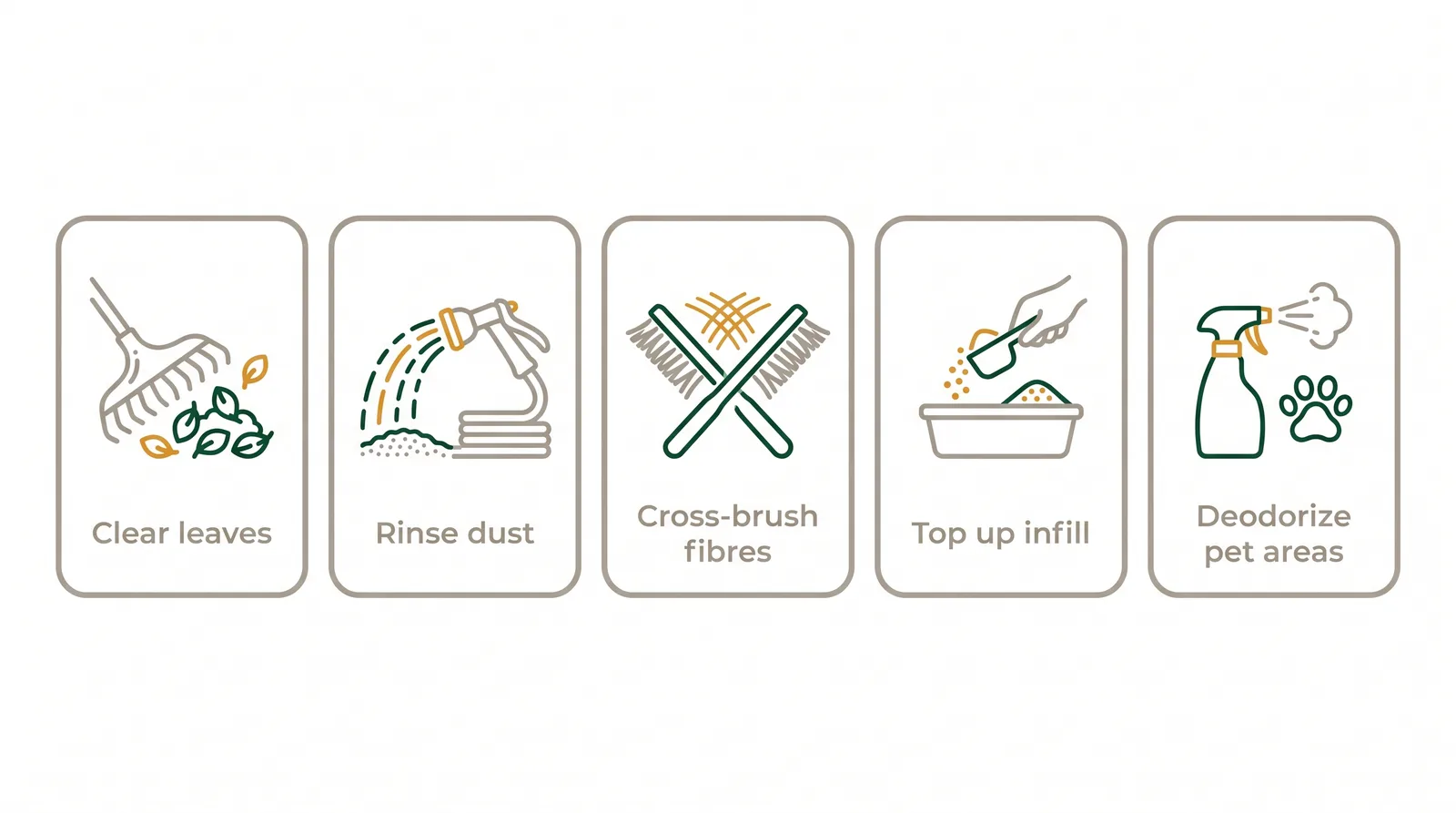
Artificial turf does not decompose the leaves, twigs, and seeds that fall on it, so they sit there. Wet and piled up, that debris traps moisture against the surface, which grows mould and mildew and blocks the turf's drainage. Under Toronto's mature street and yard trees, autumn drops a lot of it, so clearing leaves regularly with a leaf blower or a soft-bristled rake is the single most important maintenance task of the year.
Cross-brushing means sweeping the turf fibres against the direction they lean with a stiff broom, which lifts flattened blades back upright and keeps the lawn looking natural.
Beyond leaves, rinse the surface with a hose now and then to wash off dust and pollen, and cross-brush high-traffic areas to keep the fibres standing. For pet areas, rinse more often and use a turf-safe deodorizer to control odour and bacteria. None of it is heavy work, but skipping it is how a nice artificial lawn starts to look tired.
Quotable: Artificial grass does not rot leaves the way soil does, so a wet leaf pile becomes a mould-and-drainage problem. In a leafy Toronto yard, regular leaf removal is the most important maintenance task there is.
What does artificial grass need in spring?
A brush, a top-up, and a rinse. Winter flattens the fibres and thins the infill in spots, and spring is when you set it right.
Start by brushing the fibres against the grain with a stiff or power broom to stand up anything that matted under the snow. Check the infill and top it up where it has thinned, then brush again so the blades stay supported. Finish with a good rinse, and a deeper clean if pets or a hard winter have left the surface tired, to restore drainage and freshness. That short spring routine is what carries the look from one season to the next.
If your lawn is newer, the base under it is what determines how well it drains and recovers, which our guide on artificial grass installation and base prep covers, and it is worth confirming your setup follows the Toronto artificial grass bylaw before making changes.
From the data: YardQuote tracks 650 landscaping companies across the GTA, and 613 carry three or more Google reviews with an average rating of 4.77 (YardQuote tracking, July 2026). Many offer artificial turf cleaning and spring revival as a service, which is worth considering for a large or pet-heavy lawn, since a power broom and proper deodorizing do more in an hour than weeks of light hosing.
To compare local pros, see the Toronto landscaping cost page or browse landscaping companies in Etobicoke and other areas.
Want a pro to handle the seasonal upkeep? Request a quote and compare up to three vetted local pros side by side. Your contact details only go to the one you pick.