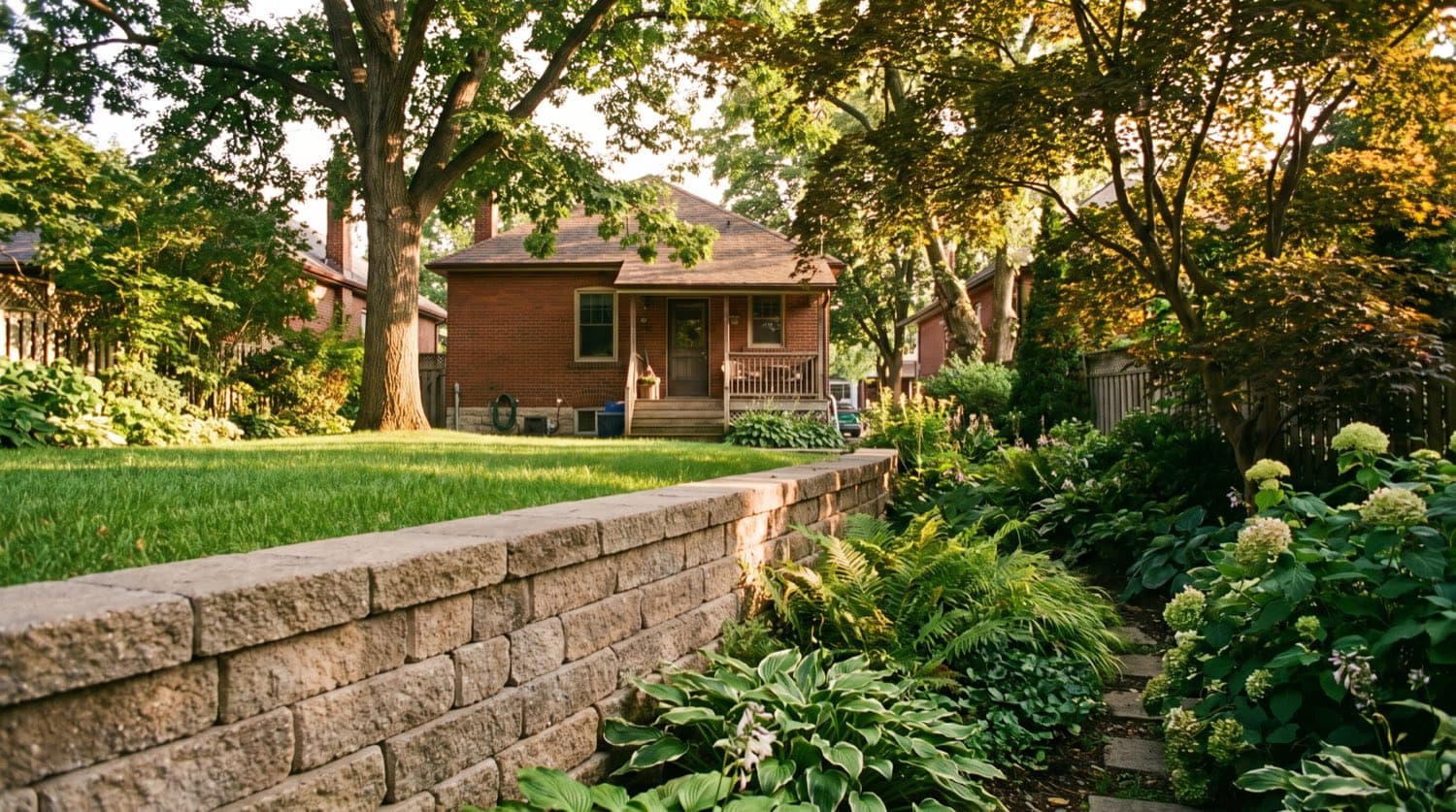
Answer First: A retaining wall is a structure that holds back soil on a slope, letting you level a yard, stop erosion, and gain usable space. You likely need one if your lot slopes enough to lose soil, pool water, or waste space. In Toronto, walls over about 1 metre generally require a building permit and engineered (P.Eng.) drawings, and installed walls cost roughly $25 to $65 per square foot of face, or $5,000 to $15,000 for a typical project (YardQuote pricing, July 2026).
A sloped backyard looks like wasted space until a wall turns it into a level lawn or a terraced garden. That is the whole job of a retaining wall, and whether you need one, and what it costs, comes down to your grade.
What is a retaining wall?
It is a structure built to hold back soil that would otherwise slide or wash downhill. On any meaningful slope, gravity and rain slowly pull soil to the bottom. A retaining wall stops that movement, holding the earth behind it in place and letting you create a level area where there was a bank.
That single function unlocks a lot: a flat lawn carved out of a hillside, a raised patio, terraced garden beds, or simply a yard that stops eroding every spring. It is one of the most structural things you can build in a landscape, which is why the taller ones are engineered rather than eyeballed.
Quotable: A retaining wall holds back sloped soil so it cannot slide or erode, turning an unusable bank into level, usable yard. The taller the wall, the more it is doing structurally, and the more engineering it needs.
When does your yard actually need one?
When a slope is costing you soil, water control, or usable space. A retaining wall is the fix for a handful of common problems, and if any of these sound like your yard, it is worth pricing one.
- Erosion: soil, mulch, or grass washing downhill after every rain.
- Lost space: a bank too steep to mow, plant, or use for anything.
- Water problems: runoff pooling against the house or driveway from higher ground.
- Leveling: you want a flat lawn, patio, or garden bed on a sloped lot.
- Protection: soil pressure pushing against a foundation, driveway, or path.
A gentle, stable, well-planted slope with no erosion may need nothing at all. The trigger is a grade that is actively causing one of the problems above.
What are the types, and what do they cost?
Material sets both the look and the price. Below are the common retaining-wall types with real GTA cost ranges from YardQuote's data, per square foot of wall face.
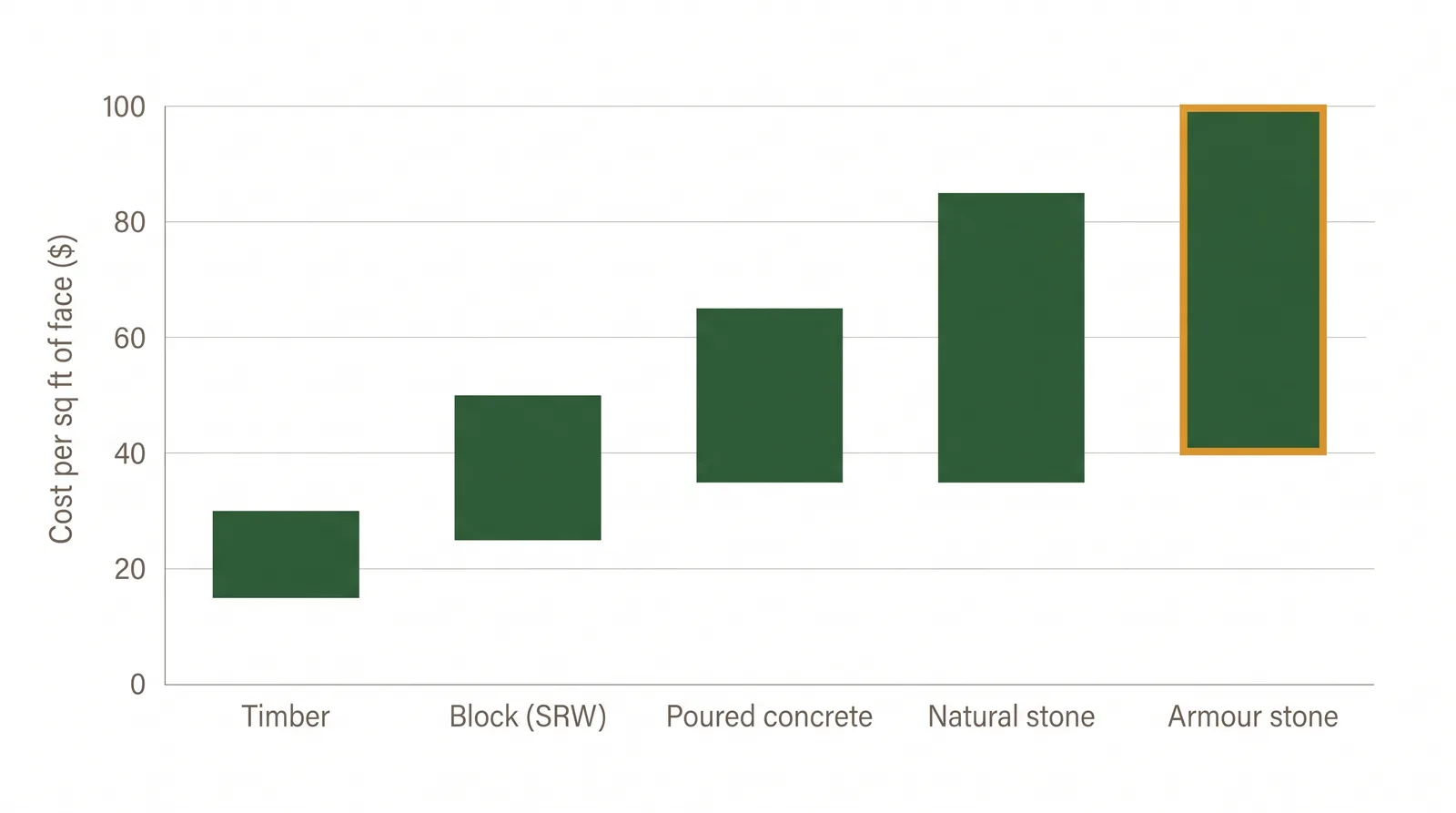
| Wall type | Cost per sq ft of face |
|---|---|
| Pressure-treated timber | $15 – $30 |
| Interlocking concrete block (SRW) | $25 – $50 |
| Poured concrete | $35 – $65 |
| Natural stone | $35 – $85 |
| Armour stone | $40 – $100 |
Interlocking concrete block, often called a segmental retaining wall, is the popular middle choice: durable, good-looking, and workable for lower walls. Timber is cheapest but the shortest-lived, and natural or armour stone sits at the premium end for both cost and permanence. A typical residential Ontario project lands between $5,000 and $15,000.
From the data: YardQuote tracks 61 retaining wall contractors across the GTA, and the 60 with review data average 4.81 stars. It is a smaller, more specialized trade than general landscaping, precisely because a wall over a metre is an engineered structure, not a decorative border.
Do you need a permit, and what makes a wall last?
For anything but a low garden wall, likely yes, and the answer is worth confirming before you build. In Toronto, a structural retaining wall over about 1 metre in height generally requires a building permit and drawings stamped by a professional engineer (P.Eng.), and walls over 0.9 metres near the public road right-of-way also need an encroachment permit under Municipal Code Chapter 743. Thresholds and how height is measured vary, so confirm your specific wall with the City of Toronto.
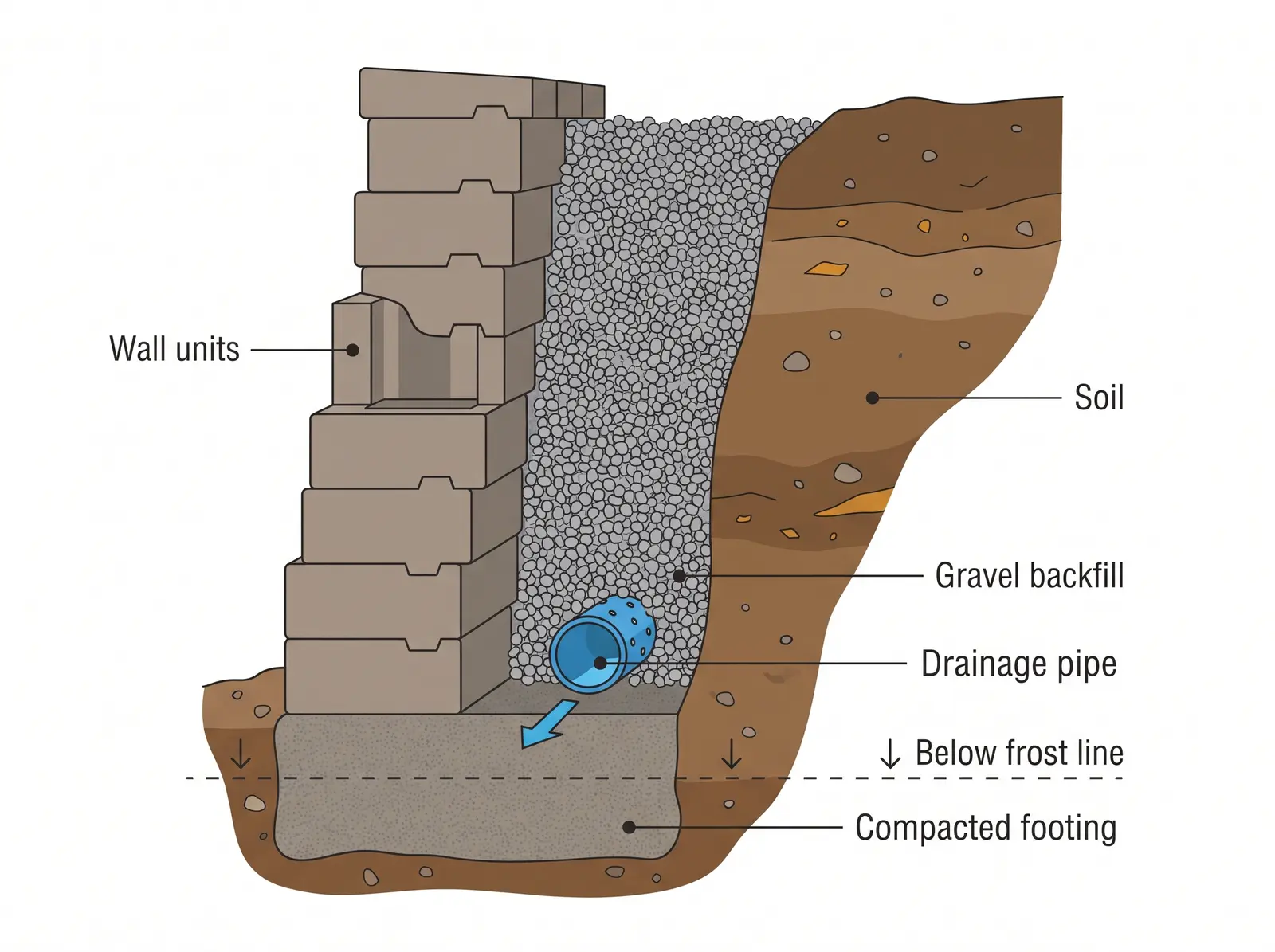
Two engineering details decide whether a wall lasts. First, drainage: gravel backfill and a drainage pipe behind the wall carry water away and relieve the pressure that otherwise bulges or topples it. Second, the footing depth: the base must sit below the frost line, roughly 1.2 metres in the GTA, so freeze-thaw cannot heave it. Skimp on either and the wall fails within a few winters, no matter how good it looks on day one. This is the same freeze-thaw enemy behind winter damage to pavers.
Because a real wall is engineered, hire accordingly. Compare current ranges on the retaining wall cost page, browse retaining wall contractors by area, and compare bids the way we lay out in why Toronto landscaping quotes vary 3x.
Have a slope that needs holding back? Request a quote and compare up to three vetted local pros side by side. Your contact details only go to the one you pick.