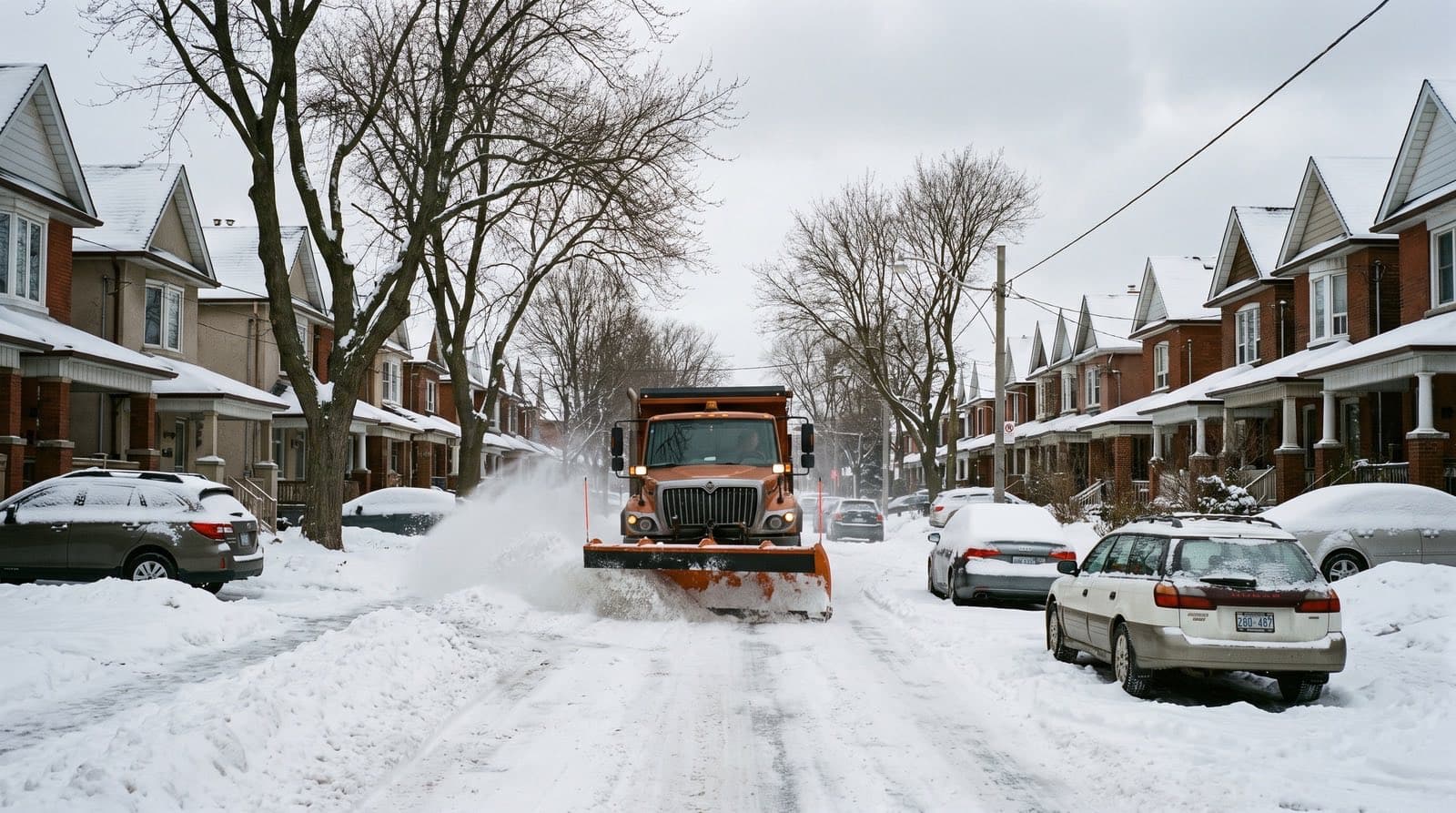
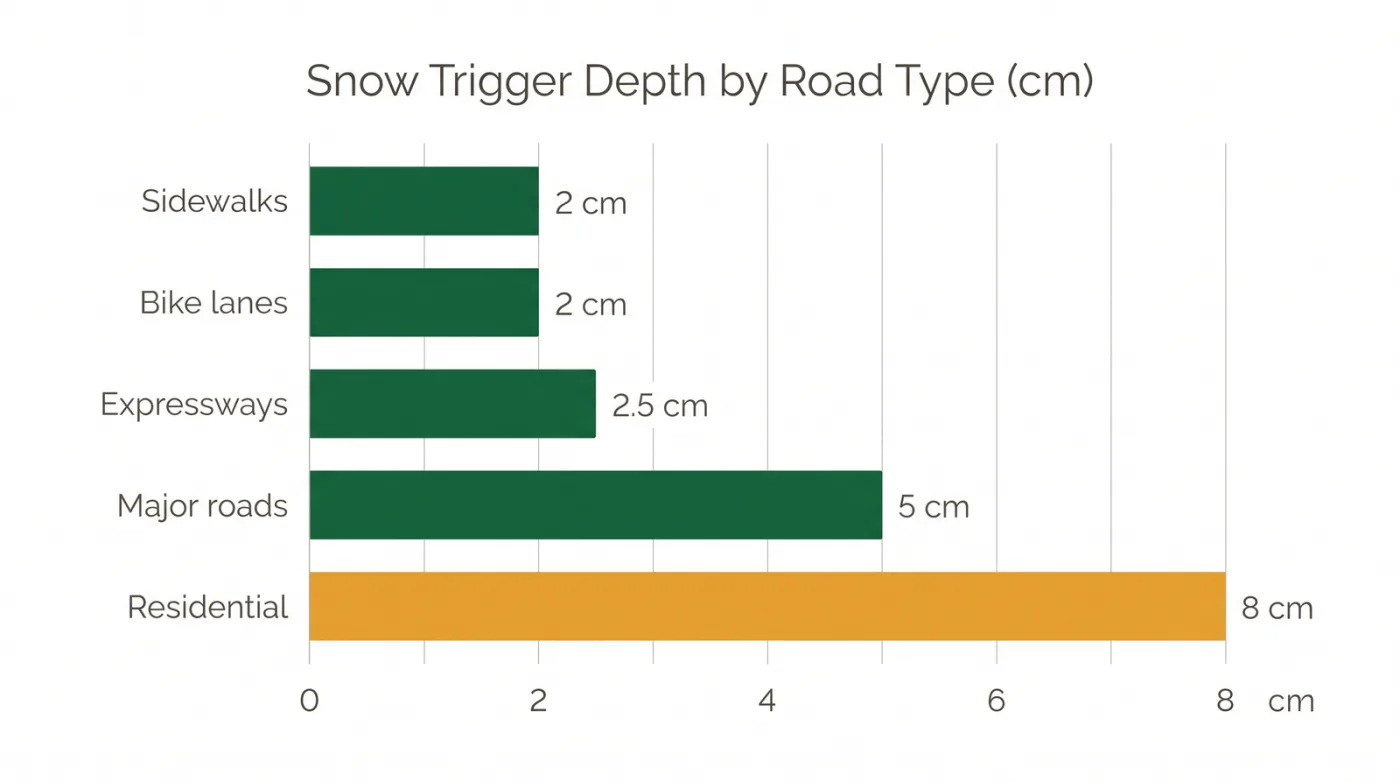
Answer First: Toronto plows by road type, not all at once. Expressways are cleared at 2.5 cm of snow, arterial and major roads plus transit routes at 5 cm, and local residential streets at 8 cm, with residential streets targeting safe and passable within about 14 hours after snow stops. Sidewalks are cleared at a 2 cm trigger, aiming for about 12 hours. The one job the City never does at any depth is your driveway.
Every Toronto winter runs the same argument: the main roads are clear but your street is a rutted mess, and it feels like the City forgot your block. It did not. Residential streets are last in the plan on purpose, and knowing the actual schedule tells you when to expect your street done, and which jobs are still yours no matter how much the City clears.
In what order does the City plow?
Toronto clears roads in priority order so emergency vehicles and transit keep moving first, then works down to residential streets. The rule of thumb: the busier and more critical the road, the lower the snow depth that triggers plowing and the faster the target.
Most of this happens overnight, when roads, sidewalks, and bike lanes are quieter, which is safer for crews and gets the network ready for the morning commute. That is why your street can look untouched at 9 p.m. and be plowed by 6 a.m.
Quotable: Toronto plows expressways at 2.5 cm, major and transit roads at 5 cm, and residential streets at 8 cm. Your street is last by design, not by accident, because emergency and transit routes are cleared first.
The full Toronto snow clearing schedule
Here are the City's service levels by road and path type: the snow depth that starts clearing, the rough time target after the snow stops, and the standard the City aims for.
| Road / path type | Starts clearing at | Time target | Standard |
|---|---|---|---|
| Expressways (Gardiner, DVP) | 2.5 cm | About 2 hours | Bare pavement |
| Arterial / major roads + transit routes | 5 cm | About 6 to 8 hours | Bare pavement |
| Sidewalks | 2 cm | About 12 hours | Safe and passable |
| Cycle tracks / bike lanes | 2 cm | About 8 hours | Safe and passable |
| Local / residential streets | 8 cm | About 14 hours | Safe and passable |
Two details matter most for homeowners. First, residential streets aim for safe and passable, not bare pavement, so expecting bare asphalt on your side street sets you up to be annoyed. Second, the 14-hour target starts when the snow stops, so a storm that ends at 6 a.m. can mean your street is cleared that evening, not first thing.
From the data: Of the 194 snow removal companies YardQuote tracks across the GTA, 70% of the rated ones hold 4.5 stars or higher (YardQuote tracking, July 2026). The City handles the roads; these are the pros homeowners hire for the part the City never touches, your driveway and walkway.
What is windrow clearing, and will the City do mine?
Windrow — the ridge of packed snow a plow pushes across the end of your driveway as it clears the road. It is the single most cursed pile in any Toronto winter, because it lands right after you have finished shovelling.
On eligible streets, the City provides windrow clearing: it opens up about a 3-metre driveway entrance, generally within about two hours of the road being plowed, where the windrow is deep enough (roughly 25 cm or more). Not every street qualifies, and it clears the entrance opening only, not the length of your driveway.
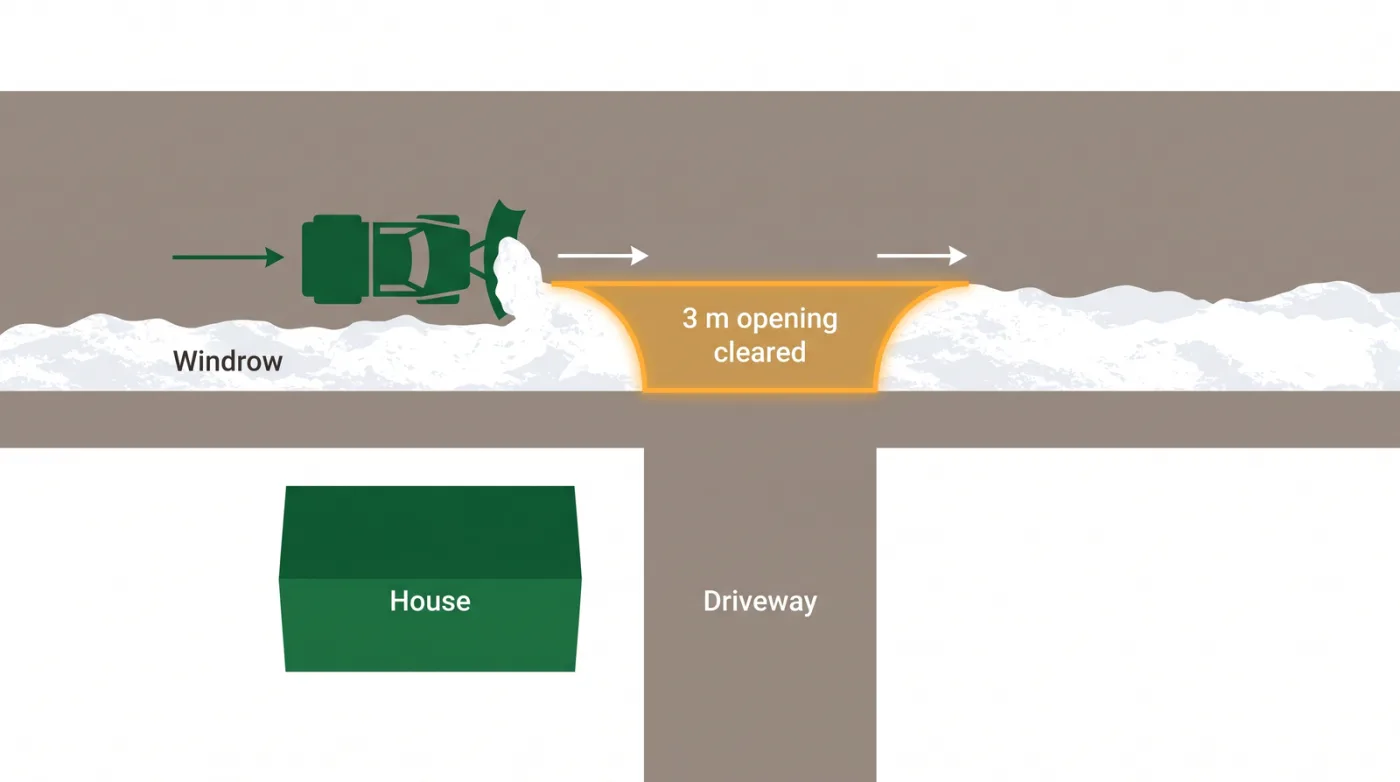
So the honest answer to "will the City clear the pile at the end of my driveway" is: maybe, if your street is eligible and the ridge is deep enough, and only the opening. On every other street, that windrow is part of the driveway you already have to clear yourself.
The one job the City never does
Your driveway and the private walkway to your door are yours to clear, at every snow depth, with no exceptions. The City clears roads, sidewalks, and bike lanes; it does not set foot on private property.
On top of that, you are responsible for clearing the public sidewalk in front of many Toronto properties within a set time after snow stops, and the City mechanically clears the large majority of sidewalks itself to help. For residents who need a hand on private property, 211 Ontario can connect them to local resources. But the driveway itself is never a City service.
Quotable: The City of Toronto clears roads and most sidewalks, but it never clears your driveway or your private walkway at any snow depth. That is the homeowner's job every single storm.
This is exactly why a seasonal contract is worth setting up before the first storm rather than after it. The homeowners who overpay call a plow company in December when the good operators are already full. The math on seasonal versus paying per storm is in our snow removal pricing breakdown.
When to sort out your own snow plan
The City's schedule tells you when your street clears. It says nothing about your driveway, which is the part that actually strands your car. July and August are the cheap-booking months, before early-bird windows close in the fall.
You can compare current ranges on the snow removal cost page or browse vetted local pros in the snow removal directory for North York and other areas. With most rated GTA operators above 4.5 stars, you do not have to gamble on an unknown to get a fair seasonal price.
Want your driveway handled before the first storm? Request a quote and compare up to three vetted local snow pros side by side. Your contact details only go to the one you pick, and booking in summer beats booking in a blizzard.