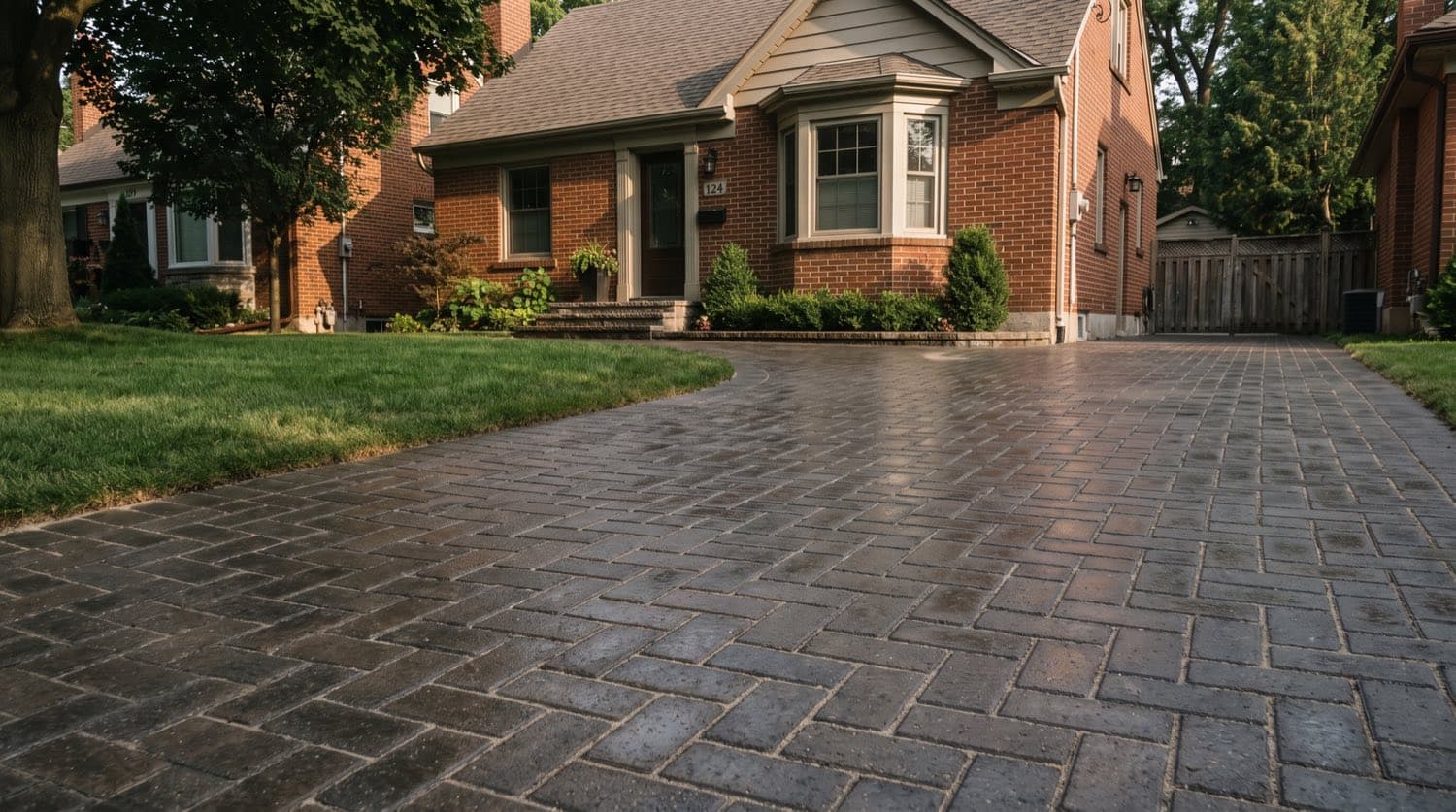
Answer First: Sealing interlocking is optional, but in the GTA it is usually worth it, because road salt and freeze-thaw are exactly what a sealer defends against. A full sand-and-seal service runs $1.35 to $2.50 per square foot, about $700 to $1,250 for a 500 square foot driveway. Seal new pavers 60 to 90 days after installation, reseal every 3 to 5 years, and re-sand the joints every 2 to 3 years where you use salt. Sealing does not hold pavers in place, that is the base's job, so treat it as protection for the look and lifespan, not a fix for sinking.
Sealing is the interlocking question homeowners ask most, usually right after a contractor offers it as an add-on. The honest answer is that it is maintenance, not magic, and whether it earns its cost comes down to one very Toronto-specific factor: salt.
What does sealing interlocking actually do?
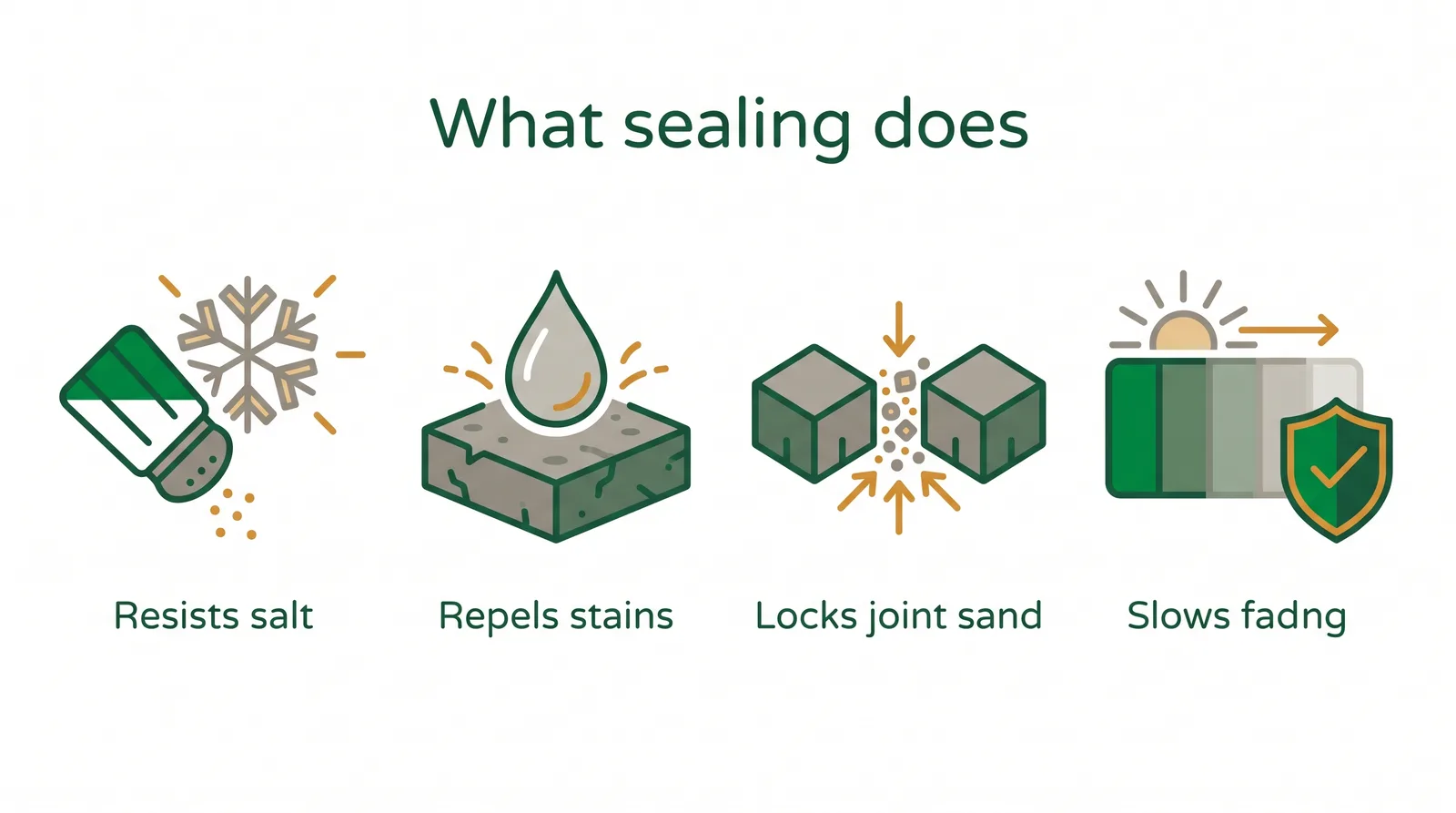
It protects the surface and the joints, and it deepens the colour. A sealer soaks into and coats the pavers, doing four things: it helps the joint sand resist washout, it repels water and de-icing salt so they cannot erode the joints as fast, it makes oil and stains easier to clean off, and it slows the colour fade that sun and weather cause. A "wet-look" sealer also enriches the paver colour; a matte one protects without the sheen.
Sealing — applying a protective coating over interlocking pavers and their joint sand to resist salt, water, stains, and fading. It is surface maintenance, and it does nothing for a paver that is sinking, which is a base problem covered in our guide to why interlocking sinks.
The one thing sealing does not do is hold pavers level. If your driveway is dipping, sealing it just seals in the dip.
Is sealing worth it in Toronto specifically?
Yes, more here than in a milder climate, and the reason is de-icing salt. Salt is the main thing that erodes interlocking joints in the GTA, and the winters that bring the salt also bring the freeze-thaw cycles that work water into any unprotected joint. A sealer slows both, which is why GTA contractors treat resanding and sealing as routine driveway upkeep rather than a luxury.
That said, it is a choice, not a requirement. Unsealed pavers do not fail; they just weather faster, lose colour sooner, and need their joint sand topped up more often. If your driveway sees heavy salt every winter, sealing pays off. If you have a shaded, salt-free backyard patio, it is more about looks than protection.
Quotable: De-icing salt is the main thing that erodes interlocking joints in the GTA. That single fact is what turns sealing from a nice-to-have into worthwhile maintenance on a Toronto driveway.
What does sealing cost, and how often do you do it?
A full sand-and-seal service, power washing, fresh polymeric joint sand, then sealer, runs $1.35 to $2.50 per square foot in the GTA, which is roughly $700 to $1,250 for a 500 square foot driveway before HST. Sealer-only reapplications cost less because the joints are already sanded.
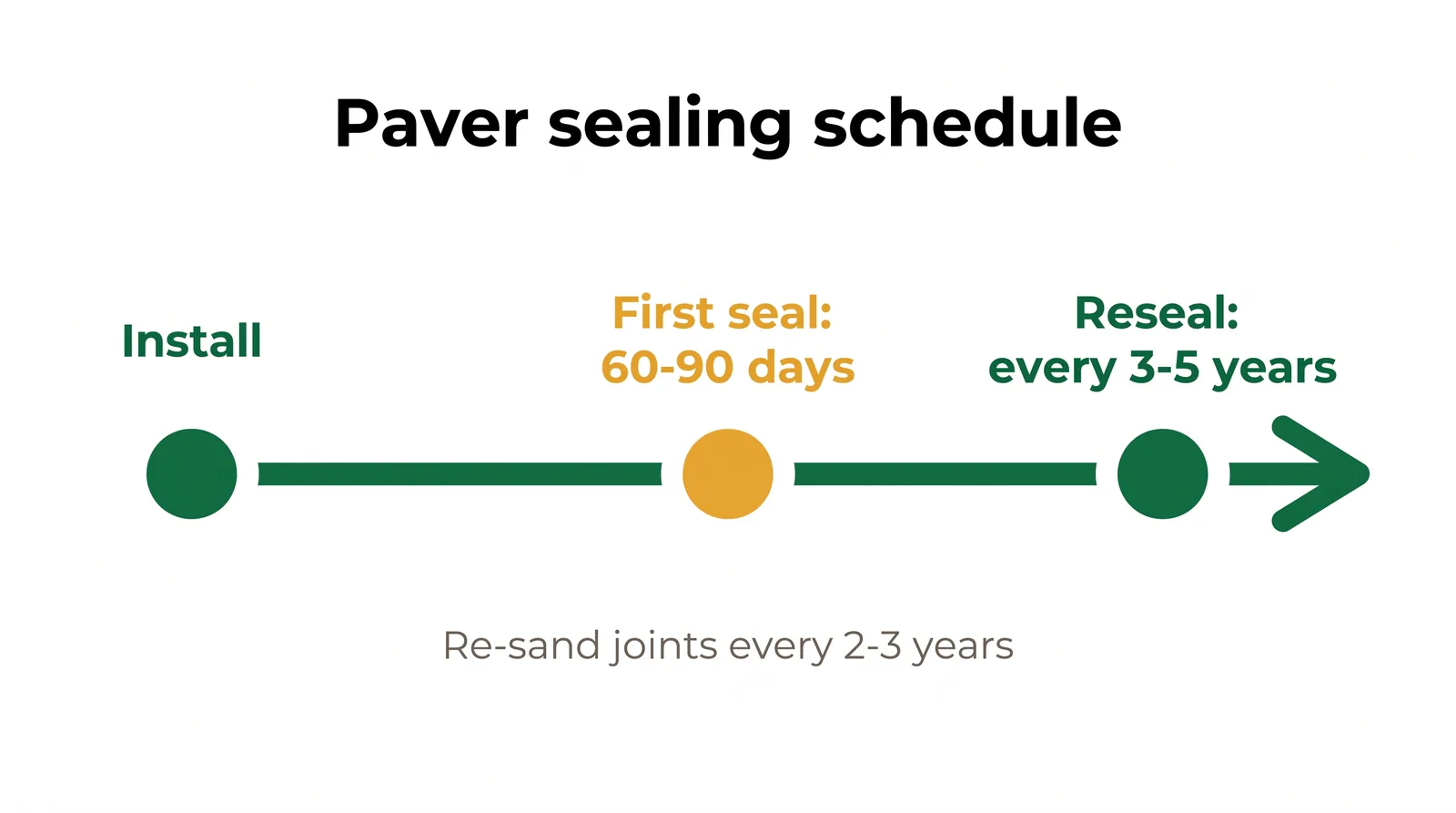
The schedule matters as much as the cost. Seal new pavers 60 to 90 days after installation, once any surface haze from curing has cleared, then reseal every 3 to 5 years. Where de-icing salt is used, re-sand the joints every 2 to 3 years. You can see how sealing fits alongside install and repair pricing on the interlocking cost guide for Toronto.
From the data: YardQuote tracks 503 interlocking contractors across the GTA, 464 with three or more reviews and an average rating of 4.75 (YardQuote tracking, July 2026). Plenty of them offer sand-and-seal as a standalone service, so you do not have to accept it as a padded add-on to a bigger job.
When does sealing go wrong?
When it is rushed, cold, or overdone. Three mistakes cause most bad sealing jobs: doing it too soon after installation before the pavers have cured and any efflorescence has cleared, applying it in cool weather when sealers generally need warm temperatures around 25°C to cure properly, and over-applying so the sealer pools instead of soaking in.
Any of these can trap moisture under the coating and leave a cloudy white haze or a blotchy, streaky finish that looks worse than bare pavers. Sealing over damp stone or dirty joints locks the dirt and moisture in. Done at the right time on clean, dry, properly sanded pavers, a seal should read as clean and even, deepened colour or a soft sheen, never glossy plastic or white blush.
Sealing, re-sanding, and sand-and-seal: what's the difference?
These three terms get mixed up, and they are not the same service. Re-sanding is refilling the joints with fresh polymeric sand, the every-2-to-3-years upkeep that fights washout and salt. Sealing is applying the protective coating over pavers and joints. Sand-and-seal is the combined service most GTA contractors sell: power wash, re-sand, then seal in one visit, which is the $1.35 to $2.50 per square foot line.
For most Toronto driveways, the sand-and-seal every 3 to 5 years, with a joint re-sand in between where salt is heavy, is the sensible rhythm. If you are still planning the build itself, get the base right first, then design with our front walkway ideas, and compare vetted crews on the interlocking directory for Etobicoke or request a quote.
Want honest sealing advice, not an upsell? Request a quote and compare up to three vetted local interlocking pros side by side. Your contact details only go to the one you pick.