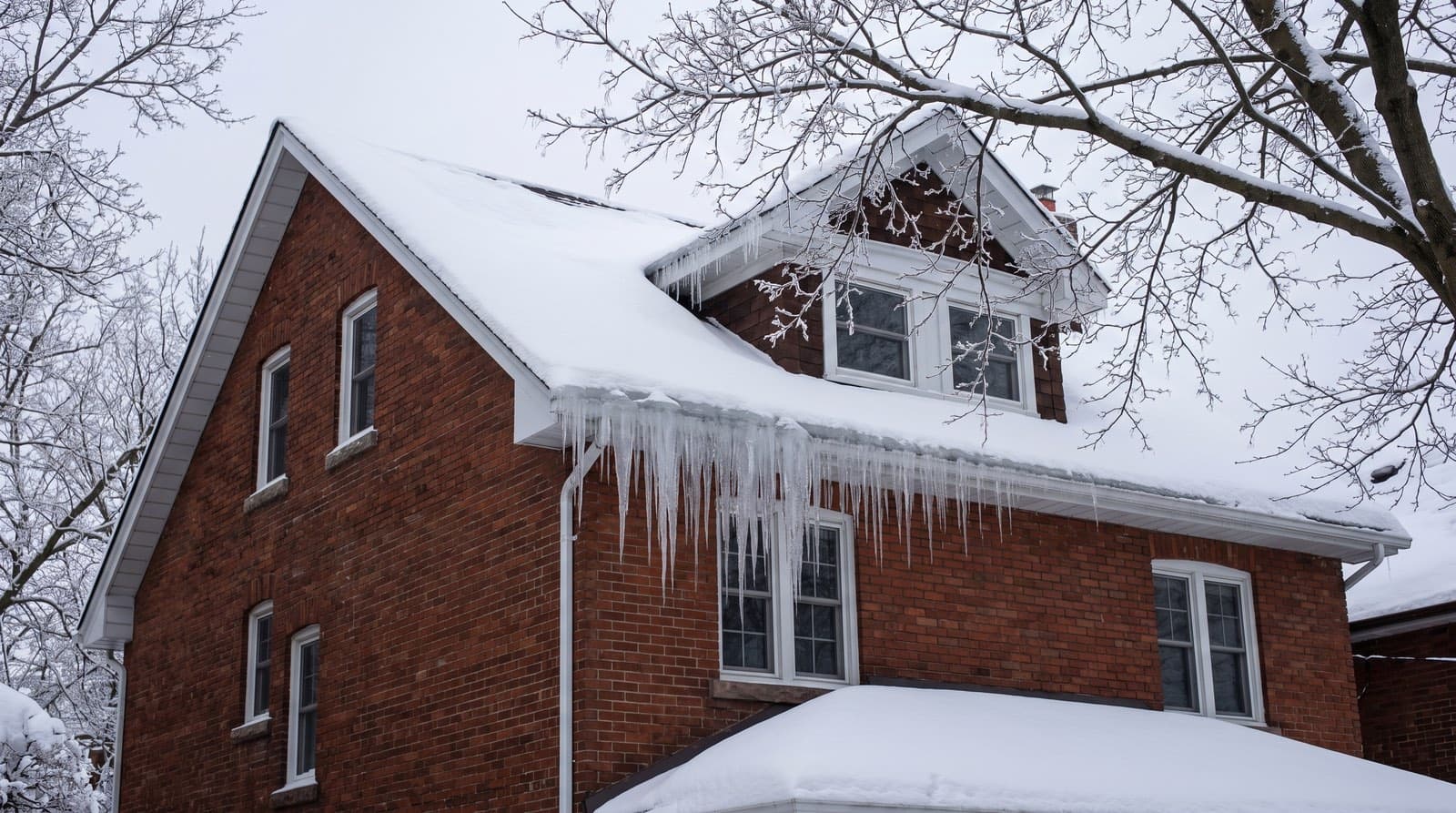
Answer First: Roof snow becomes urgent from weight and ice, not depth. It is time to act when you see structural signs, a sagging roofline, doors that suddenly stick, new ceiling or wall cracks, or when an ice dam is leaking water inside, especially after heavy wet snow on a flat or low-slope roof (University of Minnesota Extension). Wet snow weighs far more than dry, so the warning signs matter more than inches. Clear the lower edge with a roof rake from the ground, never climb an icy roof, and if you see signs of failure, stay off the roof and out of the building and call a pro.
Most roofs shed a normal Toronto winter without any help. The ones that get into trouble do it two ways: too much weight from heavy wet snow, or ice dams backing water under the shingles. Neither is about how pretty the snow looks on the roof.
When is roof snow actually urgent?
When the building tells you it is under stress. Before you worry about the snow itself, look for signs of strain, and if you see them, do not climb onto the roof or even stay in the building (University of Minnesota Extension).
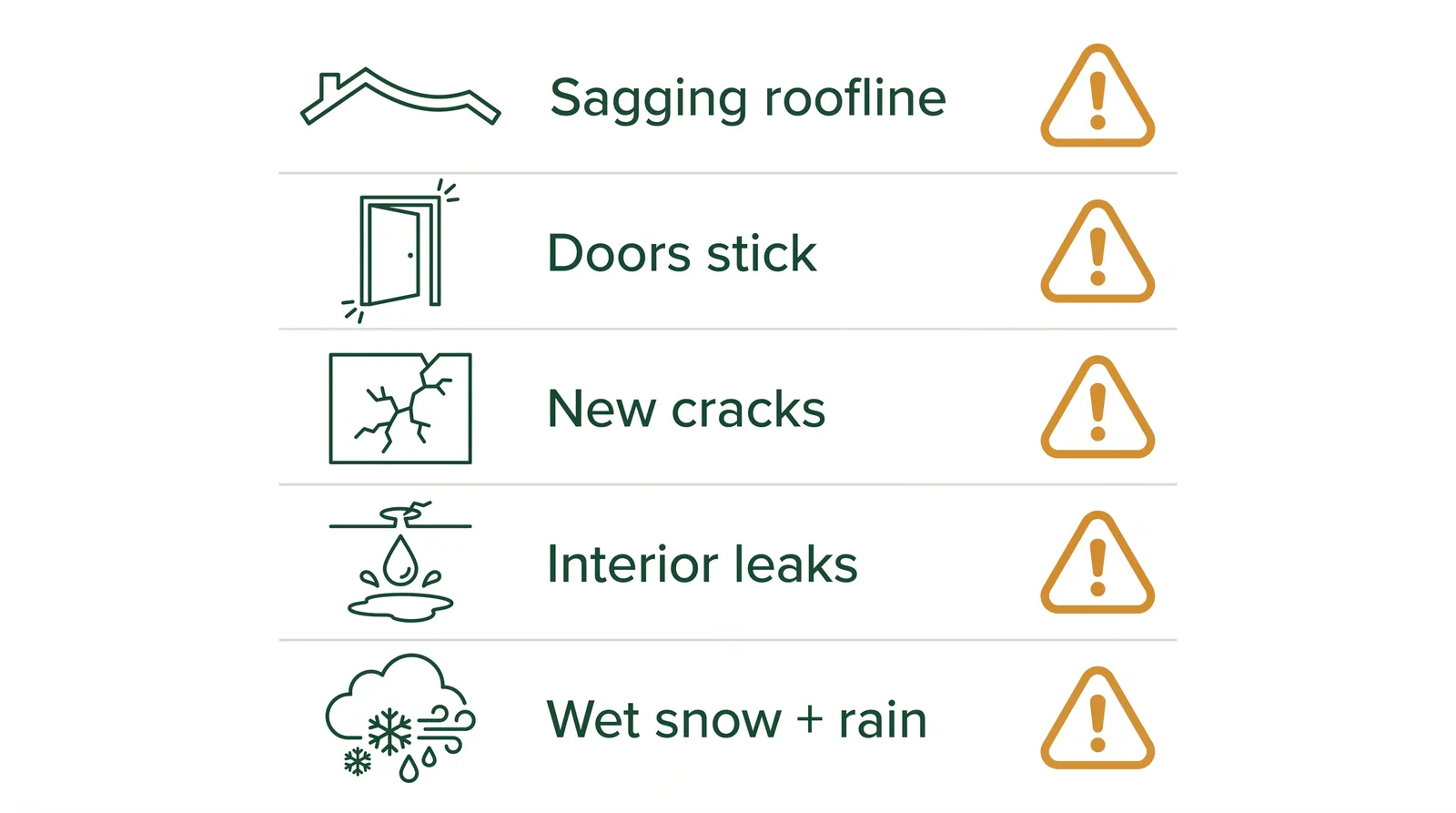
- A sagging or no-longer-straight roofline, or bulging walls.
- Doors or windows that suddenly stick, a sign the frame is being loaded.
- New cracks in ceilings, walls or around door frames.
- Creaking or popping sounds from the structure.
- Interior leaks, especially at the edges, pointing to an ice dam.
Depth is a weak signal on its own because the weight depends on the building design and how wet the snow is. Wet, dense snow weighs several times more than dry powder, so a foot of soaked snow can load a roof more than two feet of light snow. The signs above tell you about load; a ruler does not.
Quotable: Roof snow risk is about weight, not depth. Wet snow weighs several times more than dry, so a sagging roofline or a door that suddenly sticks is a better warning than any number of inches on the roof.
Why are ice dams the bigger Toronto problem?
Because they are far more common than a collapse, and they quietly wreck ceilings. An ice dam forms when heat escaping through the roof melts the snow on the upper roof, the water runs down to the cold overhang at the eaves, and it refreezes there into a ridge. That ridge then traps the next round of meltwater, which backs up under the shingles and finds its way inside (University of Minnesota Extension).
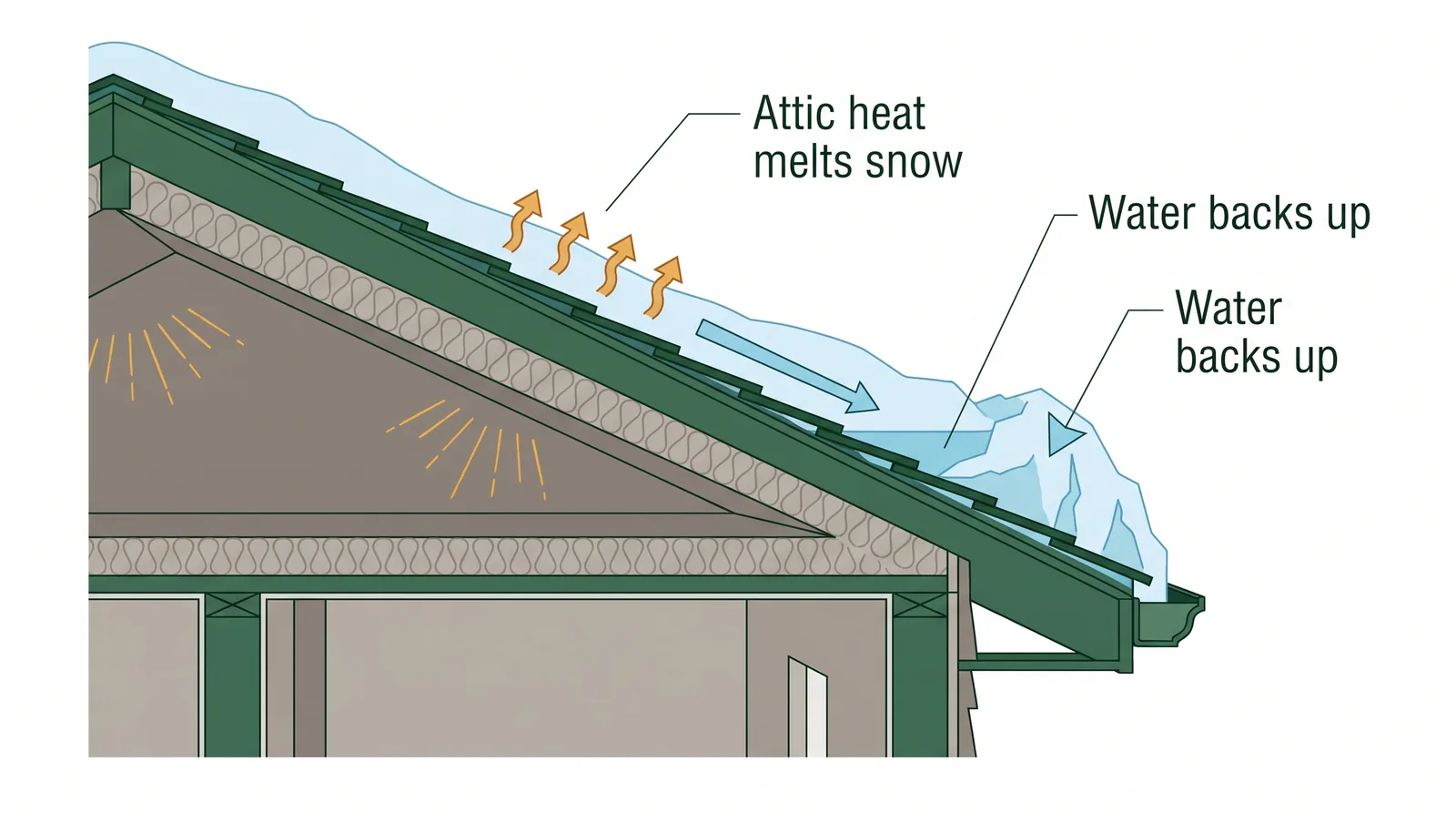
Ice dam — a ridge of ice at the cold edge of a roof, formed when snow melted by escaping attic heat refreezes at the overhang, trapping water that then leaks back under the shingles. Clearing snow from the lower edge of the roof removes one of the ingredients the dam needs.
If water is actively leaking inside, you can melt a channel through the dam to drain the water behind it, working upward from the lower edge with warm tap water on a mild day. Never chip or hammer at the ice, which breaks the shingles underneath. That is a stopgap; clearing the roof snow is the real fix, and better attic insulation and ventilation is the long-term one.
How do I clear roof snow safely?
From the ground, with a roof rake, and never by climbing. The single biggest danger is falling off a snow-covered, icy roof, so the safe method is a long-handled roof rake used from the ground to pull snow off the lower few feet of the eaves, the exact zone where ice dams form (University of Minnesota Extension).
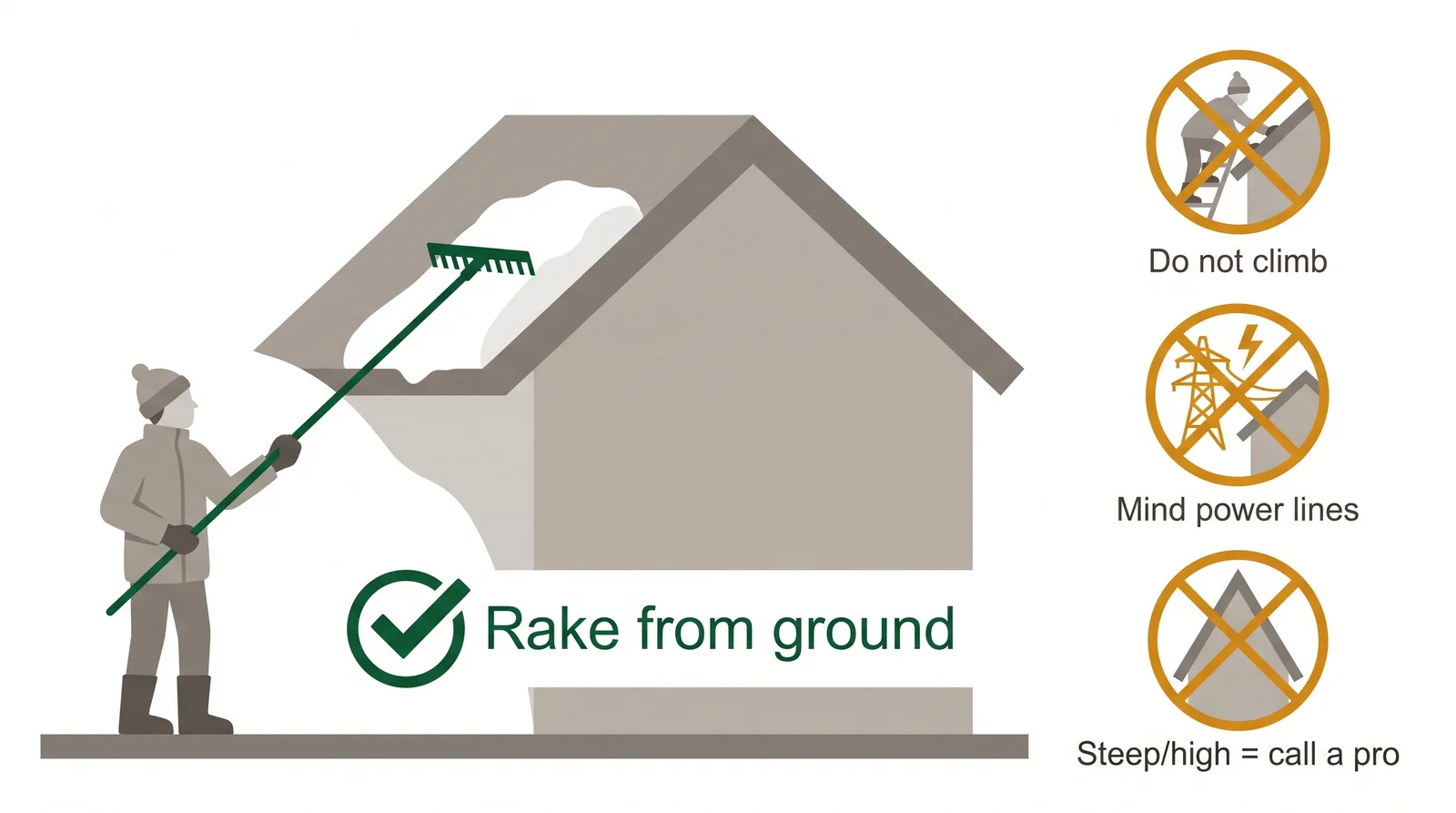
Three rules keep it safe. Keep the rake and yourself well clear of overhead power lines. Use the rake gently, since scraping can damage shingles. And know your limit: steep roofs, tall two- and three-storey homes, heavily loaded roofs, and anything showing the stress signs above are jobs for a professional with the right equipment, not a homeowner on a ladder.
From the data: YardQuote tracks 194 snow-removal companies across the GTA (July 2026), 169 with three or more reviews at an average of 4.61 stars. Roof snow clearing is a specialized, higher-risk job, so it is worth confirming a company is insured and experienced with roofs specifically before hiring, rather than assuming a driveway crew does it.
What is the takeaway for a Toronto winter?
Watch the signs, not the snow depth, and treat the roof edge as the priority. Rake the lower few feet after heavy wet snowfalls to head off ice dams, keep an eye out for sagging, sticking doors and interior leaks, and never climb an icy roof. When the roof is steep, tall, heavily loaded or showing stress, that is the moment to hire a pro, not to improvise.
The ground-level snow has its own rules, including where you are legally allowed to pile it, covered in where you can put snow in Toronto, and the deadlines for clearing walks and drives are in Toronto's sidewalk snow clearing bylaw. For driveway and walkway clearing, you can compare vetted crews on the Toronto snow removal cost page or in your area, such as snow removal in Scarborough.
Want reliable help with the snow at ground level this winter? Request a quote and compare up to three vetted local snow pros side by side. Your contact details only go to the one you pick.