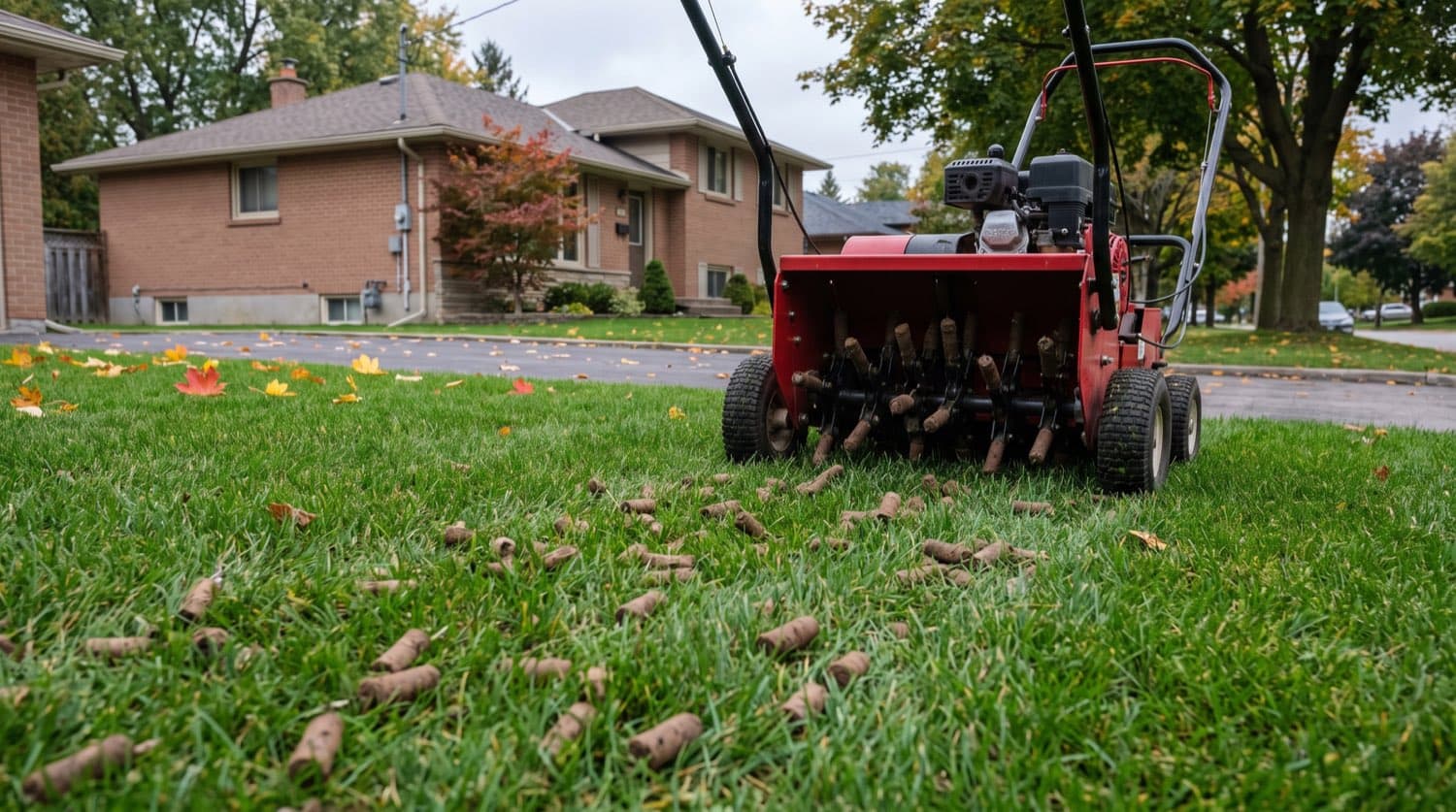
Answer First: Core aeration pulls finger-sized plugs of soil out of the lawn to relieve compaction, letting air, water, and nutrients reach the roots. Toronto's heavy clay soil compacts easily under freeze-thaw winters and foot traffic, so clay lawns often need aerating once or twice a year, ideally in early fall. It fixes what fertilizer cannot: a compacted lawn stays thin no matter how much you feed it.
If your Toronto lawn is thin, water pools after rain, and the ground feels like concrete underfoot, the problem is usually not the grass. It is the soil packed tight beneath it, and aeration is the one fix that addresses it directly.
What is lawn aeration, and what makes it "core"?
Core aeration is a machine pulling small plugs of soil out of your lawn, leaving finger-sized holes across the surface. Those holes open the packed soil so air, water, and nutrients can finally reach the roots (Iowa State University Extension).
The word "core" matters. There are two kinds of machine, and only one actually helps.
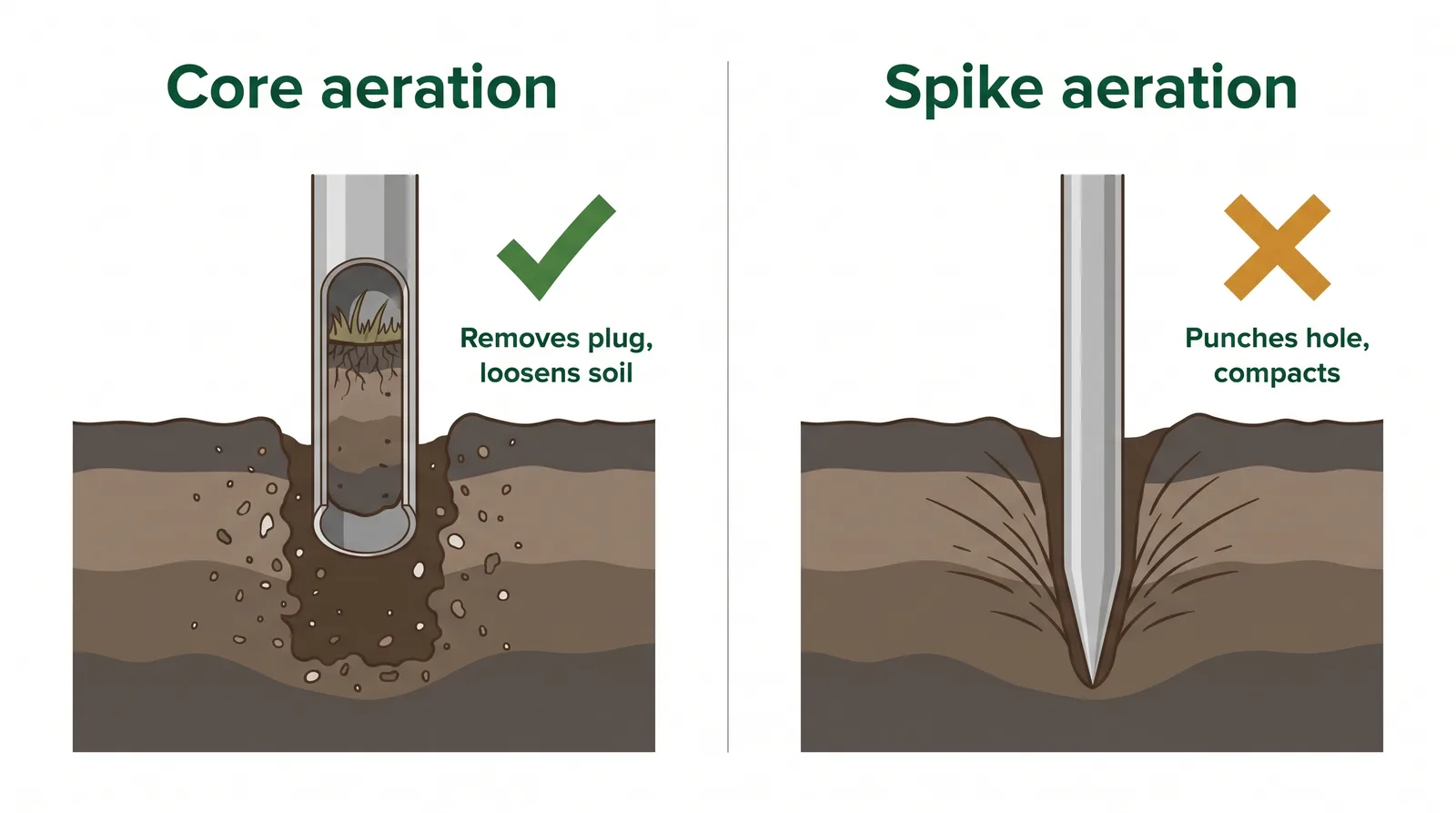
Core aeration — a machine with hollow tines removes plugs of soil (roughly three-quarters of an inch wide and up to three inches deep), physically opening the compacted ground.
Spike aeration — a machine with solid spikes punches holes without removing soil, which can press the ground even tighter. Lawn scientists specifically warn against relying on it (Iowa State University Extension).
So when a service quotes "aeration," confirm it is core aeration with hollow tines. A spike roller can leave your clay more compacted than before.
Quotable: Real aeration pulls plugs of soil out of the ground; spike machines just punch holes and can compact the soil further. Always confirm a service uses core aeration with hollow tines.
Why does Toronto clay soil need it so badly?
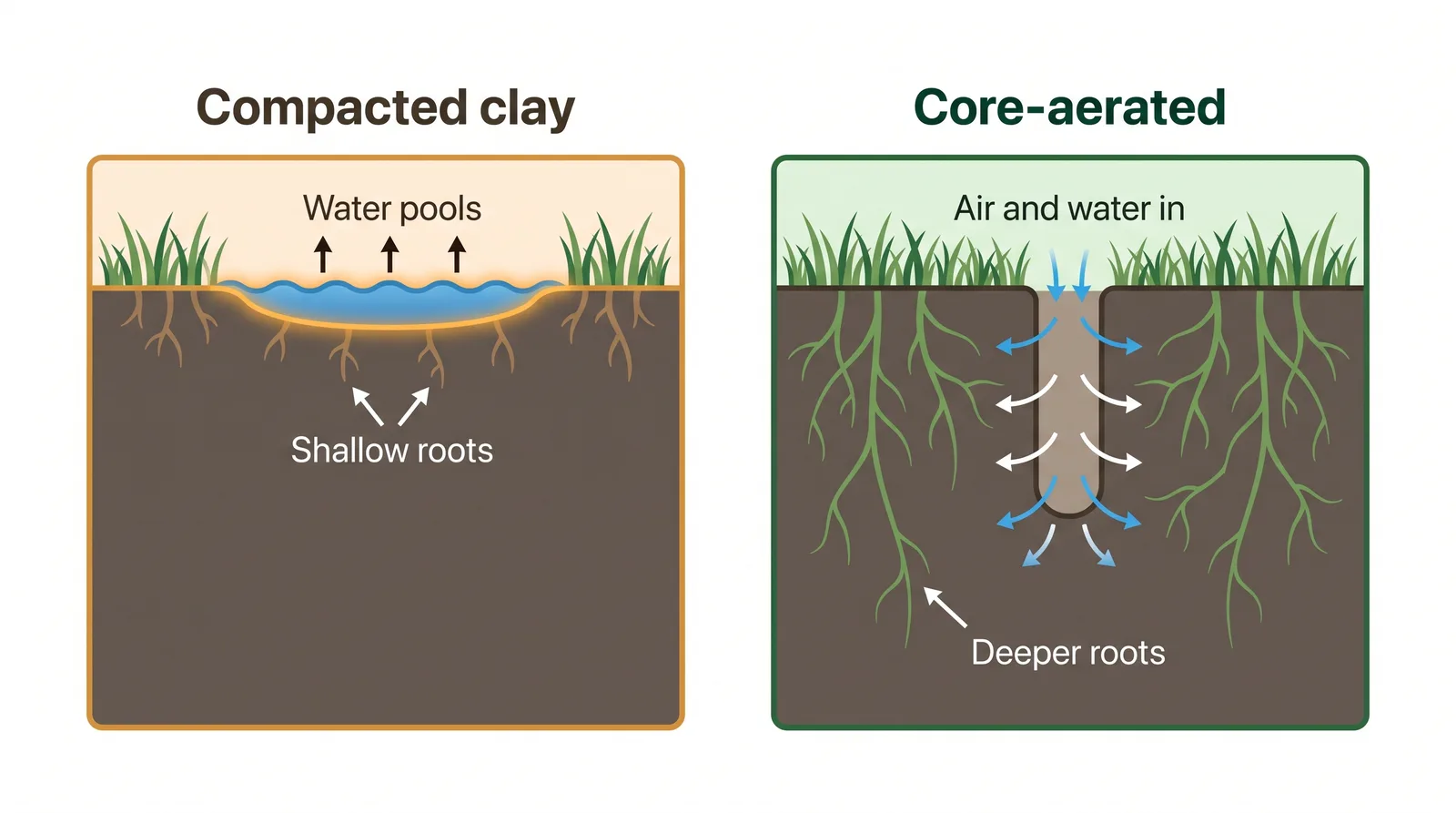
Because clay compacts faster and harder than any other soil, and Toronto's conditions make it worse. Heavy clay is dense to begin with, and freeze-thaw cycles plus foot and pet traffic press the air and water right out of the root zone.
Compacted clay does two things that kill a lawn. It stops rainwater from soaking in, so water pools or runs off instead of reaching roots, and it starves those roots of oxygen. The result is a thin, weak lawn that struggles no matter how you treat the surface. This is common across Scarborough and the older east-end lots where clay dominates. On soils this heavy, aeration is not a luxury tune-up; it is what keeps the lawn viable.
From the data: Of the 249 lawn-care companies YardQuote tracks across the GTA, 220 carry three or more Google reviews at an average of 4.75 stars (YardQuote tracking, July 2026). Core aeration, usually paired with fall overseeding, is one of the most common autumn bookings, so a well-reviewed crew is easy to line up.
When and how often should you aerate?
Early fall is the best time, and heavy clay often needs it twice a year. Cool-season Toronto lawns recover fastest when aerated in the fall (spring is a workable second choice), and fall aeration relieves the compaction that built up all summer (Michigan State University Extension).
Frequency comes down to your soil and traffic:
| Lawn type | How often to aerate |
|---|---|
| Well-drained soil, light use | About once a year |
| Heavy clay soil | Once or twice a year |
| Heavy foot or pet traffic | Twice a year |
For a good result, the aerator should leave roughly 20 to 40 holes per square foot, which usually means several passes over hard clay (Iowa State University Extension). Avoid aerating in midsummer heat or when the ground is bone dry; slightly moist soil pulls the cleanest plugs.
What to do after aerating
Leave the plugs, and pair the job with overseeding. The soil plugs the machine leaves on the surface should stay there; they break down within a week or two, returning soil and microbes to the lawn and helping decompose thatch. Mowing or a light rain speeds it up. Raking them off throws away the benefit.
Fall aeration also opens the perfect seedbed, so aerating and overseeding together is the highest-value move for a thin clay lawn: the seed drops into the plug holes with good soil contact right when cool-season grass establishes fastest.
For pricing, see our aeration and overseeding cost guide and the lawn care cost page, and browse rated crews like lawn care in Scarborough, where clay soil is the norm. If the lawn is already thin and patchy, our guide to fixing a patchy lawn covers whether to overseed or resod after you aerate.
Not sure if your clay lawn needs aeration, overseeding, or both? Request a quote and compare up to three vetted local pros side by side. Your contact details only go to the one you pick.